



Living or working in a space where mold continues to grow can gradually affect overall health. Damp walls, ceilings, carpets, and air systems often allow spores to circulate unnoticed. Over time, these microscopic particles enter the body through breathing or contact. Many people only begin asking questions after symptoms appear. Understanding the mold exposure health effects associated with long-term exposure can help people recognize risks early and respond before conditions worsen.
Understanding Why Mold Exposure Becomes a Health Concern
Indoor mold becomes a concern when moisture allows it to grow continuously. Small spores released into the air can travel through ventilation systems and settle across different rooms. While occasional exposure may not cause noticeable symptoms, prolonged contact with contaminated air can increase the likelihood of developing health problems. Researchers studying indoor air quality have documented mold exposure health effects ranging from allergies to breathing discomfort and fatigue, a concern also highlighted by the U.S. Environmental Protection Agency.
What Happens When Mold Stays in Indoor Spaces for Too Long
Mold grows easily in damp areas like bathrooms, basements, and poorly ventilated rooms. If it is not removed, spores keep spreading through the indoor environment. These particles become part of the air people breathe daily, and long-term exposure may lead to symptoms that develop gradually.
How Mold Spores Spread Through Homes and Buildings
Mold spores are very light and can move easily through indoor air. Air conditioning systems, heating vents, and daily movement can carry them across rooms. When spores land on damp surfaces, they begin growing again. Continuous circulation of these particles increases the chances of mold exposure health effects.
Why Long-Term Exposure Increases Health Risks
Occasional exposure may not cause noticeable symptoms, but repeated contact allows spores to build up in indoor air. Over time, this can lead to irritation or sensitivity. People may begin noticing coughing, congestion, or headaches linked to mold exposure health effects.
Respiratory Problems Caused by Mold in the Air
Breathing air containing mold spores is a common way exposure occurs. Once inhaled, spores can irritate the nose, throat, and lungs. Many individuals first notice coughing or nasal congestion, which may be signs of respiratory issues from mold in damp indoor environments, as also noted by the Centers for Disease Control and Prevention (CDC).
Why Mold Irritates the Airways
Airways are sensitive to airborne particles. Mold fragments may trigger inflammation when inhaled, especially in closed spaces with poor ventilation. Symptoms like throat irritation or chest tightness are often associated with respiratory issues from mold.
Signs of Respiratory Issues from Mold
Breathing-related symptoms often develop slowly. People may experience sneezing, sinus pressure, persistent coughing, or shortness of breath that seems worse indoors. These signs can indicate respiratory issues from mold, particularly when moisture problems remain unresolved.
Allergic Reactions Triggered by Mold Exposure
Mold is also a known trigger for allergic responses. When the immune system reacts to spores, the body releases chemicals that lead to typical allergy symptoms. These reactions may develop slowly with repeated exposure. Many individuals experiencing seasonal allergy-like symptoms indoors may actually be reacting to mold exposure health effects inside their living spaces.
Common Allergy Symptoms Linked to Mold
Allergic responses to mold often resemble reactions caused by dust or pollen. Sneezing, nasal congestion, watery eyes, and throat irritation are frequently reported. Some individuals also experience headaches or fatigue after spending time in damp rooms. Although symptoms may appear mild at first, they can worsen if exposure continues.
Why Some People Are More Sensitive to Mold
Sensitivity to mold varies from person to person. Individuals with allergies or asthma may react more strongly when exposed to spores. The immune system in these individuals responds quickly to airborne irritants. In such cases, repeated exposure may intensify mold exposure health effects, making symptoms more persistent and difficult to ignore.
Skin and Eye Irritation from Mold Contact
Mold exposure does not only affect breathing. Contact with moldy surfaces or airborne spores can also irritate the skin and eyes, especially in environments where mold growth is visible.
How Mold Affects the Skin
Direct contact with mold may cause itching, redness, or mild rashes. For sensitive individuals, these reactions can be part of broader mold exposure health effects.
Eye Irritation and Persistent Discomfort
Mold spores in the air can irritate the eyes, causing redness, watering, or a burning feeling. Symptoms often worsen indoors and may improve after leaving the affected space.
Long-Term Mold Exposure and Chronic Health Conditions
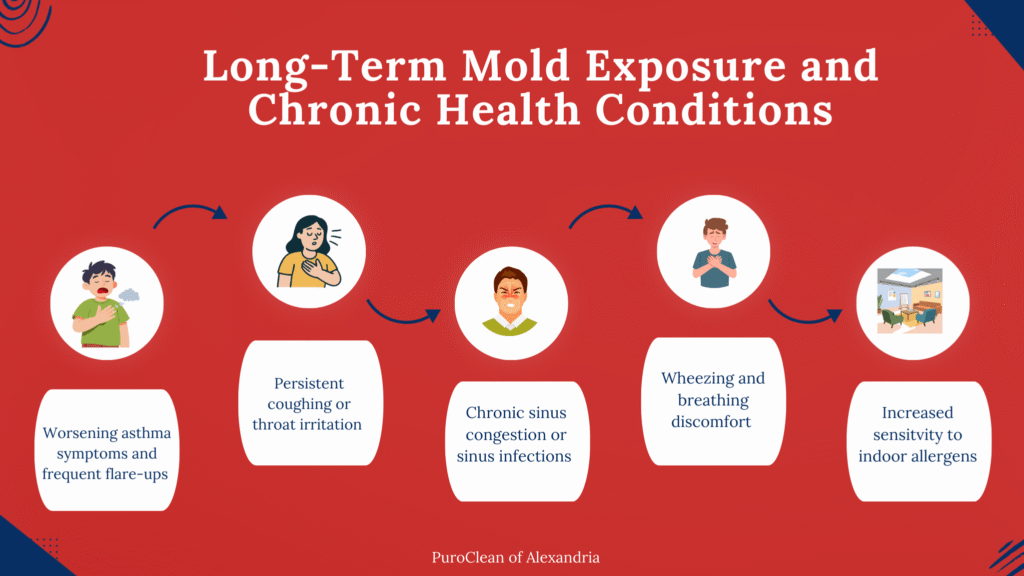
Long-term exposure to indoor mold can worsen existing health problems and trigger new symptoms over time. Continuous contact with airborne spores may irritate the respiratory system and affect people who are already sensitive to indoor air pollutants.
Possible health conditions linked to prolonged exposure include:
- Worsening asthma symptoms and frequent flare-ups
- Persistent coughing or throat irritation
- Chronic sinus congestion or sinus infections
- Wheezing and breathing discomfort
- Increased sensitivity to indoor allergens
Over time, these conditions may become more noticeable in homes with ongoing moisture problems. Addressing mold growth early can help reduce mold exposure health effects and lower the chances of long-term respiratory issues from mold.
Who Is Most at Risk from Mold Exposure
Some groups are more sensitive to mold than others. Children, older adults, and people with weakened immune systems often react more strongly to indoor mold. Being aware of these risks can help households address moisture and mold problems earlier.
Children and Older Adults
Children’s respiratory systems are still developing, while older adults may have existing health concerns. Because of this, both groups may experience stronger mold exposure health effects, including coughing and allergy-like symptoms.
People With Weakened Immune Systems
People with weakened immunity may have more difficulty handling environmental irritants. Prolonged exposure in damp spaces can increase the chances of experiencing mold exposure health effects.
Why Mold Problems Often Go Undetected Indoors
Mold frequently grows in hidden places such as behind walls, under carpets, or inside ventilation systems. This makes it possible for exposure to continue before the source is discovered. In such situations, professional inspection is often needed to locate the source and plan cleanup, a process we explain further in our blog on mold remediation timelines from inspection to clearance.
Hidden Mold in Walls, HVAC Systems, and Carpets
Moisture trapped in building materials can allow mold to grow quietly. As air moves through ducts and rooms, spores may spread and sometimes lead to respiratory issues from mold.
Early Signs of Mold Growth in a Home
Common early signs include a musty smell, dark spots on surfaces, or constant dampness. Recognizing these warnings early can help limit mold exposure health effects.
Conclusion
Long-term mold exposure is more than just a household inconvenience. Persistent damp conditions allow spores to spread through indoor air, increasing the likelihood of allergies, irritation, and breathing problems. The mold exposure health effects discussed in this article highlight how indoor environments can influence health over time. Identifying moisture problems, improving ventilation, and addressing mold growth quickly can help reduce the risks linked to prolonged exposure.
FAQs
Q1. Can mold exposure cause long-term breathing problems?
A: Yes, prolonged exposure to indoor mold can contribute to coughing, sinus irritation, and breathing discomfort. People with asthma or allergies may notice symptoms becoming worse in damp environments.
Q2. How do I know if mold in my home is affecting my health?
A: Signs may include symptoms that appear mainly indoors, such as sneezing, coughing, headaches, or eye irritation. If these improve when you leave the building, indoor mold could be a possible factor.
Q3. What should I do if I suspect mold exposure in my house?
A: Start by identifying and fixing moisture sources like leaks or poor ventilation. Cleaning visible mold and improving airflow can help reduce exposure, and professional inspection may be useful for hidden growth.