 PuroClean of Alexandria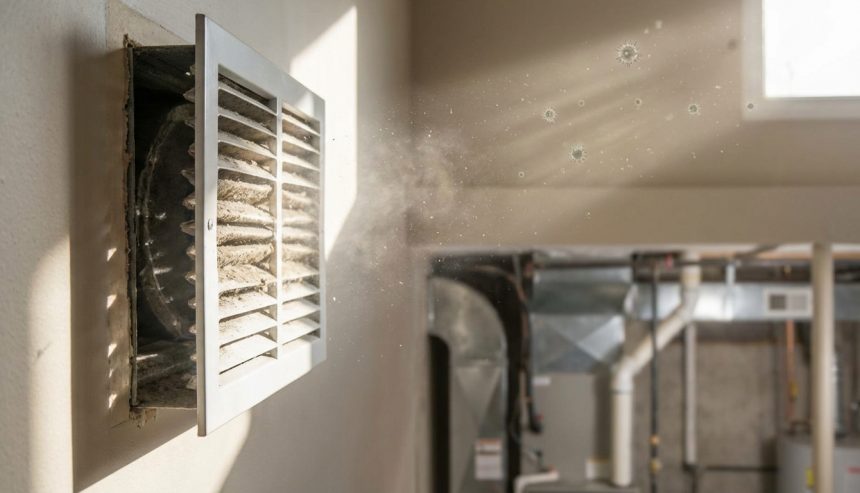
Mold is not always visible, and that’s what makes it difficult to control. It doesn’t stay confined to one surface or area; instead, it spreads quietly through the air, often reaching places you wouldn’t expect. What may begin as a small patch can quickly affect multiple parts of a home without obvious signs.
Understanding how airborne mold spores move is essential for recognizing how mold spreads indoors. In many homes, airflow plays a major role in this process, especially when heating and cooling systems are involved. In this blog, we’ll explore how mold travels through the air, how HVAC systems contribute to the spread, and what steps can help reduce the risk.
Understanding How Mold Moves Through Indoor Environments
Mold growth is not limited to the area where it starts. Once spores are released, they can travel through indoor air and settle in new locations. Airflow patterns, ventilation, and daily activity all influence how far they spread. According to EPA data, about 64 million tons of pollution were emitted into the atmosphere in the United States in 2024, highlighting how easily airborne particles can move and enter indoor environments.
This is where mold circulation in HVAC systems becomes important. As air moves through ducts and vents, it can carry spores from one room to another, allowing mold to affect larger areas within a home.
What Are Airborne Mold Spores and How They Spread
Mold spores are tiny particles released by mold colonies. These particles are light enough to float in the air, making them easy to spread throughout indoor spaces. Once they become airborne, they can travel freely until they land on a suitable surface.
When conditions such as moisture and warmth are present, these airborne mold spores can begin to grow in new locations. This process allows mold to expand quickly, even if the original source is small or hidden.
How Mold Spores Travel Through Air
Air movement plays a major role in how mold spreads indoors. Even minor airflow can carry spores across rooms and surfaces.
- Movement through natural air currents
- Disturbance from walking or cleaning activities
- Airflow from open windows and doors
- High humidity supporting airborne movement
- Attachment to dust and particles in the air
These factors make it easy for airborne mold spores to travel unnoticed. Controlling airflow and moisture helps limit how far they can spread within a home.
The Role of HVAC Systems in Mold Circulation
HVAC systems are designed to move air throughout a home, but they can also contribute to mold spread if contamination is present. When mold enters the system, it can travel through ducts and vents, reaching multiple rooms.
This is why mold circulation in HVAC systems is a common concern. Once spores are inside the system, they can continue to circulate each time the system is in use. Over time, this can increase the presence of airborne mold spores throughout the home.
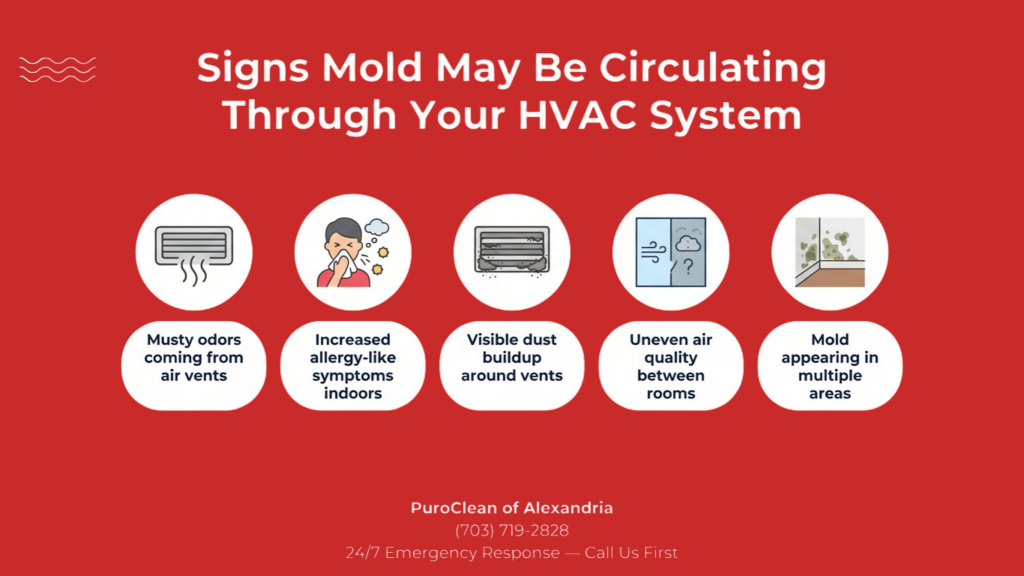
Signs Mold May Be Circulating Through Your HVAC System
There are certain signs that may indicate mold is spreading through your ventilation system. Recognizing these early can help prevent wider contamination.
- Musty odors coming from air vents
- Increased allergy-like symptoms indoors
- Visible dust buildup around vents
- Uneven air quality between rooms
- Mold appearing in multiple areas
These signs often point to mold circulation in HVAC systems. Identifying them early helps reduce the spread of airborne mold spores.
Risks of Mold Spread Through Air and Ventilation
When mold spreads through air and ventilation systems, it can affect more than just one area. The impact becomes more widespread and harder to control.
- Contamination across multiple rooms
- Reduced indoor air quality
- Increased difficulty in locating the source
- Growth in hidden areas like ducts
- Long-term impact on indoor environments
These risks highlight how quickly airborne mold spores can affect a home. Managing mold circulation in HVAC systems is essential to limiting this spread. According to the EPA, fine indoor particles can remain suspended in the air and travel across enclosed spaces, increasing the reach of contamination.
Preventive Measures to Reduce Mold Circulation
Taking preventive steps can help reduce the chances of mold spreading through air and HVAC systems. Consistent maintenance plays a key role in this process.
- Schedule regular HVAC inspections
- Replace air filters frequently
- Control indoor humidity levels
- Inspect ducts for moisture or buildup
- Clean vents and airflow systems
These measures help reduce mold circulation in HVAC systems and limit the movement of airborne mold spores. Prevention is often the most effective way to manage indoor mold risks.
When to Seek Professional Help
In some cases, mold issues go beyond simple maintenance and require professional attention. Persistent mold problems or recurring growth in multiple areas may indicate a larger issue.
If airborne mold spores continue to spread despite preventive efforts, it may be a sign of deeper contamination. In such situations, addressing mold circulation in HVAC systems with professional support can help identify and resolve the root cause. You can also refer to our blog on health risks linked to long-term mold exposure to better understand how ongoing exposure can impact indoor environments.
Conclusion
Mold spread is not always obvious, but its impact can extend far beyond the original source. Through airflow and ventilation systems, spores can travel quickly and affect multiple areas within a home. Understanding how airborne mold spores move and how HVAC systems contribute to this process is key to managing indoor environments effectively.
By taking preventive measures and staying aware of early signs, homeowners can reduce the risk of widespread contamination. Controlling mold circulation in HVAC systems and addressing issues early helps maintain a safer and more stable living space.
FAQs
Q1. Can mold spores travel through air vents?
A: Yes, airborne mold spores can move through vents, especially when there is mold circulation in HVAC systems.
Q2. How fast do airborne mold spores spread?
A: They can spread quickly through air movement, especially in enclosed spaces with active airflow.
Q3. Can HVAC systems make mold problems worse?
A: Yes, if contaminated, they can increase mold circulation in HVAC systems and spread spores throughout the home.



 PuroClean of Alexandria