 PuroClean of Alexandria
Owning or managing rental property in Alexandria comes with responsibilities that go far beyond collecting rent or handling routine maintenance. When a serious incident occurs, such as an unattended death, violent event, or severe contamination, landlords are often faced with difficult decisions under emotional and legal pressure. In these moments, misunderstanding obligations can lead to long-term consequences.
Knowing how biohazard situations are handled under local regulations helps landlords respond correctly, protect occupants, and avoid unnecessary liability. Biohazard incidents are not common, but when they occur, they demand careful attention. The laws surrounding cleanup exist to safeguard public health and ensure rental properties remain safe for current and future tenants.
Understanding Biohazard Cleanup in Rental Properties
Biohazard cleanup in rental housing involves more than removing visible mess. It addresses contamination that can pose serious health risks if not handled correctly. For landlords, understanding the scope of these situations is essential to meeting both legal and ethical obligations.
What Counts as a Biohazard Under the Law
A biohazard generally refers to biological materials that can cause illness or harm. In rental properties, this may include blood, bodily fluids, medical waste, or contamination resulting from decomposition or unsafe living conditions. These materials are regulated because they may carry pathogens that remain dangerous even after surfaces appear clean. Federal guidance from the U.S. Department of Homeland Security explains that certain biological agents can continue to pose risks through environmental exposure, which is why controlled handling and removal are required.
Under biohazard cleanup laws Alexandria, these substances are treated differently from everyday waste. Improper handling can expose tenants, maintenance staff, or neighbors to health risks that are not immediately obvious.
Why Biohazard Cleanup Is Not the Same as Regular Cleaning
Unlike routine cleaning, biohazard remediation requires specialized training, protective equipment, and disposal methods. Household cleaners and basic protective gear are not designed to neutralize harmful pathogens.
This distinction is critical when evaluating landlord cleanup responsibilities. Attempting to treat a biohazard incident as a standard maintenance issue can violate safety standards and increase legal exposure for property owners.
Biohazard Cleanup Laws Alexandria Landlords Must Be Aware Of
Local and state regulations play a significant role in how biohazard incidents must be addressed. Alexandria landlords operate under Virginia health and safety standards, as well as municipal expectations tied to rental property habitability.
State and Local Regulations That Apply to Rental Properties
Virginia law requires rental properties to be maintained in a condition that does not threaten occupant health. The Virginia Residential Landlord and Tenant Act establishes general habitability standards that continue to apply after serious incidents. When biological contamination is present, failing to remediate it properly may be considered a violation of these requirements.
These legal expectations form the backbone of biohazard cleanup laws Alexandria landlords must follow to ensure properties remain safe for occupancy.
Who Is Legally Responsible for Cleanup
Responsibility for cleanup depends on the nature of the incident. If contamination affects the structure or shared spaces, responsibility often falls on the property owner. Even when a tenant is involved in the incident, landlords may still be required to ensure the unit is safe before re-occupancy.
Understanding landlord cleanup responsibilities means recognizing that liability does not always transfer with fault. Habitability obligations often remain with the landlord regardless of circumstances.
Penalties for Non-Compliance
Ignoring or delaying proper cleanup can result in fines, tenant claims, or involvement from local health authorities. In severe cases, units may be deemed uninhabitable until remediation is completed.
Violations tied to biohazard cleanup laws Alexandria can also damage a landlord’s reputation and lead to prolonged vacancy, compounding financial losses.
Landlord Cleanup Responsibilities in Biohazard Situations
Once a biohazard is identified, landlords are expected to act promptly and responsibly. Clear procedures help reduce confusion during already stressful situations. As outlined in our blog on how biohazard cleanup is handled in Alexandria, understanding the local response process helps landlords take appropriate action and avoid missteps during traumatic incidents.
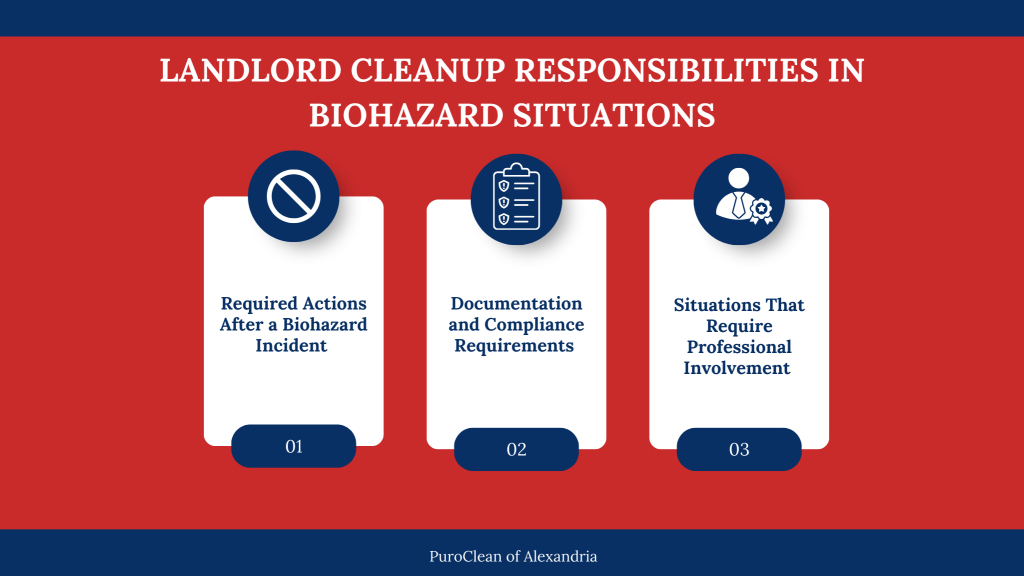
Required Actions After a Biohazard Incident
The first responsibility is to restrict access to affected areas. This helps prevent accidental exposure. Landlords must then arrange for proper assessment and cleanup to restore the unit to a safe condition.
These steps are a core part of landlord cleanup responsibilities, ensuring that no tenant or worker is placed at unnecessary risk during recovery.
Documentation and Compliance Requirements
Maintaining records of cleanup actions, inspections, and communications is essential. Documentation demonstrates compliance if questions arise later from tenants or regulatory agencies.
Accurate records also help landlords show adherence to biohazard cleanup laws Alexandria, especially when disputes occur over habitability or responsibility.
Situations That Require Professional Involvement
Certain scenarios, such as extensive contamination or incidents involving bodily fluids, require specialized handling. These situations are not appropriate for in-house maintenance staff.
Engaging qualified services ensures landlord cleanup responsibilities are met without exposing untrained individuals to harm or violating safety regulations.
Common Misunderstandings That Put Landlords at Risk
Even well-intentioned property owners can make mistakes when dealing with biohazard incidents. Many issues stem from assumptions rather than facts.
Assuming Tenants Are Always Responsible
While tenants may be involved in some incidents, landlords cannot automatically shift cleanup duties. If contamination affects the property’s condition or future occupancy, responsibility may still apply to the owner.
This misunderstanding frequently leads to violations of biohazard cleanup laws Alexandria, particularly when cleanup is delayed during disputes.
Delaying Cleanup to Reduce Costs
Some landlords hesitate due to cost concerns, hoping issues will resolve with time or minimal intervention. Unfortunately, biological contaminants do not degrade safely on their own.
Delays often increase remediation complexity and expand landlord cleanup responsibilities, resulting in higher expenses and greater legal risk.
Conclusion
Biohazard incidents in rental properties are challenging, both emotionally and legally. For Alexandria landlords, understanding cleanup laws is essential to responding responsibly and avoiding costly mistakes. These situations demand more than quick fixes or assumptions about responsibility.
Proper remediation also plays a critical role in preventing the spread of infection and ensuring a healthy environment; the Centers for Disease Control and Prevention highlights how environmental control and thorough decontamination are key parts of preventing disease transmission in affected spaces. By recognizing the scope of biohazard cleanup laws Alexandria enforces and fulfilling landlord cleanup responsibilities with care, property owners can protect tenant safety, maintain compliance, and navigate difficult situations with greater confidence.
FAQs
Q1. Are landlords legally required to handle biohazard cleanup?
A: In many cases, yes. If contamination affects habitability or shared areas, landlords are typically responsible for ensuring proper cleanup.
Q2. Can a landlord perform biohazard cleanup themselves?
A: Most biohazard situations require specialized handling, and attempting cleanup without proper training may violate safety regulations.
Q3. What happens if biohazard laws are ignored in Alexandria?
A: Ignoring requirements can lead to fines, legal claims, health department involvement, and units being deemed unfit for occupancy.

 PuroClean of Alexandria