 PuroClean of Alexandria
Hidden mold often forms out of sight, settling behind walls or ceilings where light and airflow are limited. Because these spaces stay damp longer than open areas, mold can grow quietly for weeks or months before leaving any clear marks on the surface. During that time, it may begin affecting the surrounding structure or influencing how your home feels day to day. In this bloProfessionals inspecting a wall for early signs of moldcan help you spot hidden mold before it spreads or causes costly damage.
Why Early Clues of Hidden Mold Matter
Noticing early changes is important because hidden mold rarely reveals itself immediately; its first signs are usually small shifts in odor, texture, or indoor comfort. Even though comprehensive national data is unavailable, a population-weighted analysis of multiple studies found that 47% of U.S. homes show some degree of dampness or mold, highlighting how common underlying moisture issues can be.
When moisture becomes trapped behind walls or ceilings, it often creates conditions where mold can grow undisturbed. Catching these clues early supports more effective hidden mold detection and helps reduce long-term structural or indoor air concerns.
What Hidden Mold Looks Like Before You See It
Even without visible patches, mold may still be growing behind building materials. The clues often appear gradually and seem harmless at first, which is why many homeowners overlook them. Paying attention to small changes can help with hidden mold detection before the problem worsens.
Subtle Surface Changes on Walls or Ceilings
Small distortions such as bubbling paint, soft spots, or faint stains may appear when moisture builds behind a surface. These signs suggest material changes linked to mold activity, especially in older homes or places with past moisture issues. Though mild at first, they can indicate that black mold behind drywall may be forming where light cannot reach.
Unusual Odors That Don’t Go Away
A lingering earthy or musty smell can be a strong sign of moisture trapped in enclosed spaces. Because odors travel before any visible change shows up, they often become the first hint of growth inside walls. These smells can emerge even in clean rooms, offering an important cue for hidden mold detection in areas you might not normally inspect.
Unexpected Moisture Patterns Indoors
Moisture that appears or dries slowly on walls or ceilings may signal an internal water issue. Condensation, small wet patches, or inconsistent dampness may show up after rain or temperature changes. Such patterns often indicate underlying conditions that allow black mold behind drywall to develop.
What Structural and Indoor Clues Reveal About Mold Growth
Structural changes and indoor discomfort can reveal early issues long before visible mold develops. When materials react to moisture or indoor conditions shift unexpectedly, it often reflects a deeper, unseen problem. Understanding these signs helps improve hidden mold detection inside home structures.
Paint, Plaster, or Wallpaper That Behaves Differently
When wall or ceiling finishes like paint, plaster, or wallpaper, begin peeling, cracking, or warping without an obvious reason, it often indicates moisture building behind them. These issues can point toward slow-developing mold that weakens surfaces over time. Noticing these changes early can help prevent black mold behind drywall from advancing further inside the structure.
Shifts in Indoor Comfort or Air Quality
A room may suddenly feel damp, stale, or musty despite regular cleaning. Mold releases tiny particles into the air, which can influence comfort levels even when the mold is concealed behind walls. The Environmental Protection Agency notes that mold can affect indoor environments when moisture is present, reinforcing why indoor changes shouldn’t be dismissed when improving hidden mold detection.
Sounds or Soft Spots That Shouldn’t Be There
When materials weaken from long-term moisture exposure, walls may develop soft or spongy sections. You might also notice hollow or unusual sounds when tapping the surface. These structural clues can signal deeper moisture issues that may support black mold behind drywall, even if the outer layer looks intact.
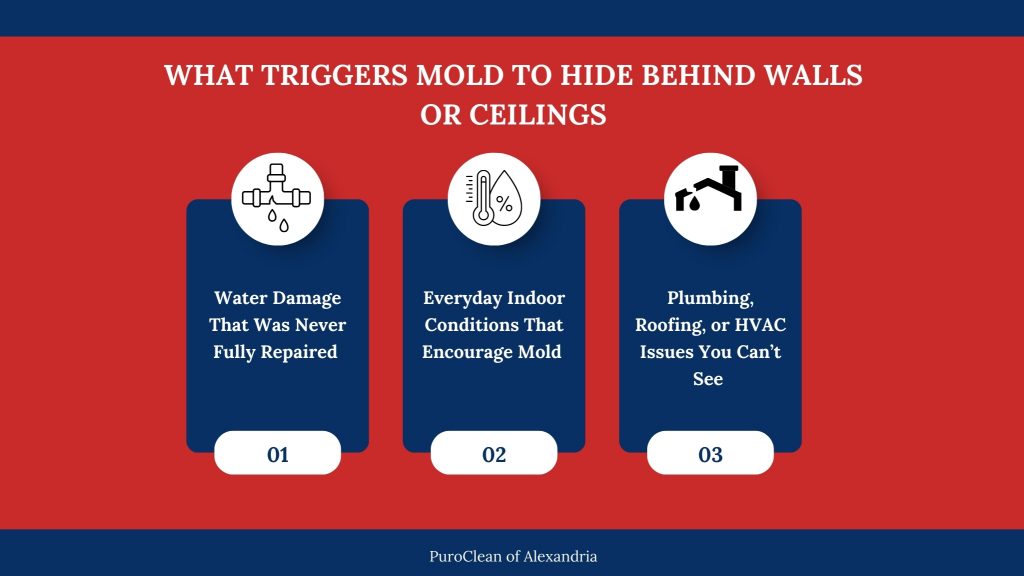
What Triggers Mold to Hide Behind Walls or Ceilings
Mold growth behind surfaces usually begins when moisture becomes trapped where airflow is limited. Understanding the conditions that cause mold to develop in hidden areas improves your ability to detect problems in their early stages. Recognizing these triggers allows homeowners to prevent future issues and support timely hidden mold detection.
Water Damage That Was Never Fully Repaired
Leaks from plumbing, flooding, or roof issues can leave moisture behind walls even after the visible damage is cleaned. When the inner layers remain damp, mold begins to grow in enclosed areas. This trapped moisture often becomes a major cause of black mold behind drywall and similar hidden growth patterns. If you’re unsure how quickly these conditions can turn into active growth, our blog on how fast mold spreads after water damage offers helpful context for understanding the timeline.
Everyday Indoor Conditions That Encourage Mold
Habits such as insufficient ventilation, indoor drying of clothes, or consistently high humidity levels can create environments where mold thrives. These everyday situations allow moisture to build along walls and ceilings, giving mold an opportunity to grow while staying concealed. Managing humidity can support better hidden mold detection over time.
Plumbing, Roofing, or HVAC Issues You Can’t See
Moisture can also come from sources inside the home’s systems. Leaking pipes, roof seepage, and condensation from HVAC units often create pockets of dampness that encourage hidden mold growth. Since these issues stay out of view, they often contribute to black mold behind drywall before homeowners realize a problem exists.
Conclusion
Hidden mold may stay out of sight, but it rarely develops without leaving small hints along the way. Subtle odors, changes in surface texture, unexplained moisture, and shifts in indoor comfort can all signal that something is happening behind your walls or ceilings.
Recognizing these signs early strengthens your approach to hidden mold detection and helps you address issues before they grow into larger structural or air-quality concerns. If you notice any of these early clues in your home, taking a closer look or seeking a professional assessment can be a helpful next step toward keeping your space safe and well-maintained.
FAQs
Q1. What should I do first if I suspect mold behind a wall?
A: Start by checking for moisture sources such as leaks, condensation, or recent water events. If early signs point toward hidden mold detection concerns, contacting a professional to assess moisture levels can provide clarity.
Q2. Why does mold grow behind ceilings or inside walls instead of on the surface?
A: Mold prefers dark, enclosed spaces where moisture remains trapped. These areas offer the ideal environment for black mold behind drywall or ceilings to grow out of sight.
Q3. What signs indicate the mold issue is getting worse?
A: Increasing musty odors, spreading stains, repeated dampness, or worsening indoor comfort suggest the mold is expanding. These developments may indicate a need for more thorough hidden mold detection steps.



 PuroClean of Alexandria