 PuroClean of Alexandria
Water damage rarely feels like a catastrophic emergency the very second it happens. A small pipe leak under the kitchen sink, a damp corner in the basement after a heavy Northern Virginia storm, or a ceiling stain that seems to dry on its own can appear harmless at first glance. For many homeowners in the Alexandria area, the assumption is that once the standing water is mopped up and the surface looks clear, the threat is over. Unfortunately, that assumption is exactly what allows mold to take a silent, destructive hold on your property.
In reality, mold growth is the most common long-term consequence of unresolved moisture. In Alexandria homes, where historical architecture and high humidity collide, mold can begin developing quietly behind drywall, under hardwood floors, and inside ceiling cavities long before you smell that tell-tale musty odor. Understanding how water leads to fungal growth, and why the mold after water damage Alexandria residents often encounter stays hidden, is the only way to protect your investment and your health.
Why Water Damage Creates the Right Conditions for Mold
Water damage introduces sustained moisture, which is the primary trigger for mold growth. If materials are not fully dried, mold can begin to develop. Drywall, wood, insulation, carpet padding, and subflooring absorb water and can retain it internally even after surfaces appear dry. This trapped moisture allows mold to take hold.
In Alexandria homes, humidity and older construction can make drying more difficult, increasing the risk of mold after water damage Alexandria homeowners often don’t anticipate.
How Mold Develops After Water Damage
Mold growth typically does not begin where homeowners can see it. Instead, it develops in areas that are rarely inspected, allowing it to spread unnoticed until damage becomes extensive.
Moisture Trapped in Walls, Floors, and Ceilings
Water intrusion often extends beyond visible surfaces, seeping behind walls, under flooring, and into ceiling cavities. Even after standing water is removed, these materials can remain damp. This trapped moisture is a key reason mold after water damage Alexandria homes often remains hidden until staining, odors, or material damage develops.
Warm, Humid Indoor Conditions
Alexandria’s climate contributes to elevated indoor humidity, particularly during warmer months. According to the U.S. Environmental Protection Agency (EPA), indoor humidity levels above 60% significantly increase the likelihood of mold growth on building materials. When lingering moisture combines with warm, humid air, mold can spread more quickly, making moisture control essential for mold prevention after flooding.
Time Delays in Drying and Repairs
The Centers for Disease Control and Prevention (CDC) notes that mold can begin growing within 24 to 48 hours after water exposure if materials remain wet. Delays in drying, cleanup, or repairs greatly increase the risk of mold after water damage Alexandria homeowners later struggle to control. Even short delays can allow mold growth to start, particularly in concealed areas.
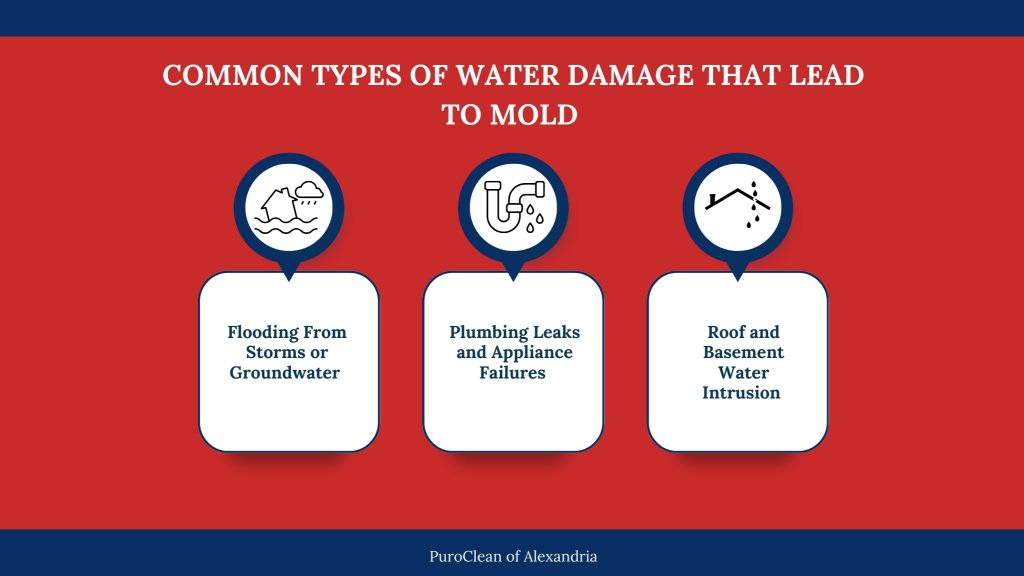
Common Types of Water Damage That Lead to Mold
Not all water damage is dramatic or immediately visible. Some of the most damaging situations develop slowly and quietly.
Flooding From Storms or Groundwater
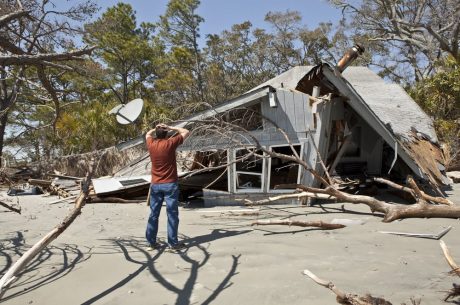
Heavy rainfall and localized flooding can introduce significant amounts of water into homes, especially in lower levels. Flooring, drywall, and structural components can become saturated quickly.
According to data from the Insurance Information Institute, U.S. households spend an average of 1.99% of their income on homeowners’ insurance, reflecting how common and financially significant property-related risks like flooding can be. Flood-related moisture often penetrates deeply, making mold prevention after flooding especially challenging without thorough drying and professional moisture control.
Plumbing Leaks and Appliance Failures
Slow leaks from supply lines, drains, washing machines, dishwashers, or water heaters can drip unnoticed for weeks. These situations frequently result in mold after water damage Alexandria homeowners only discover once cabinets are removed or walls are opened. Because the moisture source is hidden, mold growth often becomes well established before detection.
Roof and Basement Water Intrusion
Roof leaks and basement seepage introduce recurring moisture rather than a single water event. Even minor intrusion, if repeated, can create conditions where mold prevention after flooding strategies become essential to protect indoor spaces. Basements, in particular, are vulnerable due to limited ventilation and higher humidity levels.
Signs Mold May Be Growing After Water Damage
Mold often develops out of sight after water damage, making early detection difficult. Paying attention to physical, sensory, and health-related changes can help identify a problem before it becomes more severe.
Common signs to watch for include:
- Visible mold or surface changes: Discoloration, staining, spotting, or fuzzy growth on walls, ceilings, or flooring. Mold after water damage Alexandria homes experience often starts behind surfaces, so visible growth may appear later.
- Musty or earthy odors: Persistent smells that linger after water exposure can indicate hidden mold, even when no visible signs are present.
- Changes in indoor air quality: Rooms may feel damp, stale, or uncomfortable compared to other areas of the home.
- Health-related symptoms: Increased congestion, coughing, headaches, throat irritation, or discomfort when spending time in affected areas.
Identifying these signs early allows homeowners to address moisture issues before mold spreads further. Prompt evaluation after water damage can help limit both structural damage and health-related concerns.
How Mold Prevention After Flooding Works
Preventing mold requires more than surface drying. Effective mold prevention after flooding focuses on removing moisture from every affected material and preventing it from returning. For homeowners seeking practical guidance on restoring affected areas safely, our blog on how to fix ceiling water damage in Alexandria homes safely outlines steps that support thorough drying and long-term moisture control.
Immediate Drying and Moisture Control
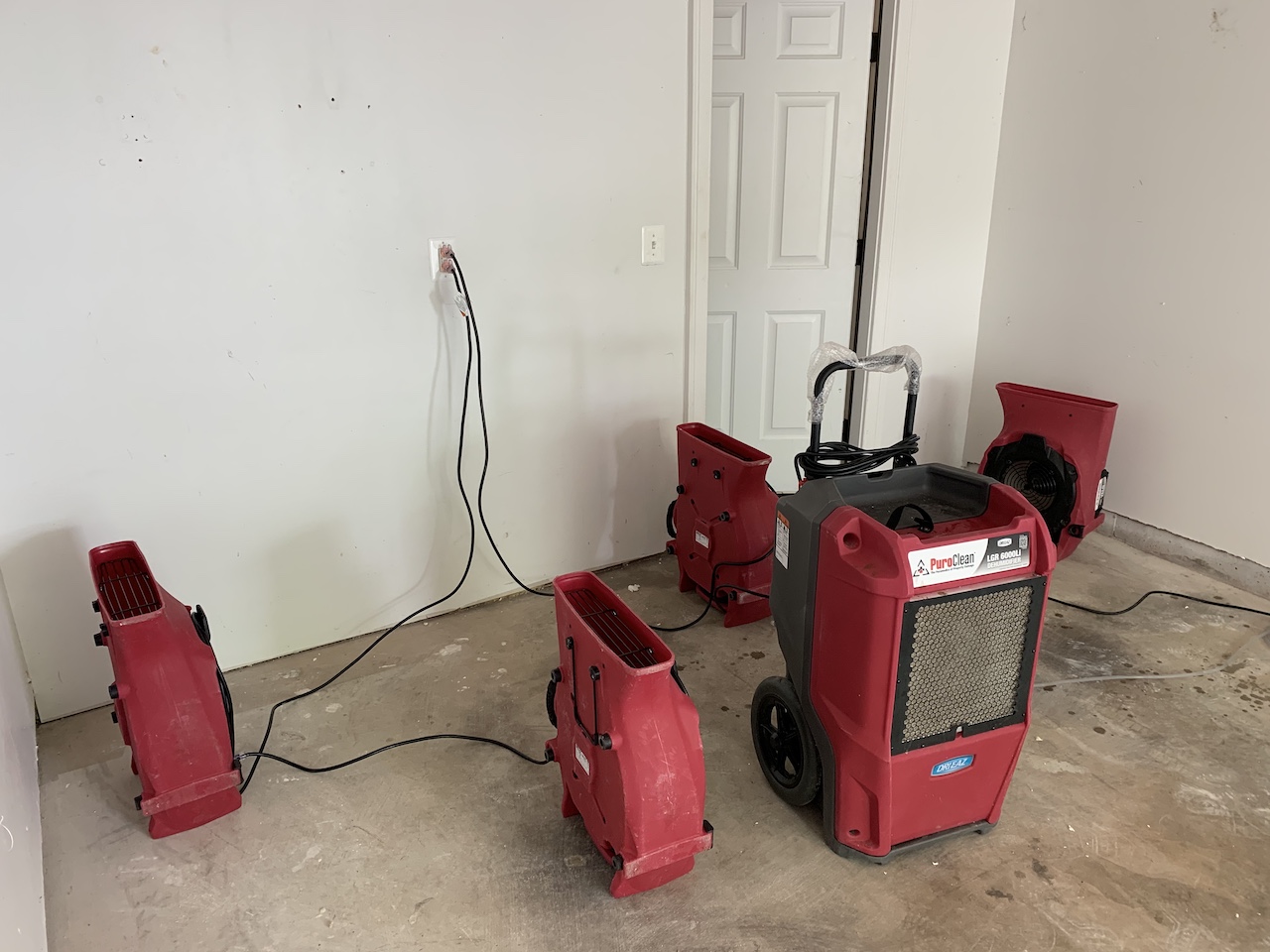
Prompt water extraction, air movement, and dehumidification are essential. Simply drying visible water is not enough. Effective mold prevention after flooding involves drying structural components such as wall cavities, subfloors, and insulation.
Cleaning, Removal, and Material Decisions
Porous materials like carpet padding, insulation, and some drywall may need to be removed if they become saturated. Retaining damp materials often leads to mold after water damage Alexandria homes that later require professional remediation. Making informed material decisions early can reduce long-term costs and prevent recurring issues.
Long-Term Moisture Management
Ventilation improvements, humidity control, and regular inspections help prevent future moisture problems. Consistent mold prevention after flooding efforts reduces risk, especially in areas that have experienced water damage before.
When Professional Help Becomes Necessary
The Environmental Protection Agency (EPA) notes that homeowners may be able to clean mold affecting areas smaller than 10 square feet, but only when the mold is on a visible, non-porous surface and the moisture source has been fully resolved.
Professional remediation is strongly recommended when:
- The water damage involved sewage or gray water
- Moisture is trapped inside walls, ceilings, or under floorboards
- The affected area exceeds 10 square feet
- The home includes high-risk individuals, such as infants, elderly occupants, or those with respiratory conditions
Experts use infrared cameras to find the water you can’t see. This ensures that the mold prevention after flooding efforts are actually working, rather than just drying the surface while the mold thrives underneath.
Conclusion
In Alexandria, water damage and mold are two chapters of the same book. You cannot have one without the other unless you intervene with speed and precision. Whether you are dealing with a burst pipe in a condo or basement seepage, the clock starts the moment the water hits the floor.
By understanding the unique risks of mold after water damage Alexandria presents and committing to aggressive, science-based mold prevention after flooding, you can keep your home safe, dry, and valuable. Don’t wait for the smell to tell you there’s a problem; act the moment the water appears.
FAQs
Q1. How quickly can mold grow after water damage in a home?
A: Mold can begin growing within 24 to 48 hours if moisture remains, though the timeline varies based on humidity, temperature, and how quickly materials are dried.
Q2. Can mold develop even if water damage seems minor?
A: Yes. Slow leaks or hidden moisture can still create conditions for mold growth over time.
Q3. Does insurance typically cover mold after water damage?
A: Coverage varies. Mold may be covered if it results from a sudden, covered water event, but policy terms differ.

 PuroClean of Alexandria