 PuroClean of Alexandria
After a traumatic incident, families are often faced with a reality they never expected to navigate. Alongside grief and shock, practical concerns can surface quickly, especially when the event occurred inside a home or private space. While the emotional impact is immediate, the environment itself may quietly carry risks that aren’t obvious at first glance. Knowing what happens next can bring a small measure of clarity during a time when many decisions feel overwhelming.
Beyond what can be seen, biological materials may remain in hidden areas, creating safety concerns that everyday cleaning cannot resolve. Professional traumatic incident cleanup Alexandria VA services exist to manage these situations with care, structure, and discretion, allowing families to step away from responsibilities that are both unsafe and emotionally difficult. In this blog, we’ll explore what biohazard cleanup involves, how professionals approach the process, and what families can expect as safety is restored to the space.
What Makes Traumatic Incident Scenes a Biohazard
Traumatic incident scenes are considered biohazards because biological materials may be present in ways that pose health risks if handled improperly. Blood and bodily fluids can carry pathogens that remain viable on surfaces for extended periods, which is why sensitive trauma cleaning focuses on controlled handling rather than surface-level cleaning. According to the Centers for Disease Control and Prevention, certain bloodborne pathogens can survive outside the body for several days under the right conditions.
These materials can seep into flooring, furniture, walls, and other surfaces, even when damage appears limited. This is one reason traumatic incident cleanup Alexandria VA services are handled differently from standard residential cleaning. The concern is not visual appearance but exposure prevention and safety.
What Professionals Mean by Traumatic Incident Cleanup
Traumatic incident cleanup refers to a structured, safety-driven process focused on removing biological hazards and restoring a space to safe use. It does not involve investigation or documentation of the incident. Instead, it follows health regulations and professional standards designed to protect occupants and workers alike.
Professionals approach this work by:
- Identifying all affected and potentially exposed areas
- Using appropriate protective equipment and containment
- Applying approved cleaning and disinfection methods
This approach is often described as sensitive to trauma cleaning because it prioritizes discretion and care while addressing real environmental risks. When handled properly, traumatic incident cleanup Alexandria VA services reduce health concerns without adding emotional strain. Each step is performed with the understanding that families may still be processing the event, which is why communication and clarity matter just as much as technical precision.
What Happens During the Assessment
The assessment phase determines the scope of cleanup before any work begins. Professionals evaluate where contamination may have spread and which materials are affected. This process helps prevent overlooked areas that could pose future risks.
During traumatic incident cleanup Alexandria VA, this step is especially important because contamination is not always confined to one visible location and may involve nearby surfaces, shared airflow, or structural materials. A thorough assessment allows the cleanup plan to be tailored to the specific conditions of the space rather than relying on assumptions.
Initial Steps Before Cleanup Begins
The first step is securing the space. This may involve restricting access and setting up containment zones to prevent cross-contamination. A walkthrough helps identify visible and hidden exposure points, including flooring seams, ventilation paths, and adjacent rooms.
Safety Protocols That Must Be Followed
During traumatic incident cleanup Alexandria VA, procedures, professionals follow Occupational Safety and Health Administration guidelines for handling biological hazards. This includes wearing personal protective equipment and using controlled removal techniques. OSHA outlines strict standards for bloodborne pathogen exposure to protect both workers and occupants. These protocols exist to reduce risk, not to complicate the process. They ensure cleanup is thorough and compliant.
How Cleaning, Decontamination, and Disposal Are Managed
Cleaning and decontamination focus on eliminating biological material rather than concealing it. Surfaces are treated with disinfectants proven to neutralize pathogens. Cleaning methods are selected based on the type of surface and level of exposure.
In many cases, traumatic incident cleanup Alexandria VA involves careful removal of affected materials that cannot be safely disinfected. This step prevents ongoing exposure and supports long-term safety.
How Porous and Non-Porous Materials Are Handled
Non-porous materials such as metal, glass, or sealed tile can usually be cleaned and disinfected thoroughly. Porous materials, like carpets, upholstered furniture, or drywall, can absorb biological material and may need to be removed entirely. All contaminated items are packaged and disposed of according to state and federal regulations.
This process is part of sensitive trauma cleaning because it balances technical requirements with respect for the space and those connected to it.
What Role Odor Control and Air Treatment Play
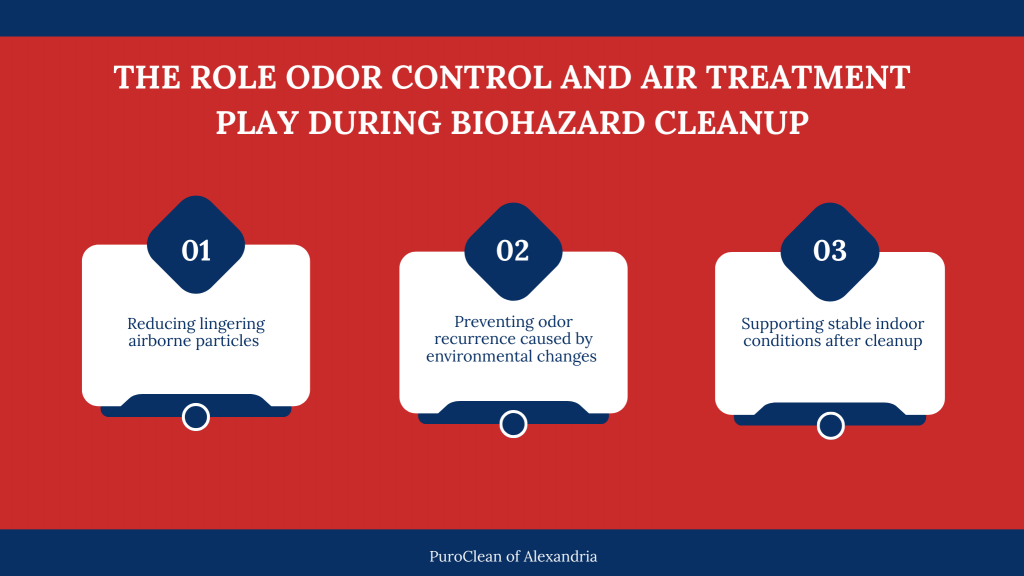
After physical cleanup, airborne particles may still remain. Odor control and air treatment are used to address residual contamination that isn’t visible but can affect comfort and indoor conditions.
The role of air and odor treatment includes:
- Reducing lingering airborne particles
- Preventing odor recurrence caused by environmental changes
- Supporting stable indoor conditions after cleanup
These steps help ensure that traumatic incident cleanup Alexandria VA efforts are complete rather than temporary. Odor control is not cosmetic; it supports a safer, more usable environment.
What Families Can Expect After Cleanup Is Complete
Once cleanup is finished, professionals reassess the area to confirm that biohazard risks have been addressed. Families are not expected to inspect or validate technical details themselves. Instead, they receive confirmation that the space has been treated according to safety standards and is ready for normal use.
While sensitive trauma cleaning does not address emotional loss, it removes physical hazards so families can move forward without added concern. For those responsible for workplaces or shared properties, it can also be helpful to think about preparedness beyond the immediate situation. Individuals who want a clearer understanding of how biohazard situations are handled proactively may find our blog on how Alexandria businesses can prepare for biohazard emergencies useful for future planning.
Conclusion
Professional cleanup after traumatic incidents is a structured process rooted in safety, accountability, and care. Each stage; assessment, controlled cleaning, material handling, and air treatment, exists to remove risks that may not be visible but can affect those who return to the space. These procedures are not rushed or improvised; they are carried out deliberately to ensure the environment is safe and stable once work is complete.
Understanding what professional cleanup involves can ease some of the uncertainty families face when making decisions in the aftermath of loss. While no service can address the emotional weight of the situation, proper cleanup removes physical hazards and restores a sense of order to the environment. Approaches grounded in sensitive trauma cleaning help ensure that this work is done respectfully, allowing families the space and time they need to focus on healing without additional concerns about safety or exposure.
FAQs
Q1. Is it safe to return after professional cleanup?
A: Yes. Once cleanup is completed, biohazard risks are addressed according to health and safety standards.
Q2. How long does traumatic incident cleanup usually take?
A: Most cleanups take one to three days, depending on the extent of affected areas.
Q3. Who typically arranges cleanup services?
A: Cleanup is usually arranged by property owners, families, or estate representatives after authorities release the scene.


 PuroClean of Alexandria