


Table of Contents
Black mold is a phrase that makes homeowners uneasy — and with good reason. But not every dark patch on a wall is the same, and different mold colors can mean different risks and next steps. This guide explains the key differences between black mold and green mold, the health and property risks they pose, how to identify them, and what to do if you find mold in your home.
Quick snapshot (What you’ll learn)
- What black mold is and why the term matters
- How black mold differs from green mold (appearance, growth conditions, health risks)
- Common places in homes where each appears (basements, attics, crawl spaces)
- When to test, when to act immediately, and when to call professionals
- Preventive steps and remediation options
What is “Black Mold”? (Short definition)
“Black mold” commonly refers to several dark-colored mold species, the most notorious being Stachybotrys chartarum. It prefers very wet, cellulose-rich materials (paper, drywall, wood) and often appears as a dark greenish-black, slimy patch. Because of its reputation, the phrase is frequently used by homeowners searching for help — which is why we’re using it as the focus keyword here.
What is Green Mold?
Green mold is a general description for several mold species that produce green patches or spores. Common genera include Cladosporium, Penicillium, and Aspergillus (some species of which can appear green). Green mold often grows in damp but not overly saturated areas and may present as powdery, fuzzy, or velvety patches.
Side-by-side: Key Differences
Appearance
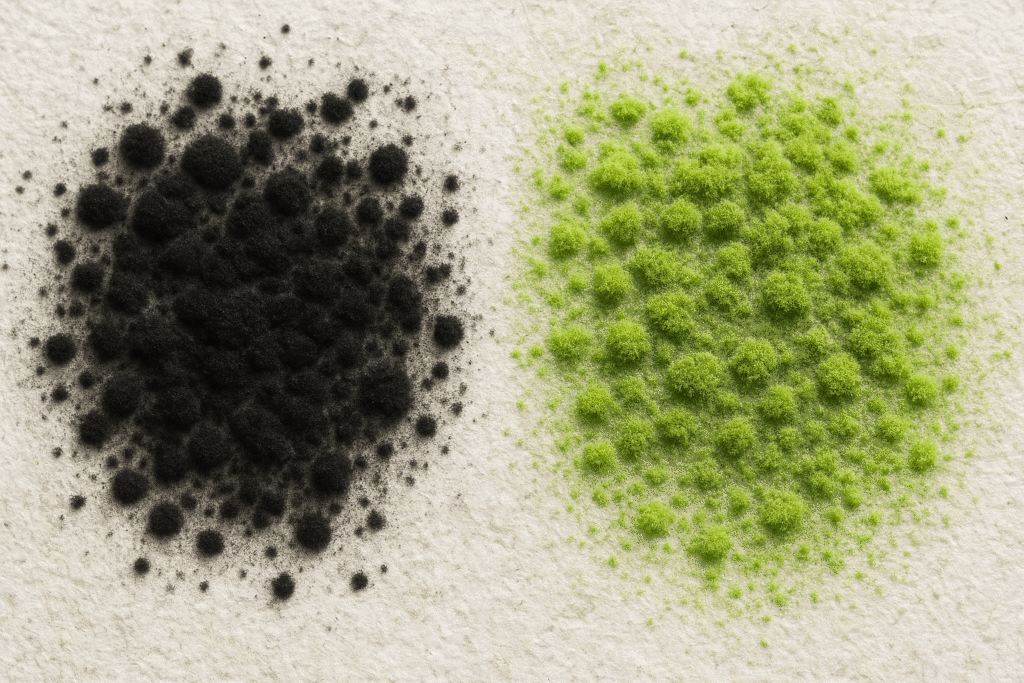
- Black Mold: Dark green to black, often slimy or wet-looking, and usually concentrated in patches.
- Green Mold: Ranges from pale green to deep green; may look powdery or fuzzy and can form spreading colonies.
Growth Conditions
- Black Mold: Needs consistent moisture — e.g., after prolonged leaks, flooding, or areas with poor drying (sump pump failure, chronic basement moisture).
- Green Mold: Tolerates lower moisture levels and often shows up in areas with intermittent dampness (bathrooms, window sills, HVAC drip pans).
Health Risks
- Black Mold: Sometimes associated with more severe reactions for sensitive people; people with asthma, allergies, or weakened immune systems can experience coughing, wheezing, skin irritation, or more severe respiratory symptoms.
- Green Mold: Can still cause allergic reactions and respiratory symptoms — especially in sensitive individuals — but is generally considered less likely to produce the severe mycotoxin concerns commonly attributed (rightly or wrongly) to black mold.
Important: Color alone cannot confirm species or toxin production. Lab testing is the only way to identify mold species and whether mycotoxins are present.
Structural Risk
- Both types can weaken building materials over time. Black mold’s tendency to colonize wet, structural materials can lead to more significant damage if not remediated quickly.
Common Home Locations (Ann Arbor patterns)
- Basements & Crawl Spaces: Black mold often after flooding, sump pump failure, or chronic high humidity. (See our posts: How to Prevent Mold in Basements, Crawl Spaces, and Attics and The Hidden Risks of a Basement Flooded With Sump Pump Overflow.)
- Attics & Rooflines: Green or black mold near roof leaks, poor ventilation, or insulation contact with roofing. (Related: Winter Mold Growth: Why Mold Appears in Michigan Homes During Cold Months.)
- Bathrooms & Kitchens: Green or mixed-color molds where steam and spills aren’t dried properly.
- Around HVAC Systems: Dust + moisture = mold growth (both green and dark varieties).
Health: What symptoms to watch for
Even if you’re not sure which mold you have, exposure can trigger:
- Sneezing, runny nose, nasal congestion
- Throat irritation, coughing, wheeze
- Eye irritation or itchy skin
- Worsening asthma or allergy symptoms
If several people in the household begin experiencing symptoms that improve when they leave the house, treat it as a mold issue and investigate.
When to test vs. when to act immediately
- Act immediately (call pros) if you see large, spreading black or dark mold after flooding, persistent water intrusion, or if mold covers an area larger than a few square feet. Fast action protects health and prevents structural damage.
- Consider testing if you need to know the species for legal, insurance, or medical reasons — or if you have high-risk occupants (infants, elderly, immunocompromised). Remember: visual inspection + moisture mapping + professional remediation often matters more than a spore test alone.
DIY steps you can take safely
- Stop the source: Fix leaks, malfunctioning sump pumps, or pipe breaks. Dry everything thoroughly.
- Protect yourself: Wear gloves, N95 respirator, and eye protection when disturbing mold.
- Small spots (<10 sq ft): Non-porous surfaces can often be cleaned with detergent and water; porous materials (ceiling tiles, drywall) usually need removal.
- Dry and monitor: Use dehumidifiers and improve ventilation. For basements aim for relative humidity below 60%.
- Document for insurance: Photos, dates, and repair receipts help with claims if the damage is significant.
For step-by-step guidance on flooding scenarios, see our post: Flooded Basement Cleanup: Expert Help for Ann Arbor Homeowners
When to call PuroClean of Ann Arbor (professional remediation)
- Mold is widespread or returns after cleaning.
- Mold appears after structural water intrusion (flood, sump pump failure, sewage).
- You have health concerns related to mold exposure.
Our technicians provide thorough inspection, moisture mapping, controlled containment, safe removal, cleaning, HEPA vacuuming, and drying. We also coordinate with your insurance and provide documentation.
Recommended reading
For accurate, research-backed guidance we recommend:
- Centers for Disease Control and Prevention (CDC) — Mold basics and health effects.
- Environmental Protection Agency (EPA) — Mold cleanup and moisture control.
https://www.puroclean.com/ann-arbor-mi/blog/mold-after-heavy-rain-or-flooding-in-ann-arbor-what-to-do-next/
https://www.puroclean.com/ann-arbor-mi/blog/mold-remediation-companies-mi/
https://www.puroclean.com/ann-arbor-mi/blog/winter-mold-growth/
(These sites offer reliable, non-commercial guidance for homeowners and are excellent background resources.)
FAQ
Q: Is all black-colored mold the dangerous “black mold” (Stachybotrys)?
A: No. Color alone doesn’t confirm species. Many molds are dark-colored. Identification requires testing, but regardless of species, any significant mold growth should be assessed and remediated.
Q: Can I remove black mold myself?
A: Small patches on non-porous surfaces can be cleaned safely with proper PPE. For large infestations, or when mold follows flooding, professional remediation is recommended to fully remove contamination and dry the area.
Q: How quickly does black mold grow after water damage?
A: Mold can begin to grow within 24–48 hours in ideal conditions. That’s why prompt drying and mitigation after water intrusion is critical.
Q: Will bleach kill black mold?
A: Bleach can remove surface mold on non-porous surfaces but doesn’t penetrate porous materials and may not prevent regrowth. Mechanical removal and drying are usually necessary for porous building materials.
Q: How do I prevent mold in my basement?
A: Control moisture — fix leaks, maintain sump pumps, ensure proper grading and drainage around the foundation, use a dehumidifier, and ventilate. For more detailed tips, see our Basement, Crawl Space, and Attic Mold Prevention guide.
If you suspect black mold in your home — especially after flooding, a sump pump failure, or ongoing moisture — don’t wait. PuroClean of Ann Arbor offers fast inspections, moisture mapping, and full remediation to protect your health and your home. Contact us for a professional assessment and documented remediation plan.