


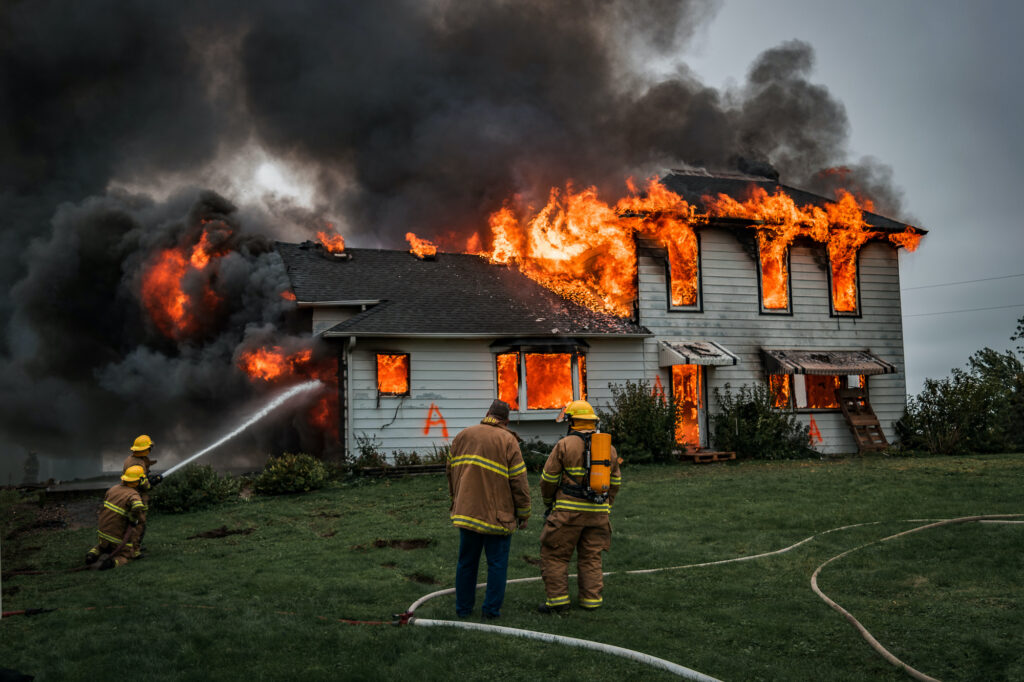
A grease fire is a fire in cooking oil or fat, usually in a pan on the stove. The first 30 seconds decide how it ends: slide a lid over the pan, turn off the heat, and leave the lid on until the pan has cooled. Never use water, and never try to carry the pan. If the flames spread beyond the pan or you have any doubt, get out and call 911 from outside.
Kitchen fire what to do is only half the story. Once the flames are out, a grease fire leaves a sticky film of smoke residue on walls, cabinets, and ceilings, and it can smell for weeks if it is not cleaned properly. Kitchen fire smoke damage is rarely limited to the pan or the stove. Grease fire cleanup is where most of the work, and most of the mistakes, happen. This guide covers the emergency steps, what never to do, oven and microwave fires, why grease smoke is so hard to clean, when surfaces can be cleaned versus replaced, odor removal, and when to call a professional. PuroClean of Ann Arbor provides fire damage restoration at (734) 926-5900.
What to Do in the First 30 Seconds
For a stovetop fire in a pan, the steps are short and the order matters. They follow the guidance of the American Red Cross, the Illinois State Fire Marshal, and PuroClean’s own grease fire guide.
- Cover the pan. Slide a lid slowly over the pan until it is completely covered, which cuts off the oxygen. A cookie sheet also works, according to the Red Cross. Leave the pan where it is.
- Turn off the burner. Do this as soon as you can reach it safely.
- Leave the lid on. Keep the pan covered until it is completely cooled.
- For a small fire in the pan, PuroClean’s guide says baking soda poured on it can smother the flames.
- If it is growing or you doubt yourself, leave. The Red Cross advice is that if you have any doubt about fighting a small fire, just get out. Close the door behind you to help contain the fire, and call 9-1-1 from outside the home.
PuroClean’s guide adds that a Class K extinguisher is the one to use on grease flames that are out of control. If you do not have one, or you are not trained, leaving the house is the safer choice.
When people search for kitchen fire what to do, this is the answer: smother, shut off the heat, and get out if it grows. A stovetop fire that stays in the pan can usually be handled in seconds, but only if the first move is correct.
Fight a stovetop fire only when it is small and you can do it without the fire getting between you and the exit. The Red Cross says fire officials advise using an extinguisher only on a fire smaller than a wastebasket.
What Never to Do
Kitchen fire what to do includes knowing which reflexes to resist. Most injuries from a grease fire come from a reflex, not the flames themselves. Avoid these:
- Never use water. The Red Cross warns that pouring water on burning grease can spread the flames, and PuroClean’s guide says it can make the grease splash.
- Never move the pan. PuroClean’s guide says not to move it or carry it, even while running, because you risk splashing grease on yourself and around the house.
- Never lift the lid to check. This is general safety knowledge (not from a linked source): lifting the lid lets in air, which a hot pan can use to reignite. Wait until the pan is completely cool.
- Never use flour or sugar. Also general knowledge (not from a linked source): both are combustible, and they do not smother oil the way a lid does.
- Never walk away from hot oil. The Illinois State Fire Marshal advises staying in the kitchen while anything is frying, boiling, grilling, or broiling, and switching off the burner if you must step away.
| Reflex | What happens | Do this instead |
|---|---|---|
| Grab water | Burning grease can splash and spread the fire | Slide a lid over the pan |
| Carry the pan outside | Hot grease can splash on you and the floor | Leave it in place and cover it |
| Peek under the lid | Air can reach the oil again | Wait until the pan is cool |
| Keep fighting a growing fire | The exit can be cut off | Get out, close the door, call 911 |
The best grease fire prevention is the simplest: stay with the pan. Stovetop fire prevention starts there too. A stovetop fire is generally easier to stop at the first flame than after the grease has ignited the cabinets above it.
Oven and Microwave Fires
Not every grease fire happens in a pan. Grease that has built up in an oven or on a drip pan can ignite too, and microwaves have their own rule.
Oven fire. The Red Cross, citing the National Fire Protection Association, says to turn the heat off and keep the oven door closed. The Illinois State Fire Marshal gives the same instruction: keep the door shut and turn off the heat. As general knowledge (not from a linked source), opening the door feeds the fire with air, so the fire is usually safer contained in the oven than in the room. If you are unsure, get out and call 911.
Microwave fire. The USFA says if a fire starts in a microwave, keep the door closed and unplug the unit.
Prevent the next one. PuroClean’s guide advises cleaning spills right away and, before turning the heat on again, removing excess grease from the drip pan and around the burner. Wait until the stove has cooled, then carefully wipe up the oil.
A kitchen fire what to do plan should cover all three: pan on the stove, oven, and microwave. Post it where everyone who cooks can see it, because the first reaction to a stovetop fire is rarely the right one unless someone has practiced it.
Why Grease Smoke Is Hard to Clean
When the flames are out, the cleanup starts, and grease smoke is among the hardest residues to remove. Several things make it difficult.
It bonds to surfaces. Restoration trade guidance says greasy, protein-based, or plastic-derived residues chemically bond to surfaces and require more than just strong soap. Degreasers contain solvents that dissolve waxy or polymerized residues that water alone cannot lift, according to the Restoration & Remediation Magazine article on degreasers.
It smears. The same article warns that aggressive scrubbing can drive soot into paint pores, and that residue can spread when wiped too hard. Professionals work top to bottom to avoid drip stains and recontamination. This is why a grease fire cleanup that starts with a wet sponge often makes the wall look worse.
It travels. PuroClean’s fire damage restoration FAQ describes soot as an acidic residue that spreads through air vents and settles on surfaces far from the fire’s source. So kitchen fire smoke damage rarely stays in the kitchen. Our guide on what soot is and whether it is dangerous covers the health side.
It is sticky. As general knowledge (not from a linked source), the film left by cooking-fat smoke feels tacky or oily rather than dry and powdery, which is why it picks up dust and looks like a dark stain on ceilings and cabinet tops.
The result is kitchen fire smoke damage that looks small on the wall and goes much deeper in the paint, wood, and ductwork. Do not paint over it: PuroClean’s FAQ warns that painting over soot traps the residue and odor, and the smell can return when heat or humidity changes.
Cleaning vs. Replacing Surfaces
Grease fire cleanup is a sorting job: some surfaces can be saved, and some cannot. The sources below describe what generally works. Kitchen fire smoke damage varies by surface, so always test first.
| Surface | Often cleanable | Consider replacing |
|---|---|---|
| Painted walls and ceilings | Dry soot removal first, then degreaser cleaning | Heavy staining that returns, or paint that lifts with the residue |
| Sealed cabinets and fixtures | Careful top-to-bottom degreasing | Unsealed or unfinished wood that absorbed grease (general knowledge) |
| Pots, pans, and flatware | Washing and polishing | Items with melted or heat-damaged parts |
| Washable wallpaper | Clean like painted walls without wetting through the paper | Paper that bubbles or peels |
| Drywall and insulation soaked by fire hose water | Ask a professional before trying to dry in place | Replace; consult a professional |
The key steps, according to the trade guidance in the degreaser article:
- Remove dry soot first. Vacuum with a HEPA unit or use chemical dry-cleaning sponges. The article says skipping this pushes dry soot deeper and reduces degreaser effectiveness.
- Pre-test on a hidden area, especially on soft plastics, unsealed wood, or delicate metals that may etch or discolor.
- Apply with a low-pressure sprayer or microfiber cloth to avoid aerosolizing soot, let it dwell for about 10 minutes or as directed, then rinse.
- Keep the surface wet while cleaning, because dried alkaline cleaners can lock in soot and leave streaks.
- Do not prime or paint until the surface pH is below 9, based on test strips. This is a professional step.
For household cleaning, a North Carolina fire recovery guide says soot and smoke on walls, furniture, and floors can be cleaned with mild soap or a TSP and bleach solution, then rinsed and dried. It warns that TSP is caustic, to wear rubber gloves, and to test bleach solutions on surfaces first, letting the test area dry at least 24 hours. The same guide says water-damaged drywall and insulation must be replaced and recommends consulting a professional about drywall and insulation soaked by fire hose water.
The honest rule for grease fire cleanup: clean what you can clean completely, and replace what holds residue. Residue left in porous materials is the source of lingering smoke odor.
Odor Removal
Grease fire cleanup is not finished until the smell is gone. A grease fire’s smell often outlasts its visible damage. Kitchen fire smoke damage includes the smell, not just the stains. Odor comes from residue, so removing odor means removing residue first.
PuroClean’s fire and smoke damage page describes smoke odor removal using deodorization and air purification, and says methods may include HEPA air scrubbers, thermal fogging, vapor modification, and ozone treatments when appropriate. It also lists HVAC duct cleaning, which keeps smoke particles from spreading again. The FAQ’s rule applies here too: remove soot and odor before priming or painting.
What you can do yourself:
- Clean the residue, not just the air. Candles and air fresheners cover odor but do not remove its source.
- Wash fabrics carefully. The North Carolina guide says to test garments before using any treatment and follow the manufacturer’s instructions. It lists cold-water washing with detergent plus a tablespoon of pure vanilla extract as an alternative, and it cautions that products not labeled for fabrics should never be used to remove smoke odors from clothing.
- Ventilate once it is safe. This is general advice (not from a linked source): open windows and run fans when the fire department says the home is safe to re-enter.
- Replace what cannot be cleaned, such as porous items that hold the smell.
If odor returns after a few warm or humid days, residue is still in the structure. That is the sign to bring in professionals after a grease fire rather than repeating the cleaning.
When to Call a Professional
Kitchen fire what to do after the flames are out is mostly a decision about when to bring in help. Call a restoration company when the damage from a grease fire goes beyond what a bucket and degreaser can handle. Signs include:
- Smoke residue on more than one room, or in the vents and ductwork
- Sticky film that smears or returns after grease fire cleanup
- Soot on ceilings, cabinets, and walls at once
- Fire hose water or extinguisher residue in the home
- Smoke odor that persists after cleaning and airing out
- Any electrical sign: the North Carolina guide says if you see sparks or smell hot insulation, turn off electricity at the main fuse box or breaker, and have a qualified electrician check for hidden electrical problems
PuroClean’s FAQ recommends calling a professional ideally within the first 24 hours, and notes that water left from firefighting should be addressed within 24 to 48 hours to prevent mold. After the fire department has made the home safe, call your insurer and a certified restoration provider.
A professional kitchen fire smoke damage job usually follows PuroClean of Ann Arbor’s process: inspection and pre-testing, removal of unsalvageable materials, cleaning of salvageable contents and surfaces, duct cleaning, and odor removal. If you have had a grease fire, call PuroClean of Ann Arbor at (734) 926-5900 for a 24/7 response and a plan to get the kitchen cleaned and back in use.
Grease Fire FAQ
Kitchen fire what to do: what should I do first in a grease fire?
Slide a lid over the pan until it is completely covered, turn off the burner, and leave the lid on until the pan is completely cool. Do not move the pan or use water. If the fire grows or you have any doubt, get out, close the door, and call 911 from outside.
Can I put water on a grease fire?
No. The Red Cross warns that pouring water on burning grease can spread the flames, and PuroClean says it can make the grease splash. Use a lid to smother a small fire. If it is out of control, leave the home and call 911.
Does baking soda put out a grease fire?
PuroClean’s guide says baking soda poured on a small fire contained in the pan can smother it. The Red Cross and the Illinois State Fire Marshal both lead with a lid, so start there. If the fire is growing, leave and call 911.
Should I use flour on a grease fire?
No. As general safety knowledge (not from a linked source), flour is combustible and does not smother oil like a lid does. The safer steps are a metal lid or cookie sheet, shutting off the burner, and leaving the pan covered until it has cooled.
Kitchen fire what to do: oven or microwave?
For an oven fire, turn off the heat and keep the door closed. For a microwave fire, keep the door closed and unplug the unit. In both cases, if you have any doubt about handling it, get out and call 911 from outside the home.
What is a stovetop fire and how do I stop one?
A stovetop fire is a fire in a pan or on the burner, most often cooking oil or grease. Cover the pan with a lid, turn off the burner, and leave it covered until cool. Never carry the pan. Stay in the kitchen while frying so you can act at the first flame.
How do I do grease fire cleanup safely?
Start with dry soot removal by HEPA vacuum or chemical sponges, then degrease from top to bottom, testing a hidden spot first. Avoid hard scrubbing, which can drive soot into paint. For heavy grease fire cleanup or smoke in the vents, call a restoration company.
Why does kitchen fire smoke damage feel sticky?
Greasy residues chemically bond to surfaces and need more than strong soap, according to restoration trade guidance, and wiping can smear them. Kitchen fire smoke damage can also travel through vents as acidic soot. Cleaning takes the right degreaser, dry soot removal first, and patience.
How do I get rid of the smell after a grease fire?
Remove the residue first, then deodorize. Professionals may use HEPA air scrubbers, thermal fogging, vapor modification, ozone treatments when appropriate, and duct cleaning. Do not paint over soot, because the odor can return when heat or humidity changes. Persistent kitchen fire smoke damage odors mean residue remains.
When should I call a restoration company?
Call for grease fire cleanup when residue has reached multiple rooms or the vents, the film keeps smearing, odor remains after cleaning, or fire hose water is involved. PuroClean recommends calling ideally within the first 24 hours. PuroClean of Ann Arbor is available 24/7 at (734) 926-5900.