


Table of Contents
When water floods your home, your first instinct may be to handle the situation yourself. Many homeowners attempt DIY water damage cleanup to save money and act quickly. But while DIY methods can help in very small, clean-water situations, they can also create much larger—and much more expensive—problems when the damage is bigger than expected or hidden behind walls, floors, or insulation.
So the big question is:
Is DIY water damage cleanup safe, or is it better to call a professional restoration company?
In this guide, PuroClean of Ann Arbor breaks down what you can and cannot safely handle yourself, the risks that come with DIY approaches, and when calling professionals is the safest choice for your home and your family.
Types of water damage (why it matters)
Not all water is the same. The type of water affects what you should do next:
- Category 1 — Clean Water: From a broken water supply line, rain, or an appliance overflow without contaminants. Lower immediate health risk but still causes damage and mold if not dried quickly.
- Category 2 — Grey Water: Contains contaminants (e.g., dishwasher, washing machine, sump pump overflow). May cause illness if not handled properly.
- Category 3 — Black Water: Sewage, floodwater from outside, standing contaminated water—this is hazardous and requires professional remediation.
If you suspect grey or black water, do not attempt DIY cleanup. Call professionals right away.
The real risks of DIY water damage cleanup
People try DIY to save money — understandable — but common risks include:
- Health hazards: Contaminated water brings bacteria, viruses, and biohazards. Spores and microbes can become airborne during improper cleanup.
- Hidden moisture: Water can hide behind walls, under flooring, and in insulation. Without moisture meters and thermal imaging, DIYers can miss pockets of dampness that later cause mold.
- Mold growth: Mold can start within 24–48 hours. If you don’t fully dry and remediate, mold colonizes and spreads, creating health risks and expensive repairs.
- Electrical danger: Water and electricity is a life-threatening combo. Standing water near outlets, appliances, or wiring should be treated carefully and—often—power turned off by a qualified electrician.
- Improper materials removal: Removing materials (drywall, insulation, carpeting) incorrectly can cause structural weakness or spread contamination.
- Insurance complications: Improper or undocumented cleanup can complicate insurance claims. Professionals provide documentation and often work with insurers.
What professionals bring to the job (why it’s safer)
When you hire PuroClean of Ann Arbor or another certified restoration company, you’re not just paying for labor — you’re paying for expertise, equipment, and documentation:
- Rapid response and containment to limit the spread of water and contamination.
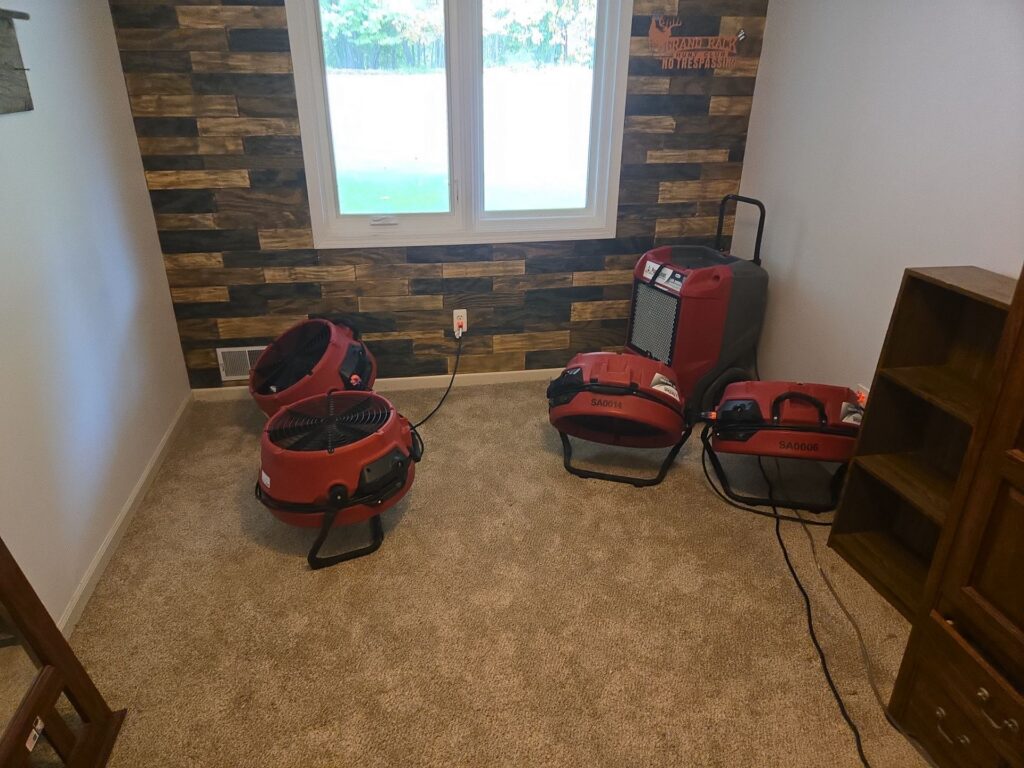
- Professional-grade drying equipment: industrial dehumidifiers, air movers, and negative-air systems to dry structural cavities and large areas quickly.
- Moisture detection & thermal imaging: advanced moisture meters and infrared cameras locate hidden moisture behind walls, under floors, and in ceilings.
- Mold prevention and remediation expertise — including when and how to remove affected materials safely.
- Sanitization & odor control using EPA-registered products and methods. (For general public health guidance on mold and moisture, see the EPA’s resources on mold.)
- Documentation & insurance support — helps with claims, often providing a smoother reimbursement process.
- Safety protocols for electrical hazards, structural damage, and contaminated water.
When DIY might be acceptable
If all of these apply, a homeowner might consider doing it themselves:
- The water source is clean and turned off (e.g., a small sink overflow).
- The affected area is less than about 10 square feet (small spill).
- The water was discovered immediately and there’s no sign of contamination.
- No porous building materials (insulation, drywall) are saturated.
- No electricity is involved or at risk.
- You have the time, tools (wet vac, fans, dehumidifier), and knowledge to document and dry thoroughly.
If even one of these conditions is missing, DIY water damage cleanup may do more harm than good, and professional restoration is the safer option.
Cost vs. safety: short-term savings vs. long-term expense
DIY can feel cheaper initially, but hidden moisture and mold mean future repairs that can exceed professional restoration costs. Professionals often reduce long-term expenses by preventing secondary damage (mold, structural decay, ruined contents), and by documenting damage for insurance.
Step-by-step emergency checklist (what you can do safely right now)
If water damage just happened and you’re waiting for pros:
- Ensure safety first. If there’s standing water and risk of electrical contact, turn off power at the breaker (only if safe to do so).
- Stop the source. Shut off water if a pipe or appliance is leaking.
- Remove people & pets from affected area until safe.
- Move salvageable items to a dry place; photograph everything for insurance.
- Ventilate by opening windows if outdoor air is dry and temperatures permit.
- Call your insurance company to report the loss and ask about emergency measures they require.
- Contact PuroClean of Ann Arbor at 734-926-5900 for 24/7 rapid response—if you’re in doubt, calling a professional immediately is the safest choice.
Useful Resources
- How PuroClean Uses Advanced Moisture Meters to Detect Hidden Water Damage — learn how professionals find water you can’t see.
- Basement Flood Cleanup Near Ann Arbor — a practical guide to dealing with basements and sump failures.
- U.S. Environmental Protection Agency (EPA) — Mold and Moisture
- Centers for Disease Control and Prevention (CDC) — Water-related guidance (for illnesses and safety)
Frequently Asked Questions (FAQ)
Q: How fast does mold start after water damage?
A: Mold can begin to grow within 24–48 hours under the right conditions. Quick drying and professional remediation lower that risk.
Q: Will my homeowners insurance cover water damage?
A: Coverage depends on the cause (sudden pipe burst vs. long-term negligence vs. flooding). Flood damage typically requires separate flood insurance. Always contact your insurer to confirm.
Q: Can I use a shop vac and fans to dry my home?
A: For very small, clean-water incidents, yes—but shop vacs and household fans often aren’t enough for larger or hidden moisture. Industrial-grade equipment and monitoring are recommended for whole-room or structural drying.
Q: How long does professional drying take?
A: Drying time varies by severity and conditions; typically multiple days to a week. Professionals use moisture readings to confirm dryness—don’t rely on how things “feel.”
Q: Is sewage backup a DIY job?
A: No. Sewage (black water) is hazardous and requires professional remediation.
Final takeaways — safety first
DIY water damage cleanup is only safe for very small, clean-water incidents.
- For small, clean, immediate incidents you may be able to perform safe DIY cleanup—document everything, dry thoroughly, and monitor for mold.
- For anything larger, contaminated, or involving hidden moisture or electrical/structural risk, hire a professional. It’s safer for your health, your home, and your wallet in the long run.
- When in doubt, call PuroClean of Ann Arbor at 734-926-5900 for an assessment—our rapid response team is available 24/7 to protect your home and family.
Don’t gamble with your home or health. If you’re facing water damage in Ann Arbor, contact PuroClean of Ann Arbor now for a free damage assessment and fast, professional restoration: 734-926-5900.