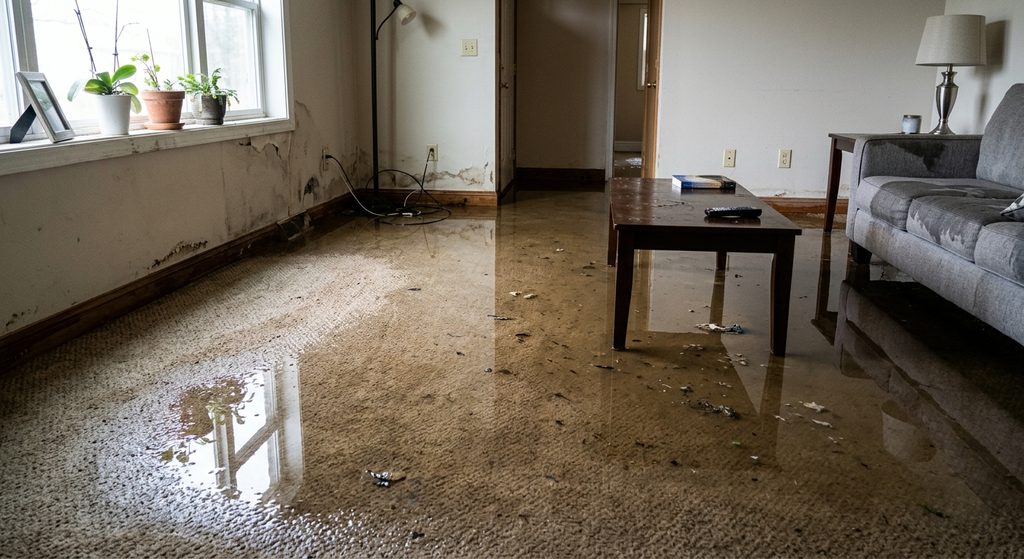
Walking across carpet that squishes underfoot is one of the worst feelings a homeowner can have. Whether the cause was a burst pipe, a failed sump pump, an overflowing washing machine, or a heavy spring storm that pushed water into the basement, the first question is usually the same: can this carpet be saved, or does it all have to go?
The answer depends on a handful of factors, and making the right call quickly matters. Done correctly, flooded carpet cleanup can rescue carpet that would otherwise be thrown away, saving you money and the hassle of a full replacement. Done too late or with the wrong approach, it can leave behind mold, odors, and a floor that never quite feels right again. This guide explains how professionals decide between saving and replacing flooded carpet and its padding, and what you can expect along the way.
Why Flooded Carpet Is So Tricky
Carpet is not a single material. It is a system made of three layers, and each one reacts to water differently:
- The carpet fibers and backing: The visible surface and the layer that holds it together.
- The padding (cushion): The foam or fiber layer underneath, which acts like a sponge.
- The subfloor: The wood or concrete beneath it all, which can trap moisture for days.
Water rarely stays on the surface. It soaks through the carpet, saturates the padding, and settles against the subfloor, where it is hard to reach with household tools. A carpet can look and feel mostly dry on top while the layers underneath are still holding enough moisture to grow mold. This is why a quick wipe-down or a rented wet vacuum is rarely enough on its own.
Sign 1: The Water Category
The single most important factor is where the water came from. Restoration professionals sort water into three categories:
Category 1: Clean Water
Water from a broken supply line, a leaking faucet, or an overflowing sink starts out clean. Carpet exposed to clean water has the best chance of being saved, provided it is dried quickly.
Category 2: Gray Water
Water from a washing machine, dishwasher, or toilet overflow without solids contains contaminants that can cause illness. Gray water that sits becomes more hazardous with time. Carpet can sometimes be cleaned and saved, but the decision depends heavily on how long it was wet and the type of carpet.
Category 3: Black Water
Sewage backups and river or ground floodwater are heavily contaminated. Carpet and padding exposed to black water should be removed and replaced. It cannot be made safe, and attempting to save it puts your household at risk.
Sign 2: How Long the Carpet Has Been Wet
Time is the second major factor. In general, carpet that has been wet with clean water for less than 24 to 48 hours has a good chance of being saved. After that window, the odds drop quickly because mold can begin to grow in damp conditions within 24 to 48 hours.
If you discover a leak after a weekend away or a flood in a basement you rarely visit, the carpet may have been wet for longer than you realize. In that case, a professional moisture inspection will tell you what you are really dealing with.
Sign 3: The Condition of the Padding
Here is the part many homeowners do not expect: even when the carpet itself can be saved, the padding often cannot. Padding absorbs large amounts of water, dries slowly, and can hold contaminants and odors deep inside its structure. Because it is inexpensive compared to the carpet above it, replacing the pad is usually the smarter choice, even when the carpet is worth keeping.
A typical approach looks like this: technicians carefully lift the carpet, remove and discard the wet padding, dry the carpet and the subfloor separately, and then reinstall the carpet over fresh padding. This gives you the best of both worlds, because the carpet is preserved while the most vulnerable layer is replaced.
Sign 4: The Type and Age of the Carpet
Not every carpet is worth the effort of saving. Several details influence the decision:
- Backing type: Carpet with a synthetic backing generally tolerates water better than older carpet with a jute or natural fiber backing, which can shrink, stain, or deteriorate when soaked.
- Age and wear: An older carpet that is already thin or worn may not justify the cost of restoration compared to new flooring.
- Installation: Wall-to-wall carpet that is tacked down can usually be lifted and re-stretched. Glued-down carpet, common in basements and some commercial spaces, is much harder to lift without damage.
- Value: High-quality wool or specialty carpet is often worth restoring, while basic builder-grade carpet may be more economical to replace.
A good restoration team will walk you through these trade-offs rather than defaulting to replacement every time.
Sign 5: The State of the Subfloor and Surrounding Materials
Even if the carpet can be saved, the job is not done until everything underneath is dry. The subfloor, baseboards, tack strips, and the bottom of the drywall all need to reach normal moisture levels. Technicians use moisture meters and thermal imaging to find hidden wet areas that cannot be seen or felt. If the subfloor or wall cavities stay damp, mold growth and odors can return even after the carpet looks perfect.
What Professional Flooded Carpet Cleanup Looks Like
When professionals handle a flooded carpet, the process is far more thorough than a surface cleaning. While every home is different, the steps typically include:
- Inspection and moisture mapping: Identifying the water source, classifying the water, and measuring how far moisture has spread.
- Water extraction: Removing standing water and pulling as much moisture as possible out of the carpet and padding.
- Padding removal: Taking out the wet padding and disposing of it properly.
- Lifting and drying: Raising the carpet so air can circulate, then using air movers and dehumidifiers to dry the carpet, the subfloor, and the surrounding area.
- Cleaning and sanitizing: Applying antimicrobial treatments and deodorizing to protect against bacteria and odors.
- Verification: Confirming with moisture readings that every layer is dry before reinstalling or replacing anything.
This level of care is what separates restored carpet that lasts from carpet that develops a musty smell a few weeks later.
What You Can Do Right Now
While you wait for help, a few safe steps can reduce the damage:
- Stop the source of water if you can do so safely, and turn off power to affected areas when outlets or appliances may be in contact with water.
- Remove furniture and belongings from wet carpet to prevent staining and further damage.
- Open windows and run fans to improve air movement, if the weather allows and the water was clean.
- Take photos and video of the damage for your insurance claim.
- Avoid using a household vacuum on wet carpet, which is both a shock hazard and ineffective.
- Stay out of sewage-contaminated areas and keep children and pets away.
These steps help, but they are not a substitute for professional drying. The sooner trained technicians can assess the damage, the better your chances of saving your carpet.
Save It or Replace It: A Quick Decision Guide
Use this as a general reference, keeping in mind that only an on-site inspection can confirm the right call:
- Likely to save: Clean water, wet for less than 48 hours, carpet in good condition, padding replaced.
- Maybe: Gray water, or clean water that sat for a few days, with higher-value carpet worth restoring.
- Likely to replace: Black water, carpet wet for many days, visible mold, glued-down carpet that cannot be lifted, or old and worn carpet.
Get Expert Help With Flooded Carpet Cleanup in Ann Arbor
You should not have to guess whether your carpet can be saved. A restoration professional can test moisture levels, identify the water category, and give you a clear recommendation before you spend money on replacement. Acting within the first day or two gives you the most options.
If your Ann Arbor home has been hit by a leak, flood, or storm, call (734) 926-5900 to speak with the PuroClean of Ann Arbor team and schedule an inspection. The sooner the drying starts, the better your chances of saving your flooring and getting life back to normal. You can also learn more about our services at PuroClean of Ann Arbor.
Frequently Asked Questions
Can flooded carpet be saved?
Often, yes, especially when the water was clean, the carpet was wet for less than 48 hours, and it is dried professionally. The padding usually needs to be replaced even when the carpet is saved.
How long does flooded carpet take to dry?
With professional equipment, carpet and the subfloor underneath typically dry in about three to five days, though heavily saturated areas can take longer.
Do I always have to replace carpet padding after a flood?
In most cases, yes. Padding absorbs water like a sponge, dries slowly, and can hold contaminants and odors, so replacing it is the safest and most cost-effective choice.
Can I clean flooded carpet myself?
You can take first steps like removing furniture and ventilating the room, but household tools cannot reach the moisture in the padding and subfloor. Skipping professional drying raises the risk of mold and lingering odors.
Will insurance cover flooded carpet cleanup?
Coverage depends on your policy and the cause of the water. Document the damage with photos and contact your insurance carrier as soon as possible to understand your options.