


Table of Contents
Winter in Ann Arbor brings festive lights, family gatherings, and freezing temperatures that put local homes at serious risk for plumbing damage. One of the most common and costly winter emergencies homeowners face is frozen pipes vs bursting pipes in Ann Arbor, especially during the holiday season when homes may be vacant or water usage increases.
Understanding the difference between frozen pipes vs bursting pipes in Ann Arbor homes can help you recognize early warning signs, respond faster, and prevent extensive water damage that disrupts your holidays.
In this guide, the restoration experts at PuroClean of Ann Arbor explain what every homeowner should know to stay protected this winter.
Frozen Pipes vs Bursting Pipes in Ann Arbor: The Simple Difference
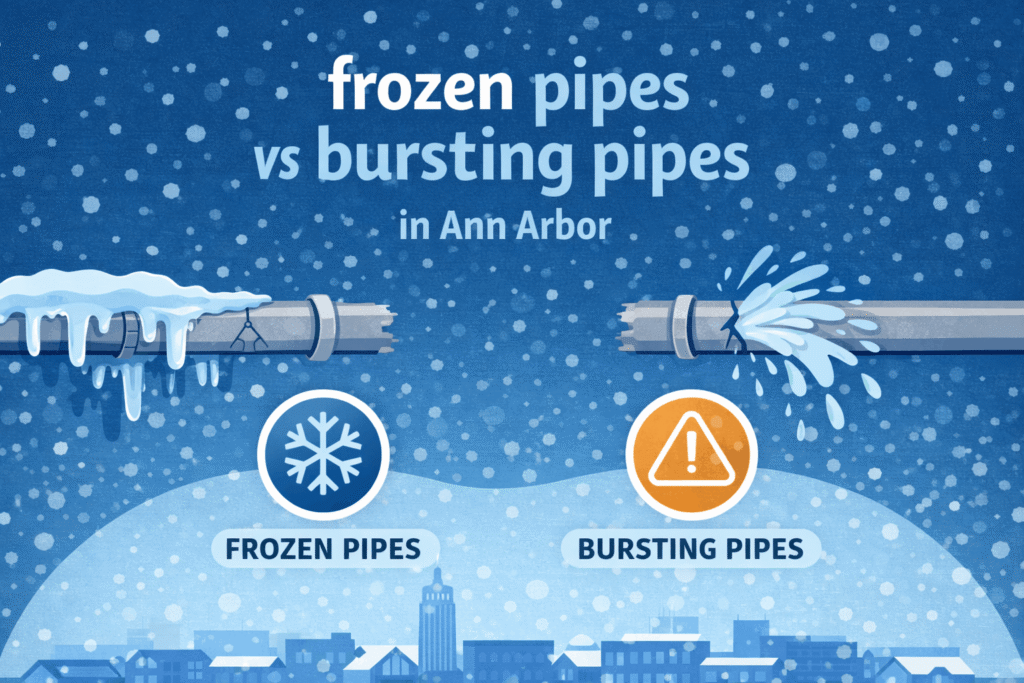
Frozen pipes occur when water inside a pipe freezes due to prolonged exposure to cold temperatures. As water freezes, it expands, restricting or completely blocking water flow.
Bursting pipes happen when the pressure caused by frozen water cracks or ruptures the pipe—often releasing large amounts of water once temperatures rise.
Why it matters:
When comparing frozen pipes vs bursting pipes in Ann Arbor, frozen pipes are a warning sign. Bursting pipes are an emergency that can cause immediate property damage.
Why Ann Arbor Homes Are Especially Vulnerable in Winter
Local weather patterns and housing characteristics increase the risk of frozen pipes vs bursting pipes in Ann Arbor:
- Sub-freezing temperatures and sudden cold snaps
- Older homes with aging plumbing systems
- Uninsulated basements, crawl spaces, and attics
- Exterior-facing pipes in kitchens, bathrooms, and laundry rooms
- Homes left unoccupied during holiday travel
According to the Insurance Institute for Business & Home Safety, frozen and burst pipes are among the most common causes of winter-related water damage claims in the U.S.
Early Warning Signs of Frozen Pipes (Act Fast)
Recognizing frozen pipes early can prevent them from bursting. Watch for these warning signs:
- Little or no water flow from faucets
- Frost or condensation on exposed pipes
- Strange noises such as banging or gurgling
- Cold spots on walls or ceilings
- Inconsistent water pressure
In many cases of frozen pipes vs bursting pipes in Ann Arbor, early action is what prevents a burst and costly water damage.
How Long Does It Take for Frozen Pipes to Burst?
Timing is critical when dealing with frozen pipes vs bursting pipes in Ann Arbor homes.
Typical winter damage timeline:
- 6–12 hours below 20°F: Pipes may freeze
- 12–24 hours: Pressure builds inside the pipe
- 24–48 hours: Cracking or bursting becomes likely
Most pipes don’t burst while frozen—but when temperatures rise and water begins to flow again.
Signs You’re Already Dealing With a Burst Pipe
If you notice any of the following, a pipe may have already burst:
- Standing water or flooding
- Water stains on ceilings or walls
- Bubbling or peeling paint
- Warped floors or baseboards
- A sudden drop in water pressure
At this stage of frozen pipes vs bursting pipes in Ann Arbor, immediate professional help is essential to limit damage.
Why the Holidays Increase Pipe Damage Risk
The holidays are a peak time for burst pipe disasters because:
- Homes are often vacant for days
- Leaks go unnoticed longer
- Water damage spreads across multiple levels
- Emergency repairs are delayed
This makes understanding frozen pipes vs bursting pipes in Ann Arbor especially important before traveling or hosting guests.
What to Do If You Suspect Frozen Pipes (Before They Burst)
If you think a pipe is frozen but not yet broken:
- Keep the faucet slightly open
- Apply gentle heat using a hair dryer or warm towels
- Increase your home’s thermostat temperature
- Open cabinet doors to allow warm air circulation
- Contact a professional if the pipe does not thaw quickly
Calling early can prevent a frozen pipe from becoming a burst pipe emergency.
What to Do If a Pipe Bursts in Your Ann Arbor Home
If a pipe bursts, follow these steps immediately:
- Shut off the main water supply
- Turn off electricity in affected areas if safe
- Remove standing water if possible
- Document damage for insurance
- Call PuroClean of Ann Arbor right away
Our team provides fast, professional water damage restoration to address emergencies caused by frozen pipes vs bursting pipes in Ann Arbor.
👉 Learn more about our capabilities on our Services Overview page.
Why Fast Response Makes a Major Difference
Delaying cleanup after a burst pipe can lead to:
- Structural damage to drywall and framing
- Mold growth within 24–48 hours
- Damage to insulation, flooring, and electrical systems
- Increased insurance claim costs
PuroClean of Ann Arbor uses advanced moisture detection, water extraction, and drying technology to restore homes affected by frozen pipes vs bursting pipes in Ann Arbor efficiently and safely.
Related resources:
How to Prevent Frozen and Bursting Pipes This Winter
Preventative steps greatly reduce the risk of frozen pipes vs bursting pipes in Ann Arbor:
- Insulate exposed pipes
- Maintain consistent indoor temperatures
- Let faucets drip during extreme cold
- Shut off exterior water lines
- Ask a neighbor to check your home while away
For freeze warnings, homeowners can also monitor updates from the National Weather Service and Michigan winter safety resources.
Frequently Asked Questions
How can I tell the difference between frozen pipes vs bursting pipes in Ann Arbor?
Frozen pipes usually cause little or no water flow, while bursting pipes result in visible leaks, flooding, or water damage.
Can frozen pipes thaw without bursting?
Yes, if pressure is relieved quickly and the pipe is safely thawed. Early action is key.
Should I turn off my water when leaving Ann Arbor during winter?
Yes. Shutting off your main water supply significantly reduces the risk of severe damage.
How fast can mold grow after a burst pipe?
Mold can begin developing within 24 to 48 hours if moisture is not professionally dried.
Does homeowners insurance cover burst pipes?
Most policies cover sudden pipe bursts, but coverage varies. Quick mitigation helps support claims.
Trust PuroClean of Ann Arbor This Holiday Season
Whether you’re dealing with frozen pipes vs bursting pipes in Ann Arbor, fast action and professional restoration can prevent lasting damage.
If you suspect a plumbing emergency or want help winterizing your home, call PuroClean of Ann Arbor (734) 926-5900 today. Our local team is ready to respond 24/7 to protect your property and restore peace of mind.