 PuroClean of Ann Arbor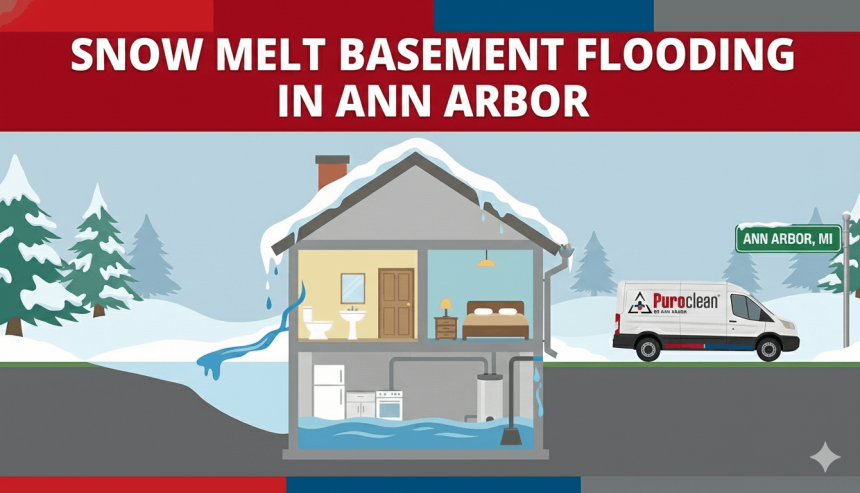
Table of Contents
Winter in Ann Arbor brings beautiful snowfall—but when temperatures fluctuate between freezing and thawing, that snow can quickly turn into a serious problem for homeowners. Snow melt basement flooding Ann Arbor is one of the most common winter water damage issues, and it often happens when people least expect it.
If your basement has ever smelled damp, shown water stains, or flooded after snow began melting, you’re not alone. Understanding why snow melt causes basement flooding in Ann Arbor, the early warning signs, and how to prevent costly water damage can save you time, stress, and thousands of dollars. For more winter home preparation tips, check out our Winterizing Your Home: The Ultimate Ann Arbor Checklist.
Why Snow Melt Causes Basement Flooding in Ann Arbor
Ann Arbor’s winter weather creates the perfect conditions for snow melt basement flooding due to freeze–thaw cycles, compacted snow, and saturated soil.
1. Freeze–Thaw Cycles Increase Ground Pressure
When snow melts during a warmer day, water seeps into the soil around your home. At night, temperatures drop again, causing the ground to freeze. This cycle:
- Traps moisture near your foundation
- Increases hydrostatic pressure
- Forces water through even small foundation cracks
Over time, that pressure pushes moisture into basement walls and floors, increasing the risk of snow melt basement flooding in Ann Arbor.
2. Saturated Soil Has Nowhere to Drain
During winter, the ground is often frozen beneath the surface. When snow melts:
- Water can’t absorb properly into frozen soil
- Runoff collects around foundations
- Drainage systems struggle to keep up
This pooling water is a leading cause of basement flooding from snow melt in Ann Arbor homes. For guidance on preventing drainage issues, visit the City of Ann Arbor Stormwater Management page.
3. Blocked or Frozen Drainage Systems
Snow, ice, and debris can block:
- Downspouts
- Foundation drains
- Sump pump discharge lines
When water can’t flow away from your home, it finds the path of least resistance—often straight into your basement, causing snow melt basement flooding in Ann Arbor. Learn more about sump pump maintenance on our Sump Pump Inspection & Maintenance page.
How Melting Snow Seeps Through Basement Foundations
Even well-built homes are vulnerable during snow melt events.
Water commonly enters basements through:
- Hairline foundation cracks
- Basement window wells
- Floor drains
- Cold joints where walls meet the floor
- Porous concrete or block walls
Many homeowners don’t realize that concrete is not waterproof. Over time, it absorbs moisture, especially when snow melt sits against the foundation for extended periods, increasing the chance of snow melt basement flooding in Ann Arbor. Learn more about foundation issues on the Foundation Repair Council site.
Warning Signs of Snow Melt Basement Flooding in Ann Arbor
Catching water intrusion early can dramatically reduce damage. Watch for these common signs:
- Damp or musty odors
- White powdery residue (efflorescence) on basement walls
- Water stains or discoloration
- Peeling paint or bubbling drywall
- Warped flooring or baseboards
- Standing water near floor drains
- Increased humidity or condensation
⚠️ Important: Even minor moisture can lead to mold growth within 24–48 hours if not properly dried, which is common after snow melt basement flooding in Ann Arbor. For more on mold prevention, read our blog: Mold After Heavy Rain or Flooding in Ann Arbor: What to Do Next.
Sump Pump Failures During Cold Snaps
Your sump pump is your basement’s first line of defense—but winter weather can cause unexpected failures that lead to snow melt basement flooding in Ann Arbor.
Common Winter Sump Pump Issues
- Frozen discharge pipes preventing water from exiting
- Power outages during winter storms
- Overworked pumps during rapid snow melt
- Lack of battery backup
- Ice buildup blocking exterior drainage
If your sump pump stops working during a thaw, water can rise quickly—sometimes flooding a basement in just minutes. For winter sump pump tips, check the EPA’s Basement Waterproofing & Flood Prevention Guide.
Signs Your Sump Pump May Be Failing
- Pump runs constantly or not at all
- Unusual noises or vibrations
- Water backing up into the pit
- Basement flooding after snow melt
Why Snow Melt Basement Flooding Is Especially Dangerous
Snow melt flooding often goes unnoticed because it can be slow and silent. However, the damage can be severe:
- Structural damage to foundations
- Ruined drywall, insulation, and flooring
- Electrical hazards
- Mold growth behind walls and under floors
- Damage to stored belongings and appliances
Because homes are sealed tightly in winter, moisture becomes trapped—creating ideal conditions for mold growth after snow melt basement flooding in Ann Arbor.
How to Prevent Snow Melt Basement Flooding in Ann Arbor
While not all flooding can be prevented, these steps significantly reduce risk:
✔ Clear Snow Away From Your Foundation
Remove snow at least 3–5 feet away from your home to prevent meltwater from pooling near walls.
✔ Extend Downspouts
Ensure downspouts direct water at least 6 feet away from the foundation—even in winter.
✔ Check Your Sump Pump
- Test it before major snow melt
- Ensure discharge lines aren’t frozen
- Consider a battery backup system
✔ Seal Foundation Cracks
Small cracks can allow surprising amounts of water inside during thaw cycles.
✔ Monitor Basement Humidity
Use a dehumidifier and watch for moisture changes during warmer winter days. For more humidity control tips, see our Water Damage Prevention Guide.
When to Call Emergency Water Damage Restoration
If you notice:
- Standing water in your basement
- Rapid moisture spread
- Sump pump failure
- Water damage to walls, flooring, or belongings
…it’s time to call a professional immediately.
Why Fast Response Matters
Water damage worsens by the hour. Professional restoration helps:
- Prevent mold growth
- Stop structural damage
- Save flooring, drywall, and personal items
- Properly dry hidden moisture
DIY cleanup often misses moisture trapped behind walls and under floors—leading to bigger problems later.
24/7 Emergency Water Damage Restoration in Ann Arbor
When snow melt basement flooding in Ann Arbor occurs, PuroClean of Ann Arbor is ready to respond—day or night.
Our trained technicians provide:
- Rapid water extraction
- Advanced drying and dehumidification
- Moisture detection and monitoring
- Mold prevention and remediation
- Assistance with insurance claims
We understand Ann Arbor’s winter conditions and how quickly snow melt basement flooding can escalate. Learn more about our Emergency Water Damage Restoration Services.
Don’t Wait Until the Damage Gets Worse
Snow melt basement flooding doesn’t always announce itself with standing water. Often, the most serious damage is hidden—until it becomes expensive and dangerous.
📞 If your basement shows signs of water intrusion, contact PuroClean of Ann Arbor for 24/7 emergency water damage restoration. The sooner we arrive, the more damage we can prevent from snow melt basement flooding in Ann Arbor


 PuroClean of Ann Arbor