


PuroClean of Ann Arbor (734) 926-5900
Why Pittsfield Township Homes Need Fast Water Damage Restoration
Water damage restoration in Pittsfield Township: water damage restoration isn’t a service anyone thinks about until the moment they need it, and that moment usually arrives without warning. A washing machine hose fails overnight. A sump pump quits during a heavy spring storm. A pipe bursts in a crawlspace nobody checks from November to March. Within hours, water has soaked into drywall, subfloor, and insulation, and the clock is already running on mold growth.
Pittsfield Township’s mix of housing stock adds to the risk. The township includes everything from older ranch homes with aging plumbing to newer subdivisions built on lower-lying parcels prone to drainage issues after heavy rain. Add Michigan’s freeze-thaw winters, which stress pipes and foundations year after year, and it’s easy to see why water damage is one of the most common property claims in the area.
The single biggest factor in how much a water event costs you in dollars, in mold risk, and in disruption is how quickly professional water extraction begins. This is why homeowners searching for water damage restoration Pittsfield Township services should prioritize response time above nearly everything else. The Insurance Institute for Business & Home Safety (IBHS) notes that water damage is among the most frequent and costly types of homeowner insurance claims, and that response speed is the single largest variable in total loss.
This guide walks through what causes water damage in Pittsfield Township homes, what to do in the first hour, and exactly what a full restoration involves.
Common Causes of Water Damage in Pittsfield Township Homes
Understanding what typically triggers a call for water damage restoration Pittsfield Township homeowners make helps explain why prevention and fast response both matter so much.
Burst Pipes
Burst pipe water damage is one of the most frequent calls we get, especially in late winter. Pipes running through unheated crawlspaces, exterior walls, or garages are most at risk when temperatures swing below freezing overnight. A single instance of burst pipe water damage can release hundreds of gallons before anyone notices — often while the homeowner is asleep or away.
Basement Flooding
Basement flooding Pittsfield Township residents deal with typically comes from one of three sources: a failed sump pump during heavy rain, groundwater seeping through foundation cracks, or municipal storm drain backup during severe storms. Township lots with heavier clay soil or lower grading are especially prone to basement flooding, since water has nowhere to drain except toward the foundation. When basement flooding Pittsfield Township homeowners experience goes untreated, the moisture works its way into framing and subfloor within days.
Appliance and Fixture Failures
Washing machine supply lines, dishwasher hoses, water heaters, and toilet supply lines all fail eventually. Because these failures often happen gradually — a slow drip behind a wall or under a cabinet — the damage can go unnoticed until flooring warps or a musty smell appears, at which point emergency water removal Ann Arbor homeowners call for often reveals damage well beyond the original leak.
Severe Storms and Heavy Rain
Southeast Michigan’s storm patterns bring intense, short-duration downpours that overwhelm gutters, downspouts, and grading faster than older drainage systems were designed to handle. Flood cleanup Pittsfield Township crews respond to often follows exactly this pattern — a fast-moving storm that pushes more water at a foundation than it was built to shed. Fast flood cleanup Pittsfield Township residents can arrange makes the difference between a contained cleanup and a full basement rebuild.
Roof and Window Leaks
Aging roofing, ice dams, and failed window seals let water into attics, wall cavities, and window wells. These leaks tend to be slower and less dramatic than a burst pipe, but they cause just as much hidden damage over time.
Appliance and HVAC Condensate Issues
Clogged condensate lines on furnaces, air conditioners, and dehumidifiers can slowly leak into surrounding framing and flooring, especially in finished basements.
Why Fast Water Extraction Matters
The Centers for Disease Control and Prevention (CDC) notes mold can begin growing within 24 to 48 hours in the presence of moisture, which is why the speed of the initial response matters as much as the thoroughness of the eventual repair.
That’s the reasoning behind calling for emergency water removal Ann Arbor and Pittsfield Township residents can reach 24/7 rather than waiting until morning or trying to manage a serious water event alone. Every hour water sits in carpet, drywall, or subfloor increases the odds that materials can’t be saved and that mold gets a foothold before drying equipment ever arrives. Same-day emergency water removal Ann Arbor area homeowners request almost always costs less overall than a delayed response.
Signs of Hidden Water Damage
Not every water problem announces itself with standing water, but every one of them benefits from prompt water extraction Pittsfield Township crews can provide. Watch for:
- A musty or damp smell in a specific room
- Warped, cupped, or soft flooring
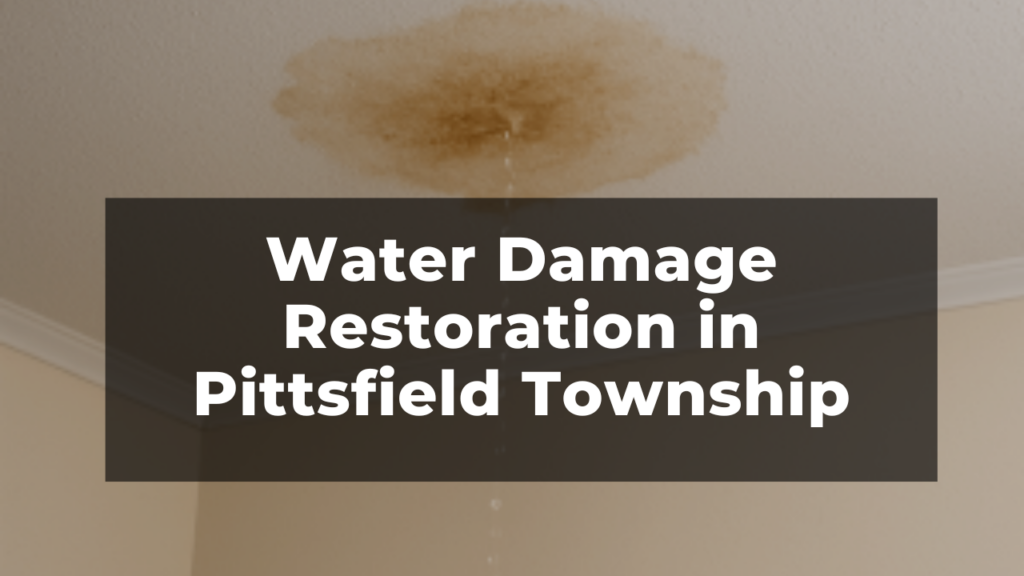
- Discoloration or bubbling on walls or ceilings
- Peeling paint or wallpaper
- Higher-than-usual water bills with no obvious explanation
- Visible mold, especially near baseboards or in corners
- A basement that feels consistently humid
If you notice any of these, don’t wait for the problem to become visible everywhere — call a water damage restoration company near me search should point you to sooner rather than later. This is especially true with basement flooding Pittsfield Township homes experience, since a finished basement can hide moisture behind drywall for weeks before it surfaces visibly.
What Water Damage Restoration Involves, Step by Step
Professional water damage restoration Pittsfield Township homeowners can trust follows a structured process designed to stop the damage, dry the structure completely, and prevent secondary problems like mold.
Step 1: Emergency contact and assessment. A 24/7 call center dispatches a technician who assesses the source of water, the category of contamination (clean, gray, or black water), and the extent of affected materials.
Step 2: Water extraction. Powerful pumps and extraction equipment remove standing water immediately. This is the most time-sensitive step in the entire process — the sooner water extraction Pittsfield Township technicians begin, the less material needs to be replaced later. Thorough water extraction Pittsfield Township crews perform in the first hours on-site sets the pace for how quickly the rest of the drying process goes.
Step 3: Containment and safety. Contaminated water (from sewage backup or flooding) requires containment to prevent cross-contamination, along with appropriate protective equipment for anyone working in the space.
Step 4: Structural drying. Industrial air movers and dehumidifiers are positioned to dry walls, flooring, and framing from the inside out. This phase typically runs three to five days, with moisture levels monitored daily using specialized meters.
Step 5: Removal of unsalvageable materials. Saturated drywall, insulation, and flooring that can’t be fully dried are removed to prevent mold growth and further deterioration.
Step 6: Cleaning and antimicrobial treatment. Affected surfaces are cleaned and treated to eliminate bacteria and inhibit mold growth, particularly important after any flood cleanup Pittsfield Township residents have needed involving outside water.
Step 7: Monitoring and verification. Moisture readings continue until levels return to normal throughout the affected structure — not just on the surface, but inside wall cavities and subfloor.
Step 8: Reconstruction. Once the space is fully dry, repairs and rebuilding — drywall, flooring, trim, paint — restore the space to pre-loss condition.
The IICRC maintains the S500 Standard for Professional Water Damage Restoration, the industry protocol for water categorization, extraction, and drying that reputable restoration companies follow.
What Does Water Damage Restoration Cost in Pittsfield Township?
The cost of water damage restoration Pittsfield Township homeowners face depends on several factors:
- Water category. Clean water from a supply line costs less to remediate than gray or black water from sewage or flooding, which requires more extensive containment and disposal.
- Extent of the affected area. A single room costs less than a fully flooded basement.
- Materials affected. Flooring type, drywall, and insulation all factor into replacement costs.
- Drying time required. Larger or more saturated areas need more equipment and more days of monitoring.
- Reconstruction scope. Cosmetic repairs cost less than full structural rebuilding.
Because every situation is different, an on-site assessment gives the most accurate estimate. PuroClean of Ann Arbor provides free inspections and detailed estimates before work begins.
Does Homeowner’s Insurance Cover Water Damage in Pittsfield Township?
Coverage for water damage restoration Pittsfield Township claims depends heavily on the source of the water.
Often covered: Sudden, accidental water damage — a burst pipe, a failed water heater, a sudden appliance malfunction — is typically covered under a standard homeowner’s policy.
Often not covered: Flooding from outside sources, including basement flooding caused by heavy rain or storm surge, is usually excluded from standard policies and requires separate flood insurance. This is one of the most common surprises homeowners run into after basement flooding Pittsfield Township storms have caused.
The Federal Emergency Management Agency (FEMA) confirms that standard homeowner’s insurance does not cover flood damage, which is why a separate National Flood Insurance Program policy is often necessary for homes in flood-prone areas.
Documenting the cause immediately — with photos and a clear timeline — strengthens any claim, regardless of which type of coverage applies.
Preventing Water Damage Before It Starts
- Insulate exposed pipes. Pipes in crawlspaces, garages, and exterior walls need insulation to prevent freezing and the burst pipe water damage that follows.
- Test your sump pump annually. A battery backup ensures it still works during a power outage, which is exactly when storms are most likely to overwhelm it.
- Inspect appliance hoses regularly. Replace washing machine and dishwasher hoses every five years, even if they look fine.
- Maintain proper grading and gutters. Water should slope away from the foundation, and gutters need to be clear of debris.
- Install a water leak detector. Smart sensors can alert you to a slow leak long before it becomes a flood requiring full water damage restoration Pittsfield Township crews to address.
- Know where your main shutoff valve is In a burst pipe emergency, shutting off the water immediately limits how much damage occurs before help arrives.
When to Call PuroClean of Ann Arbor
Reach out for professional water damage restoration Pittsfield Township homeowners can count on if you experience:
- A burst pipe or major appliance failure
- Basement flooding after a storm
- Sewage backup or any contaminated water event
- A persistent musty smell with no visible source
- Ceiling stains or warped flooring
- Any situation where you’re unsure how much water has gotten into the structure
PuroClean of Ann Arbor provides 24/7 emergency water removal Ann Arbor and Pittsfield Township residents trust, along with flood cleanup Pittsfield Township needs after major storms, throughout Pittsfield Township, Ann Arbor, and all of Washtenaw County. Our IICRC-certified technicians respond quickly and document everything your insurance company needs to process a claim.
Frequently Asked Questions About Water Damage Restoration in Pittsfield Township
How fast should I call for water damage restoration? Immediately. Mold can begin growing within 24 to 48 hours of water exposure, so calling a water damage restoration company near me search turns up as soon as you discover water is the single most important step you can take to limit damage.
What’s the difference between water extraction and full restoration? Water extraction Pittsfield Township crews perform removes standing water and is the first step. Full restoration includes structural drying, cleaning, antimicrobial treatment, and any necessary reconstruction to return the home to pre-loss condition.
Is basement flooding always covered by insurance? Not always. Flooding from groundwater, storm surge, or sewer backup often requires separate flood or sewer backup coverage, while flooding from an internal source like a burst pipe is usually covered under a standard policy.
Can I dry out water damage myself with fans? Household fans and dehumidifiers can help with very minor, surface-level moisture, but they can’t dry wall cavities, subfloor, or insulation the way industrial equipment can. Incomplete drying is one of the most common causes of hidden mold growth after a water event.
How long does the restoration process typically take? Extraction happens immediately, but structural drying alone usually takes three to five days. Full restoration including reconstruction can take anywhere from a few days to several weeks depending on the extent of the damage.
What should I do in the first hour after discovering water damage? Shut off the water source if possible, turn off electricity to the affected area if there’s any risk of contact with water, move valuables to a dry area, and call a water damage restoration company near me search turns up immediately rather than waiting to see if it dries on its own.
PuroClean of Ann Arbor provides 24/7 water damage restoration, flood cleanup, and structural drying services throughout Pittsfield Township and all of Washtenaw County. When water strikes, every hour counts — don’t wait to call.
PuroClean of Ann Arbor (734) 926-5900 4621 Freedom Drive, Suite 2, Ann Arbor, MI 48108