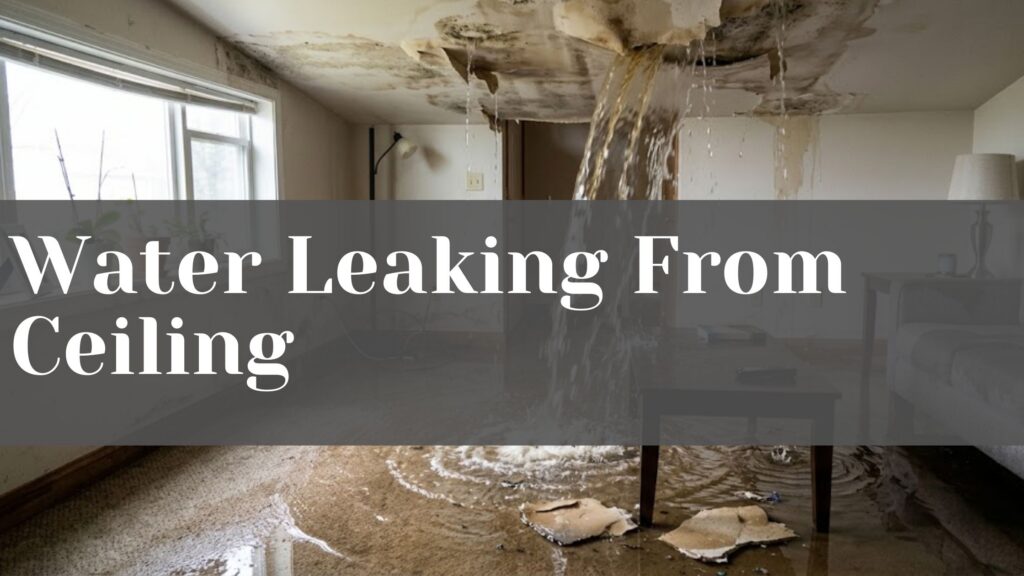
You are sitting at home when you notice a dark stain spreading across the ceiling, or worse, a steady drip landing on your floor. Water leaking from the ceiling is stressful because it raises two questions at once: what do I do right now, and who do I call?
This guide answers both. You will learn the first steps to take in the next few minutes, how to figure out where the water is coming from, and how to decide between a plumber, a roofer, and a water damage restoration company. Acting quickly matters. Water that sits in a ceiling soaks insulation and drywall, can reach electrical wiring, and can start growing mold within 24 to 48 hours.
First Things First: Stay Safe
Before you do anything else, think about safety. Water and electricity are a dangerous combination, and a ceiling holds more than drywall. Wiring, light fixtures, and ceiling fans may all be in the path of the leak.
- Keep away from the wet area. Do not stand directly under a sagging or bulging section of ceiling. Saturated drywall is heavy and can collapse without warning.
- Watch for light fixtures and outlets. If water is dripping from a light fixture or ceiling fan, do not touch it or use the switch.
- Turn off the power if needed. If water is near fixtures or outlets, shut off electricity to that area at the breaker panel, but only if you can reach the panel without stepping through water.
- Keep children and pets out of the room until the situation is under control.
If you see sparks, smell burning, or the ceiling looks ready to give way, leave the area and call emergency services.
7 Urgent Steps to Take When Water Is Leaking From Your Ceiling
Step 1: Stop the Water If You Can
If the leak is coming from a bathroom, kitchen, or laundry room above, the fastest fix is often shutting off water at its source. Turn off the fixture or appliance that may be leaking, such as a washing machine, dishwasher, or toilet. If you cannot tell where the water is coming from, shut off the main water supply to the house. Knowing where your main shutoff valve is before an emergency happens can save you a lot of damage.
If the leak is coming from the roof, you obviously cannot turn off the rain. In that case, move on to the steps below to limit the damage.
Step 2: Contain the Water
Place a bucket or large container under the drip. Lay a towel or plastic sheet around it to catch splashes. If the ceiling is bulging with trapped water, a small hole in the lowest point of the bulge can relieve pressure and let the water drain into a bucket in a controlled way. This should only be done when you are certain no electrical fixtures are nearby, and many homeowners prefer to leave it to a professional. When in doubt, skip this step and keep clear.
Step 3: Protect Your Belongings
Move furniture, electronics, rugs, and valuables out of the room, or at least away from the wet area. If items are too heavy to move, cover them with plastic sheeting. Lift area rugs and pull furniture off carpet so that wet legs do not stain the flooring.
Step 4: Document the Damage
Take photos and video of the stain, the drip, the affected rooms, and any damaged belongings. This documentation is valuable for your insurance claim, and it also gives your service providers a clear picture of how the damage looked when you first found it.
Step 5: Find the Likely Source
You do not need to be a plumber to make a good guess. A few clues point toward the cause:
- The leak appears only during or after rain or snowmelt: Likely a roof problem.
- The leak is under a bathroom, kitchen, or laundry room: Likely a plumbing problem such as a supply line, drain, or fixture.
- The leak is steady and does not depend on the weather: Likely a pressurized pipe or water heater issue.
- Water forms on the ceiling near a vent or air handler: Possibly an HVAC condensation problem.
- Staining appears near exterior walls in winter: Possibly an ice dam on the roof.
Step 6: Ventilate and Start Removing Moisture
Open windows if the weather allows and run fans to improve airflow. A household dehumidifier can help control humidity in the room. These steps will not dry out a saturated ceiling cavity, but they slow the spread of moisture while you wait for help.
Step 7: Make the Right Phone Calls
This is where most people get stuck, because a ceiling leak can involve more than one kind of professional. The next section breaks it down.
Who Should You Call? Restoration Company vs. Roofer vs. Plumber
The right call depends on where the water is coming from and what has already been damaged. In many cases, you will need more than one professional, and the order matters.
Call a Plumber When the Source Is Inside the House
If the water is coming from a pipe, drain, water heater, or fixture, you need a plumber to find and repair the leak. A plumber fixes the source of the problem, but a plumber does not typically dry out your ceiling, walls, and insulation or handle the water damage left behind.
Call a Roofer When the Leak Follows Rain or Snow
If the water shows up only during storms, snowmelt, or after ice builds up along the roof edge, the source is most likely the roof. A roofer can inspect flashing, shingles, gutters, and ice dams, and repair or temporarily tarp the roof to stop more water from getting in. Like a plumber, a roofer addresses the cause, not the damage inside your home.
Call a Water Damage Restoration Company for the Damage
A restoration company focuses on what the water has already done. That includes removing standing water, assessing how far moisture has spread through the ceiling, insulation, and walls, drying the structure, and preventing mold growth. If your ceiling is stained, sagging, or wet, a restoration team is the one to handle the cleanup and drying.
The key point is that these calls are not either-or. The source of the leak and the damage from the leak are two separate problems. Stopping the water does not dry what is already soaked, and drying the ceiling will not matter if the leak keeps coming back.
A Simple Guide to Who to Call First
- Active leak from a pipe or appliance: Shut off the water, then call a plumber and a restoration company.
- Leak during rain or snowmelt: Call a roofer for the source and a restoration company for the interior damage.
- Ceiling already stained, wet, or sagging: Call a restoration company right away, since the damage is time sensitive.
- Not sure where the water is coming from: Start with a restoration company, which can use moisture detection tools to trace the path of the water and help you decide who else to bring in.
Why Speed Matters So Much
Water leaking from a ceiling rarely stays where you see it. It travels along joists, soaks insulation, and spreads inside wall cavities where you cannot see it. By the time a stain is visible, the hidden damage is often larger than it looks.
Several problems become more likely with each passing day:
- Mold growth, which can begin within 24 to 48 hours in damp conditions.
- Structural damage, as drywall weakens and wood framing stays wet.
- Ceiling collapse, when saturated drywall becomes too heavy to hold.
- Electrical hazards, when water reaches wiring and fixtures.
- Higher repair costs, because a small, early problem is far easier to fix than a large, neglected one.
In Michigan, freezing winters and spring thaws add another layer of risk, since ice dams and burst pipes can send water into ceilings quickly. Getting professional help on site early is the best way to keep a small leak from becoming a major project.
What a Restoration Team Does When You Call
When you call a restoration company about water leaking from your ceiling, you can expect a process like this:
- Assessment: Technicians check the affected area, identify the type of water, and look for hidden moisture using meters and thermal imaging.
- Water removal: Any standing water is extracted, and wet materials that cannot be saved, such as saturated insulation, are removed.
- Drying: Air movers and dehumidifiers are set up to dry the ceiling, walls, and surrounding materials, with moisture readings checked each day.
- Cleaning and sanitizing: Affected areas are cleaned and treated to protect against bacteria, mold, and odors.
- Repairs: If drywall or other materials had to be removed, the team can help with rebuilding so your ceiling is restored to its pre-loss condition.
A good team will also explain what they find, answer your questions, and help you understand what to share with your insurance carrier.
Do Not Wait: Get Help for Water Leaking From Your Ceiling in Ann Arbor
A ceiling leak is the kind of problem that does not get better on its own. The longer water sits, the more it costs and the more it spreads. If your Ann Arbor home or business has water leaking from the ceiling, do the safe first steps above, then get trained help on the way.
Call (734) 926-5900 to reach the PuroClean of Ann Arbor team and schedule an inspection. We can assess the damage, begin drying, and help you figure out what else you need to get the leak fixed for good. You can also learn more about our services at PuroClean of Ann Arbor.
Frequently Asked Questions
Who do I call first if water is leaking from my ceiling?
If you know the source is a pipe or appliance, shut off the water and call a plumber and a restoration company. If it leaks during rain or snowmelt, call a roofer for the source and a restoration company for the interior damage. If you are unsure, a restoration company can help trace the water.
Can I fix a leaking ceiling myself?
You can take temporary steps like stopping the water, containing drips, and moving belongings. Fixing the source and drying the hidden moisture are better left to professionals, because water often spreads where you cannot see it.
Is a ceiling leak an emergency?
Often, yes. A ceiling that is dripping, sagging, or near electrical fixtures is a safety concern, and moisture left in place can lead to mold within 24 to 48 hours.
What if the ceiling is bulging with water?
Stay out from underneath it and keep people and pets away. A bulging ceiling can collapse, so call a professional right away.
Will insurance cover a ceiling leak?
Coverage depends on your policy and the cause of the leak. Take photos right away, avoid throwing out damaged materials before documenting them, and contact your insurance carrier as soon as possible.