


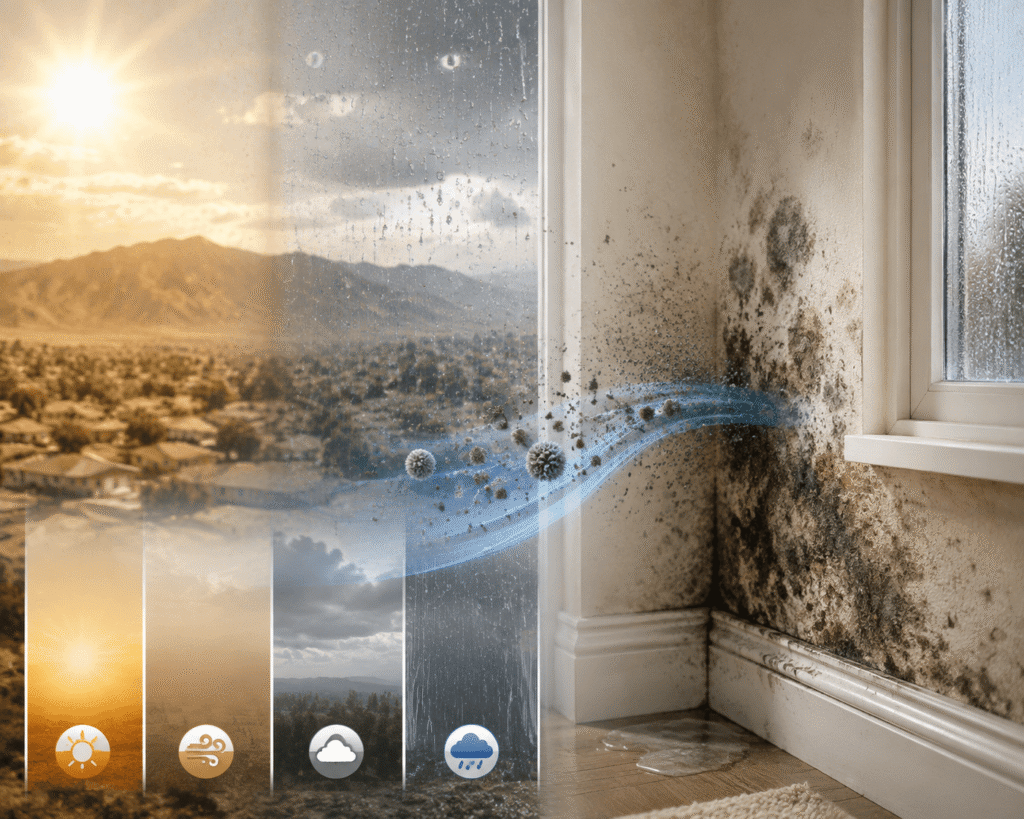
Bakersfield properties frequently experience sudden moisture intrusions from appliance breaks or plumbing leaks, which dry porous building components absorb like massive sponges. This rapid saturation transforms drywall and subflooring into an ideal habitat, activating dormant microscopic spores to multiply within forty-eight hours. Promptly extracting the water and deploying commercial dehumidifiers halts this spread, protecting the underlying framework from progressive decay and preventing a minor leak from becoming a massive structural catastrophe.
When a property manager responds to an initial leak with immediate extraction, the structural materials avoid long-term saturation. Conversely, delaying this extraction allows the water to migrate deep into the building foundation, warping floor joists and cracking concrete slabs. The consequence of active moisture migration is a rapid breakdown of material fibers. Utilizing thermal imaging cameras and precise moisture meters exposes these hidden migration paths, guiding the placement of high-velocity air movers to dry the property completely.
What Happens When Microorganisms Infiltrate HVAC Systems and Wall Cavities?
Once spores colonize wet cellulose, they release volatile compounds into the ventilation system, lowering indoor air quality with a pungent, musty odor. The organisms consume wooden studs and paper-backed drywall at the source, actively weakening the physical integrity of the structure. Eliminating this spreading threat requires strict containment barriers and negative air pressure to completely halt cross-contamination.
Technicians executing mold removal and remediation capture the airborne spores with high-efficiency particulate air filtration. Scrubbing the structural surfaces with EPA-registered disinfectants eradicates the contamination at the microscopic level, permanently altering the environment to prevent the colony from returning. When a team establishes containment before cleaning begins, they stop cross-contamination completely. Failing to establish this barrier allows brushing or vacuuming to scatter millions of microscopic spores into adjacent spaces, worsening the initial contamination.
How Does Fungal Deterioration Compare to Other Catastrophic Property Events?
Property owners often underestimate fungal growth, which breaks down cellular matter much like acidic soot corrodes metals after a fire. Although this biological degradation happens slowly, it yields severe structural compromises over an extended period. Just as prompt fire and smoke damage restoration neutralizes corrosive ash, early moisture intervention preserves the density of wood and drywall.
Delaying the physical removal process allows the organism’s root systems to penetrate much deeper into the property’s skeleton, turning localized discoloration into widespread structural failure. When soot sits on surfaces for weeks, it etches into glass and tarnishes metal fixtures permanently. In an identical manner, allowing fungal root systems to remain within wall cavities leads to wood rot that cannot be scrubbed away. Property owners must treat both scenarios as emergencies that require specialized chemical neutralization and extraction rather than standard household surface wiping.
Why Are Specialized Protocols Necessary for Severe Organic Accumulation?
When moisture intrusion involves sewage backups, the biological threat multiplies exponentially as raw sewage introduces dangerous pathogens, parasites, and bacteria. Standard cleaning agents only temporarily mask surface discoloration while leaving deep fungal root systems intact. Saturated porous materials quickly become highly infectious and physically unstable.
Technicians must perform rigorous biohazard cleanup to safely extract these toxic materials and sterilize the remaining structural cavity. Proper sanitation destroys both infectious bacterial pathogens and fungal root systems, restoring a hygienic interior environment while strictly following state health guidelines. Skipping these protocols leaves dangerous pathogens trapped within the subfloors, threatening the health of all future occupants.
At What Point Is Structural Replacement Required After Prolonged Moisture Exposure?
Ignoring a musty odor or a persistent slow leak allows the fungal feeding cycle to destroy the load-bearing capacity of wood, drywall, and insulation. Once these building components lose their structural strength, surface cleaning is no longer a safe or viable option. Technicians must physically tear out the compromised framing, flooring, and wall systems to restore structural integrity.
Executing complete reconstruction services rebuilds the affected zones from the studs outward, matching the new framing and drywall to the property’s original architectural layout. By replacing the ruined materials entirely, the property regains its structural stability and functionality, seamlessly transitioning the damaged property back into a usable commercial or residential space. Rebuilding from the foundation up restores total structural equilibrium, ensuring the building can withstand future seismic and thermal stresses safely.
PuroClean Certified Restoration has supplied the technical skill required to protect the buildings serving Bakersfield’s residential and commercial hubs, meeting the rigorous demands of the Central Valley environment. Stop the biological decay cycle from threatening the life of the building today!