


You cleaned the walls. You scrubbed the floors. You opened every window in the house for days. You bought every odor-eliminating spray and candle you could find. And still, weeks after the fire, the smoke smell is back the moment you walk through the front door.
If this sounds familiar, you are not alone. Persistent smoke odor after a fire or smoke event is one of the most frustrating problems Nassau County homeowners face, and it is not a reflection of how thoroughly you cleaned. It is a reflection of the chemical nature of smoke itself, and why surface cleaning alone can never fully eliminate it.
At PuroClean of Baldwin, smoke odor removal is one of the most specialized services we provide. We use industrial-grade technology and a systematic, science-based approach to eliminate smoke odor permanently, not temporarily mask it, in homes and businesses throughout Long Island. This guide explains exactly why smoke odor is so persistent, what actually works to eliminate it, and when it is time to stop fighting it yourself and call a professional smoke odor removal team.
Why Smoke Odor Is So Difficult to Eliminate
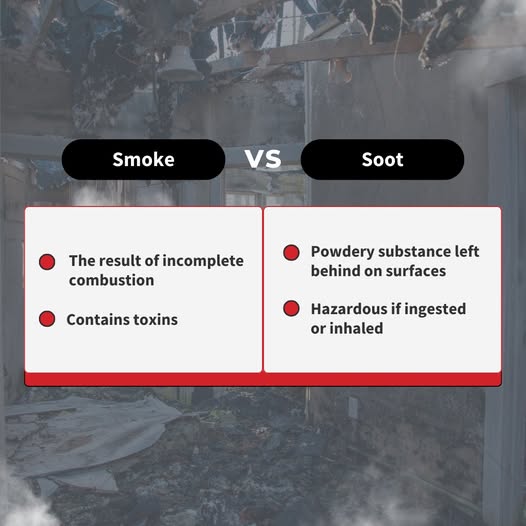
Understanding why smoke smell keeps coming back starts with understanding what smoke actually is. Smoke is not a single substance. It is a complex mixture of gases, volatile organic compounds, aerosols, and microscopic carbon particles produced during combustion. Each of these components behaves differently and contributes to odor in different ways.
Smoke Particles Are Extraordinarily Small
The particles in smoke from a residential fire range in size from about 0.1 to 10 microns. To put that in perspective, a human hair is approximately 70 microns wide. Particles this small penetrate deeply into porous materials including drywall, wood framing, insulation, fabrics, carpeting, and even the paint on your walls. They do not simply sit on the surface waiting to be wiped away. They migrate into the molecular structure of the materials themselves.
Soot Is Chemically Reactive
Soot is not inert dust. It contains acidic compounds, volatile organic compounds, and chemical residues that continue to interact with the surfaces they contact long after the fire is out. This ongoing chemical activity is one reason smoke odor from a fire can actually worsen over the days and weeks following the event if it is not professionally addressed. The chemical reactions happening inside your walls and floors are continuously generating new odor compounds.
Smoke Travels Everywhere
As detailed in our smoke damage versus fire damage guide, smoke does not stay where the fire was. It travels through air movement patterns, HVAC ductwork, electrical conduits, plumbing penetrations, and any other pathway between connected spaces. In a typical Nassau County home with central air conditioning or forced air heating, smoke from a kitchen fire can deposit residue in every room of the house within minutes. This means the source of persistent odor is often not where you can see the damage.
Surface Cleaning Does Not Reach the Source
When you clean a smoke-damaged wall, you are addressing the surface layer of residue. But smoke particles have penetrated into the drywall paper, the gypsum core, and the wood framing behind it. They have soaked into the back side of your baseboards and into the insulation inside your walls. No amount of surface cleaning reaches these embedded sources. When conditions change, such as temperature rising on a warm day or humidity increasing after rain, these embedded compounds off-gas and the odor returns.
Odor Masking Is Not Odor Removal
Consumer smoke odor products, including sprays, plug-in diffusers, scented candles, and even professional-grade masking agents, work by introducing competing odors that temporarily override the perception of smoke smell. They do not remove or neutralize the smoke compounds themselves. The moment the masking fragrance dissipates, the underlying smoke odor returns. This is the cycle that frustrates so many homeowners who try to manage smoke odor without professional help.
The Hidden Sources of Recurring Smoke Odor in Nassau County Homes
When smoke odor keeps returning after cleaning, it is almost always because one or more hidden sources of embedded smoke residue were not addressed. These are the locations most commonly responsible for persistent smoke smell in Long Island homes:
HVAC Systems and Ductwork
This is the single most common reason smoke odor persists after what appears to be a thorough cleaning. If your heating or cooling system was running at the time of the fire or smoke event, the return air system drew smoke through the ductwork and deposited residue on duct walls, the air handler cabinet, the blower wheel, and the evaporator coil. Every time the system runs, it heats or cools this contaminated residue and distributes the released odor to every room in the house.
Professional HVAC decontamination is not optional when smoke odor is the goal. It includes duct cleaning using HEPA-equipped vacuum systems, treatment of the air handler and blower assembly, coil cleaning if contaminated, and replacement of all filters. Until this work is done, every other smoke odor removal effort in the house is fighting against the system that is continuously redistributing the problem.
Wall Cavities and Insulation
The space inside your walls, between the drywall and the exterior sheathing, is filled with insulation and framing members that absorbed smoke during the fire event. This material is completely inaccessible to any surface cleaning approach. The smoke compounds embedded in wall cavity insulation off-gas continuously, migrating through the drywall paper and into the living space. In cases where odor is severe and persistent, removal and replacement of insulation in affected wall cavities is sometimes required.
Attic Spaces
Hot smoke rises, and attic spaces accumulate high concentrations of smoke residue from fires on lower floors. Attic insulation, roof sheathing, and framing absorb smoke compounds that then off-gas downward into living spaces as the attic heats up during warm weather. Nassau County homeowners often notice smoke odor intensifying on warm summer days months after a fire, which is frequently a sign that attic contamination is the remaining source.
Subfloor and Floor Framing
Smoke that descends and settles in a fire-damaged space deposits residue on flooring surfaces and, importantly, on the subfloor and floor framing below. When flooring is replaced after a fire without addressing the subfloor beneath it, the new flooring essentially seals in the smoke residue below, which then off-gases upward through the new floor for months.
Interior Paint and Drywall Paper
Drywall paper is highly porous and absorbs smoke compounds readily. Standard latex paint applied over smoke-affected drywall without a proper sealing primer does not prevent odor migration. Within weeks of repainting, the smoke compounds migrate through the new paint and odor returns. This is a specific, preventable mistake that professional restorers avoid by applying shellac-based or oil-based odor-blocking primers before any finish paint.
Soft Furnishings and Contents
Upholstered furniture, mattresses, draperies, clothing, and carpet are significant reservoirs of smoke odor. Even after structural surfaces are treated, soft furnishings that were not professionally cleaned can maintain the odor environment in a room. Professional contents cleaning, including ultrasonic treatment for hard goods and specialized laundering for fabrics, is an essential component of complete smoke odor elimination.
What Actually Works: Professional Smoke Odor Removal Methods
Effective smoke odor removal requires neutralizing odor compounds at their source, not masking them at the surface level. These are the methods that professional smoke odor specialists use and that produce lasting results.
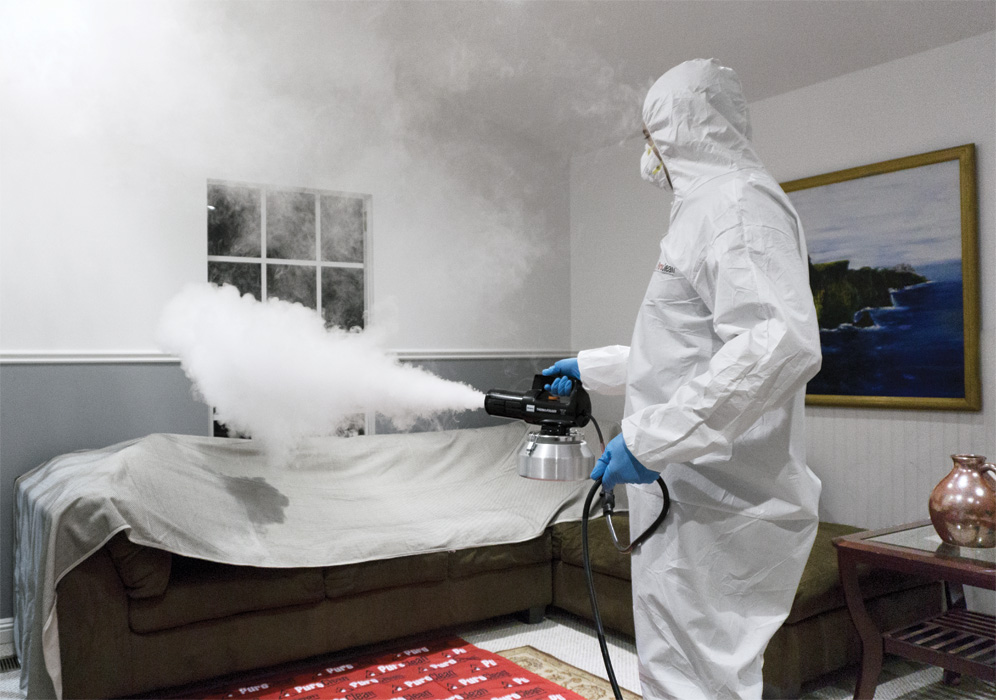
Thermal Fogging
Thermal fogging is one of the most effective smoke odor removal techniques available and one of the most frequently misunderstood. A thermal fogger heats a specially formulated deodorizing solution to produce a dense fog of microscopic particles that behave similarly to smoke itself. Because the fog particles are the same approximate size as smoke particles, they penetrate into the same surfaces, wall cavities, and material structures that the smoke reached.
Once inside these surfaces, the deodorizing fog compounds react chemically with the smoke odor compounds, neutralizing them at the molecular level rather than simply masking them. Thermal fogging is particularly effective in porous materials and complex structural environments where other methods cannot physically reach the odor source.
Hydroxyl Generation
Hydroxyl generators produce hydroxyl radicals, the same compounds that the sun’s UV radiation generates naturally in the atmosphere to break down pollutants. In the context of smoke odor removal, hydroxyl radicals attack and break down volatile organic compounds and other odor-causing molecules at the molecular level, converting them into water vapor and carbon dioxide.
A key advantage of hydroxyl generation over ozone treatment is that it is safe for use in occupied or partially occupied spaces. The hydroxyl radicals it produces are not harmful to people, pets, or plants at the concentrations used in restoration work. This makes it the preferred method when complete evacuation of the property is not practical. Hydroxyl generators are positioned throughout the affected area and run continuously over a period of days for severe smoke odor situations.
Ozone Treatment
Ozone is one of the most powerful oxidizing agents available for smoke odor removal. Ozone generators produce O3 molecules that are highly reactive with organic compounds, breaking down the molecular chains of smoke odor compounds and eliminating them rather than masking them. Ozone treatment can reach into surfaces and spaces that physical cleaning cannot access, making it effective against embedded odor sources.
The important qualification with ozone treatment is safety. Ozone at the concentrations required for effective odor treatment is harmful to humans, pets, plants, and certain materials including rubber and some electronics. The treatment space must be completely evacuated during treatment and for a period afterward while ozone levels return to safe ambient levels. Professional operators monitor ozone concentration levels throughout the process.
HEPA Air Scrubbing

High-efficiency particulate air scrubbers pull large volumes of air through filters capable of capturing particles as small as 0.3 microns with 99.97 percent efficiency. In a smoke-damaged space, HEPA air scrubbers run continuously during restoration work to capture airborne smoke particles, reducing the concentration of particulates that would otherwise resettle on cleaned surfaces. They also improve air quality for restoration workers and reduce the risk of cross-contamination to unaffected areas.
Odor-Blocking Primers and Encapsulation
After cleaning and deodorization treatments are complete, structural surfaces are sealed with odor-blocking primer before any finish work is applied. Products like shellac-based primer create a barrier that physically seals any residual smoke compounds into the substrate, preventing them from migrating through the new paint surface. This encapsulation step is the final line of defense against odor recurrence and is non-negotiable in a professional smoke odor removal project.
Enzyme and Specialized Chemical Cleaning
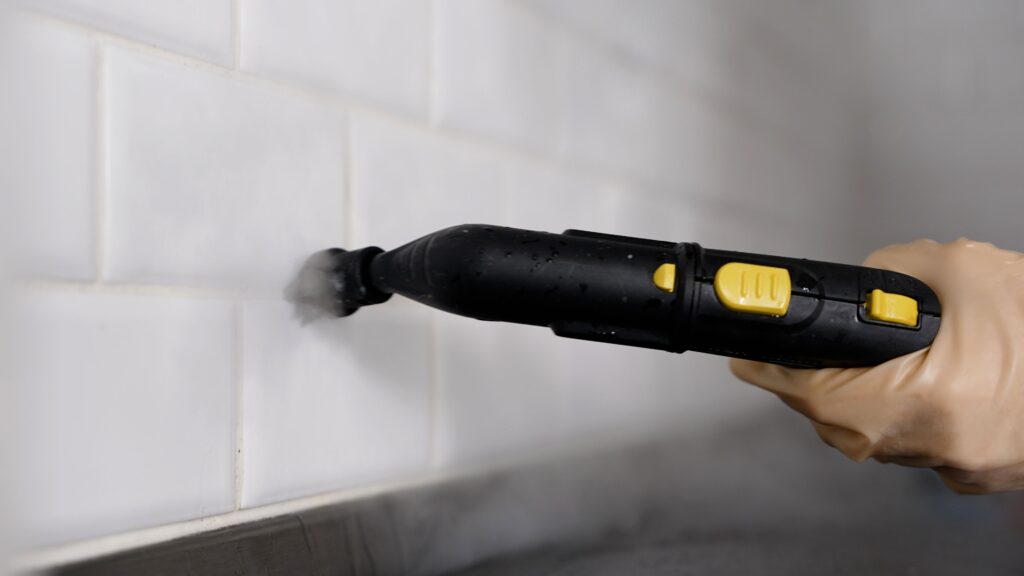
Certain smoke residue types, particularly protein residue from kitchen fires and wet soot from smoldering fires, require enzymatic cleaning agents or specific alkaline and acidic cleaning solutions that break down the residue compounds chemically rather than just physically removing them. The choice of cleaning agent is matched to the specific residue type present, which is one reason professional assessment before cleaning produces better results than generic cleaning approaches.
Smoke Odor Removal Methods: A Comparison for Nassau County Homeowners
| Method | Safe While Occupied? | Penetrates Surfaces? | Best Used For |
| Thermal fogging | No | Yes | Porous materials, wall cavities, embedded odor |
| Hydroxyl generation | Yes | Moderately | Ongoing treatment, occupied spaces, fabrics |
| Ozone treatment | No | Yes | Severe odor, sealed empty spaces |
| HEPA air scrubbing | Yes | No | Airborne particulate reduction, ongoing cleanup |
| Odor-blocking primer | Yes (after drying) | Seals surface | Final barrier before repainting |
| Enzyme cleaning | Yes | Moderate | Protein smoke residue, organic odor sources |
| Consumer sprays/candles | Yes | No | Temporary masking only; not a removal method |
Professional smoke odor removal typically combines two or more of these methods in a sequenced approach. No single method eliminates all smoke odor sources in a complex structural environment.
The Professional Smoke Odor Removal Process: Step by Step
Understanding the full professional process helps Nassau County homeowners evaluate whether the work being proposed or performed at their home meets industry standards.
- Source identification and assessment: A thorough assessment maps the full extent of smoke penetration using odor detection, visual inspection, and in some cases air quality testing. Every affected surface, cavity, and system is identified before any treatment begins.
- Contents removal: Soft furnishings, draperies, clothing, and other porous contents are removed for professional cleaning at the PuroClean facility. Leaving contaminated contents in place during structural treatment significantly reduces effectiveness.
- HVAC isolation and treatment: The HVAC system is isolated, inspected, and professionally cleaned before any deodorization treatment begins. Running a contaminated HVAC system during treatment redistributes odor and undermines the entire process.
- Dry soot removal: All surfaces are treated with chemical dry sponges before any wet cleaning is introduced, removing loose soot particles that would smear and embed further with moisture.
- Surface cleaning: All affected surfaces are cleaned using cleaning agents matched to the specific residue type. This step removes the bulk of accessible residue.
- Deodorization treatment: One or more professional deodorization methods, selected based on the specific odor severity and structural conditions, are applied to neutralize embedded odor compounds.
- Encapsulation and sealing: Odor-blocking primers are applied to all structural surfaces before any finish work, permanently sealing residual compounds.
- Contents restoration and return: Professionally cleaned contents are returned to the restored space after structural work is complete.
- Verification: Odor levels are assessed before the project is closed to confirm that removal has been achieved to acceptable standards.
A Note on Tobacco Smoke Odor Removal
Not every smoke odor removal project follows a fire event. Tobacco smoke odor in a home being sold, rented, or returned to a landlord after a tenancy is a very common request from Nassau County homeowners and property managers. Tobacco smoke presents a specific challenge because years of continuous smoke exposure deposit thin but extraordinarily tenacious layers of residue on every surface in the home, including inside HVAC systems, in wall cavities, and on the back sides of built-in cabinetry.
The same professional methods used for fire smoke odor removal apply to tobacco smoke, but the scope and duration of treatment is typically greater given the depth of long-term penetration. In homes with decades of tobacco smoke exposure, surface repainting without professional deodorization and sealing produces results that last only weeks before the odor migrates back through the new paint.
If you are preparing a Nassau County home for sale and tobacco smoke odor is a concern, professional smoke odor removal by PuroClean of Baldwin is one of the highest-return pre-sale investments you can make. Buyer perception of a home with smoke odor significantly affects both offer prices and the number of offers received.
Common Smoke Odor Removal Mistakes Nassau County Homeowners Make
- Painting over smoke-damaged surfaces without primer: Standard latex paint does not block smoke odor. Without a shellac-based or oil-based sealing primer, odor migrates through new paint within weeks.
- Running the HVAC system after a fire: Every cycle of a smoke-contaminated HVAC system redistributes odor throughout the home. The system should be shut off and assessed before being used again.
- Relying on air fresheners or candles: These products mask odor temporarily. They do not remove the smoke compounds causing it. When the fragrance dissipates, the smoke smell returns.
- Cleaning only the visibly affected area: Smoke travels. The kitchen where the fire started is not necessarily the only area with significant smoke odor. Every connected space, including closets, attic access areas, and adjacent rooms, must be assessed.
- Replacing flooring without treating the subfloor: New flooring installed over a smoke-contaminated subfloor seals in the problem. Smoke compounds off-gas upward through the new floor for months.
- Attempting ozone treatment without professional training: Consumer ozone generators are not powerful enough to address serious smoke odor and can create a false sense of completion. Professional ozone treatment requires specific concentration monitoring and safety protocols.
- Skipping contents cleaning: Soft furnishings, mattresses, and draperies left in a smoke-damaged space recontaminate the environment after structural surfaces are cleaned. Contents must be professionally treated as part of the overall project.
Smoke Odor Removal and Your Nassau County Insurance Claim
Smoke odor removal is a covered component of a fire damage insurance claim under standard homeowners policies. It is important to ensure that smoke odor remediation costs are specifically documented and claimed, because insurers will not automatically include them unless they are itemized in the scope of work.
At PuroClean of Baldwin, our scope of work documentation includes specific line items for each smoke odor removal method applied, the areas treated, and the materials used. This level of detail gives your insurance adjuster a clear, auditable record of the odor remediation work and supports full reimbursement rather than a generalized estimate that leaves money on the table.
For Nassau County homeowners purchasing a home with existing smoke odor issues, smoke odor remediation is typically not covered by homeowners insurance since it does not result from a sudden covered loss. In these situations, we work directly with buyers and sellers to provide transparent estimates and efficient remediation that fits within the context of a real estate transaction.
Why Nassau County Homeowners Trust PuroClean of Baldwin for Smoke Odor Removal
PuroClean of Baldwin brings together the industrial-grade equipment, certified technician training, and systematic process discipline required to eliminate smoke odor permanently from Nassau County homes. We do not offer temporary solutions. We address every source, every system, and every material layer involved in smoke contamination, and we verify results before we consider a project complete.
Our smoke odor removal services are available as a standalone service for homes with tobacco smoke, wildfire smoke intrusion, or residual odor from prior fire events, as well as an integrated component of full fire and smoke damage restoration projects. We serve residential homeowners, landlords, property managers, and real estate professionals throughout Nassau County and Long Island.
We work directly with all major insurance carriers and provide complete documentation to support every aspect of a smoke odor removal claim. Our 24/7 emergency response means we can begin the process within hours of a fire event, before smoke compounds have had time to embed more deeply into structural materials.
Smoke Odor Removal Services Across Nassau County
PuroClean of Baldwin provides professional smoke odor removal throughout Baldwin, Freeport, Rockville Centre, Merrick, Bellmore, Oceanside, Valley Stream, Lynbrook, and the surrounding Nassau County and Long Island communities. Whether you are dealing with the aftermath of a recent fire, a long-standing tobacco odor problem, or a home purchase with inherited smoke issues, our team has the tools and expertise to deliver permanent results.
Frequently Asked Questions About Smoke Odor Removal
How long does smoke odor removal take?
Timeline depends on the severity of smoke penetration and the size of the affected area. A moderate smoke odor situation in a single room following a contained kitchen fire may be fully treated in two to three days. A whole-house smoke odor project following a significant fire event typically takes five to ten days for the deodorization phases alone, separate from any structural restoration work. Tobacco smoke remediation in a full home generally takes three to five days.
Will the smoke smell ever fully go away on its own?
No. Smoke odor does not naturally dissipate to acceptable levels in a home without treatment. While some reduction in odor intensity occurs over time as volatile compounds slowly off-gas, the embedded residue in structural materials, insulation, and porous contents remains a persistent odor source indefinitely. Homes with untreated smoke odor frequently still show detectable smoke contamination years later.
Can smoke odor affect indoor air quality and health?
Yes. Smoke residue in a home is not just an odor problem. It is an air quality problem. Volatile organic compounds and fine particles continuously released from smoke-contaminated surfaces contribute to poor indoor air quality that can cause respiratory irritation, headaches, and other health effects with prolonged exposure. This is especially concerning for children, the elderly, and anyone with asthma or other respiratory conditions in Nassau County homes.
I bought a house with smoke smell. Is that covered by insurance?
No. Pre-existing smoke odor in a purchased home is not covered by homeowners insurance because it does not result from a sudden covered loss. Remediation costs in this situation are the responsibility of the buyer or negotiated as part of the sale. PuroClean of Baldwin provides free assessments and transparent estimates for pre-purchase or post-purchase smoke odor remediation projects.
How do I know if my HVAC is contributing to smoke odor?
Turn off your HVAC system for 24 hours and assess whether the smoke odor intensity changes. If odor diminishes noticeably with the system off or intensifies when the system runs, the HVAC is almost certainly a contributing source. Do not run a smoke-contaminated HVAC system before it has been professionally assessed and cleaned.
Stop Living With Smoke Smell: Call PuroClean of Baldwin Today
Persistent smoke odor is not something you have to accept as a permanent feature of your home. Whether it is from a recent fire, years of tobacco use, or a smoke event in a home you just purchased, PuroClean of Baldwin has the equipment, expertise, and systematic approach to eliminate it permanently.
We serve Nassau County and Long Island homeowners with professional smoke odor removal that addresses every source, every system, and every material layer involved in the problem. Free assessments, transparent estimates, direct insurance coordination, and 24/7 emergency response availability.
Call PuroClean of Baldwin any time, 24 hours a day, 7 days a week. We serve Baldwin, Freeport, Rockville Centre, Merrick, Bellmore, Oceanside, Valley Stream, Lynbrook, and all of Nassau County.
PuroClean of Baldwin | Serving Nassau County and Long Island Communities.
Connect With Us on Social Media!
Facebook | Instagram | Twitter | NextDoor | Pinterest | Google Reviews | LinkedIn | Tiktok | YouTube


