


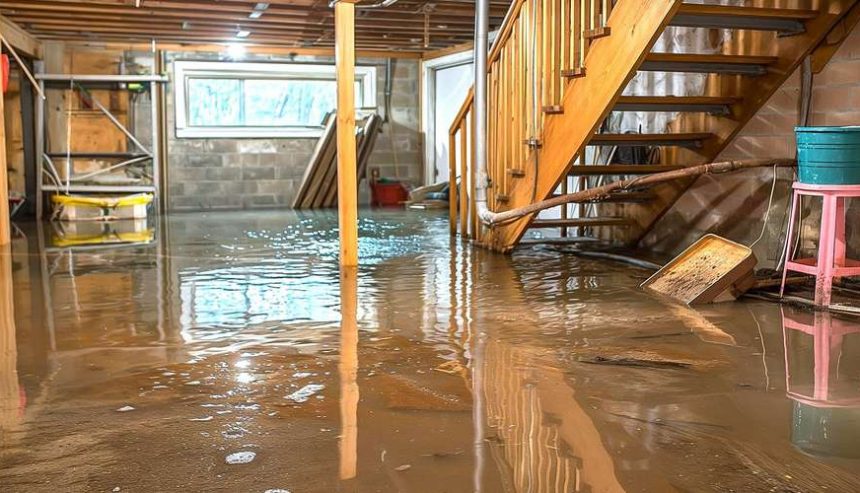
Basement flooding is one of the most distressing problems Baldwin, NY homeowners face. One moment your basement is dry and functional; the next, you’re wading through inches or even feet of water, watching your belongings float by and wondering how this happened.
Water Damage in Baldwin, NY
As Long Island’s premier water damage restoration specialists, PuroClean of Baldwin, NY has responded to thousands of basement flooding emergencies throughout our community. We’ve seen firsthand how devastating basement floods can be, and more importantly, we understand exactly why they happen and how to prevent them.
Baldwin’s unique geographic location, aging infrastructure, and coastal climate create a perfect storm of basement flooding risks. Whether you’re a longtime resident or new to the area, understanding what causes basement flooding in Baldwin homes empowers you to protect your property, prevent disasters, and respond quickly when problems arise.
Why Baldwin Basements Are Particularly Vulnerable
Before diving into specific causes, it’s essential to understand why Baldwin homes face higher basement flooding risks than many other communities.
Coastal proximity and sea level considerations. Baldwin sits just miles from the Atlantic Ocean and Reynolds Channel, with much of the community at or near sea level. Many Baldwin basements are actually below sea level, making them naturally susceptible to water intrusion during storms, high tides, and periods of heavy rainfall. This geographic reality means that water constantly seeks to infiltrate Baldwin basements through any available pathway.
High water tables. Baldwin’s water table, the underground level where soil becomes saturated, sits unusually high compared to inland communities. During wet seasons or after significant rainfall, the water table can rise to within feet of the surface, creating tremendous hydrostatic pressure against basement walls and floors. This pressure forces water through any crack, joint, or porous area in your foundation.
Read Also: Basement Flooding: 5 Costly Reasons
Aging housing stock. Much of Baldwin’s housing was constructed in the post-World War II building boom of the 1940s-1960s. These homes are now 60-80 years old, with foundation materials, waterproofing systems, and drainage infrastructure well past their intended lifespan. Concrete foundations from this era often lack modern waterproofing treatments and can develop cracks and deterioration over time.
Storm vulnerability. As a coastal Long Island community, Baldwin faces regular threats from nor’easters, hurricanes, and intense summer thunderstorms. These weather events can overwhelm drainage systems, cause storm surge, and dump inches of rain in hours—all recipes for basement flooding.
Understanding these underlying vulnerabilities helps explain why the following specific causes create such serious flooding problems in Baldwin homes.
Heavy Rainfall and Storm Events
The most common cause of basement flooding in Baldwin is simply too much rain in too little time. Long Island’s weather patterns bring intense rainfall that overwhelms both natural and artificial drainage systems.
Nor’easters and tropical systems. These major storm events can drop 3-6 inches of rain across Baldwin in 24-48 hours. Your home’s drainage system—gutters, downspouts, and foundation drains—simply cannot handle this volume. Water accumulates around your foundation faster than it can drain away, eventually finding its way into your basement through cracks, window wells, or the floor-wall joint (cove joint).
Summer thunderstorms. Baldwin’s humid summers bring sudden, intense thunderstorms that can drop 1-2 inches of rain in an hour. These flash-flood conditions create the same overwhelming effect as longer storms but with even less warning. PuroClean of Baldwin, NY sees a surge in emergency calls during these summer storm events, particularly from homes in lower-lying areas of Baldwin.
Overwhelmed municipal systems. During heavy rainfall, Baldwin’s storm sewer system can reach capacity, causing water to back up through basement floor drains. This is especially common in older neighborhoods where storm and sanitary sewers may be combined or undersized for modern rainfall patterns.
Prevention strategies:
- Install and maintain a sump pump system with battery backup
- Ensure gutters and downspouts direct water at least 6-10 feet from your foundation
- Grade your yard to slope away from your house (minimum 6 inches of drop over 10 feet)
- Consider installing a French drain system around your foundation perimeter
- Install a backwater valve on floor drains to prevent sewer backup during storms
Sump Pump Failures
Sump pumps are your basement’s primary defense against flooding, collecting groundwater and pumping it away from your foundation. When they fail—and in Baldwin, they frequently do—flooding follows quickly.
Power outages during storms. The cruel irony of sump pumps is they’re most needed during severe storms—exactly when power outages are most likely. A single power outage during a nor’easter can leave your sump pump disabled for hours or days while water continues accumulating in your basement. PuroClean of Baldwin, NY responds to dozens of these preventable floods after every major storm.
Mechanical failures. Sump pumps have moving parts that wear out, typically lasting 7-10 years under normal conditions. In Baldwin, where high water tables mean pumps often run continuously during wet seasons, lifespans can be even shorter. Float switches stick, motors burn out, and impellers break—usually at the worst possible moment.
Overwhelmed capacity. Even functioning sump pumps have limits. If groundwater infiltration exceeds your pump’s capacity (typically 2,500-5,000 gallons per hour for residential units), water accumulates faster than it can be pumped out. Homes in low-lying Baldwin areas or those with inadequate drainage systems may need higher-capacity pumps or multiple pump systems.
Clogged discharge lines. Sump pump discharge pipes can freeze during winter, become blocked by debris, or disconnect outside your home. When the pump runs but water can’t discharge, it recirculates back into the sump pit or backs up into your basement.
Lack of maintenance. Many Baldwin homeowners never test their sump pump until an emergency occurs. Pumps that sit idle during dry periods may seize up or fail when suddenly needed. The float switch can become stuck, and sump pits can fill with sediment that restricts pump operation.
Prevention and solutions:
- Install a battery backup sump pump system (cost: $800-$2,000)
- Consider a water-powered backup pump that operates during power outages
- Test your sump pump quarterly by pouring water into the pit
- Replace sump pumps every 7-10 years, before failure
- Install a sump pump alarm to alert you to malfunctions
- Keep the discharge line clear and ensure it directs water at least 20 feet from your foundation
- Schedule annual sump pump inspections with PuroClean of Baldwin, NY
Foundation Cracks and Deterioration
Your basement’s concrete foundation is supposed to be a waterproof barrier, but time, pressure, and settlement create entry points for water.
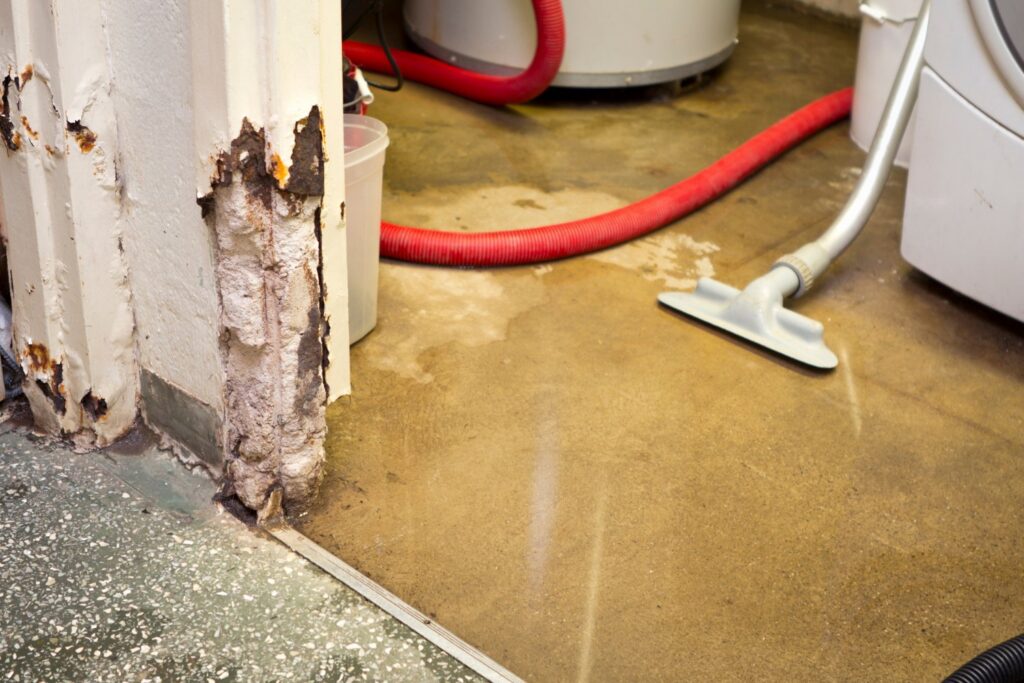
Hydrostatic pressure. Baldwin’s high water table creates constant pressure against basement walls and floors. During wet periods, this pressure intensifies dramatically. Water will exploit any weakness, forcing its way through hairline cracks, porous concrete, and mortar joints. Even seemingly minor cracks can allow hundreds of gallons into your basement during major rain events.
Settlement cracks. As homes age and soil settles, foundations develop cracks. Vertical cracks from normal settling are common in Baldwin’s older homes. More concerning are horizontal cracks or stair-step cracks in block foundations, which can indicate structural issues requiring immediate professional attention.
Floor-wall joint seepage. The cove joint—where basement floor meets walls—is inherently vulnerable because it’s difficult to waterproof during construction. In Baldwin homes built decades ago, this joint often lacks modern sealants. Hydrostatic pressure forces water through this joint, creating that telltale water line along your basement perimeter.
Porous concrete and block foundations. Concrete and concrete block are not naturally waterproof. Older Baldwin homes often have foundations without proper waterproofing treatments. Water migrates through the porous material itself, creating dampness, efflorescence (white mineral deposits), and eventually active seepage.
Window well failures. Basement windows sitting in window wells can allow water infiltration if the wells lack proper drainage, have cracked seals, or are improperly installed. During heavy rain, these wells fill with water that seeps around window frames into your basement.
Prevention and repairs:
- Apply interior waterproofing sealants to basement walls
- Inject polyurethane or epoxy into active cracks
- Install an interior French drain and sump pump system to manage water that penetrates the foundation
- Consider exterior excavation and waterproofing for severe cases (cost: $80-$150 per linear foot)
- Replace or upgrade window well covers and ensure proper drainage
- Consult with PuroClean of Baldwin, NY for professional assessment and waterproofing solutions
Inadequate or Failed Drainage Systems
Even if your foundation is sound, poor drainage around your Baldwin home will eventually cause basement flooding.
Clogged or damaged gutters. Your gutters and downspouts are designed to collect roof runoff and direct it away from your foundation. However, clogged gutters overflow during rain, dumping water directly alongside your foundation. A single clogged gutter can pour hundreds of gallons of water into the soil next to your basement wall during a storm. Baldwin’s many trees mean gutters fill with leaves, seeds, and debris quickly.
Improper downspout placement. Downspouts that discharge within 3-4 feet of your foundation deposit water where it can easily seep into your basement. This is incredibly common in Baldwin homes and one of the easiest flooding causes to fix. Yet PuroClean of Baldwin, NY regularly responds to floods that could have been prevented by simply extending downspouts.
Negative grading. Your yard should slope away from your house, allowing water to drain away naturally. However, over time, soil settles, landscaping changes, and ground levels shift. Many Baldwin properties now have soil that slopes toward the house, creating a pool of water against the foundation during rain. Sidewalks, patios, and driveways can also create dams that trap water against your foundation.
Failed or absent footer drains. Modern homes have perforated drain pipes (footer drains) installed around the foundation perimeter during construction, designed to collect and divert groundwater away from the foundation. Baldwin’s older homes may lack these systems entirely, or existing drains may be clogged with sediment, crushed by soil pressure, or infiltrated by tree roots after decades of service.
Landscaping that directs water toward your home. Well-intentioned landscaping can create flooding problems. Flower beds against your foundation, especially those with soil mounded higher than your basement floor level, direct water downward along your walls. Dense plantings can prevent soil from drying out, maintaining constant moisture against your foundation.
Prevention strategies:
- Clean gutters at least twice yearly (spring and fall), or more often if you have overhanging trees
- Extend downspouts 6-10 feet from your foundation using extensions or underground piping
- Regrade soil around your foundation to create proper slope away from the house
- Consider installing a French drain system along foundation perimeter
- Remove plantings directly against foundation walls
- Install splash blocks or downspout extensions
- PuroClean of Baldwin, NY can assess your drainage and recommend comprehensive solutions
Plumbing Failures and Appliance Leaks
Not all basement flooding comes from outside. Internal plumbing failures and appliance malfunctions frequently flood Baldwin basements.
Water heater failures. Most Baldwin homes have water heaters in the basement. These appliances typically last 10-15 years before the tank corrodes and fails. When they do, 40-80 gallons of water floods your basement within minutes. Slow leaks from corroded tanks can cause gradual damage you may not notice until mold appears or flooring warps.
Washing machine supply line failures. Washing machine hoses—especially older rubber hoses—fail regularly, rupturing and flooding basements with high-pressure water. A single burst hose can release 600+ gallons per hour, quickly flooding your basement if you’re not home.
Water supply line leaks. Main water lines, branch lines, and fixture supply lines all run through or near basements. Corrosion, freezing, and age cause these pipes to leak or burst. Baldwin’s aging housing stock means many homes still have galvanized steel pipes that corrode from the inside, eventually failing catastrophically.
Sewage backups. While technically not “flooding,” sewage backups through basement floor drains, toilets, or fixtures create some of the most devastating and costly basement water damage. Tree roots infiltrating sewer lines, city sewer backups, and clogged drain lines all cause sewage to back up into your basement—the lowest point in your plumbing system.
HVAC condensate line issues. If your furnace or air conditioning system is in the basement, condensate drains can clog or overflow, releasing water into your basement. While these leaks are typically smaller than other sources, they can cause significant damage over time if undetected.
Prevention measures:
- Replace water heaters proactively at 10-12 years, before failure
- Install a water heater catch pan with drain line to sump pit or floor drain
- Replace washing machine hoses every 3-5 years with braided stainless steel hoses
- Consider installing automatic shut-off valves on washing machines and water heaters
- Install a backwater valve on basement floor drains to prevent sewage backup
- Schedule annual plumbing inspections for older homes
- Insulate pipes in unheated areas to prevent freeze-related bursts
- Know where your main water shut-off valve is located and test it annually
Frozen and Burst Pipes
Baldwin’s winters, while not as severe as upstate New York, still bring freezing temperatures that cause pipe bursts and subsequent basement flooding.
Exterior wall pipes. Pipes in exterior walls or uninsulated basement areas are vulnerable to freezing when temperatures drop below 20°F, especially during extended cold snaps. When water freezes, it expands, bursting pipes. The flooding doesn’t begin until temperatures rise and the ice melts, often while you’re at work or away, allowing hundreds or thousands of gallons to flood your basement.
Inadequate insulation. Many Baldwin homes have partially finished basements with uninsulated sections where pipes run. These areas are particularly vulnerable during winter. Even finished basements can have cold spots where pipes freeze.
Vacant homes and power outages. Homes left vacant during winter or homes that lose heat during extended power outages face extreme freeze risk. Without heat circulating, even interior pipes can freeze and burst.
Prevention strategies:
- Insulate all exposed pipes, especially in exterior walls and unheated areas
- During extreme cold, leave faucets dripping slightly to keep water moving
- Open cabinet doors under sinks to allow warm air circulation
- Keep basement temperature above 50°F even when away
- Consider installing heat tape on vulnerable pipe sections
- Know where your main water shut-off is and shut it off if leaving home vacant during winter
- If pipes freeze, call PuroClean of Baldwin, NY immediately—we can help before they burst
Sanitary Sewer Backups
One of the most distressing causes of basement flooding in Baldwin involves sewage backing up through floor drains, toilets, or other basement fixtures.
Tree root infiltration. Baldwin’s mature trees create beautiful neighborhoods but their roots constantly seek water sources. Sewer lines develop small cracks or joint separations over decades, and roots infiltrate these openings. Eventually, roots create complete blockages that cause sewage to back up into your home’s lowest point—your basement.
Combined sewer systems. Some older Baldwin neighborhoods have combined sewer systems where storm water and sanitary sewage share pipes. During heavy rain, these systems become overwhelmed, and sewage backs up through basement drains.
Main sewer line blockages. Accumulated grease, “flushable” wipes (which aren’t actually flushable), feminine hygiene products, and other debris can clog your main sewer line. When completely blocked, all drainage from your home backs up into the basement.
City sewer system backups. Sometimes the problem isn’t your pipes but the municipal system. When city sewers back up during storms or due to blockages, sewage can flow backward into your home through floor drains.
Prevention and solutions:
- Install a backwater prevention valve on your basement floor drain (cost: $300-$800)
- Have your sewer line inspected with a camera every 3-5 years to identify root infiltration early
- Never flush anything except toilet paper and human waste
- Avoid planting trees directly over sewer lines
- Clean your main sewer line every 2-3 years if you have mature trees on your property
- Consider sewer line insurance or endorsement for your homeowners policy
- If sewage backs up, evacuate and call PuroClean of Baldwin, NY immediately, sewage is a Category 3 biohazard requiring professional remediation
What to Do When Your Baldwin Basement Floods
Despite best prevention efforts, basement flooding can still occur. Knowing how to respond minimizes damage and costs.
Safety first. Never enter a flooded basement if water has reached electrical outlets or your electrical panel. Standing water and electricity create lethal shock hazards. Shut off power at the main breaker if you can access it safely from a dry location, or call an electrician.
Stop the source. If flooding results from internal plumbing, shut off the water supply immediately. For external flooding during storms, there’s little you can do except ensure your sump pump is operating if you have power.
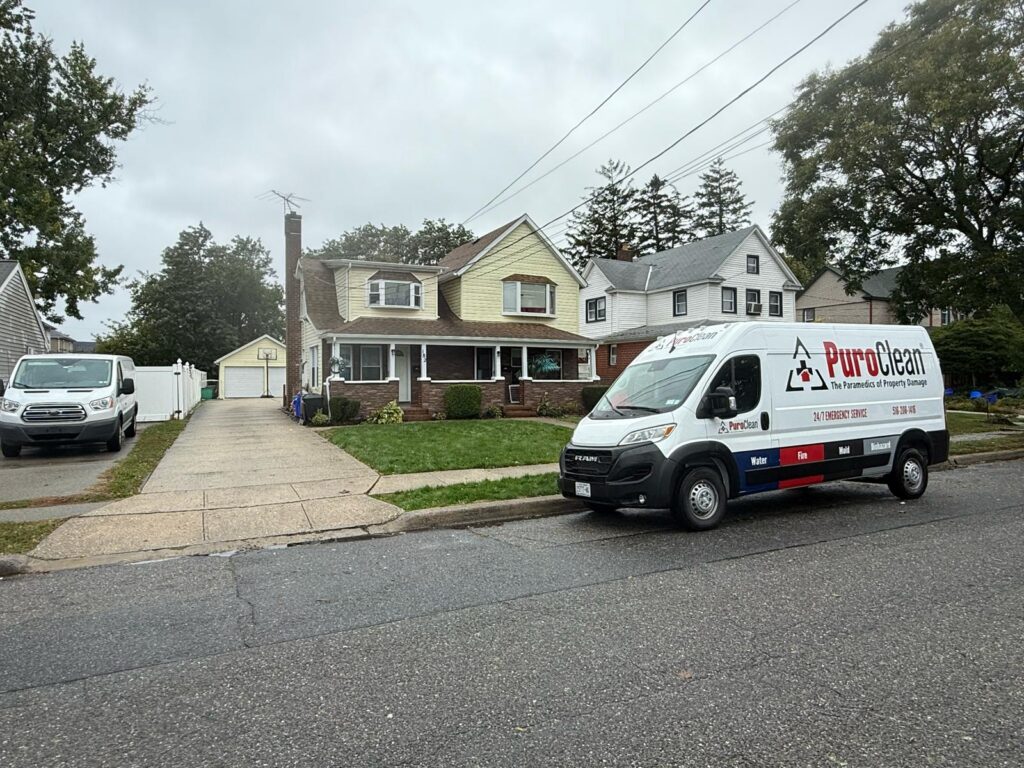
Call professionals immediately. Contact PuroClean of Baldwin, NY at our 24/7 emergency line. We respond immediately to basement flooding throughout Baldwin, bringing industrial water extraction equipment, dehumidifiers, and expertise to minimize your damage and costs. We also work directly with your insurance company to streamline claims.
Document everything. Take photos and videos of the flooding, water depth, and damaged items before cleanup begins. This documentation is essential for insurance claims.
Begin water removal. For minor flooding (less than an inch of clean water), you can begin removing water with a wet/dry vacuum once electrical safety is ensured. However, for significant flooding, professional extraction equipment removes water far more thoroughly and quickly.
Don’t delay. Mold begins growing within 24-48 hours in Baldwin’s humid climate. Every hour you wait allows water to penetrate deeper into walls, insulation, and subflooring, increasing damage and costs dramatically. Immediate professional response from PuroClean of Baldwin, NY protects your home and your investment.
Protect Your Baldwin Home Today: Call PuroClean of Baldwin, NY
Basement flooding in Baldwin homes results from a perfect storm of geographic vulnerability, aging infrastructure, and weather extremes. However, understanding these common causes empowers you to take proactive steps that dramatically reduce your risk.
Whether you need emergency flood response, professional waterproofing assessment, drainage system evaluation, or sump pump installation and maintenance, PuroClean of Baldwin, NY provides comprehensive solutions backed by decades of local experience.
Don’t wait until water is pouring into your basement. Contact PuroClean of Baldwin, NY today for a professional basement assessment. We’ll identify your vulnerabilities, recommend cost-effective prevention strategies, and ensure you’re prepared if flooding strikes.
Your Baldwin home deserves protection from basement flooding. Trust the local experts who understand Baldwin’s unique challenges, trust PuroClean of Baldwin, NY. Call us 24/7 for emergency service or schedule a prevention assessment today.
Connect With Us on Social Media!


