


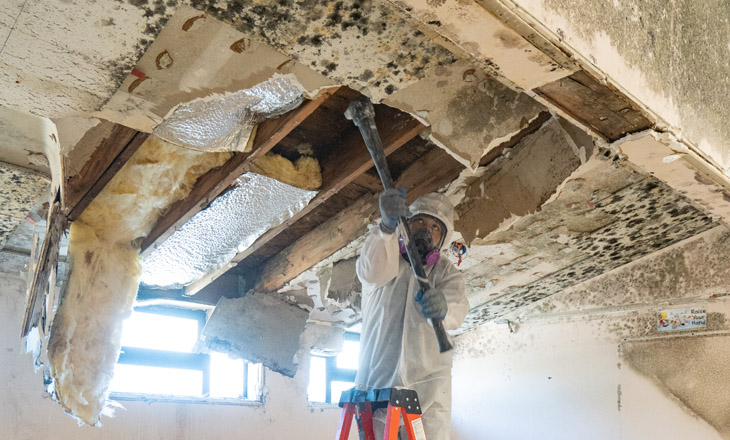
Mold is one of the most common and most misunderstood problems that Nassau County homeowners face. It grows silently behind walls, under floors, and inside HVAC systems. It produces health effects that are often mistaken for allergies or respiratory illness. It damages structural materials progressively over months and years. And it is far more prevalent in Long Island homes than most people realize, given the region’s combination of aging housing stock, coastal humidity, high water table, and regular storm-driven moisture intrusion.
Mold remediation is the professional process of identifying, containing, removing, and preventing the recurrence of mold growth in a property. It is not the same as mold cleaning, and it is not something that bleach, vinegar, or store-bought mold spray can accomplish in anything beyond the most superficial surface situations. Done correctly, professional mold remediation eliminates the existing mold problem, addresses the moisture source that allowed it to develop, and returns your home to a safe, healthy condition.
At PuroClean of Baldwin, mold remediation is one of the core services we provide to homeowners, landlords, and businesses throughout Nassau County and Long Island. This comprehensive guide covers everything you need to know: what mold actually is, why it grows in Nassau County homes, the health effects it causes, how professional remediation works from start to finish, what it costs, how insurance coverage works, and how to choose the right contractor.
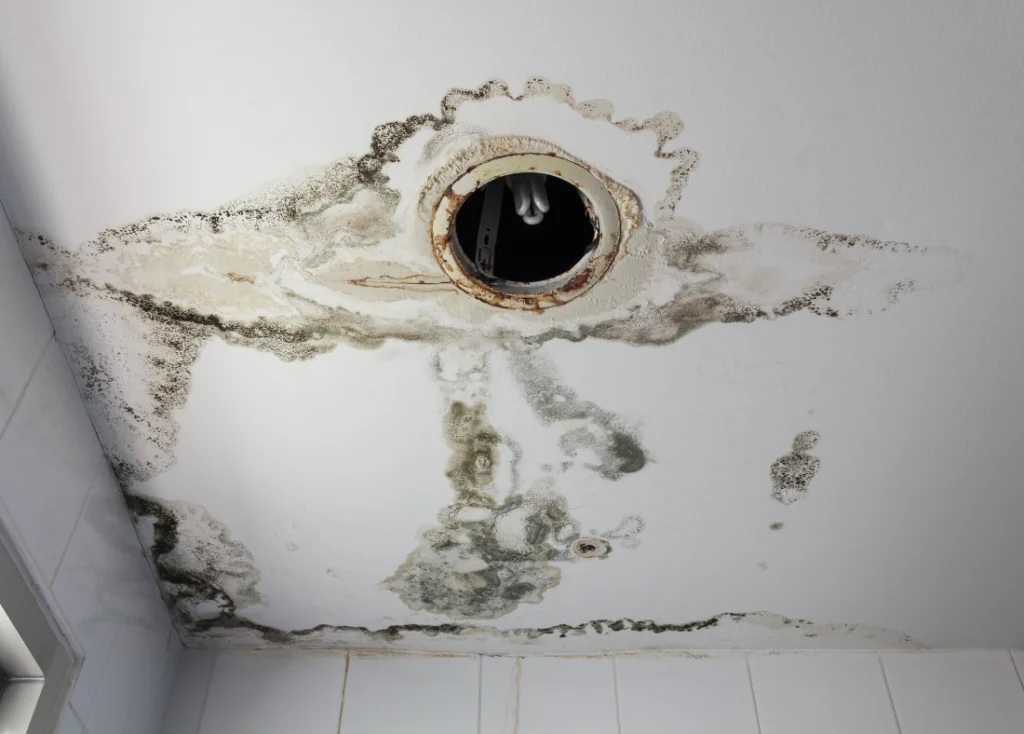
What Is Mold and Why Does It Grow in Nassau County Homes?
Mold is a category of fungi that reproduces through microscopic spores. Mold spores are everywhere in the natural environment, including in the outdoor and indoor air of every home. The presence of spores alone is not the problem. The problem begins when spores land on a surface that provides the conditions necessary for germination and growth: moisture, an organic food source, and a temperature in the range that most residential spaces maintain.
Of these three conditions, moisture is the only one that homeowners can realistically control. Organic food sources, which include wood, drywall paper, dust, and virtually any building material with organic content, are present throughout every home. Temperature within the mold growth range exists in every occupied structure. Moisture is the trigger, and eliminating moisture is the key to both remediating existing mold and preventing its return.
Why Nassau County Homes Are Particularly Vulnerable
Long Island’s environmental and housing conditions create elevated mold risk compared to many other regions. Nassau County homeowners contend with:
- Coastal humidity: Nassau County’s proximity to the Atlantic Ocean and Great South Bay produces consistently higher ambient humidity levels than inland areas, particularly during summer months. High indoor humidity without adequate dehumidification creates baseline conditions that favor mold growth even without active water intrusion.
- Aging housing stock: A large proportion of Nassau County homes were built between the 1940s and 1970s. These homes frequently have plumbing systems, roofing materials, and building envelopes that are at or past the end of their service life, creating multiple pathways for moisture intrusion.
- High water table: The water table across much of Nassau County is relatively shallow. Basements and crawl spaces in many communities sit close to or seasonally below the water table, creating chronic moisture conditions in these below-grade spaces.
- Storm activity: Nor’easters, tropical systems, and severe summer storms regularly drive rain against and through aging building envelopes, introduce flooding to low-lying areas, and overwhelm sewer systems that back up into homes.
- HVAC moisture: Central air conditioning systems that are not properly maintained accumulate condensate moisture in drain pans and on evaporator coils, creating localized mold growth that then circulates spores throughout the home every time the system runs.
Health Effects of Mold Exposure: What Nassau County Families Need to Know
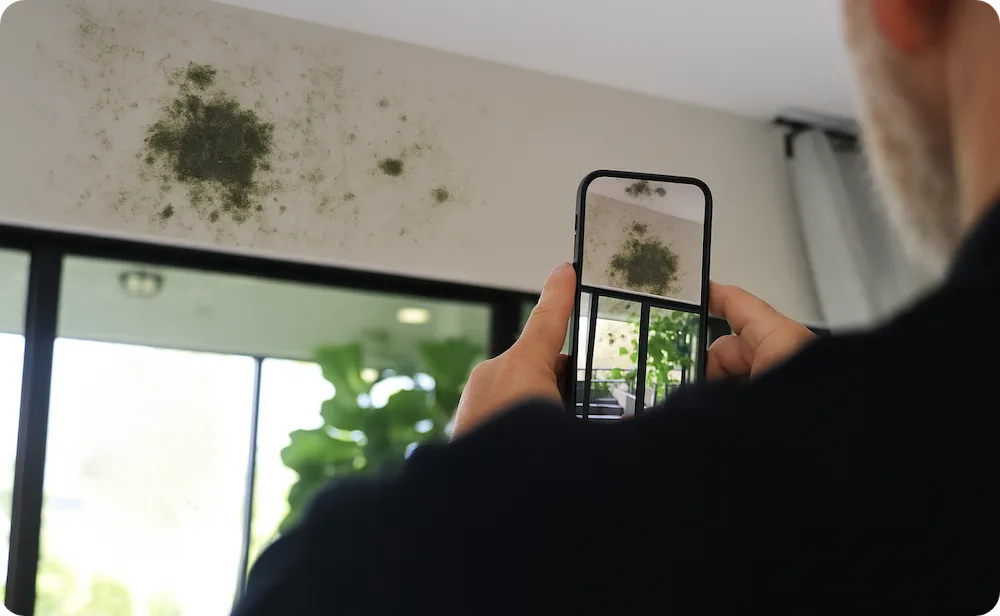
Mold produces several categories of compounds that affect human health, and the health effects of mold exposure vary significantly depending on the type of mold, the concentration of exposure, the duration of exposure, and the individual’s sensitivity and health status.
Allergenic Effects
The most common health effects of mold exposure are allergenic reactions. Mold spores and the fragments of mold hyphae that become airborne trigger immune responses in sensitive individuals, producing symptoms that closely resemble seasonal allergies: nasal congestion, runny nose, sneezing, itchy and watery eyes, and skin irritation. These symptoms often occur year-round for occupants of mold-affected homes, rather than following the seasonal pattern of outdoor allergen exposure.
Respiratory Effects
For individuals with asthma, chronic obstructive pulmonary disease, or other pre-existing respiratory conditions, mold exposure can trigger or worsen symptoms significantly. Mold spores in the respiratory tract can provoke bronchospasm, increase airway inflammation, and cause asthma attacks. Children and elderly individuals are particularly vulnerable. Nassau County families with members who have developed new or worsening respiratory symptoms should consider mold assessment as part of the diagnostic workup.
Mycotoxin Effects
Certain mold species produce mycotoxins, toxic chemical compounds that can cause more serious health effects beyond simple allergenic reactions. Stachybotrys chartarum, commonly referred to as black mold, is the most widely known mycotoxin-producing species, but it is not the only one. Mycotoxin exposure at elevated concentrations is associated with neurological symptoms, immune suppression, and other systemic effects. It is important to note that the presence of any black-colored mold does not automatically mean Stachybotrys is present. Laboratory testing is required to identify mold species.
Vulnerable Populations
While any person can experience adverse health effects from significant mold exposure, certain groups face greater risk. Infants and young children whose immune systems are still developing, elderly individuals with reduced immune function, people with HIV/AIDS or other immunocompromising conditions, individuals undergoing chemotherapy, and anyone with chronic respiratory conditions are all at elevated risk from mold exposure. For households that include members of these groups, a lower threshold for professional mold assessment and remediation is appropriate.
Common Mold Types Found in Nassau County Homes
| Mold Type | Appearance | Common Location | Health Concern |
| Cladosporium | Olive, brown, or black | Fabrics, HVAC, wood surfaces | Allergenic, respiratory |
| Penicillium | Blue, green, or white | Water-damaged materials, food | Allergenic, some species produce mycotoxins |
| Aspergillus | Varied: white, green, black | HVAC, insulation, damp walls | Allergenic; dangerous to immunocompromised |
| Stachybotrys | Dark green or black, slimy | Chronically wet drywall and wood | Mycotoxin producer; serious health risk |
| Chaetomium | White to gray to black | Water-damaged drywall | Allergenic; produces mycotoxins |
| Alternaria | Dark green or brown, velvety | Bathrooms, below sinks | Common allergen; triggers asthma |
| Trichoderma | White with green patches | Wet wood, paper, carpet | Allergenic; produces enzymes damaging to materials |
Species identification requires laboratory analysis of air or surface samples. Effective remediation protocols address all mold regardless of species, so testing before remediation is not always necessary. Testing is most valuable for post-remediation verification, when health symptoms are present, or when documentation is needed for insurance or real estate purposes.
Where Mold Hides in Nassau County Homes: The Most Common Problem Locations
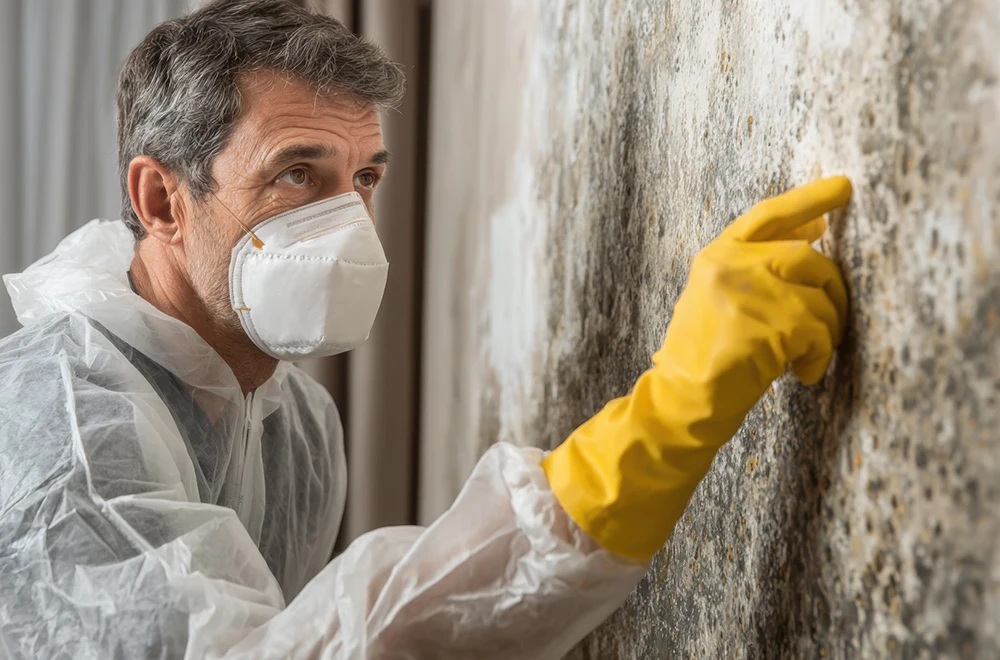
Bathrooms
Bathrooms are the most common location for household mold because they combine consistent moisture from showers and baths, frequent temperature fluctuations, and often inadequate ventilation. Mold on grout and caulk lines is the most visible manifestation, but the more serious growth typically occurs inside wall cavities behind tile, under the subfloor around the toilet and tub, and inside exhaust fan ducts that vent improperly or not at all.
Basements
Nassau County basements face chronic moisture challenges from groundwater, the high water table, storm flooding, and the natural tendency of below-grade spaces to accumulate humidity. Mold in basements frequently grows on the back of drywall, on wood framing and sill plates at the base of walls, on stored boxes and organic materials, and on concrete surfaces where efflorescence indicates moisture migration through the foundation.
Attics
Attic mold is often discovered during home inspections and is one of the most commonly misunderstood mold problems. It typically results from inadequate attic ventilation, bathroom or kitchen exhaust fans that vent into the attic rather than outside, and ice dam formation that allows meltwater to penetrate the roof deck. Attic mold grows on the underside of roof sheathing and on rafters and trusses, and it can be extensive while producing no visible signs from the living space below.
Behind Walls and Under Floors
Hidden mold behind drywall and under flooring is the most difficult to detect and the most common source of unexplained musty odors and health symptoms in otherwise clean-looking homes. Slow plumbing leaks, condensation on cold pipes running through warm wall cavities, and moisture migration through exterior walls all create conditions for mold growth that is completely invisible from the room side.
HVAC Systems
Mold inside heating and cooling systems is a particularly serious situation because the system actively distributes spores throughout every room it serves. Mold grows on evaporator coils where condensate moisture accumulates, in drain pans that do not drain completely, on the surfaces of supply and return ducts, and on the insulation inside air handler cabinets. A musty odor from supply registers when the system runs is a common signal of HVAC mold contamination.
Crawl Spaces
Crawl spaces in Nassau County homes face severe moisture challenges. Ground moisture evaporates upward through inadequate or deteriorating vapor barriers, outdoor humidity enters through crawl space vents, and groundwater intrusion occurs during storm events. Mold grows on wood framing, insulation, and any organic material in these spaces and can migrate upward into the living area through floor penetrations and the HVAC system.
The Professional Mold Remediation Process: Step by Step
Understanding what professional mold remediation actually involves helps Nassau County homeowners evaluate proposals and recognize whether work being performed at their home meets industry standards. Here is the complete process as PuroClean of Baldwin performs it:
Step 1: Comprehensive Mold Inspection and Assessment
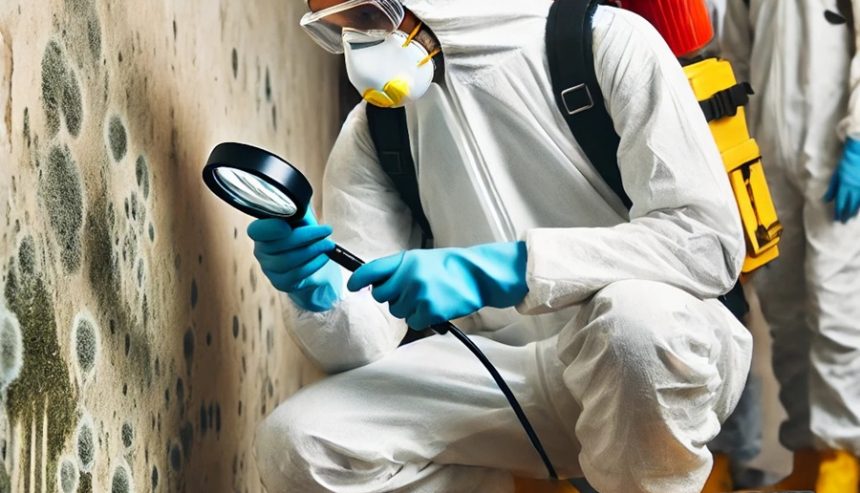
Professional remediation begins with a thorough inspection that goes well beyond looking at visible mold. Our certified inspectors use thermal infrared cameras to detect moisture patterns in walls and ceilings without opening them, digital moisture meters to measure the moisture content of structural materials, and borescope cameras to inspect inside wall cavities when needed. The inspection maps the full extent of mold growth and identifies every moisture source contributing to the problem.
Step 2: Mold Testing When Appropriate
Mold testing is not always necessary before remediation, but it is valuable in specific situations. Air quality sampling measures the concentration of mold spores in the indoor air compared to outdoor baseline levels. Surface sampling identifies the mold species present on affected surfaces. Testing is most useful when occupants are experiencing health symptoms, when the extent of hidden mold needs to be established, or when post-remediation verification documentation is required. All testing should be performed by a third-party industrial hygienist who is independent of the remediation contractor.
Step 3: Containment Setup
Before any mold is disturbed, the affected area is sealed off from the rest of the home to prevent cross-contamination. Containment involves sealing doorways with plastic sheeting and tape, covering HVAC vents in the work area, and establishing negative air pressure inside the containment zone using HEPA-filtered air scrubbers. Negative air pressure ensures that any air movement is into the containment zone from the clean areas outside it, not outward from the contaminated work area into the rest of the home.
Step 4: Moisture Source Correction
This step is non-negotiable and is what separates genuine professional remediation from surface cleaning that will fail within weeks. The moisture source feeding the mold growth must be identified and corrected before any mold removal begins. A plumbing leak must be repaired. A roof defect must be addressed. An HVAC drain must be cleared. A crawl space vapor barrier must be repaired or replaced. Removing mold without fixing the moisture source is the equivalent of mopping up water without turning off the tap.
Step 5: Removal of Contaminated Materials
Porous materials that have been colonized by mold cannot be cleaned. Drywall, insulation, carpet, and other porous materials with mold growth must be physically removed and properly disposed of as mold-contaminated waste. The extent of material removal is determined by the inspection findings and moisture readings, not by visible mold alone, because mold often extends into materials beyond the visible growth boundary.
Step 6: HEPA Vacuuming and Surface Cleaning
After contaminated materials are removed, all remaining surfaces in the containment zone are thoroughly cleaned. HEPA vacuuming removes loose mold spores and debris from surfaces without reintroducing them to the air. Surfaces are then cleaned using antimicrobial agents appropriate to the specific surfaces and mold types present. Wire brushing may be used on rough wood surfaces where mold has penetrated the grain.
Step 7: Antimicrobial Treatment
After cleaning, all surfaces in the affected area are treated with EPA-registered antimicrobial agents that inhibit residual mold growth. These agents are applied to structural framing, sheathing, and any other surfaces that will be enclosed when the area is rebuilt. This treatment provides an additional layer of protection against recurrence during the period before the restored area is fully dried and sealed.
Step 8: Structural Drying
Any residual moisture in structural materials must be brought to acceptable levels before the area is rebuilt. Commercial dehumidifiers and air movers are deployed and monitored until moisture readings confirm that all materials have reached target levels. Rebuilding over wet materials creates immediate conditions for mold recurrence.
Step 9: Rebuild and Restoration
Once the affected area is clean, treated, and dry, structural materials are replaced and the area is restored to pre-loss condition. New drywall is installed, insulation is replaced, and finish work including paint is applied using mold-resistant materials where appropriate.
Step 10: Post-Remediation Verification Testing
After remediation is complete and before containment is removed, clearance testing by an independent third-party industrial hygienist confirms that mold levels throughout the affected area have been reduced to levels consistent with normal background concentrations. This verification is the professional standard for confirming that remediation was successful and provides documentation for insurance claims, real estate transactions, and the homeowner’s own peace of mind.
New York State Mold Licensing Requirements
New York is one of a small number of states that require contractors performing mold assessment and mold remediation to hold state-issued licenses. The New York State Department of Labor licenses both mold assessors and mold remediators under Article 32 of the New York Labor Law, which took effect in 2016.
Under New York law, a licensed mold assessor must develop the mold remediation plan and perform the post-remediation assessment. A licensed mold remediator must perform the actual remediation work. The same company cannot perform both the assessment and the remediation on the same project, ensuring independent verification of results.
Before hiring any mold contractor in Nassau County, verify that they hold current New York State mold remediation and assessment licenses. Unlicensed mold work exposes homeowners to legal liability and provides no guarantee that the work meets professional standards. PuroClean of Baldwin operates in full compliance with New York Article 32 licensing requirements.
DIY Mold Removal vs. Professional Remediation: The Real Difference
The EPA recommends that mold covering more than 10 square feet be handled by a professional. For Nassau County homeowners, this threshold is a helpful guideline, but there are situations where professional remediation is warranted even for smaller areas:
- When mold is present in an HVAC system
- When mold is suspected inside wall cavities or under flooring
- When any household member has a respiratory condition, compromised immune system, or mold sensitivity
- When the same mold keeps returning after cleaning, indicating an unresolved moisture source
- When the mold has an unusual appearance or an unusually strong odor
- When a real estate transaction is involved and documentation is required
The most important limitation of DIY mold removal is not the cleaning itself but the inability to verify results. Without moisture mapping, air quality testing, and containment, DIY cleaning can dislodge mold spores and spread them to previously unaffected areas while appearing to solve the visible problem. Professional remediation with clearance testing is the only way to confirm that the problem has been genuinely resolved.
Mold Prevention: How Nassau County Homeowners Can Reduce Risk
The most effective mold prevention strategy is moisture control. Here are the specific measures most relevant to Nassau County homes:
- Maintain indoor humidity below 50 percent: Use a hygrometer to monitor indoor humidity levels. During Nassau County’s humid summers, a whole-home or portable dehumidifier in basement and crawl space areas is often necessary.
- Ensure bathroom and kitchen exhaust fans vent outside: Fans that vent into attics or wall cavities create exactly the moisture conditions mold needs in those enclosed spaces.
- Inspect and maintain gutters and downspouts: Gutters that overflow or downspouts that discharge too close to the foundation direct water toward the structure. Ensure downspouts discharge at least six feet from the foundation.
- Address plumbing leaks immediately: Even slow, minor leaks create ongoing moisture conditions that support mold growth over time. Fix leaks as soon as they are identified.
- Maintain your crawl space vapor barrier: Inspect crawl space vapor barriers annually and repair or replace sections that are torn, displaced, or deteriorating.
- Schedule annual HVAC maintenance: Annual professional HVAC maintenance includes inspection and cleaning of the drain pan and evaporator coil, which are the most common locations for mold growth in heating and cooling systems.
- Act quickly after water intrusion: Mold can begin growing within 24 to 48 hours on wet materials. Any water intrusion event should be professionally dried immediately.
Mold Remediation and Homeowners Insurance in Nassau County
As covered in depth in our companion post on whether homeowners insurance covers mold, coverage for mold remediation under a standard New York homeowners policy is conditional on the cause of the mold. Mold resulting from a sudden, covered water event such as a burst pipe is generally covered. Mold resulting from flooding, long-term neglect, or chronic moisture conditions is generally not covered.
For Nassau County homeowners pursuing a mold insurance claim, the documentation produced during professional remediation is critical. PuroClean of Baldwin’s remediation documentation includes moisture readings, inspection photographs, scope of work detail, materials removed, treatments applied, and post-remediation clearance test results. This complete record gives your insurance adjuster everything needed to process the claim efficiently and completely.
New York homeowners policies frequently include mold coverage sublimits, often $5,000 to $10,000, that are lower than the overall dwelling coverage limit. Understanding your policy’s specific mold sublimit before a loss occurs is an important part of financial preparedness.
How to Choose a Mold Remediation Contractor in Nassau County
Given the prevalence of mold problems in Nassau County and Long Island, the local market includes a wide range of contractors offering mold remediation services. Not all of them operate to the same standards. Here is what to verify before hiring:
- New York State mold remediation license: Required by law. Verify the license number on the New York State Department of Labor website before signing any contract.
- Industry certifications: Look for IICRC (Institute of Inspection, Cleaning and Restoration Certification) certifications, particularly the Applied Microbial Remediation Technician (AMRT) designation.
- Independent post-remediation testing: Any reputable contractor will recommend clearance testing by an independent third party. Be cautious of contractors who perform their own clearance testing.
- Written scope of work: A detailed written scope that identifies affected areas, containment plan, materials to be removed, cleaning and treatment methods, and drying targets is the foundation of a professional project.
- Insurance carrier relationships: Contractors with established relationships with major insurance carriers and experience navigating the claims process add significant value to a project.
- Local references: Ask for references from Nassau County or Long Island homeowners who have had similar mold situations addressed. Local experience matters for understanding the specific moisture challenges of Long Island homes.
Mold Remediation by PuroClean of Baldwin
PuroClean of Baldwin is a licensed, certified mold remediation contractor serving Nassau County and Long Island. Our certified technicians hold IICRC Applied Microbial Remediation Technician credentials and operate under New York State Article 32 mold licensing requirements. We have performed mold remediation in hundreds of Nassau County homes across every type of mold situation from bathroom tile mold to whole-basement remediation to complex attic mold projects.
We provide free mold assessments, transparent written estimates, and direct insurance carrier communication. Our remediation documentation is designed to support complete insurance claim recovery. We coordinate independent post-remediation clearance testing and do not consider a project complete until clearance results confirm that mold levels have returned to safe background concentrations.
We serve homeowners, landlords, property managers, and real estate professionals throughout Baldwin, Freeport, Rockville Centre, Merrick, Bellmore, Oceanside, Valley Stream, Lynbrook, and the surrounding Nassau County communities, seven days a week with emergency response capability for urgent situations.
Frequently Asked Questions About Mold Remediation
How do I know if I have mold if I cannot see it?
The most common signs of hidden mold are a persistent musty or earthy odor in a specific area of the home, unexplained allergy-like symptoms that improve when you leave the house, visible water staining or moisture damage on walls or ceilings, and any history of water intrusion events including plumbing leaks, flooding, or roof leaks. If any of these conditions are present, a professional mold inspection is warranted.
Is all black mold dangerous?
No. The term black mold is commonly used to refer to Stachybotrys chartarum, a mycotoxin-producing species that requires laboratory testing to identify. Many mold species appear black or dark green. The color of mold visible to the naked eye does not identify the species or its toxicity. All mold growth in a home should be remediated regardless of color. If species identification is needed for health or legal purposes, laboratory testing is required.
Can I paint over mold to get rid of it?
No. Paint does not kill mold or prevent it from continuing to grow. Painting over mold simply hides it temporarily. The mold continues to grow beneath the paint surface, eventually penetrating the new paint layer and reappearing. Mold must be physically removed and the moisture source corrected before any painting is done.
Will mold come back after remediation?
Mold will not return after professional remediation if two conditions are met: the moisture source has been correctly identified and permanently resolved, and the remediation was performed to clearance standards. If the moisture source is not fixed, mold will return regardless of how thorough the remediation was. This is why moisture source correction is a non-negotiable step in the professional remediation process.
How long does mold remediation take?
Duration depends on the size of the affected area and the scope of material removal and structural work required. A single-room bathroom remediation typically takes two to four days. A basement mold project can take five to ten days. A whole-attic project with insulation replacement may take one to two weeks. Your PuroClean project manager provides a detailed timeline estimate after the initial inspection.
Should I leave my home during mold remediation?
For small, well-contained projects with proper containment in place, remaining in the home may be possible. For larger projects, projects involving HVAC system contamination, or any situation where a household member has a respiratory condition or mold sensitivity, temporary relocation during the active remediation phase is recommended. Your project manager will advise you based on your specific situation.
Schedule Your Free Mold Assessment With PuroClean of Baldwin
Mold in a Nassau County home is not a problem that resolves on its own or that benefits from delayed action. Every week that mold goes unaddressed, it expands its footprint, deepens its penetration into structural materials, and continues affecting the air quality and health environment of your home.
PuroClean of Baldwin provides free, no-obligation mold assessments throughout Nassau County and Long Island. Our certified inspectors use professional detection technology to give you an accurate picture of what is actually happening in your home, followed by a transparent, written estimate for professional remediation if it is needed.
Call PuroClean of Baldwin today to schedule your free assessment. We serve Baldwin, Freeport, Rockville Centre, Merrick, Bellmore, Oceanside, Valley Stream, Lynbrook, and all of Nassau County, seven days a week with 24/7 emergency response capability.
Connect With Us on Social Media!
Facebook | Instagram | Twitter | NextDoor | Pinterest | Google Reviews | LinkedIn | Tiktok | YouTube

PuroClean of Baldwin | Serving Nassau County and Long Island Communities.


