


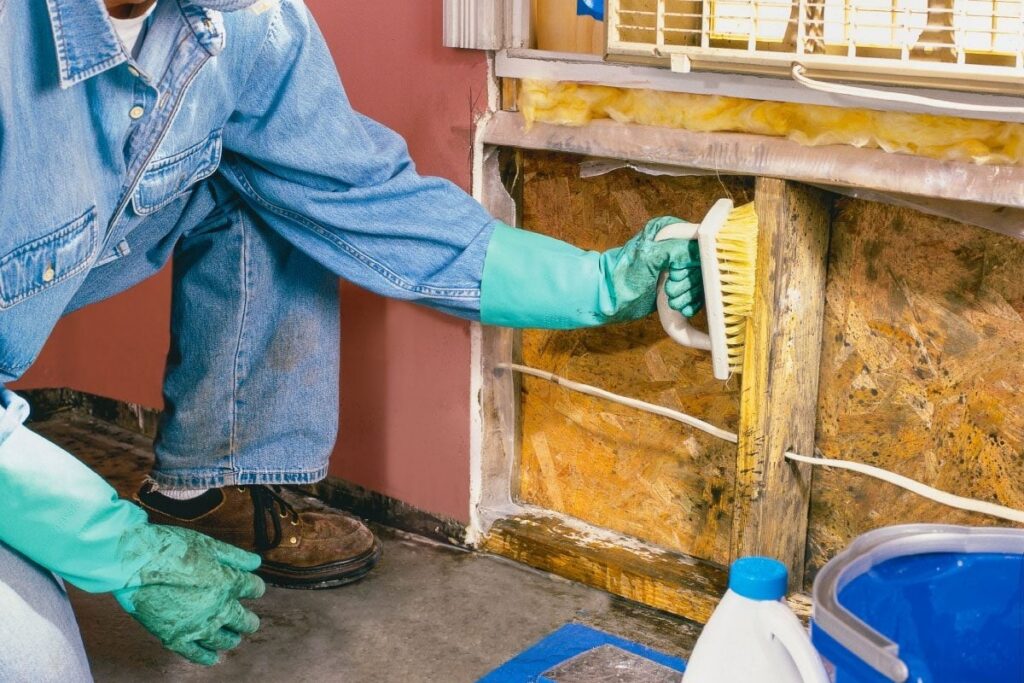
Walk into any big-box hardware store and you’ll find an entire aisle devoted to mold and mildew products. Sprays, gels, bleach-based cleaners, foggers, sealants all of them marketed with confident promises about eliminating mold fast and keeping it gone. It’s easy to understand the appeal. Mold shows up, you spray it down, you wipe it away, problem solved.
Mold Removal and Remediation: Call (516) 200-1416
Except it isn’t. Not really. And for homeowners in Baldwin, New York, this misunderstanding isn’t just inconvenient it can be genuinely dangerous.
Baldwin’s combination of aging housing stock, proximity to the South Shore, and the lingering moisture legacy of major storms like Sandy makes it one of the more mold-prone communities in Nassau County. Homes here deserve more than a surface scrub. They deserve a remediation approach that actually works one that addresses what you can see, what you can’t see, and what caused the problem in the first place.
This post breaks down exactly why professional mold remediation is not a luxury for Baldwin homeowners, but a necessity.
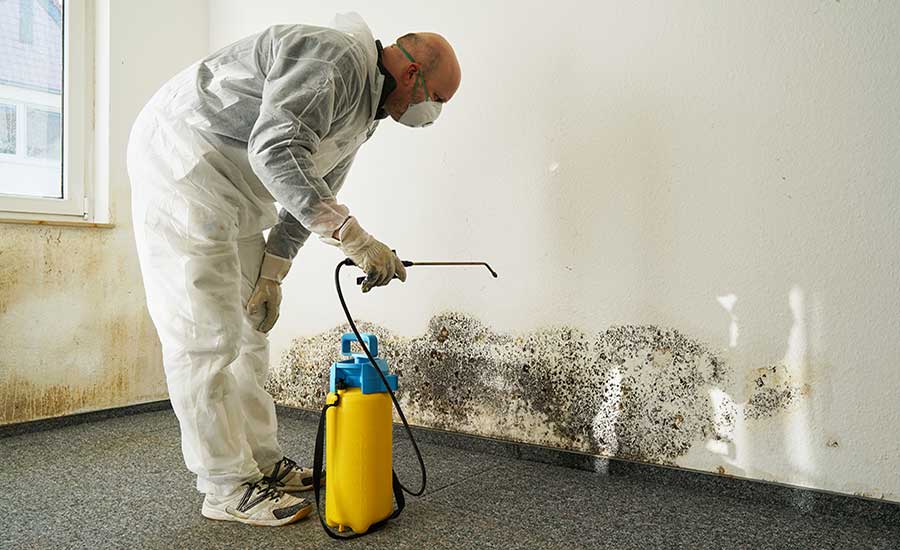
The Difference Between Cleaning Mold and Remediating It
This distinction is at the heart of why so many DIY mold treatments fail. Cleaning mold means removing visible growth from a surface. Remediation means identifying and eliminating the conditions that allowed mold to take hold, removing all affected material not just the visible portions and restoring the environment to a state where mold cannot return.
Think of it this way: if you have weeds growing in your garden, you can pull the tops off and your yard will look clean for a week or two. But if you don’t get the roots, the weeds come back. Mold works the same way. The visible colony on your bathroom wall or basement ceiling is only the surface expression of a much larger network of fungal growth that has penetrated porous materials like drywall, wood, and insulation. Wiping it down or spraying it with bleach kills some of what’s on the surface but leaves the root system intact and leaves the underlying moisture conditions that fed it in the first place completely unaddressed.
Professional remediation goes to the root. It traces moisture to its origin. It removes compromised materials rather than trying to clean them. And it restores the space using methods that are verified to work, not just products that smell effective.
Why Baldwin Homes Are Particularly Vulnerable
To understand why professional remediation matters so much in Baldwin specifically, it helps to understand what makes this community uniquely susceptible to mold.
The age of the housing stock. Much of Baldwin was developed in the post-World War II building boom of the late 1940s through the 1960s. These homes were built with the materials and methods of their era which means many lack modern vapor barriers, have minimal mechanical ventilation, and were constructed with wood framing and insulation that absorbs and retains moisture readily. When moisture gets into these homes, it tends to stay.
Read Also: DIY Mold Remediation vs. Professionals: Why Experts Are Better
Geographic humidity. Baldwin sits just north of the South Shore barrier beaches, and the proximity to the Atlantic Ocean keeps relative humidity consistently elevated throughout much of the year. Summer humidity in Nassau County regularly exceeds 70 to 80 percent the sweet spot for rapid mold growth. Even homes without active leaks can develop mold problems simply from ambient moisture migrating through walls and floors.
The flooding legacy. Superstorm Sandy in 2012 left a lasting mark on South Shore communities, and Baldwin was among the hardest hit areas in Nassau County. Many homes that flooded were repaired and returned to service, but the drying and remediation done in the aftermath ranged from thorough to superficial. In homes where residual moisture was sealed behind repaired walls or under new flooring without proper treatment, mold has continued growing quietly for years. Homeowners who purchased properties after Sandy may be dealing with remediation problems they never knew they were inheriting.
Foundation and basement challenges. Baldwin’s relatively flat topography and high water table create chronic challenges for basements and crawl spaces. Water infiltration through poured concrete foundations, block walls, and crawl space floors is extremely common. Moisture-wicking foundations keep basement air damp year-round, making these spaces prime real estate for mold colonies.
All of these factors combine to create a mold environment that is considerably more complex than what you’d encounter in a drier, newer-construction community. That complexity demands a professional response.
What a Professional Sees That You Don’t
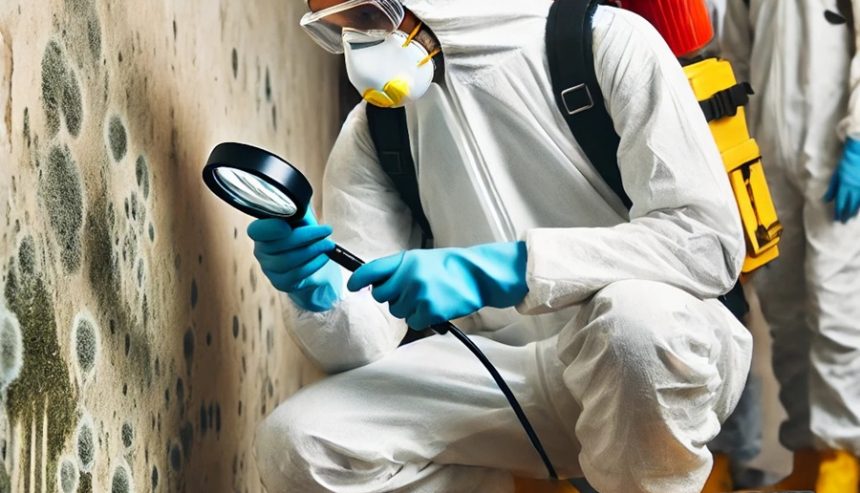
One of the most important services a professional remediator provides isn’t removing mold it’s finding it. Hidden mold is endemic in Baldwin homes, and it’s often far more extensive than any visible growth suggests.
Mold frequently colonizes the interior faces of exterior walls, where warm interior air meets cold wall surfaces and condensation occurs. It grows inside wall cavities around windows where flashing has failed and water has been seeping in undetected. It spreads across the underside of roof sheathing in poorly ventilated attics. It colonizes subfloor assemblies beneath bathrooms where wax ring seals have degraded. In each of these cases, the occupants of the home may have no idea anything is wrong until health symptoms emerge or a renovation exposes years of unchecked growth.
Professional remediators use tools that make the invisible visible. Thermal imaging cameras detect temperature differentials in walls and ceilings that indicate moisture behind surfaces. Moisture meters quantify the water content of building materials and can identify zones of chronic dampness that haven’t yet produced visible mold but will. Air sampling and surface swab testing conducted by certified industrial hygienists provide a scientific picture of the mold species present and their concentration levels.
Without these tools and the trained eye to interpret what they reveal, a homeowner simply cannot know the true scope of what they’re dealing with. And treating 10 percent of a problem while leaving 90 percent untouched isn’t remediation it’s theater.
The Problem With DIY Approaches
Let’s be direct about why DIY mold treatment so often makes things worse rather than better.
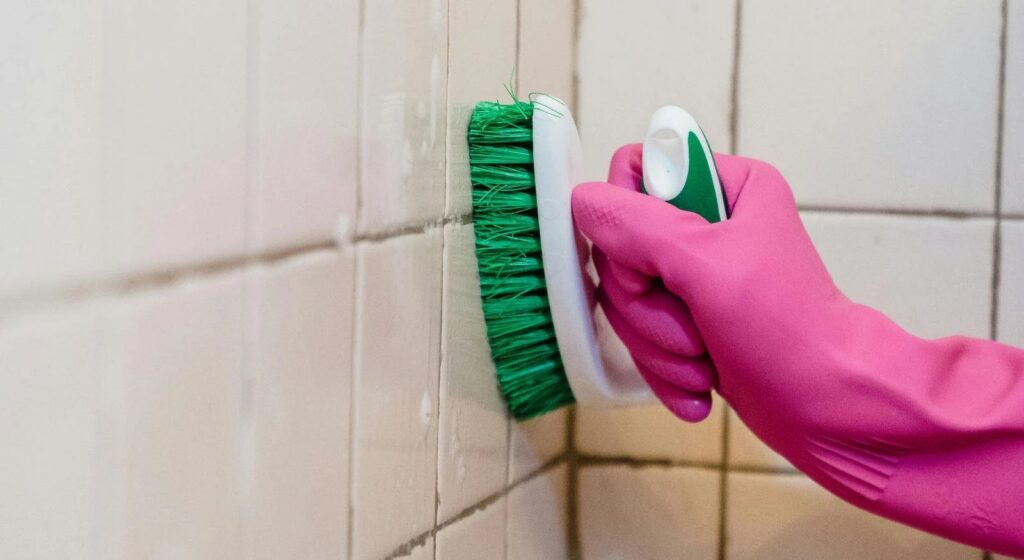
Bleach doesn’t work on porous surfaces. This is one of the most persistent and damaging myths in home maintenance. Bleach is an effective disinfectant on non-porous surfaces like tile and glass. But on drywall, wood, or grout the surfaces where mold most commonly grows in homes bleach cannot penetrate to the depth where the fungal structure lives. The water component of the bleach solution actually adds moisture to the material, potentially encouraging deeper growth. You kill the surface colony, the material looks clean, and within weeks the mold returns from below.
Disturbing mold without containment spreads it. This is perhaps the most dangerous aspect of untrained DIY remediation. When you scrub a mold colony, you release enormous numbers of spores into the air. Without proper containment sealed work zones, negative air pressure, HEPA air scrubbers those spores travel through your home’s air currents and land on new surfaces, seeding new colonies throughout rooms that previously had no mold problem. A homeowner trying to address mold in the basement can inadvertently contaminate their living room, bedrooms, and HVAC system with a single vigorous scrubbing session.
Not wearing proper PPE puts your health at risk. Mold exposure during disturbance is maximally concentrated far more intense than simple ambient exposure from living in a home with mold. Without an appropriate respirator (at minimum an N-95, preferably a half-face respirator with P-100 cartridges), goggles, gloves, and disposable coveralls, anyone scrubbing mold is being exposed to a significant dose of whatever species is present.
Treating symptoms without diagnosing causes guarantees recurrence. Even if a DIY treatment successfully removes all visible mold, without identifying and correcting the moisture source that fed it, the mold will return. Professional remediators don’t just treat the mold they investigate and address the conditions that created it.
New York State Law and Mold Remediation
This isn’t just a matter of best practices in New York, it’s the law. The New York State Department of Labor regulates mold assessment and remediation under Article 32 of the Labor Law, enacted in 2016.
Under these regulations, any mold remediation project affecting more than ten square feet requires a licensed mold remediator. Mold assessment the formal evaluation of the scope and nature of a mold problem must be conducted by a licensed mold assessor who is independent from the remediator. This separation of roles is intentional: it prevents contractors from both diagnosing the problem and prescribing the solution without independent oversight.
Additionally, any remediation project requires a written remediation plan developed by the licensed assessor, and a post-remediation assessment must be conducted to verify that the work was successful before clearance is granted.
These legal requirements exist for good reason. Mold remediation done improperly is not a neutral outcome it’s often actively harmful, spreading contamination, creating ongoing health hazards, and resulting in expensive repeated treatments. The licensing framework ensures that work affecting the health and safety of building occupants meets a verifiable professional standard.
For Baldwin homeowners, this means that any legitimate remediation contractor working on your home should be able to provide their New York State mold remediation license number on request. If they can’t, or if they don’t mention the requirement for an independent assessment, that’s a serious red flag.
What Professional Remediation Actually Looks Like
A quality professional remediation engagement in Baldwin will follow a structured process that looks very different from what a homeowner with a spray bottle and some rubber gloves can accomplish.
It begins with a comprehensive assessment. A licensed mold assessor will inspect the property, use moisture detection equipment, collect air and surface samples if warranted, and produce a written remediation plan that identifies the affected areas, the materials that need to be removed, and the corrective measures required to address the underlying moisture source.
Before any physical work begins, the remediation contractor establishes containment. The affected area is sealed off from the rest of the home using polyethylene sheeting, and the work zone is put under negative pressure using commercial air scrubbers with HEPA filtration. This ensures that spores disturbed during remediation are captured rather than spread.
Affected porous materials drywall, insulation, carpeting, wood trim, and in severe cases structural framing are removed and disposed of according to applicable regulations. Non-porous surfaces are cleaned using EPA-registered antimicrobial solutions that are genuinely effective, not consumer products that merely kill surface growth.
Following cleaning, surfaces may be treated with an encapsulant to seal any residual mold material and prevent reactivation. The entire work zone is then HEPA vacuumed and subjected to extended air scrubbing to capture any airborne spores.
Finally, post-remediation clearance testing is conducted by the independent assessor not the remediation contractor to verify that mold levels have returned to acceptable background levels before the containment is removed and the space is cleared for occupancy.
This process takes time, expertise, and specialized equipment. It cannot be replicated with products from a hardware store shelf. But it also produces results that are verified, documented, and guaranteed in a way that no DIY treatment can match.
Choosing the Right Professional for Your Baldwin Home
Not every contractor who advertises mold services in Nassau County is operating at the level Baldwin homeowners deserve. Here’s what to look for.
Verify their New York State license. You can check licensure status through the NYS Department of Labor website. The assessor and remediator must hold separate licenses, and for larger jobs, they must be independent of one another.
Ask about their assessment process. A contractor who wants to begin work without a formal assessment phase or who bundles assessment and remediation without independent verification is not following state law and is not practicing best-in-class remediation.
Ask whether post-remediation clearance testing is included or facilitated. Reputable contractors will either conduct this themselves (with documented methodology) or will recommend an independent industrial hygienist to handle it.
Check for insurance. General liability insurance and workers’ compensation coverage protect both the contractor and you as the homeowner in the event of an accident or property damage during the work.
Get multiple written estimates. Prices for mold remediation in Nassau County vary significantly. A thorough written estimate should detail the scope of work, the materials to be removed, the containment methods, the products to be used, and whether post-remediation testing is included. Vague estimates that simply quote a flat price without explaining the scope should be questioned.
Be wary of scare tactics. Unfortunately, the mold remediation industry has its share of contractors who use alarming language to upsell unnecessary services. A trustworthy contractor will explain their findings clearly, provide documentation, and give you the information you need to make an informed decision not pressure you into signing a contract based on fear.
The Long-Term Case for Doing It Right
There is a version of mold treatment that costs less up front: buy a bottle of spray, scrub the visible growth, repaint, and move on. Many Baldwin homeowners have done exactly this. And many of them have done it again six months later. And again after that.
The economics of professional remediation actually favor the professional approach when you account for the full picture. Repeated DIY treatments that fail to address the underlying problem add up quickly. More importantly, mold that continues to grow unchecked causes progressive structural damage to framing, to sheathing, to floor assemblies that becomes exponentially more expensive to repair the longer it’s allowed to continue.
There’s also the matter of your home’s value. Baldwin’s real estate market is robust, and a documented history of professional mold remediation with clearance testing on file is an asset when it comes time to sell. Conversely, evidence of recurring mold problems, untreated moisture damage, or amateur remediation attempts can significantly complicate a sale and reduce your negotiating position.
And above everything else, there is the health of your household. Mold is not a cosmetic issue. It is a biological contaminant that affects air quality, respiratory health, and in some cases neurological function. The people living in your home your children, your parents, your partner deserve to breathe clean air in a home that has been properly treated by professionals who know what they’re doing.
A scrub is not enough. Baldwin homeowners deserve better, and the good news is that better is available.
Conclusion:
Mold in a Baldwin home is not a problem you can outrun with a spray bottle. The conditions here the humidity, the aging homes, the complex moisture dynamics of South Shore properties demand a professional response rooted in proper assessment, thorough remediation, and verified clearance.
If you’ve been dealing with recurring mold, if you’ve noticed musty odors that won’t go away, if you have water staining that’s been there “for a while,” or if you’ve just had a water event of any kind, don’t reach for the bleach. Reach for the phone. Call a licensed mold assessor, get a proper evaluation, and get the problem handled the right way once, completely, and for good.
Your home is worth it. Your health is worth it.
Connect With Us on Social Media!
Facebook | Instagram | Twitter | NextDoor | Pinterest | Google Reviews | LinkedIn | Tiktok | YouTube


