


When a fire occurs in a home, most people instinctively focus on the most dramatic and visible destruction: charred walls, burned furniture, collapsed ceilings. That damage is real, serious, and impossible to miss. But for a significant number of residential fires, particularly smaller kitchen fires, electrical fires, and fires that are contained and extinguished quickly, the structural damage from the flames themselves represents only a portion of the total harm done to the property.
Smoke damage is the silent partner of every fire event. It travels farther, penetrates deeper, and lingers far longer than the fire that produced it. In many Nassau County homes that have experienced a contained fire, smoke damage affects rooms and belongings that never came anywhere near the flames, including areas on different floors, in closets, and inside HVAC systems that can distribute smoke residue throughout an entire structure within minutes.
Understanding the difference between fire damage and smoke damage is not just an academic exercise. It has direct implications for how your home is restored, what your insurance claim should include, and why attempting to address either type of damage without professional help consistently produces incomplete results. At PuroClean of Baldwin, we restore both every week for Nassau County and Long Island homeowners, and this guide gives you the complete picture.
The Fundamental Difference Between Fire Damage and Smoke Damage
Fire damage and smoke damage are caused by two different physical phenomena operating simultaneously during and after a fire event. Treating them as the same problem leads to incomplete restoration and recurring issues.
What Fire Damage Actually Is
Fire damage is the direct, physical destruction caused by heat and combustion. When flames contact building materials, furnishings, and personal property, they consume and alter those materials through oxidation, charring, and complete destruction. The heat radiating from a fire can also cause thermal damage to materials that are never directly touched by flames, warping plastics, cracking glass, and denaturing structural wood well beyond the visible burn zone.
Fire damage is highly localized in most residential fire events. The area of direct combustion and heat damage is typically concentrated around the point of origin and the path the fire traveled before it was extinguished. While the visual impact of fire damage is often dramatic, its geographic boundaries within a structure are usually identifiable.
What Smoke Damage Actually Is
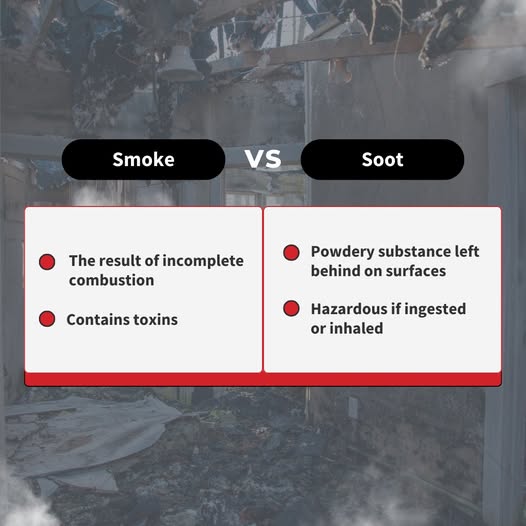
Smoke damage is fundamentally different. Smoke is not a single substance but a complex mixture of gases, aerosols, and microscopic particles produced by incomplete combustion. This mixture includes carbon particles, volatile organic compounds, acids, aldehydes, and the specific chemical byproducts of whatever materials were burning, whether that is wood, plastic, synthetic fabric, rubber, or kitchen grease.
Because smoke is airborne, it behaves according to air movement patterns rather than the geography of the fire. It travels through HVAC systems, under doors, through electrical outlet boxes, and into every room and cavity that shares airspace with the fire location. It then settles on and bonds with surfaces throughout the structure, including rooms that experienced no fire damage whatsoever.
What makes smoke damage particularly insidious is that it is chemically active. The acidic compounds in smoke residue continue to etch and corrode surfaces long after the fire is out. Metals tarnish, fabrics yellow, electronics corrode, and plastics permanently discolor. The longer smoke residue remains on surfaces without professional treatment, the deeper the damage becomes and the harder it is to reverse.
Types of Smoke and Soot Residue: Why They Matter for Restoration
Not all smoke damage looks or behaves the same way, and this is one of the most important things restoration professionals understand that homeowners typically do not. The type of material that burned, the temperature at which it burned, and the availability of oxygen during combustion all determine the character of the smoke residue produced. Each type requires a different remediation approach.
Dry Smoke Residue
Dry smoke is produced by fast-burning, high-temperature fires, most commonly fires involving paper, wood, and natural materials burning under conditions with ample oxygen. Dry smoke residue is typically powdery in texture and does not smear when touched. It is the most straightforward type of soot to clean and generally responds well to dry cleaning sponges and appropriate cleaning solutions.
Wet Smoke Residue
Wet smoke is produced by slow-burning, low-temperature fires, often involving plastics, synthetic materials, and rubber. These fires smolder rather than burn freely. Wet smoke residue is sticky, pungent, and smears badly when conventional cleaning attempts are made without the correct approach. It penetrates deeply into porous surfaces and produces some of the most persistent odors encountered in fire restoration work. Wet smoke damage from a smoldering fire that was caught before it fully ignited is frequently more difficult to remediate than the dry smoke residue from a larger, faster fire.
Protein Residue
Protein smoke is produced by the burning of organic materials, most commonly food during kitchen fires. It is nearly invisible on surfaces, which leads many homeowners to believe the damage from a kitchen fire is limited. In reality, protein residue coats virtually every surface in the affected area with a thin, greasy film that carries an extremely powerful, persistent odor. It is one of the most difficult residues to fully eliminate and requires specific enzymatic cleaning agents designed to break down protein compounds.
Fuel Oil or Chemical Smoke Residue
Fires involving fuel oil furnaces, chemical storage, or manufactured materials produce thick, heavy smoke residue that is among the most difficult to remediate. This type of residue often has a strong petroleum or chemical odor and can penetrate deeply into structural materials. It is also more likely to contain toxic compounds that require careful handling by trained technicians.
How Fire Damage and Smoke Damage Spread Through a Home Differently

How Fire Damage Spreads
Fire spreads through conduction, convection, and radiation. It follows fuel sources, rises with heat, and moves through structural openings. In a residential setting, fire typically spreads from the point of origin along combustible surfaces, up through wall cavities if given access, and horizontally as burning materials drop or radiate heat to adjacent surfaces.
The fire department’s primary job is to interrupt this spread, and in the majority of residential fire calls in Nassau County, they succeed in containing the fire to a limited area of the structure. This is why so many residential fire incidents result in a burned kitchen or a damaged bedroom rather than a total structure loss.
How Smoke Damage Spreads
Smoke spreads entirely differently and is far more difficult to contain. Hot smoke rises immediately and seeks every available pathway through the structure. Within minutes of a fire starting, smoke can travel through HVAC return air ducts and be distributed to every room in the home. It seeps under doors, through electrical conduits in walls, and around plumbing penetrations.
The specific smoke patterns in a fire-damaged home tell a story about air movement at the time of the fire. Restoration professionals read these patterns to understand the full scope of smoke penetration, identifying affected areas that may show no visible residue but carry odor and chemical contamination. In many Nassau County homes with central air systems, smoke travels further and more uniformly than in homes without HVAC.
The HVAC Problem
One of the most frequently overlooked aspects of smoke damage in residential fires is HVAC contamination. When a fire occurs while the heating or cooling system is running, the return air system actively draws smoke throughout the ductwork and deposits residue on duct surfaces, the air handler, and the coil. Every time the system runs after a fire, it redistributes smoke odor and residue to every room served by that duct system.
Professional fire restoration always includes assessment of the HVAC system. In many cases, ductwork cleaning and air handler treatment are required components of a complete restoration. Skipping this step is one of the most common reasons homeowners complain of persistent smoke smell months after a fire restoration project.
Fire Damage vs Smoke Damage: A Side-by-Side Comparison
| Factor | Fire Damage | Smoke Damage |
| Cause | Direct heat and combustion | Airborne particles and gases from combustion |
| Geographic spread | Localized around fire origin and path | Spreads throughout entire structure via air |
| Visibility | Immediately obvious | Often invisible or subtle in remote areas |
| Speed of progression | Active during the fire | Continues after fire is out; gets worse over time |
| Primary materials affected | Structural elements, furnishings near fire | All surfaces in connected airspace |
| HVAC involvement | Rarely affected unless in fire path | Almost always affected if system was running |
| Odor | Charred wood and materials | Persistent, penetrating, chemically complex |
| DIY restoration feasibility | Requires professional rebuilding | Requires professional treatment; DIY incomplete |
| Insurance treatment | Part of fire damage claim | Part of same fire damage claim |
| Time sensitivity | Immediate structural assessment needed | Every hour increases bonding depth |
Both types of damage are covered under a standard homeowners fire damage claim and both require professional restoration. Neither should be addressed in isolation from the other.
Health Risks: Smoke Damage Is Not Just a Cleaning Problem
One dimension of smoke damage that homeowners frequently underestimate is its health impact. Smoke residue is not an inert substance that merely looks and smells unpleasant. It contains a complex mixture of toxic and carcinogenic compounds that pose real health risks to occupants of a smoke-damaged home.
Soot and Respiratory Health
Soot particles are extremely fine, in the range of 2.5 microns or smaller in many fire events. Particles of this size penetrate deep into the lungs and can remain there for extended periods. Short-term exposure to soot causes irritation of the eyes, nose, throat, and respiratory tract. Long-term or repeated exposure is associated with increased risk of respiratory disease and cardiovascular effects. For Nassau County families with children, elderly members, or anyone with asthma or other respiratory conditions, a smoke-damaged home is a genuine health environment that should not be occupied until professional remediation is complete.
Volatile Organic Compounds
The VOCs released by burning synthetic materials, plastics, and treated wood include benzene, formaldehyde, acrolein, and a range of other compounds with documented health effects at elevated concentrations. These gases can off-gas from smoke-contaminated surfaces for weeks after a fire, maintaining elevated indoor air quality concerns well beyond the visible presence of soot.
Toxic Metals
Depending on what burned, smoke residue may contain toxic metals including lead from older painted surfaces, arsenic from treated wood, and other heavy metals from electronic components and building materials. These compounds are invisible and odorless but are present in the residue on surfaces throughout a smoke-damaged home.
How Fire Damage and Smoke Damage Are Restored Differently
Because fire damage and smoke damage are fundamentally different types of harm, they require distinct restoration approaches, even though both result from the same event and are addressed simultaneously by a professional restoration team.
Restoring Fire-Damaged Areas
Fire damage restoration is essentially a construction and rebuilding process. Charred and structurally compromised materials are removed: burned drywall, damaged framing, destroyed flooring, and any other structural elements that cannot be safely restored. The scope of demolition is determined by the extent of heat damage to structural integrity, not just by visible charring.
After demolition, the affected structure is rebuilt to its pre-loss condition using materials that match the original as closely as possible. This rebuild phase is coordinated with the overall restoration timeline and is typically the longest portion of a fire restoration project.
Restoring Smoke-Damaged Areas
Smoke damage restoration begins while demolition and debris removal are still underway and continues in parallel with the rebuilding process. The first step is always dry soot removal using chemical dry sponges on all affected surfaces before any wet cleaning is introduced. Wet cleaning soot-covered surfaces before dry removal causes smearing that drives residue deeper and makes subsequent cleaning significantly more difficult.
Following dry removal, affected surfaces are cleaned using appropriate cleaning agents matched to the type of soot residue present. Protein residue requires enzymatic cleaners. Wet smoke residue requires degreasers and heavy-duty cleaning agents. Dry smoke residue typically responds to alkaline cleaners.
Odor Elimination
Cleaning surfaces removes visible residue but does not by itself eliminate smoke odor. Odor molecules from smoke have bonded at the molecular level with porous surfaces including wood framing, drywall paper, insulation, and soft furnishings. Eliminating this odor requires one or more of the following professional deodorization methods:
- Thermal fogging: A heated deodorizing solution is converted into a fog that penetrates the same surfaces and cavities that smoke reached, neutralizing odor molecules at their source.
- Hydroxyl generation: Hydroxyl generators produce hydroxyl radicals that break down odor-causing compounds at the molecular level. This method is safe for use in occupied adjacent spaces and is effective on a wide range of odor types.
- Ozone treatment: Ozone generators oxidize odor molecules throughout a sealed, evacuated space. This method is highly effective but requires the space to be unoccupied during treatment and for a period afterward.
- Sealing and encapsulation: After cleaning and deodorization, odor-blocking sealants are applied to structural surfaces before rebuilding. This step permanently encapsulates any residual odor compounds that could not be removed from porous materials.
HVAC System Restoration
As discussed earlier, HVAC system assessment and treatment is a non-optional component of complete smoke damage restoration. Duct cleaning, air handler treatment, filter replacement, and in some cases coil cleaning are required to prevent the system from continuously redistributing smoke odor throughout the restored home.
Why Both Fire and Smoke Damage Must Be Documented Separately for Your Insurance Claim
From an insurance perspective, treating fire damage and smoke damage as a single undifferentiated loss is one of the most common documentation mistakes that costs Nassau County homeowners money on their claims.
Fire damage and smoke damage affect different materials, require different restoration methods, and carry different labor and materials costs. A thorough insurance claim documents both categories separately, with specific room-by-room scope items for structural fire damage and separate line items for smoke cleaning, deodorization, HVAC treatment, and contents cleaning in every affected area of the home, including rooms that experienced smoke but no direct fire damage.
Many homeowners are surprised to learn that their insurance claim should include smoke remediation costs for rooms that appeared relatively unaffected visually. Smoke damage to HVAC systems, attic spaces, and contents throughout the home is legitimately part of a fire damage claim and should be documented and claimed accordingly.
PuroClean of Baldwin produces detailed, itemized damage assessments that document fire damage and smoke damage separately and completely, covering every affected area and system in the home. This documentation is specifically designed to support maximum legitimate claim recovery.
Why Time Is Critical for Both Fire Damage and Smoke Damage
Both categories of damage worsen meaningfully with the passage of time, but for different reasons and on different timelines.
- Smoke damage accelerates within hours: The acidic compounds in soot begin etching metal surfaces, yellowing fabrics, and discoloring plastics within hours of a fire. Porous materials absorb smoke residue more deeply over time, making removal progressively more difficult and in some cases impossible. Professional restoration that begins within the first 24 to 48 hours achieves significantly higher restoration rates than work that begins days later.
- Fire-damaged structures face weather risk: Structural fire damage frequently creates openings in walls, roofs, and windows that expose the interior of the home to weather. Rain intrusion into a fire-damaged structure causes secondary water damage and mold risk. Emergency board-up and tarping protect the structure while the full restoration process is organized.
- Firefighting water creates mold risk: The water used to extinguish the fire saturates structural materials and creates ideal conditions for mold growth within 24 to 48 hours if not professionally extracted and dried. Water damage from fire suppression efforts is a standard component of fire restoration and must be addressed simultaneously with fire and smoke damage.
- Delayed action affects insurance claims: Insurance policies require policyholders to take reasonable steps to mitigate ongoing damage after a covered loss. Delayed response that results in preventable secondary damage can give an insurer grounds to dispute a portion of the claim.
How PuroClean of Baldwin Addresses Both Fire and Smoke Damage
PuroClean of Baldwin provides complete fire and smoke damage restoration services for homeowners throughout Nassau County and Long Island. Our certified technicians are trained and equipped to address both categories of damage simultaneously, as part of a single coordinated restoration project.
Our fire and smoke restoration process includes:
- Emergency response and stabilization: Rapid board-up, tarping, water extraction from firefighting efforts, and structural assessment within hours of the fire.
- Complete damage documentation: Separate, itemized documentation of fire damage and smoke damage throughout the entire structure including HVAC systems, attic spaces, and contents.
- Soot removal and surface cleaning: Systematic dry and wet cleaning of all smoke-affected surfaces using cleaning agents matched to the specific residue type present.
- Professional deodorization: Thermal fogging, hydroxyl generation, and sealing as required to achieve complete odor elimination.
- HVAC system treatment: Complete duct cleaning, air handler treatment, and filter replacement to prevent smoke odor recirculation.
- Contents restoration: Professional pack-out, cleaning, deodorization, and secure storage of all salvageable belongings.
- Structural rebuilding: Complete rebuild of fire-damaged structural elements to pre-loss condition, coordinated with all restoration work.
- Insurance documentation and coordination: Professional claims documentation and direct carrier communication to support fast, complete claim approval.
Fire and Smoke Damage Restoration Across Nassau County
PuroClean of Baldwin serves homeowners and businesses throughout Baldwin, Freeport, Rockville Centre, Merrick, Bellmore, Oceanside, Valley Stream, Lynbrook, and the surrounding Nassau County communities. We respond 24 hours a day, 7 days a week because fire does not keep office hours and the clock starts running the moment the fire is out.
Whether you are dealing with a major structural fire or a small kitchen fire that left smoke damage throughout your Nassau County home, the PuroClean of Baldwin team has the training, equipment, and experience to restore your property completely and professionally.
Frequently Asked Questions About Fire and Smoke Damage
Is smoke damage covered by homeowners insurance?
Yes. Smoke damage is covered as part of a fire damage claim under standard homeowners insurance policies. It is important to document smoke damage throughout the entire home, not just in the area of direct fire damage, because rooms affected by smoke but not flames are legitimate components of the claim.
Can smoke damage occur without visible fire damage in a room?
Absolutely. This is one of the most important things Nassau County homeowners need to understand after a fire event. Smoke travels through air movement patterns and can affect rooms throughout the home that never experienced fire or even heat. A bedroom on the second floor can have significant smoke damage from a fire that was contained to the first-floor kitchen.
How do I know if my HVAC system has smoke damage?
If your heating or cooling system was running at the time of the fire, assume your HVAC has smoke contamination until a professional assessment proves otherwise. Signs include smoke odor from vents when the system runs, visible discoloration on supply registers, and soot deposits on filters. Do not run the system after a fire until it has been assessed.
Why does smoke smell come back after I thought it was cleaned?
Recurring smoke odor after cleaning is almost always the result of one of three things: residue that was not fully removed from porous surfaces, an HVAC system that was not treated and is redistributing odor, or paint applied over smoke-damaged surfaces without an odor-blocking primer. Professional restoration with proper deodorization and encapsulation eliminates these recurrence pathways.
How long does fire and smoke damage restoration take?
The timeline depends on the extent of both fire and smoke damage and the scope of structural rebuilding required. Smoke-only damage with no significant structural fire damage can often be fully remediated in three to seven days. Projects involving significant structural fire damage and full room rebuilds typically take three to eight weeks. Your PuroClean project manager will provide a detailed timeline estimate after the initial assessment.
What should I do immediately after a fire in my Nassau County home?
First, ensure everyone is safely out of the home and that the fire department has cleared the property as safe to enter. Then call PuroClean of Baldwin for emergency response. Do not attempt to clean soot yourself, do not run the HVAC system, ventilate carefully, and document all visible damage with photographs before anything is touched or moved. Contact your insurance company to open a claim, and have your PuroClean documentation ready to support that call.
Experienced Nassau County Fire and Smoke Restoration: Call PuroClean of Baldwin
Whether you are standing in a smoke-filled home after a kitchen fire or dealing with the aftermath of a more serious fire event, PuroClean of Baldwin is the team Nassau County homeowners trust to restore both the structure and the air quality of their homes completely and professionally.
We do not just address what you can see. We address every surface, every system, and every room affected by both fire damage and smoke damage, and we document everything your insurance claim needs for a full recovery.
Call PuroClean of Baldwin any time, 24 hours a day, 7 days a week. We serve Baldwin, Freeport, Rockville Centre, Merrick, Bellmore, Oceanside, Valley Stream, Lynbrook, and all of Nassau County with immediate emergency fire and smoke damage restoration response.
PuroClean of Baldwin | Serving Nassau County and Long Island Communities.
This article is intended for general informational purposes. Fire and smoke damage restoration requirements vary by incident. Contact PuroClean of Baldwin for a professional assessment of your specific situation.
Connect With Us on Social Media!
Facebook | Instagram | Twitter | NextDoor | Pinterest | Google Reviews | LinkedIn | Tiktok | YouTube


