


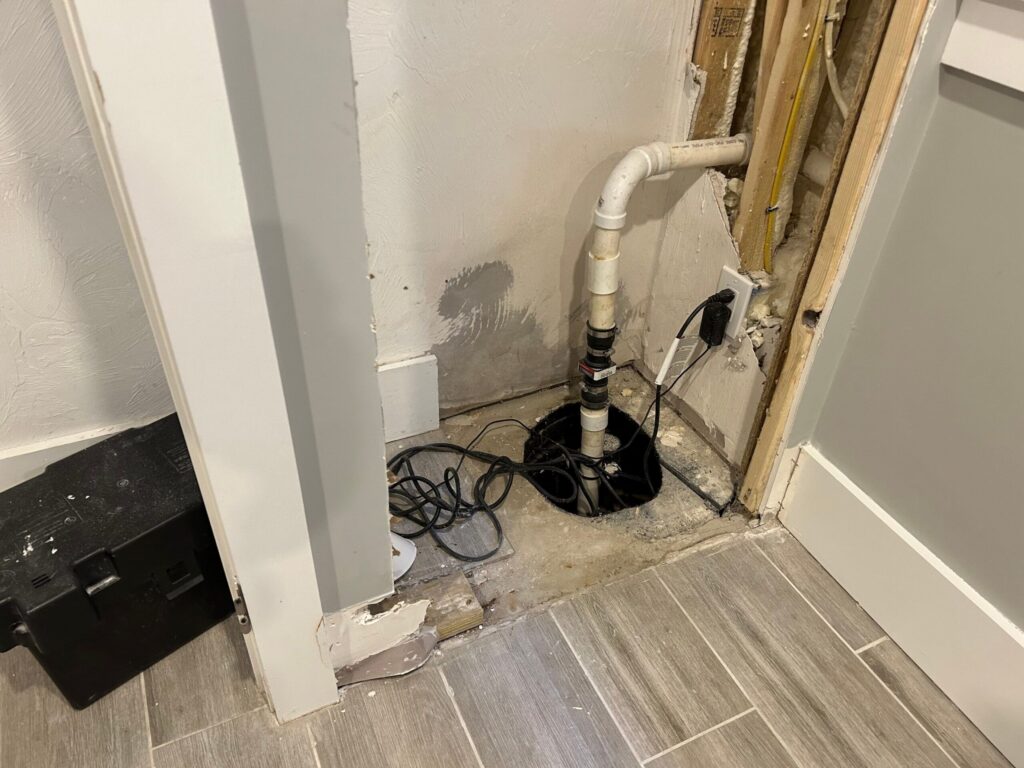
Baldwin homeowners face a unique challenge during heavy rains and spring thaw water intrusion into basements and crawl spaces. For most Baldwin properties, a properly functioning sump pump stands as the silent guardian against catastrophic water damage.
Water Damage Restoration in Baldwin: Call (516) 200-1416
Yet many homeowners take this critical system for granted, failing to maintain it until the moment it fails usually during the worst possible time, when you need it most. Understanding sump pump failure, its causes, prevention strategies, and emergency response can mean the difference between a dry basement and tens of thousands of dollars in water damage repairs.
Understanding Your Sump Pump and Why It Matters
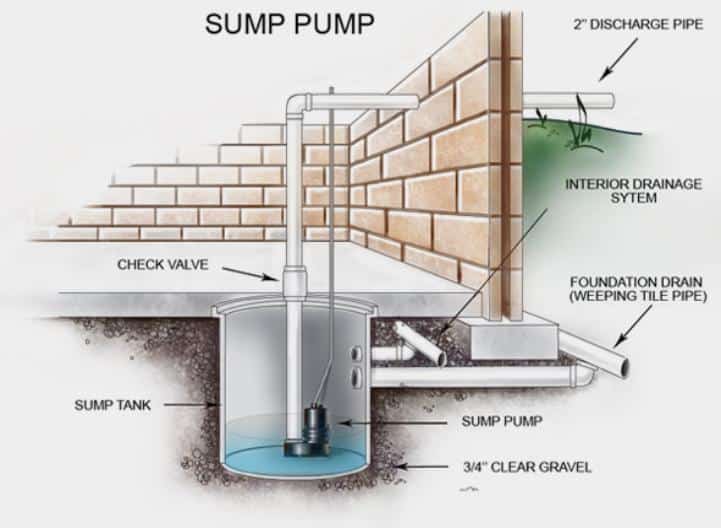
A sump pump is a relatively simple but essential device that protects your home from water intrusion. Located in a basin below your basement floor, the pump automatically detects rising groundwater and expels it away from your home’s foundation. When working correctly, it’s practically invisible you may not hear it for weeks. But when it fails, the consequences become immediately apparent and often devastating.
Basements and crawl spaces in Baldwin homes frequently accumulate groundwater due to the region’s water table, soil composition, and seasonal moisture patterns. Without a functioning sump pump, this water has nowhere to go but into your living spaces. Water damage from a failed sump pump isn’t a minor inconvenience it’s a catastrophe that can affect your entire home’s structural integrity.
Read Also: Sump Pump Stopped Working? 5 Reasons & Emergency Fixes
The financial stakes are significant. A typical basement flooding incident can cost $10,000 to $25,000 in immediate restoration, not counting the long-term consequences like mold growth, foundation damage, and decreased property value. More extensive flooding can easily exceed $50,000 in total damages. When you consider these costs, the time and minimal expense required to maintain your sump pump becomes an obvious investment in your home’s protection.
How Sump Pumps Work: The Basics
To understand sump pump failure, you need to know how the system functions. The basic process is straightforward but depends on multiple components working together seamlessly.
Water naturally flows toward the lowest point of your home, which in most Baldwin basements is where the sump basin is located. Groundwater enters the basin through foundation drains or naturally seeps up from the earth. As water accumulates, it rises to a preset level, triggering a float switch. This switch activates the pump’s motor, which begins pulling water from the basin through an inlet screen and forcing it up through a discharge pipe that exits your home.
The water travels through the discharge line typically extending 10 to 20 feet away from your foundation where it’s deposited safely away from your home. A check valve in the discharge line prevents water from flowing back into the basin once the pump shuts off. When water levels drop below the float switch’s activation point, the pump automatically shuts off, waiting silently until the next surge of groundwater requires its services.
This automatic cycle repeats countless times throughout the year, especially during heavy rains and spring snowmelt. The system works reliably for years if maintained properly, but multiple failure points exist that can interrupt this critical cycle.
The Most Common Causes of Sump Pump Failure
Understanding why sump pumps fail helps you identify problems before they become emergencies. While each system is unique, certain failure modes appear repeatedly in Baldwin homes.
The float switch is the most common part that fails on a sump pump, and many manufacturers recommend replacing the float every two years. Protect Your Pipes The float switch controls the on/off cycles of the pump. Over time, the switch can become stuck, corroded, or simply wear out. A stuck float switch means the pump won’t activate when water levels rise, leaving your basement unprotected. Alternatively, a malfunctioning float can cause the pump to run continuously, grinding itself to failure.
The check valve prevents backflow and needs to be replaced if it is leaking. Consumer Reports When this valve fails, water that was just pumped out can flow back into your basement, forcing the pump to work harder and longer than necessary. This continuous cycling accelerates wear on the motor and can cause premature failure.
The discharge pipe may crack or clog. Consumer Reports Cracks in the discharge line allow water to escape before reaching the final drainage point, often running back toward your foundation. Clogs block water flow entirely, causing backup into the basin. Both situations defeat the pump’s purpose.
The impeller can get jammed by debris, affecting performance. Consumer Reports The impeller is the rotating component that actually moves water. Gravel, sand, or other debris can jam this critical component, preventing water movement or causing the motor to work so hard that it burns out.
Power failure represents another common cause. A pump won’t run during a power outage unless you have a backup system. Chubb Baldwin experiences power outages during severe storms often the exact moments when your sump pump is most critical. Without a battery backup, your pump becomes useless when the power grid fails.
Debris and sediment accumulation clog the pump’s intake screen and inlet, restricting water flow and forcing the motor to work harder. Over months and years, this buildup can completely block water intake.
Poor pump placement is often overlooked but critical. A sump pump no longer sitting on a level surface can run nonstop or fail to run at all. State Farm Vibrations from the motor and pressure from water in the basin can shift the pump out of position. If the pump tilts, the float switch may not function correctly, or the intake pipe may become obstructed.
Age is inevitable. Most sump pumps last between seven and ten years. Most sump pumps last about 7–10 years. If yours is old, noisy, or constantly running, it may be time for a replacement. State of Michigan An aging pump becomes increasingly unreliable, with worn bearings, corroded components, and reduced pumping capacity.
Warning Signs Your Sump Pump Is Failing

Recognizing failure signs before catastrophe strikes gives you time to repair or replace your system. Several warning indicators warrant immediate attention.
The most obvious sign is visible water in your basement when none should be present. This indicates the pump isn’t doing its job, whether due to mechanical failure, power loss, or inadequate capacity.
Unusual sounds deserve investigation. Listen for weird noises, grinding, buzzing, or banging. Chubb Normal pump operation produces a quiet hum or the sound of water flowing. Grinding indicates impeller damage, buzzing suggests electrical problems, and banging typically means internal mechanical failure.
A constantly running pump is abnormal and concerning. The pump should cycle on and off as water levels fluctuate. Continuous operation indicates a stuck float, a leaking check valve, or an undersized pump that can’t keep up with incoming water. Continuous operation accelerates wear and can lead to complete failure.
Strange smells warrant attention. A musty odor suggests standing water or mold growth, indicating the pump isn’t removing water properly. Burning smells indicate overheated motor components and suggest imminent failure.
Read Also: Common Causes of Sump Pump Failure and How to Fix Them
Visible corrosion on pump components indicates advanced deterioration. Rust and mineral deposits accumulate over time, reducing efficiency and increasing failure likelihood.
Reduced water discharge or slow drainage suggests clogs or impeller damage reducing pumping capacity.
A tripped circuit breaker indicates electrical problems requiring immediate professional inspection.
Essential Maintenance to Prevent Failure
Fortunately, most sump pump failures are preventable through routine maintenance. To keep your sump pump running smoothly, proper upkeep is essential. Help extend its life, prevent costly repairs or replacements, and even reduce your energy bills by following along with our sump pump maintenance checklist. American Red Cross
Monthly Checks
Check that the pump is plugged in and the cord looks safe. Pour water into the pit to make sure it kicks on and shuts off. Look for standing water or a musty smell around the pit. Chubb These simple monthly tasks take just a few minutes and catch most problems early.
Quarterly Deep Maintenance
Every three to four months, perform more thorough inspection and cleaning. Cleaning the pump inlet screen Located along the base of the pump, this screen acts as a filter. To keep it operating efficiently, use a scrub brush to remove any debris that could be caught there. American Red Cross Debris accumulation is one of the most common failure causes.
Removing standing water from the pit Use a wet/dry vacuum to remove any excess water, then reconnect the pump to power. American Red Cross Standing water can accumulate silt and debris, clogging the pump and encouraging mold growth.
Check that your pump is level. Checking that your sump pump is upright, level, and free of obstructions is one way to avoid system failure. State Farm Use a simple level to verify the pump hasn’t shifted from vibrations.
Inspect the discharge line thoroughly. It’s a good idea to check where your pump discharges water outside your home. You don’t want the site near your house’s foundation. Otherwise, the water can return to the sump pump and eventually overwork your unit. State Farm Water should discharge at least 10 to 20 feet away from your foundation and drain downhill, never pooling near your home.
Test the float switch manually. Gently pour water into the pit and observe whether the pump activates smoothly and shuts off when water level drops.
Annual Comprehensive Maintenance
Clean your sump pump annually. Sump pumps can accumulate dirt, debris, and minerals over time, leading to an obstruction that may disrupt the pump’s operation. Prevent this by cleaning it at least once a year – a process that includes: Cleaning the pump itself – Disconnect the sump pump from the power supply and remove it from the basin. Use a damp cloth or sponge to wipe clean, then spray the pump with a garden hose. American Red Cross
Inspect all electrical connections and the power cord. Make sure the sump pump is on an independent circuit. Attach a surge protector with a built-in fault circuit protector, or plug directly into a GFCI socket to ensure your safety and protect against damage. City of Somerville Proper electrical protection prevents both pump damage and safety hazards.
Consider professional inspection annually. Even a well-maintained pump benefits from a professional inspection once a year. Technicians can identify hidden problems like worn switches, corroded wiring, or motor issues before they cause failures. State of Michigan
Battery Backup Systems: Insurance for Power Outages
A common reality in Baldwin is that severe storms causing sump pump demand often trigger power outages simultaneously. A battery backup will help make sure your pump doesn’t fail, even in the event of a power outage. If you have battery backup installed, make sure you test the battery by unplugging the pump. Protect Your Pipes
Battery backup systems automatically activate when main power fails, providing hours of pumping capacity depending on the system and water levels. For a Baldwin homeowner, this is often the difference between a dry basement and flooded disaster. Battery systems typically run $500 to $2,000 installed and can provide the most cost-effective protection against catastrophic water damage.
What to Do When Your Sump Pump Fails
If your sump pump fails, every hour counts. Water damage accelerates rapidly, and mold begins growing within 24 to 48 hours.
First, stop water entry if possible. If the pump has completely failed but you have a few hours before significant water accumulation, use your wet/dry vacuum to manually remove water from the basin. This buys time while you arrange professional repair.
Call a licensed plumber or pump specialist immediately. Don’t delay hoping the problem resolves itself. Sump pump repairs typically cost $300 to $800, while water damage restoration averages $5,000 to $25,000 or more. The math is obvious.
Your plumber can often diagnose problems quickly. Common repairs include replacing the float switch (often $200 to $400), clearing clogs ($200 to $500), replacing the check valve ($150 to $300), or complete pump replacement ($500 to $2,000 including installation).
Document everything photographically. If water damage occurs, document all damage for insurance claims.
When Replacement Becomes Necessary
Sometimes repair isn’t economically justified. Depending on use, a sump pump’s life expectancy ranges from seven to ten years. With that in mind, if you are experiencing recurring issues with your sump pump and it is seven to ten years old, it is best to replace it. Sill
New submersible pumps (the most popular type) typically cost $300 to $900 plus $200 to $500 for professional installation. While this represents a significant expense, it’s a small fraction of potential water damage costs.
Conclusion
Your sump pump is among your home’s most important systems, yet most Baldwin homeowners give it almost no attention until it fails. That inattention can prove catastrophically expensive. A few minutes of monthly inspection, quarterly cleaning, and annual professional maintenance keeps your sump pump ready to perform when needed.
The contrast between homes is striking. One homeowner invests $100 annually in preventive maintenance and maintains a dry basement for decades. Another ignores their pump, pays nothing until it fails during a storm, then faces $20,000 in water damage restoration, mold remediation, and structural repairs. The financial difference is staggering, yet the preventive effort is minimal.
Start today. Test your pump by pouring water into the pit and confirming it activates. Inspect the discharge line and ensure it extends far from your foundation. Clean the intake screen. These tasks take 30 minutes and can add years to your pump’s life while providing invaluable peace of mind. Your basement’s future depends on it.
24/7 Emergency Water Restoration • Baldwin, NY & All of Nassau County • Certified • Local • Trusted
PuroClean of Baldwin | Serving Baldwin, NY and Nassau County | Available 24/7 | IICRC Certified
Water Damage Restoration | Mold Remediation | Fire & Smoke Damage | Biohazard Cleanup
Connect With Us on Social Media!
Facebook | Instagram | Twitter | NextDoor | Pinterest | Google Reviews | LinkedIn | Tiktok | YouTube


