


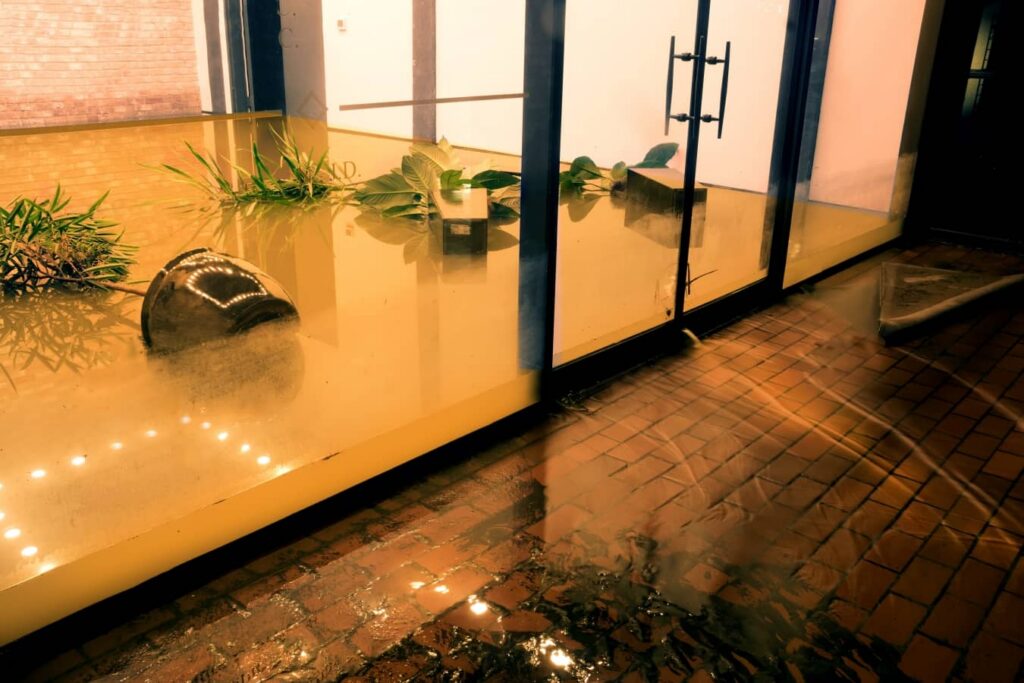
When a plumbing asset ruptures, a roof leak develops during a coastal storm, or a sump pump fails in a finished basement, many homeowners treat the situation as an inconvenient cleanup project that can wait until the weekend. This is a dangerous misunderstanding of material science and building dynamics.
Water damage is not a static condition, it is a highly progressive, destructive event that deteriorates your property on a strict, predictable biological and structural clock. The moment water breaches its designated containment lines and saturates your flooring, drywall, or framing, a countdown begins. Every minute that standing water remains or trapped moisture is allowed to sit unaddressed, the overall cost of repair skyrockets and the physical integrity of your home degrades further.
As a premier digital marketer and local property restoration partner representing PuroClean of Baldwin, NY, my goal is to deliver clear, actionable, and data driven insights to property owners across Nassau County. Understanding the exact water damage timeline allows you to make informed decisions during a crisis, helping you protect your family’s health, preserve your home’s equity, and navigate the insurance claims process effectively.
This extensive guide provides an exhaustive breakdown of what happens to a residential structure hour by hour and day by day following a water intrusion event. If you are currently facing an active leak or a flooded room, do not let the clock run out. Contact our local emergency dispatch team immediately at (516) 200-1416 to deploy our certified technicians and advanced structural drying technology.

Minutes to 1 Hour: Immediate Spreading and Initial Saturation
The initial hour of a water damage event is characterized by rapid physical expansion. Water naturally follows the path of least resistance, flowing downward and outward through gravity. Within the first sixty minutes, liquid spreads aggressively across your floors, wicking quickly into any porous materials it encounters.
Carpets, area rugs, padded underlays, and foam cushions act like massive industrial sponges, absorbing gallons of water instantly. At the same time, water wicks vertically up your walls, penetrating the bottom edge of standard interior drywall. Furniture legs sitting on wet floors begin absorbing liquid, which can cause wood stains, varnishes, and finishes to bleed permanently onto your carpets or area rugs. Personal belongings stored on the floor, including cardboard storage boxes, paperwork, books, and photographs, absorb water rapidly, causing ink to dissolve, paper to warp, and structures to collapse. From an aesthetic perspective, high value assets like hardwood flooring can show initial signs of surface staining within this brief window as the moisture disrupts protective surface seals.
1 to 24 Hours: Subsurface Swelling and Microscopic Activation
When standing water is left unmitigated for a full twenty four hours, the damage shifts from a superficial surface problem to a deeper structural issue. Materials that were saturated during the first hour begin to undergo chemical and physical transformations due to prolonged exposure to moisture.
Drywall sheets begin to absorb water high into their core structures, causing the compressed gypsum material to soften, break down, and lose its structural rigidity. You may begin to notice sagging, bulging, or blistering paint along baseboards and low wall sections. Wooden components, such as baseboard trim, door casings, and subfloor plywood panels, begin to absorb water into their cellular walls, leading to swelling, expansion, and initial alignment issues that prevent doors from closing smoothly. Metal objects exposed to the high humidity or direct liquid, including carpet staples, framing nails, and furniture tacks, begin to tarnish and oxidize, leaving behind localized rust stains.
On a microscopic level, this twenty four hour mark is when the environmental conditions become ripe for biological growth. Dormant mold spores, which naturally exist in every residential indoor environment, absorb the trapped water and initiate the germination sequence. While the fungal growth remains completely invisible to the naked eye at this stage, the biological process has officially been triggered, setting the stage for an impending microbial outbreak if rapid drying is not established immediately.
24 to 48 Hours: The Critical Structural Threshold and Mold Germination
The forty eight hour mark represents the single most critical threshold in the property restoration industry. This is the definitive boundary line where a straightforward water extraction job transitions into a complex, multi dimensional biological remediation project.
Between twenty four and forty eight hours, the germinated mold spores begin sprouting root like filaments called hyphae, anchoring themselves firmly into porous cellulose materials like drywall paper and wooden structural framing timbers. As the fungi multiply, a distinct, heavy, and musty odor begins to permeate the indoor air, signaling that volatile organic compounds are being released into your living spaces. Simultaneously, structural components experience heightened degradation. Engineered wood products, such as particleboard shelving, laminate flooring, and medium density fiberboard trim, begin to delaminate, buckle, and completely fall apart as the water soluble glues holding them together dissolve. Hardwood flooring planks begin to display severe cupping or crowning, where the edges of the wood rise or sink due to uneven moisture distribution between the top and bottom of the boards. Ceilings that have been holding water from a second floor leak will display extensive sagging, and the weight of the trapped water can cause entire sections of plaster or drywall to collapse without warning, posing a severe physical safety hazard to occupants.
48 Hours to 1 Week: Progressive Decay and Airborne Contamination
If a property remains wet for three to seven days, the destruction becomes extensive, progressive, and highly hazardous to both the building structure and human health.
During this phase, mold colonies reach full cellular maturity and enter the sporulation phase, producing visible colonies that manifest as black, green, or white fuzzy patches across walls, carpeting, and furniture. Millions of airborne spores are released directly into the home’s indoor air currents, allowing the contamination to spread via air pathways into entirely unaffected rooms and into the central HVAC ductwork. Wood framing members, such as wall studs, floor joists, and subfloor sheets, experience prolonged saturation, leading to deep wood rot, splitting, and structural softening. Metal hardware, including pipes, brackets, and structural fasteners, experiences advanced corrosion and rust, compromising their load bearing capacities. Additionally, any water that entered the property as a clean category one source, such as a clean tap water pipe burst, is reclassified as a highly contaminated category three black water source by day three because of the exponential proliferation of bacteria, pathogens, and microorganisms within the stagnant environment.
More Than 1 Week: Severe Structural Breakdown and Massive Financial Loss
Allowing water damage to persist for over a week results in severe, often catastrophic consequences for the property. At this advanced stage, the cost of restoration increases exponentially because simple drying is no longer an option, extensive structural demolition and rebuilding are required.
The structural integrity of the home’s core framework becomes deeply compromised. Drywall becomes completely mushy and falls away from the studs, plaster crumbles entirely, and subfloors sag so severely that walking on them becomes dangerous. Deep seated wood rotting fungi can permanently destroy solid wood framing members, requiring the physical replacement of load bearing elements. The mold contamination is typically pervasive throughout the home at this point, requiring specialized remediation containment zones, negative air pressure machines, and extensive air scrubbing. Furthermore, the long term financial impact is magnified because many insurance policies include strict clauses requiring property owners to mitigate damage in a timely manner. Allowing water to sit for over a week due to negligence can result in the complete denial of your insurance claim, leaving you to pay tens of thousands of dollars out of pocket for structural reconstruction.
The Long Island Factor: How Our Local Climate Accelerates the Timeline
While the generic water damage timeline applies to any structure, properties located in Baldwin and across the South Shore of Long Island face unique geographical and environmental challenges that actively accelerate these destructive phases.
Our regional coastal climate is characterized by naturally high seasonal humidity levels, particularly during the late spring, summer, and early autumn months. When a home in Nassau County suffers a water damage event, the high outdoor humidity slows down the natural evaporation process significantly. If your home is already trapped in a high humidity environment, the air cannot easily absorb the extra moisture evaporating from wet carpet or drywall, causing the indoor relative humidity to spike to near one hundred percent almost instantly. This accelerated humidity surge compresses the standard mold germination timeline, allowing fungal spores to take root in less than twenty four hours. Additionally, many Baldwin homes feature older, historic architectural elements or deep subterranean basements that sit close to the local water table. These spaces lack modern vapor barriers, meaning moisture can become permanently trapped inside foundation walls and subfloors, accelerating structural wood rot and masonry efflorescence far faster than in inland regions.
How PuroClean of Baldwin Disrupts the Clock: Our Scientific Drying Approach
To successfully protect a home from the progressive destruction of the water damage timeline, you must deploy an intervention strategy that moves faster than the water itself. At PuroClean of Baldwin, we utilize the advanced principles of psychrometrics, the science of drying, to disrupt the damage clock and restore environmental equilibrium.
1. Immediate Emergency Extraction: Our team responds twenty four hours a day, seven days a week, utilizing high capacity, truck mounted vacuum systems to physically extract thousands of gallons of standing water from your property within the crucial first hour of arrival, removing the bulk of the moisture threat immediately.
2. Precision Moisture Mapping: We do not rely on visual inspections alone. Our technicians deploy advanced pin and pinless moisture meters alongside infrared thermal imaging cameras to track the exact path of the water behind your drywall, under laminate floors, and inside structural cavities, ensuring no hidden pockets of moisture are left to fuel mold growth.
3. High Velocity Air Movement: We strategically position industrial axial and centrifugal air movers across the affected zones. These machines deliver focused, high velocity airflow that breaks the stagnant boundary layer of air on wet surfaces, forcing trapped moisture to convert into airborne vapor rapidly.
4. Low Grain Refrigerant (LGR) Dehumidification: To prevent the destructive greenhouse effect caused by rapid evaporation, we deploy heavy duty LGR dehumidifiers that aggressively pull moisture vapor out of the air, driving the relative humidity down to ultra dry levels and drawing deep, deep moisture out of structural timbers.
Conclusion: Do Not Let the Clock Run Out! Call PuroClean of Baldwin Today
In a water damage emergency, time is your greatest enemy. Waiting even a few extra hours to call for professional assistance can mean the difference between a simple, clean three day drying project and an extensive, multi week structural demolition and mold remediation ordeal. Attempting to manage a water loss with standard household fans and retail equipment will only allow the invisible water timeline to advance unchecked behind your walls.
At PuroClean of Baldwin, we represent your dedicated, local defense against property destruction. Our highly trained, IICRC certified restoration technicians understand the unique structural makeup of Long Island homes and possess the advanced technology required to halt the water damage timeline instantly. We work directly with all major insurance carriers to streamline your claims process and return your home to a safe, pre loss condition seamlessly. Protect your investment, secure your family’s indoor air quality, and regain your peace of mind. Contact PuroClean of Baldwin right now at (516) 200-1416 to dispatch our emergency response unit directly to your location.

Connect With Us on Social Media!
Facebook | Instagram | Twitter | NextDoor | Pinterest | Google Reviews | LinkedIn | Tiktok | YouTube


