


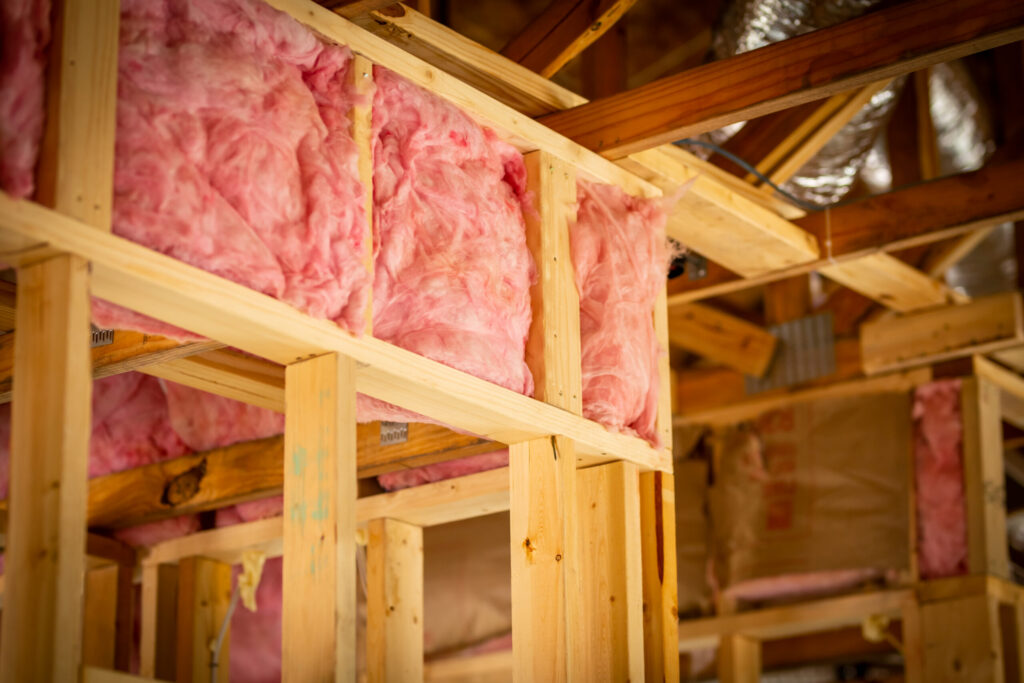
The “pink stuff” inside your walls is pink fiberglass insulation (often called glass wool), famously trademarked by Owens Corning . Made of melted glass and sand spun into fluffy fibers, it is designed to trap air, slow heat transfer, and deaden sound.
How Fiberglass Reacts to Water Damage
While the glass fibers themselves are water-resistant and won’t rot, getting them wet introduces several serious issues that homeowners need to address immediately:
- Loss of Insulation Power (R-Value): The fluffy “loft” traps air to keep your house warm in the winter and cool in the summer. When it gets waterlogged, it compacts and loses its insulating properties, sometimes permanently.
- Mold & Mildew: If the attached vapor-retardant paper or backing gets wet—or if the insulation sits in stagnant moisture for more than 48 hours—it creates a prime environment for mold.
Steps to Handle Wet Insulation
If you suspect a plumbing leak or roof leak has reached your insulation, follow these actionable steps:
- Find and Stop the Leak: The absolute first priority is to locate the source of the water and stop it.
- Assess the Damage: Carefully cut away a small section of the drywall to see how wet the insulation is.
- Dry vs. Replace:
- Dry: If the fiberglass is only slightly damp and you catch it within 24-48 hours, you might be able to dry it out using high-powered fans and dehumidifiers once the leak is fixed.
- Replace: If the pink insulation is completely soaked, has clumped or compressed, or has visible mold, you must remove and replace it. Wet fiberglass that stays in an enclosed wall cavity will continuously trap moisture and lead to wood rot.
- Dispose Safely: Always wear protective gear (gloves, goggles, and an N95 mask) when handling fiberglass, as the microscopic glass particles can irritate your skin and lungs.
Is it Pink Mold?
Sometimes, homeowners mistake the “pink stuff” on their bathroom walls or near water pipes for insulation, when it’s actually an overgrowth of bacteria called Serratia marcescens (commonly misidentified as pink mold). This slimy pink buildup thrives in damp, humid environments and feeds on soap scum and body oils. You can remove it by spraying the area with a mixture of vinegar and water, or a loose paste of baking soda and dish detergent.
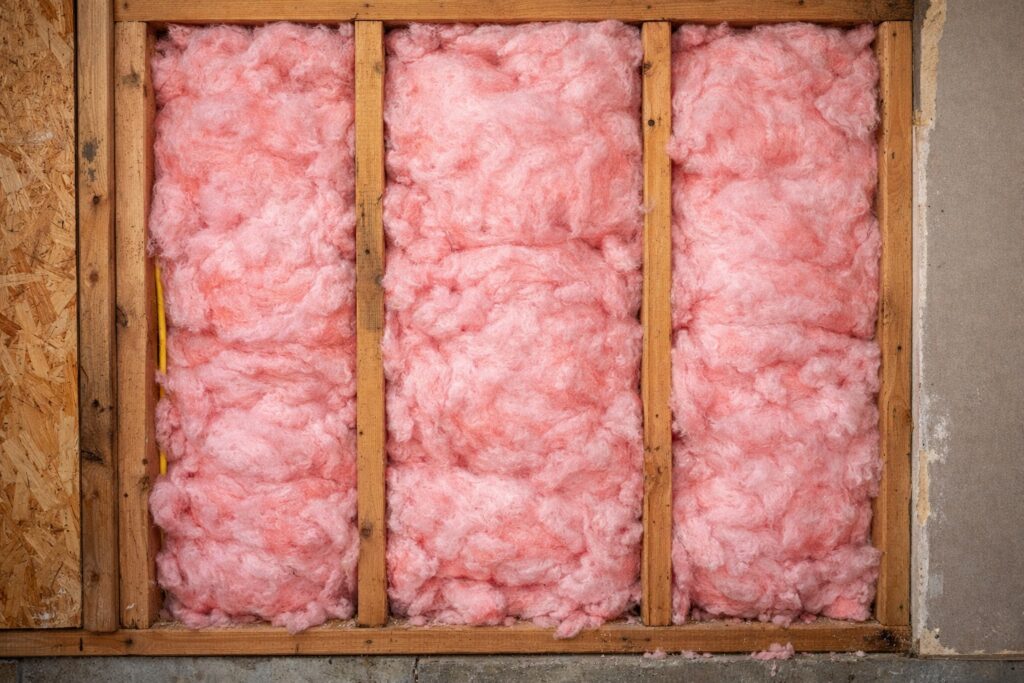
If you have ever peered inside an open wall during a home renovation, looked up into your attic floor, or witnessed a demolition crew pulling apart damaged drywall after a pipe burst, you have undoubtedly seen it. It looks like fluffy pink cotton candy stuffed tightly between the wooden wall studs. But what exactly is that pink stuff in the walls called, what does it do, and what happens when it gets wet?
The technical name for this common building material is fiberglass insulation, often referred to as insulation batts. While it is an incredibly effective tool for regulating your home’s indoor climate and keeping your energy bills manageable, fiberglass insulation behaves like a massive sponge when exposed to water. In this comprehensive guide, we will explore the science behind fiberglass insulation, why it is pink, how water intrusion ruins its functionality, and why wet insulation must be addressed immediately to prevent toxic mold growth.
If you are currently dealing with a flooded wall cavity or suspected water damage in your Baldwin, NY home, contact PuroClean of Baldwin immediately at (516) 200-1416 for an expert inspection.
The Basics: What Is Fiberglass Insulation?
Fiberglass insulation is a thermal barrier composed of extremely fine fibers of glass. Manufacturers melt down raw materials like sand and recycled glass, then spin the molten liquid into thousands of microscopic, hair like glass filaments. These fibers are woven together into a dense, lightweight mat that traps millions of tiny pockets of air.
This trapped air is the secret to insulation. The pockets slow down the transfer of heat between the interior of your home and the harsh outdoor elements. In the winter, fiberglass keeps your furnace’s heated air inside. In the hot, humid summer months on Long Island, it keeps your air conditioned air from escaping, lowering your utility costs and reducing the strain on your HVAC system.
Why is the insulation pink?
Naturally, fiberglass is an off white or dull yellowish color. The iconic pink color is actually a result of artificial dye added by the Owens Corning company, which pioneered the manufacturing process in the mid twentieth century. The company trademarked the color pink for their insulation products to make their brand instantly recognizable to homeowners and contractors alike. Today, other manufacturers produce insulation in different colors, including bright yellow, green, brown, and white, but Owens Corning’s pink remains the most famous.
Common Forms of Fiberglass Insulation Found in Long Island Homes
Depending on the age and architectural style of your property, fiberglass insulation is generally installed in one of two formats.
1. Insulation Batts and Rolls
This is the pre cut, fluffy pink matting that fits snugly between standard twenty four inch or sixteen inch wall stud spaces. Batts often feature a brown kraft paper backing that acts as a vapor retarder, which is stapled directly to the wooden framing before drywall is installed.
2. Blown In or Loose Fill Insulation
Instead of pre cut mats, loose fill fiberglass consists of unbonded, shredded glass fibers. Professional installers use a specialized pneumatic blowing machine to pump this loose material into hard to reach attic spaces, floor joists, and enclosed wall cavities. It forms a seamless, thick blanket of pink or white fluff that fills every nook and cranny perfectly.
The Impact of Water Damage on Pink Fiberglass Insulation
While fiberglass itself is made of glass and will not technically rot or dissolve, its structural design makes it highly vulnerable to water damage from roof leaks, plumbing failures, and basement flooding.
The Total Loss of R Value
An insulation’s effectiveness is measured by its R Value, which quantifies its resistance to heat flow. The higher the R Value, the better the material insulates. Because fiberglass relies entirely on trapped air pockets to function, any liquid water that enters the wall cavity will instantly fill those air pockets. Water conducts heat significantly faster than air, meaning wet insulation completely loses its ability to regulate temperature. Furthermore, the heavy weight of the absorbed water causes the fluffy pink batts to sag, bunch up, and collapse to the bottom of the wall cavity, leaving the upper portions of your walls entirely uninsulated.
The Ultimate Mold Breeding Ground
When fiberglass insulation gets wet inside an enclosed wall cavity, it creates a severe environmental hazard. The dark, unventilated space between your drywall and exterior siding traps the moisture. While mold cannot feed on the glass fibers themselves, it feeds voraciously on the dust, organic debris, and paper backing attached to the insulation batts. Combined with stagnant humidity, mold spores will germinate within 24 to 48 hours, spreading rapidly behind your walls before you ever see visible spots on your interior paint.
Can Wet Pink Insulation Be Dried Out, or Must It Be Replaced?
One of the most frequent questions we receive at PuroClean of Baldwin is whether wet insulation can be saved using commercial dehumidifiers and air movers. The answer depends entirely on the source of the water and how long the material has been saturated.
Category 1 Clean Water Situations
If the water came from a clean source, such as a broken water supply line or a fresh water pipe burst, and the issue was caught within a few hours, it may theoretically be possible to dry the insulation if it is completely accessible. However, because fiberglass is so dense and tightly packed, drying it thoroughly inside an intact wall is nearly impossible. In almost all practical restoration scenarios, it is safer, faster, and more cost effective to remove the wet insulation, dry the underlying wood framing, and install fresh material.
Category 2 and Category 3 Contaminated Water
If the insulation was saturated by contaminated water, such as an HVAC condensation overflow, a sump pump failure, a toilet backflow, or outdoor storm water runoff, the pink fiberglass must be discarded immediately. Fiberglass acts as a highly efficient physical filter, trapping bacteria, pathogens, chemicals, and mud deep within its woven fibers. It cannot be sanitized or washed. Leaving contaminated insulation inside your walls poses severe, long term health risks to your household.
How PuroClean of Baldwin Restores Water Damaged Walls
When water penetrates your walls, our certified team follows a meticulous, multi step process to ensure your home is restored safely and professionally.
1. Advanced Moisture Mapping: We utilize infrared thermal imaging cameras to see through your drywall, instantly pinpointing exactly where the cold, wet pink insulation ends and the dry insulation begins without tearing down your walls blindly.
2. Precision Flood Cuts: Instead of demolishing an entire room, our technicians make a clean horizontal cut along the drywall, typically twelve to twenty four inches above the high water mark, to expose only the affected wall cavity.
3. Safe Extraction and Disposal: We carefully remove the saturated, sagging fiberglass insulation and bag it immediately to prevent dust, debris, and potential mold spores from circulating through your home’s air.
4. Structural Drying and Sanitization: Once the cavity is empty, we apply EPA registered antimicrobial treatments to the exposed wooden wall studs and subfloors. We then deploy commercial LGR dehumidifiers and high velocity air movers to dry the structural timbers to certified dry standards.
5. Insulation and Drywall Rebuilding: After confirming the wood is perfectly dry, our construction division reinstalls high quality insulation and hangs fresh drywall, seamlessly painting and finishing the space to return it to pre loss condition.
Protect Your Home’s Air Quality and Structural Equity
The pink stuff in your walls plays a vital role in keeping your Long Island home comfortable, but when water compromises its integrity, it transitions from a protective barrier into a hidden environmental threat. Ignoring wet wall cavities can lead to catastrophic mold outbreaks, compromised indoor air quality, and permanently warped structural framing.
At PuroClean of Baldwin, we possess the specialized technical tools, professional training, and restoration expertise to manage your property’s recovery from start to finish. Do not let hidden water damage threaten your family’s health or your property value.
Contact PuroClean of Baldwin today at (516) 200-1416 to speak with a local expert or dispatch an emergency response team directly to your doorstep.
Connect With Us on Social Media!
Facebook | Instagram | Twitter | NextDoor | Pinterest | Google Reviews | LinkedIn | Tiktok | YouTube


