


A house fire is one of the most traumatic events a family can experience. Even when everyone escapes safely, the aftermath is overwhelming. You are displaced from your home, surrounded by damage, and suddenly navigating a complex insurance process at the exact moment when your capacity for stress is already at its limit.
Filing a fire damage claim with your homeowners insurance company is not complicated in theory, but in practice, the steps you take and the decisions you make in the hours and days before you file that claim can have a significant impact on how much you receive, how quickly the process moves, and how smoothly the entire restoration experience goes.
At PuroClean of Baldwin, we have worked alongside Nassau County and Long Island homeowners through hundreds of fire damage restoration projects. We have seen claims go smoothly and we have seen claims go badly. The difference almost always comes down to preparation and the quality of documentation assembled before the claim is formally filed.
This guide walks you through every important step to take before filing your fire damage claim so you can protect your family’s financial interests and set the stage for a full, efficient recovery.

Why What You Do Before Filing Matters So Much
Many homeowners assume that once the fire department leaves and the smoke clears, the next step is simply calling their insurance company. And while notifying your insurer promptly is indeed important, how you approach that notification and what you have in hand when you make that call makes an enormous difference.
Insurance companies employ experienced adjusters whose job is to assess damage and determine the value of your claim. They are skilled at identifying gaps in documentation, questioning timelines, and applying policy exclusions and limitations. That does not mean your insurer is working against you, but it does mean that walking into the claims process unprepared puts you at a disadvantage.
Homeowners who take the time to document damage thoroughly, understand their policy, and engage the right professionals before filing consistently receive faster approvals, more complete settlements, and fewer disputes than those who call their insurer immediately after the fire without any preparation.
Step 1: Prioritize Safety Above Everything Else
Before you think about claims, documentation, or restoration, the immediate priority is the safety of your family and anyone else affected by the fire. This point deserves emphasis because the emotional pull to return to your home and assess the damage can lead people to put themselves at risk.
Do Not Re-Enter Until Cleared
Even after a fire is extinguished, a fire-damaged structure can be extremely dangerous. Structural elements compromised by heat may be at risk of collapse. Electrical systems may be live and hazardous. Air quality inside a fire-damaged building is dangerous due to smoke, soot, carbon monoxide, and the toxic byproducts of burned materials including plastics, treated wood, and household chemicals. Do not re-enter your home until the fire department has formally cleared it as safe to enter.
Secure Medical Attention If Needed
Smoke inhalation is a serious medical concern that does not always present symptoms immediately. If any member of your household was exposed to smoke, seek medical evaluation even in the absence of obvious symptoms. Medical records from this evaluation may also be relevant to any liability or displacement portions of your insurance claim.
Arrange Temporary Housing
Most standard homeowners insurance policies include Additional Living Expenses (ALE) coverage, which reimburses you for the cost of temporary housing, meals, and other increased living costs while your home is being restored. Contact your insurance company early to activate this coverage. Keep every receipt from the moment you are displaced, including hotel bills, restaurant meals, laundry costs, and pet boarding, as all of these may be reimbursable under your ALE coverage.
Step 2: Document the Damage Before Anything Is Touched or Cleaned
Documentation is the single most important thing you can do before filing your fire damage claim. The quality and completeness of your documentation directly shapes the outcome of your settlement. This step needs to happen before any cleaning, repair, boarding up, or restoration work begins, with the exception of emergency protective measures authorized by your insurer.
Photograph and Video Everything
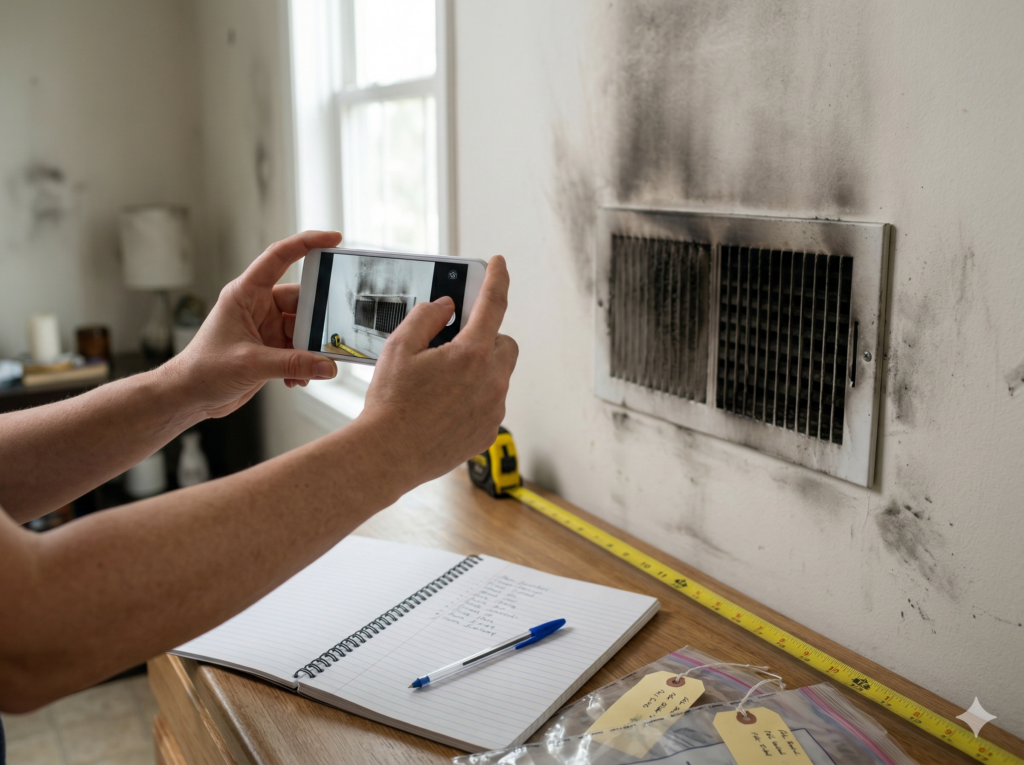
Using your smartphone or any available camera, document every area of damage in as much detail as possible. Do not just photograph the most obviously damaged areas. Photograph every room, every wall, the exterior of the home, the roof if it can be safely seen, the garage, outbuildings, and any damaged landscaping or vehicles. Capture wide-angle shots that establish context and close-up detail shots of specific damage.
Video walkthroughs are particularly powerful documentation tools because they capture the full scope of damage in a way that individual photographs cannot. Walk through the entire property with your camera in video mode, narrating what you are seeing as you go. Note every area of visible fire, smoke, soot, and water damage from firefighting efforts.
Document Damaged and Destroyed Contents
Your homeowners policy has a personal property or contents coverage component that covers your belongings separate from the structure itself. Documenting damaged contents is just as important as documenting structural damage. Photograph every damaged item in place before anything is moved or discarded. Note the brand, model, approximate age, and condition of valuable items wherever possible.
Retrieve Existing Home Inventory Records If Available
If you maintained a home inventory before the fire, this is the moment it pays off. A home inventory is a record of your belongings, ideally with photographs, serial numbers, purchase receipts, and estimated values. Retrieve any inventory records you have stored digitally off-site, in cloud storage, or with your insurance agent. If you did not have a home inventory, the documentation you create now becomes your inventory.
Photograph Utility Meters and Exterior Features
Document the condition of your utility meters, exterior features, fencing, driveway, walkways, and any other property elements that may have been affected. These are easy to overlook in the immediate aftermath of a fire but can represent meaningful value in your claim.
Step 3: Locate and Review Your Insurance Policy
Before you call your insurance company, take the time to locate your policy documents and understand what you have. If physical copies were lost in the fire, contact your insurance agent or carrier directly to request a copy. Your mortgage servicer may also have a copy on file.
Key Policy Elements to Review
When reviewing your policy before filing, focus on these critical sections:
- Dwelling coverage (Coverage A): The maximum amount your policy will pay to repair or rebuild the structure of your home. Verify that your coverage limit reflects the current cost to rebuild, not just the market value of the property.
- Personal property coverage (Coverage C): The limit for your contents and belongings. Note whether your policy covers replacement cost value or actual cash value, as this distinction has a major impact on what you receive for damaged items.
- Additional living expenses (Coverage D): Your temporary housing and displacement cost coverage. Understand the monthly and total limits so you can plan your temporary living arrangements accordingly.
- Other structures coverage (Coverage B): Coverage for detached garages, fences, sheds, and other structures on your property.
- Deductible amount: The amount you are responsible for before insurance pays. Confirm your deductible and factor it into your financial planning.
- Exclusions and limitations: Review any specific exclusions that might affect your claim, such as limitations on certain types of personal property, vacancy clauses, or business property exclusions.
Replacement Cost Value vs. Actual Cash Value
This distinction matters enormously for contents claims. A policy that covers replacement cost value (RCV) pays you what it costs to buy a new equivalent item at today’s prices. A policy that covers actual cash value (ACV) pays you the depreciated value of the item, meaning what it was worth at the time of the fire after accounting for its age and condition.
For a five-year-old television, RCV might pay you $800 to buy a new equivalent model. ACV might pay you $200 to $300 after depreciation is applied. Across an entire household of belongings, this difference can amount to tens of thousands of dollars. Know which type of coverage you have before you begin your contents inventory.
Step 4: Take Reasonable Steps to Prevent Further Damage
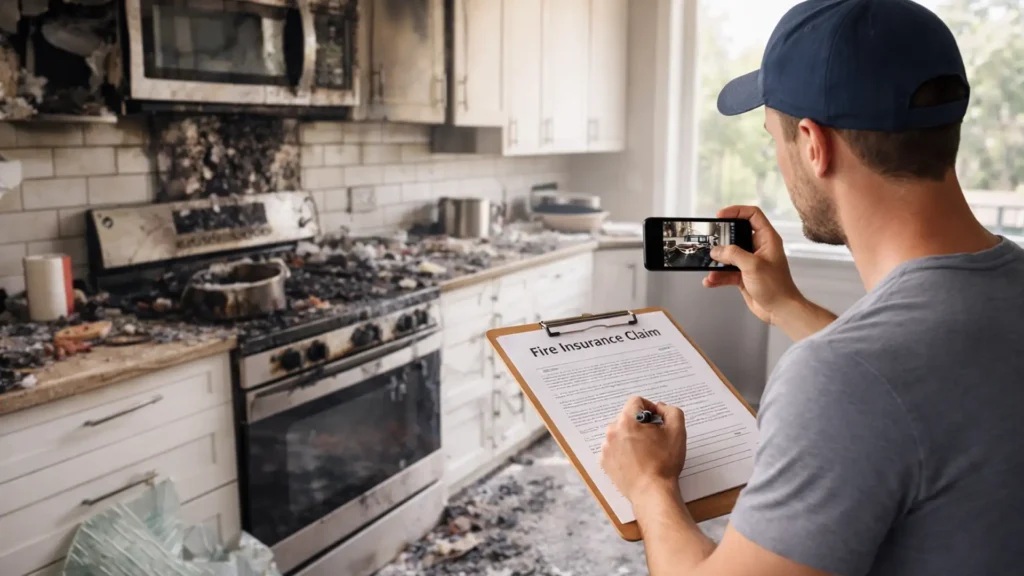
Most homeowners insurance policies include a duty to mitigate, meaning you are required to take reasonable steps to prevent additional damage to your property after a covered loss. Failure to mitigate can give your insurer grounds to reduce your claim settlement.
For fire-damaged properties, reasonable mitigation typically includes:
- Boarding up broken windows and damaged doorways to prevent unauthorized entry and weather damage
- Covering roof damage with tarps to prevent rain water intrusion
- Securing the property against vandalism and theft
- Contacting a restoration company to begin water extraction and drying if firefighting water is present inside the home
All mitigation work should be documented with photographs before and after. Keep all receipts for materials and labor. These costs are typically reimbursable as part of your claim. Do not undertake major repairs or reconstruction before your adjuster has inspected the property, as this can complicate your claim. Emergency protective measures are the exception.
Step 5: Obtain the Official Fire Department Report
The official fire department incident report is one of the most important documents in a fire damage claim. It establishes the date, time, location, and cause of the fire, which are all foundational facts your insurance company will want to verify.
Contact the Baldwin Fire Department or the relevant fire department that responded to your incident to request a copy of the report. In Nassau County, fire department reports are typically available within a few days of the incident. Some departments provide reports directly to homeowners, while others require a formal records request.
The fire report is particularly important if the cause of the fire might affect your claim, such as in cases involving electrical faults, appliance malfunctions, or suspected arson. Your insurer will obtain this report independently, but having your own copy lets you review it for accuracy and address any discrepancies before they become issues in the claims process.
Step 6: Contact a Licensed Fire Damage Restoration Company
One of the most valuable steps you can take before filing your fire damage claim is engaging a licensed, certified fire damage restoration company like PuroClean of Baldwin. Many homeowners delay this step, thinking they need to wait for their insurance adjuster to inspect the property first. In most cases, this delay works against you.
Why Early Restoration Engagement Matters
Fire and smoke damage is active and progressive. Soot continues to corrode surfaces and embed into materials for days after a fire. Firefighting water that remains inside a structure begins to cause mold within 24 to 48 hours. Odors become increasingly difficult to eliminate the longer smoke particles remain bonded to surfaces.
A restoration company can begin emergency mitigation work, such as water extraction, structural drying, and emergency board-up, immediately after the fire department clears the property. This emergency work prevents secondary damage and is almost always approved by insurance carriers as a covered mitigation expense.
What a Restoration Professional Brings to Your Claim
Beyond the physical restoration work, an experienced restoration contractor provides something equally valuable for your claim: professional damage documentation. PuroClean of Baldwin produces detailed written and photographic damage assessments, moisture readings, scope of work proposals, and restoration documentation that insurance adjusters recognize and work with efficiently.
This professional documentation carries weight with adjusters that self-taken photographs alone do not. It demonstrates the scope and severity of damage in the technical language insurers use, and it accelerates the approval process for restoration work.
Step 7: Notify Your Insurance Company Promptly
Once you have documented the damage, located your policy, taken mitigation steps, and engaged a restoration professional, you are in a strong position to contact your insurance company and formally open your claim. Most policies require you to notify your insurer promptly after a covered loss, so do not delay this step unnecessarily, but do take the preparation steps above before making the call.
What to Have Ready When You Call
When you contact your insurance company to file your claim, have the following information available:
- Your policy number and the name of your insurance carrier
- The date, time, and address of the fire
- A brief, factual description of how the fire started, based on what you know at this point
- A list of the areas and rooms of your home that were affected
- Your temporary housing address and contact information
- Contact information for the restoration company you have engaged
Be factual and measured in your initial report. Avoid speculating about causes, estimating damage values, or making statements about what is and is not covered before you have had a chance to review your policy thoroughly. Initial statements made during a claims call can become part of the claim record.
Request a Copy of Everything
From the moment you open your claim, request copies of every document, every written communication, every adjuster report, and every estimate that is produced as part of your claim. Keep these organized in a dedicated file, either physical or digital. A well-organized claims file gives you the ability to review, challenge, and refer back to every aspect of your claim throughout the process.
Common Fire Damage Claim Mistakes and How to Avoid Them
| Common Mistake | What to Do Instead |
| Re-entering the home before it is cleared | Wait for official clearance from the fire department |
| Throwing away damaged items before documenting them | Photograph everything in place before anything is moved or discarded |
| Calling the insurer without documentation in hand | Photograph and video the damage before making the first call |
| Making major repairs before the adjuster inspects | Limit pre-inspection work to emergency mitigation only |
| Accepting the first settlement offer without review | Review with a public adjuster or restoration professional before accepting |
| Not tracking ALE expenses from day one | Keep every receipt from the moment you are displaced |
| Overlooking smoke and water damage in unburned rooms | Document all rooms, not just those with direct fire damage |
| Not requesting the fire department report | Obtain the official incident report as early as possible |
| Signing a contractor’s assignment of benefits without review | Have any assignment of benefits documents reviewed before signing |
Avoiding these mistakes does not require legal expertise or insurance industry knowledge. It simply requires slowing down in a high-stress moment and following a methodical process.
Working With Your Insurance Adjuster
Once your claim is opened, your insurance company will assign an adjuster to your case. The adjuster’s job is to inspect the damage, review your documentation, and determine the value of your claim based on your policy terms. Understanding how to work effectively with your adjuster can significantly affect your outcome.
- Be present during the inspection: Walk through the property with your adjuster and point out every area of damage. Do not assume they will find everything on their own.
- Bring your documentation: Have your photographs, video walkthroughs, contents inventory, fire report, and any restoration company assessments available during the inspection.
- Ask questions: If the adjuster references a policy limitation or exclusion you do not understand, ask for clarification in writing.
- Do not rush to sign: Take time to review any settlement offer before signing. Once you sign a release, your ability to seek additional compensation is typically extinguished.
- Know your right to a public adjuster: If you are unhappy with how your claim is being handled, you have the right to hire a licensed public adjuster to represent your interests at any point in the process.
How PuroClean of Baldwin Supports You Through the Fire Damage Claims Process

PuroClean of Baldwin is more than a restoration contractor. We are a full partner in your recovery from the moment we arrive at your property. Our role in the claims process includes:
- Emergency response and mitigation: Immediate water extraction, structural drying, board-up, and tarping to stop ongoing damage and satisfy your policy’s mitigation requirement.
- Detailed damage documentation: Professional written and photographic assessments of all fire, smoke, soot, and water damage in the format insurance adjusters use.
- Scope of work development: A comprehensive written remediation and restoration scope that gives your adjuster a clear, complete picture of what your home needs.
- Contents pack-out and restoration: Professional inventory, cleaning, and secure storage of your salvageable belongings throughout the restoration process.
- Direct carrier communication: We communicate directly with all major insurance carriers and work to keep the approval and authorization process moving efficiently.
- Full structural restoration: From initial mitigation through final rebuild, we manage the complete restoration of your home to its pre-loss condition.
Serving Baldwin and Nassau County After Fire Damage
PuroClean of Baldwin provides 24/7 emergency fire damage response throughout Baldwin, Freeport, Rockville Centre, Merrick, Bellmore, Oceanside, Valley Stream, Lynbrook, and the surrounding Nassau County communities. We are locally owned and operated, which means when you call us, you reach a team that knows Long Island homes, works with Long Island insurance carriers daily, and is genuinely invested in helping our neighbors recover.
Fire damage does not wait for business hours, and neither do we. Our emergency response team is available every hour of every day to respond, assess, and begin the protective mitigation work that sets the foundation for a successful claim and a full recovery.
Frequently Asked Questions About Filing a Fire Damage Claim
How long do I have to file a fire damage claim in New York?
Most homeowners insurance policies in New York require you to notify your insurer promptly after a covered loss, and formal proof of loss documentation is typically required within 60 days of the loss. However, policy terms vary, and waiting even a few weeks to file can complicate your claim. File as soon as you are prepared to do so.
Can my insurance company deny my fire damage claim?
Yes. Common reasons for denial include arson or intentional acts, vacancy clause violations if the home was unoccupied for an extended period, policy lapses due to non-payment, and damage caused by perils specifically excluded from the policy. If your claim is denied, you have the right to appeal and to seek legal or public adjuster representation.
What happens if my home cannot be safely repaired and needs to be rebuilt?
Total loss claims are handled under the dwelling coverage limit of your policy. The insurer will assess whether rebuilding or a cash settlement is appropriate. In New York, homeowners have rights regarding how total loss values are calculated, and engaging a public adjuster for a total loss claim is strongly recommended.
How long does fire damage restoration take?
Restoration timelines vary widely based on the severity of the fire, the size of the home, and the scope of structural damage. Minor fire damage to a single room may be restored in two to four weeks. Significant structural damage to a whole home can take three to twelve months or more. Your PuroClean project manager will provide a detailed timeline estimate after the initial assessment.
Do I need a public adjuster for a fire damage claim?
Not every claim requires a public adjuster, but complex claims, large losses, and any situation where you feel your settlement offer is inadequate benefit significantly from public adjuster representation. In New York, public adjusters are licensed by the Department of Financial Services and charge a percentage of the claim settlement as their fee.
Do Not Navigate a Fire Damage Claim Alone
The period immediately after a house fire is not the time to figure things out on your own. The decisions you make in those first 24 to 72 hours set the trajectory for your entire recovery, financially and physically. Having the right restoration partner engaged early is one of the most important steps you can take.
PuroClean of Baldwin is ready to respond immediately, help you document your damage correctly, communicate with your insurance carrier, and guide your family through the entire restoration process from emergency mitigation to move-back day.
Call PuroClean of Baldwin any time, 24 hours a day, 7 days a week. We serve Baldwin, Freeport, Rockville Centre, Merrick, Bellmore, Oceanside, Valley Stream, Lynbrook, and all of Nassau County.
PuroClean of Baldwin | Serving Nassau County and Long Island Communities.
Connect With Us on Social Media!
Facebook | Instagram | Twitter | NextDoor | Pinterest | Google Reviews | LinkedIn | Tiktok | YouTube


