


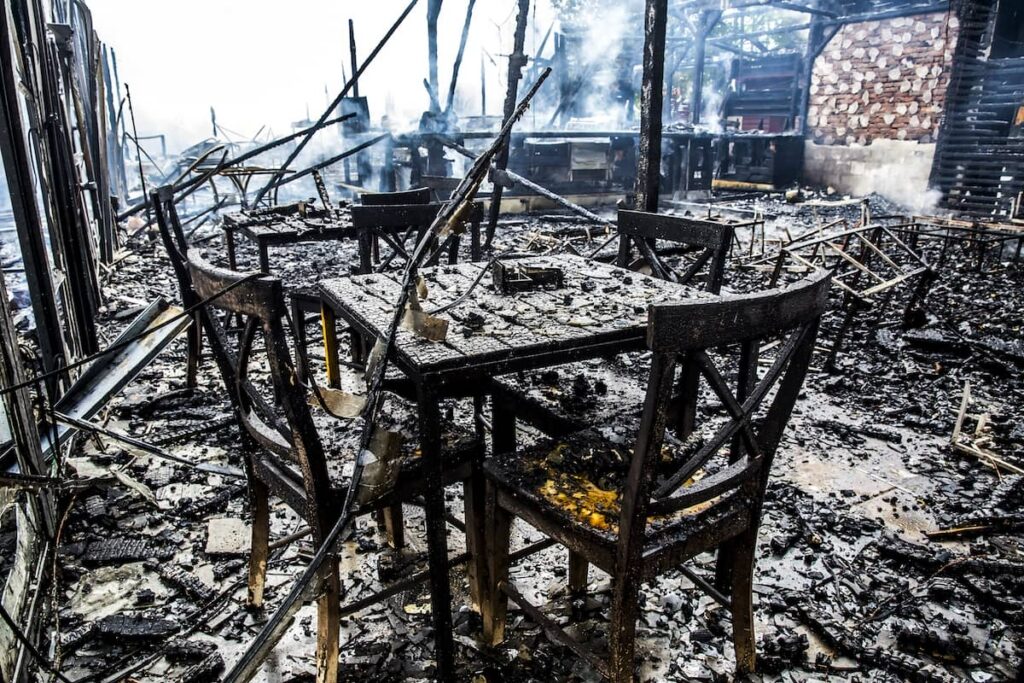
The fire is out. The trucks are pulling away. And you’re standing outside your home in Baldwin, Lynbrook, or somewhere else across Nassau County, trying to process what just happened. The next 24 hours are the most critical period of your entire recovery.
Fire and Smoke Damage: Call (516) 200-1416
The decisions you make, the calls you place, and the actions you take in the hours immediately following a house fire will directly shape how smoothly your insurance claim goes, how much secondary damage your home suffers, and how quickly you and your family can begin the road back to normal. Getting it right doesn’t require you to know everything about fire restoration. It requires you to know the right steps, in the right order, and who to call.
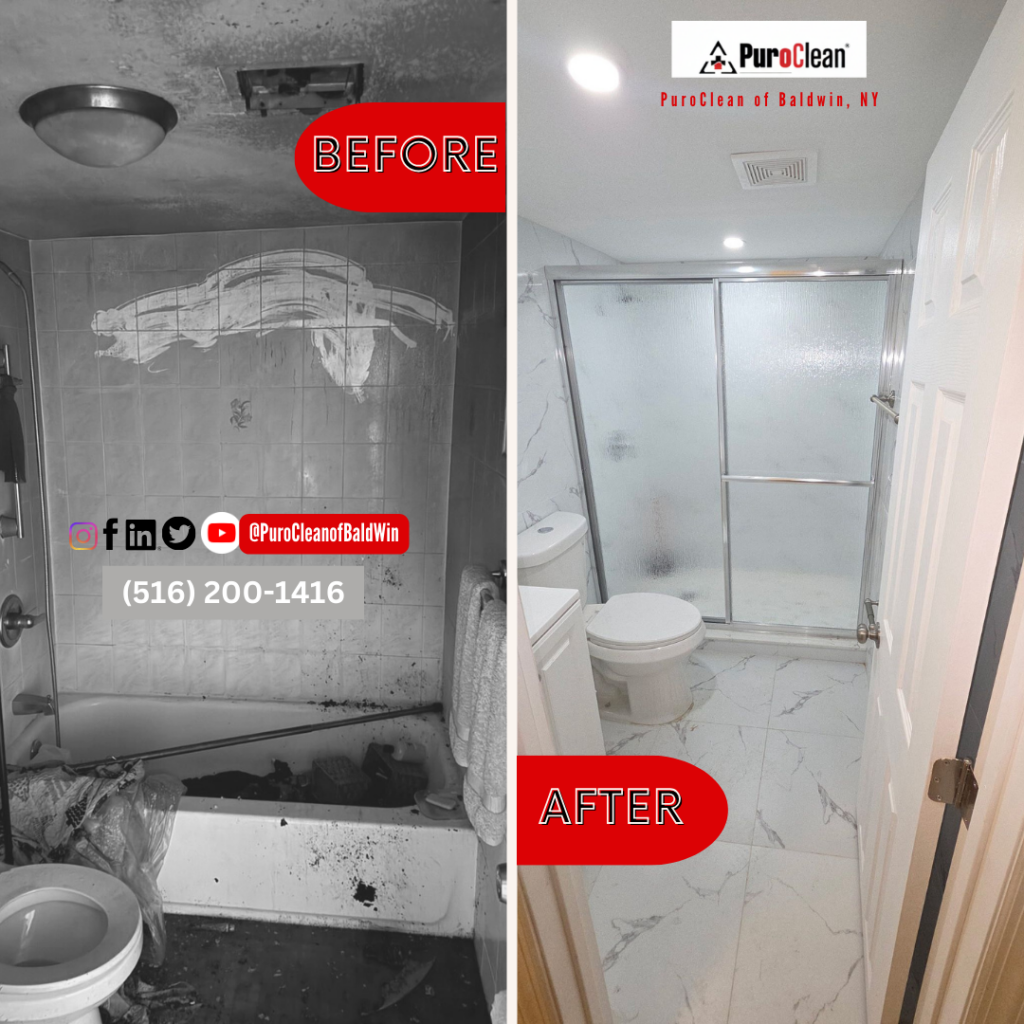
At PuroClean of Baldwin, we respond to fire damage emergencies across Nassau County every week. We’ve seen firsthand what happens when homeowners take the right steps immediately after a fire, and we’ve seen the costly consequences when well-meaning but uninformed decisions make a bad situation worse. This guide is written to make sure you know exactly what to do, starting from the moment the fire is out.
The First Hour: Safety, Documentation, and Your Insurance Company
Step 1: Do Not Go Back Inside
This is the rule that is hardest for homeowners to follow, and the most important one. The instinct to go back in and check on your belongings, grab irreplaceable items, or assess the damage yourself is completely understandable. It is also potentially life-threatening.
A fire-damaged home is an active structural hazard. Floors that survived the fire may have been weakened by heat and water and can collapse without warning. Ceilings loaded with firefighting water can come down suddenly. Walls may have lost structural integrity. The electrical system, even if the power has been cut, can still present shock hazards through damaged wiring and water-saturated panels.
Do not re-enter your home for any reason until a fire department official, building inspector, or structural engineer has assessed the property and explicitly cleared it for entry. This applies even if the fire appeared minor and only affected one room. The structural and electrical risks extend well beyond the burn zone.
Step 2: Account for Everyone, Including Pets
Before anything else, confirm that every member of your household, including pets, is accounted for and safe. If anyone was inside during the fire and their whereabouts are uncertain, notify emergency personnel on scene immediately. Do not assume everyone got out until you have confirmed it.
Step 3: Get a Copy of the Fire Report
Before the fire department leaves your property, ask the officer in charge for the incident report number and find out how to obtain a copy of the full fire report. This document records the official cause of the fire, the time and duration of the response, and other details that your insurance company will use when processing your claim. Getting this information while responders are still on scene is far easier than tracking it down later.
Step 4: Call Your Insurance Company
Contact your homeowner’s insurance carrier as soon as you are safely away from the property. Most major insurers have 24-hour claims lines for exactly this situation. Prompt notification is typically a policy requirement, and earlier contact means an earlier adjuster assignment, which means a faster claims process.
When you call, have the following ready: your policy number, the address of the property, a brief description of what happened, and the fire incident report number if you have it. Your insurer will tell you what to do next, assign a claim number, and, if your home is uninhabitable, explain your Additional Living Expenses (ALE) coverage, which typically covers hotel costs, meals, and other reasonable living expenses while your home is being restored.
Ask your insurer specifically about ALE limits and duration so you can plan appropriately. In Nassau County, where hotel and short-term rental costs are significant, understanding exactly what your coverage provides from the start will help you make smart housing decisions.
Step 5: Photograph and Video Everything
Before any cleaning, moving, or restoration work begins, document the damage as completely as possible. If you can safely do so from outside the home, photograph the exterior from multiple angles. Once the property is cleared for entry, document every room, every damaged item, every affected surface, and every structural element that shows damage, from multiple angles and distances.
This documentation is the backbone of your insurance claim. The more thorough it is, the harder it is for an adjuster to undervalue your loss. Use your phone’s video function to walk through each room and narrate what you’re seeing, then follow up with still photos of specific items and areas. If you have home inventory records, purchase receipts, or photos of your belongings from before the fire, locate those as well and share them with your insurer.
Hours Two Through Six: Securing the Property and Getting Professional Help on Site
Step 6: Board Up and Tarp the Property
A fire-damaged home is an open, vulnerable structure. Windows broken by heat or firefighting operations, doors compromised by forced entry, and sections of roof or exterior wall that have been damaged all need to be secured immediately against weather, unauthorized entry, and wildlife. Nassau County weather, particularly in winter and storm season, can introduce significant additional water damage to a fire-damaged home within hours if openings are left unaddressed.
Emergency board-up and tarping services are typically covered under your homeowner’s insurance policy as reasonable protective measures, and they should be arranged as soon as the property is cleared for access. PuroClean of Baldwin provides emergency board-up and tarping as part of our immediate fire damage response. When you call us, securing your property is one of the first things we do.
Step 7: Call PuroClean of Baldwin – (516) 200-1416
This is the call that will define the trajectory of your recovery more than any other. A professional fire damage restoration team on site within hours of the fire gives you the best possible chance of minimizing total damage, preserving more of your belongings, and moving through the restoration process as efficiently as possible.
Here is why speed matters so much. Soot, the acidic residue carried by smoke, begins permanently etching and staining surfaces within hours of deposition. Metals begin to corrode. Plastics begin to discolor permanently. Porous materials absorb soot residue deeper the longer it sits, turning surfaces that could be cleaned into surfaces that must be replaced. Every hour between the fire and the start of professional cleaning increases the scope and cost of restoration.
The firefighting water is an equally urgent problem. Structural materials saturated with water begin developing the conditions for mold growth within 24 to 48 hours. In Nassau County homes, where existing ambient humidity from the coastal environment is already elevated, that window can be even shorter. Without professional water extraction and structural drying beginning immediately, mold remediation becomes an additional and expensive component of an already significant restoration project.
When PuroClean of Baldwin arrives, we begin water extraction, structural drying, and damage assessment simultaneously. We document everything for your insurance claim. We identify salvageable contents and begin the process of separating what can be restored from what must be replaced. And we establish a clear, comprehensive restoration plan so you understand exactly what the path forward looks like.
Step 8: Arrange Temporary Housing
If your home has been declared uninhabitable, or if the scope of damage makes it clear that the restoration process will take weeks, arranging stable temporary housing early is important for your family’s wellbeing and your ability to focus on the recovery process without constant logistical disruption.
Contact your insurance company about ALE coverage before booking anything, so you understand what expenses are reimbursable and what the daily or monthly limits are. Keep all receipts from the moment you leave your home, including hotel stays, meals, and any household items you need to purchase for temporary living. These are claimable expenses, and organized records will make reimbursement much smoother.
If you have family or friends in the Baldwin or Lynbrook area who can accommodate you temporarily, that option can reduce ALE costs and give you closer access to your property during the restoration process.
Hours Six Through Twenty-Four: Inventory, Claims, and Next Steps
Step 9: Create a Detailed Contents Inventory
One of the most time-consuming and emotionally difficult parts of the post-fire insurance process is documenting your personal property losses. Start this process as early as possible, ideally within the first day, when your memory of what was in each room is still fresh.
Go room by room, either mentally or using your pre-fire photos as a reference, and list every item of value: furniture, appliances, electronics, clothing, jewelry, artwork, tools, sporting equipment, musical instruments, collectibles, and anything else that was damaged or destroyed. For each item, try to note the approximate purchase date, original cost, and replacement cost if you know it.
Your insurance company will provide a proof of loss form that requires this level of detail. The more complete your inventory, the more accurately your claim can be settled. Do not discard any damaged items until your adjuster has seen them or explicitly told you they can be disposed of. Throwing away damaged property before it has been assessed can jeopardize your claim.
Step 10: Understand Your Policy Before the Adjuster Visits
Before your insurance adjuster visits the property, take time to read through your homeowner’s policy with particular attention to a few key areas. First, determine whether your personal property is covered at replacement cost value or actual cash value. Replacement cost coverage pays what it costs to buy a new equivalent item today. Actual cash value coverage pays replacement cost minus depreciation, which for older items can be significantly less. This distinction matters enormously in a major fire loss.
Second, review your dwelling coverage limit to confirm it is sufficient to cover the cost of rebuilding your home at current Nassau County construction costs. Building costs have risen significantly in recent years, and policies that were set several years ago may be underinsured relative to current rebuilding costs.
Third, confirm whether your policy includes ordinance or law coverage. This provision covers the additional cost of bringing your rebuilt home up to current building codes, which may require upgrades beyond simple like-for-like replacement in older Baldwin and Lynbrook homes built to code standards from decades ago.
Step 11: Communicate Proactively with Your Adjuster
When your insurance adjuster visits, be present if at all possible. Walk through the property with them and point out all areas of damage, including smoke damage in rooms not directly affected by the fire, water damage from firefighting operations, and any structural concerns. Adjusters are thorough, but they benefit from a homeowner’s knowledge of the property and all its features.
PuroClean of Baldwin can be present during the adjuster visit and provide our own detailed damage assessment documentation to supplement the adjuster’s findings. Our moisture logs, photographic records, and written scope reports give the adjuster a complete, professionally documented picture of the total damage, which supports a more accurate and comprehensive settlement.
If you disagree with any aspect of the adjuster’s assessment or settlement offer, you have the right to request a re-inspection, provide additional documentation, or engage a public adjuster to advocate on your behalf. Do not feel pressured to accept a settlement that doesn’t reflect the true scope of your loss.
Step 12: Notify Other Relevant Parties
Beyond your insurance company, there are several other parties who may need to be notified following a significant house fire. If you have a mortgage, your lender will need to be informed, as they have a financial interest in the property and will likely need to be involved in the insurance settlement process. Your utility companies, Nassau County building department (if structural repairs require permits), and your children’s school if displacement affects their transportation or contact information are all worth contacting within the first day or two.
What Happens After the First 24 Hours
Once the immediate steps are taken, the restoration process moves into a more structured phase managed by your professional restoration team. With PuroClean of Baldwin engaged from the start, you will have a clear restoration plan, a documented timeline, and a single point of contact managing every phase of recovery, from water extraction and structural drying through soot removal, odor elimination, content restoration, and full structural rebuild.
The restoration process for a Nassau County home varies in duration depending on the severity of the fire, but with professional response beginning within the first 24 hours, the process is as efficient as it can possibly be. Damage that would compound over days of delay, mold that would require separate remediation, and soot damage that would require more extensive surface replacement are all prevented or minimized when the first 24 hours are handled correctly.
Your role during the restoration process is to stay in communication with your restoration team and your insurance adjuster, make timely decisions when approvals or selections are needed, and keep records of all expenses and communications related to your claim. Beyond that, your job is to let the professionals do the work they are trained to do.
Call PuroClean of Baldwin the Moment the Fire Is Out
The first 24 hours after a house fire are not the time to research options, wait and see, or try to handle things yourself. They are the time to act, and to act with the right team at your side.
PuroClean of Baldwin is available 24 hours a day, 7 days a week, 365 days a year for emergency fire damage response throughout Baldwin, Lynbrook, Freeport, Rockville Centre, Merrick, Baldwin Harbor, North Baldwin, Oceanside, Valley Stream, Elmont, Hempstead, and all of Nassau County.
We are IICRC-certified fire damage restoration specialists. We work directly with all major insurance carriers and provide the documentation your adjuster needs from day one. We handle every phase of your recovery, from the first emergency call to the final walkthrough of your fully restored home. And we are your neighbors, with deep roots in the Nassau County community and a genuine commitment to helping Long Island families recover from the worst days of their lives.
When the fire is out, call PuroClean of Baldwin. We respond immediately, we work fast, and we don’t stop until your home is back.
🔥 FIRE EMERGENCY? CALL US NOW, WE RESPOND 24/7 🔥
PuroClean of Baldwin, Nassau County’s Trusted Fire Damage Restoration Experts
IICRC Certified • All Insurance Accepted • 24/7 Emergency Response • Serving All of Nassau County
PuroClean of Baldwin proudly serves Baldwin, Lynbrook, Freeport, Rockville Centre, Merrick, Oceanside, Valley Stream, Elmont, Hempstead, Baldwin Harbor, North Baldwin, North Lynbrook, and all of Nassau County, Long Island.
Fire Damage Restoration • Water Damage Restoration • Mold Remediation • Sewage Cleanup • Biohazard Cleanup • 24/7 Emergency Response
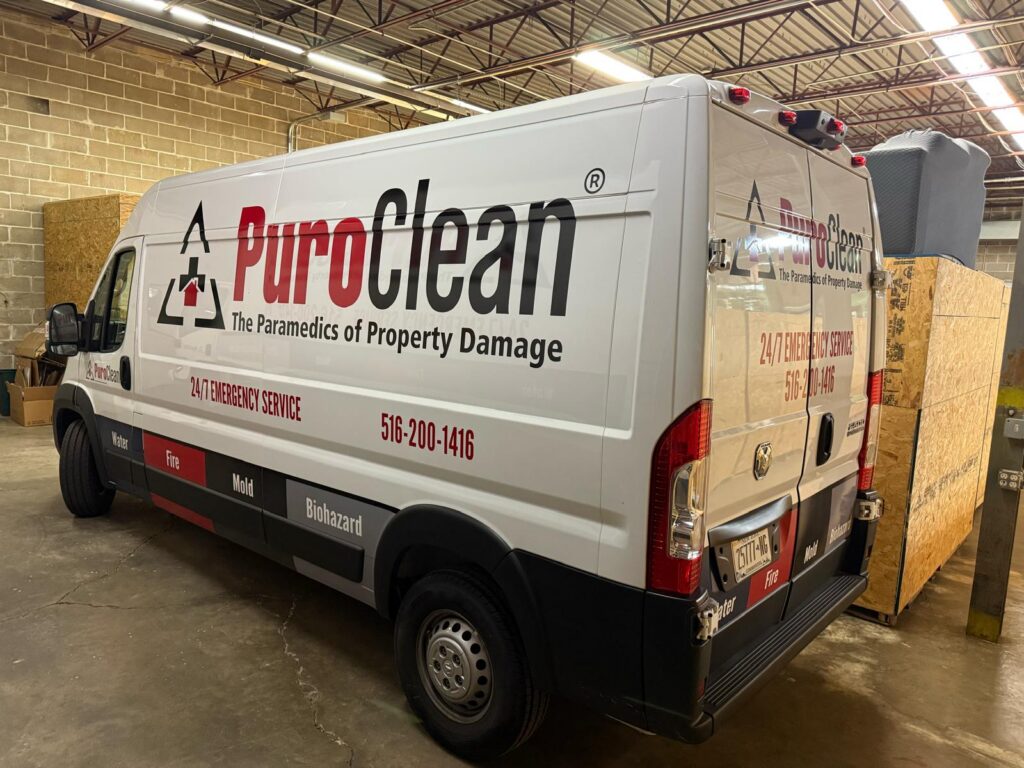
Connect With Us on Social Media!
Facebook | Instagram | Twitter | NextDoor | Pinterest | Google Reviews | LinkedIn | Tiktok | YouTube


