


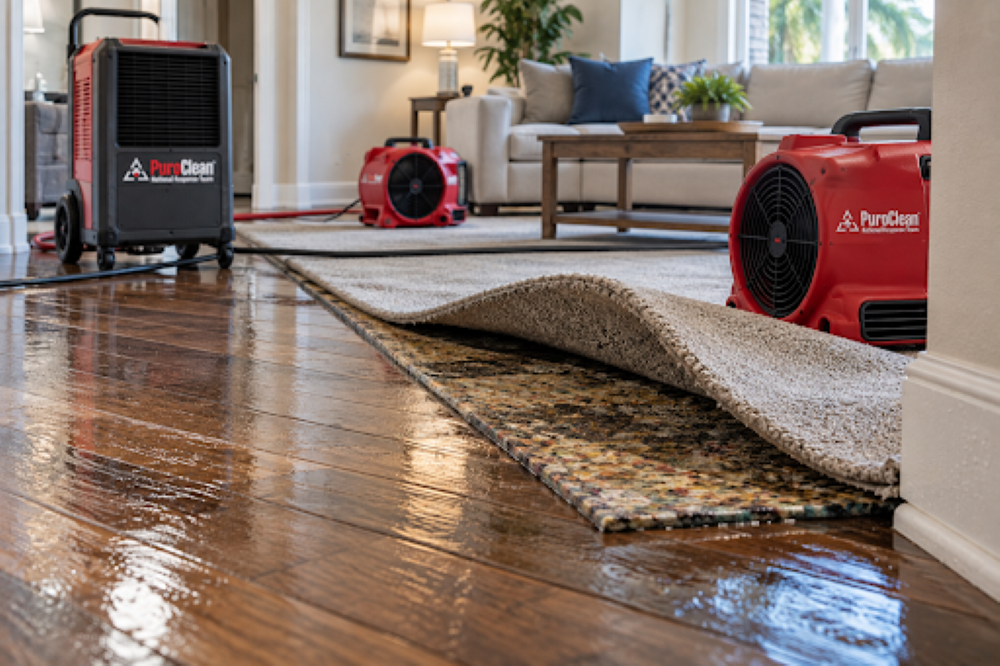
Stop Appliance Leaks From Ruining Your Living Room Comfort
Water from a leaking dishwasher, refrigerator, or washing machine can spread into your living room fast. One minute the floor looks a little damp, and soon the carpet along hardwood floors and baseboards is soaked. It is easy to think you just need to dry the surface, but what is happening under the carpet is what really matters.
Fast action in a living room is about protecting the whole system, not just the carpet fibers you see. Hardwood, padding, baseboards, and the air you breathe can all be affected. As a professional carpet water extraction service, we approach living room leaks differently depending on what is underneath the carpet and how close the water is to wood and trim.
When water spreads over hardwood, we have one plan. When it spreads over a wood subfloor under carpet, we have another. That difference is a big part of what decides whether the carpet and padding can be saved or if they need to be replaced.
Why Speed Matters After Appliance Leaks in Living Rooms
In many Michigan homes, appliance leaks pop up just as people are using washers and dishwashers more and keeping windows closed. With less fresh air coming in, moisture from a leak sticks around longer and drying slows down.
Here is what often happens in a living room after a leak:
- Within hours, carpet and padding are saturated, hardwood faces early warping risk, and moisture reaches baseboards.
- Within 24 to 48 hours, you may notice odors, possible microbial growth, staining, and the carpet backing starting to separate, a problem called delamination.
- As time goes on, trapped moisture can damage tack strips, hardwood finishes, and lower wall areas.
DIY fixes like towels, fans, or a shop-vac usually only reach what you can see or touch on top. The water that matters most is often:
- Under the carpet and padding
- Along the wall edges and under baseboards
- Under heavy furniture that was not moved quickly
- In seams and joints of hardwood or subfloor
That hidden moisture is why professional drying is so important. Without it, things can look better on the surface while bigger damage is quietly growing underneath.
How Pros Handle Carpet Water Extraction on Hardwood vs. Subfloor
The first step for us is always to find out exactly where the water went. We do not guess. We use:
- Moisture meters to test carpet, padding, hardwood, and subfloor
- Thermal imaging to see cooler, wet areas that are not obvious
- Physical checks at corners, under furniture, and near doorways
Once we know the spread, we plan based on what is under the carpet.
On hardwood, we are careful not to push water deeper into seams or under planks. We:
- Extract standing water gently and steadily
- Often lift sections of carpet to inspect the wood below
- Use specialized drying mats on the hardwood surface to pull moisture up through the boards
- Control dehumidifiers and air movers so drying is steady and does not stress the wood
We watch for cupping, where board edges rise, and check finishes and plank movement. The goal is to dry the hardwood from the top and from the air around it, while protecting its shape and look.
On a wood subfloor under carpet, the approach is more aggressive. We:
- Perform deep carpet water extraction service over the entire wet area
- Use focused air movement across the carpet and into the padding
- Check seams and joints in the subfloor for swelling or softness
- Target wet subfloor panels for extra drying and check their strength before reinstalling carpet
If the subfloor has stayed strong and flat, there is a better chance the carpet and padding can go back into service after full drying and cleaning.
Protecting Baseboards, Door Casings, and Wall Surfaces
Baseboards and lower walls are right in the line of fire when living room carpet gets wet. Water wicks upward from soaked padding and carpet. Even if the baseboard looks fine, the back side can be damp, and moisture can sit on the wall surface behind it.
That is why we pay close attention to:
- Moisture readings along the bottom of walls
- Swelling, soft spots, or staining on baseboards and door casings
- Any bubbling, peeling, or cracking paint near the floor
If readings show moisture behind trim, we may carefully remove or pry baseboards in some areas to let air get behind them. Wall-cavity drying systems can move dry air into those hidden spaces. Air movers are placed so they dry surfaces without blowing debris or moisture into clean areas.
During and after restoration, we can also help prevent future issues by:
- Sealing small gaps where water easily pools
- Adjusting how carpet and padding sit near trim so they do not press hard into damp wood
- Explaining what to watch for over the next days and weeks, such as new warping, bubbling paint, or lingering odors
When Living Room Carpet and Padding Can Be Saved
One of the biggest questions we hear is whether the carpet and padding can stay. The answer depends on several things:
- How long the water has been there
- How clean the source water was
- How deeply the padding and backing are saturated
- Whether hardwood or subfloor below has started to warp or break down
Carpet and padding are often salvageable when:
- The leak came from a clean supply-line and was found quickly
- Water spread is limited to part of the living room
- Professional carpet water extraction service and drying began early
In those cases, we may lift the carpet, dry and treat the padding, and fully dry any hardwood or subfloor beneath. With cleaning and proper drying, the materials can often be reused.
Replacement is more likely when:
- The water is heavily contaminated, such as from a drain
- The carpet, padding, seams, and tack strips stayed saturated for many hours or days
- There have been repeat leaks in the same area that already weakened the backing and padding
In those situations, keeping the old materials can risk ongoing odors and damage to the structure below.
Frequently Asked Questions About Living Room Carpet Water Extraction
How Fast Should I Call for Carpet Water Extraction After a Leak?
Professional help should be called as soon as you notice water. The quicker a carpet water extraction service starts, the better the chance of saving the carpet, padding, hardwood, and baseboards, and reducing odor and microbial growth.
Can Wet Living Room Carpet Over Hardwood Really Be Saved?
Yes, in many cases it can, especially when the water is clean and addressed quickly. Pros can carefully lift and dry the carpet, manage controlled drying on the hardwood, and monitor both materials to limit warping, cupping, and permanent staining.
Do Baseboards Always Have to Be Removed After a Living Room Leak?
Not always. If the leak is caught early and moisture has not moved far up the wall, baseboards may dry in place. When moisture readings are high behind trim, removing some or all baseboards helps dry hidden areas and prevent future issues.
Is It Safe to Use My Own Shop Vac for Carpet Extraction?
A shop vac can help with surface water but cannot remove moisture from padding, along tack strips, or under carpet edges near walls. Without professional drying, trapped moisture can damage hardwood, subfloor, and baseboards, and lead to odors.
How Long Does Living Room Carpet Take to Dry After Service?
Most living room carpets dry within a few days with professional equipment, depending on how wet they were, the type of padding, and whether hardwood or subfloor underneath also needs drying and monitoring. Technicians check progress and adjust equipment as the space dries.
Restore Your Home’s Comfort and Safety Today
If water has soaked into your carpets, fast action can make the difference between simple restoration and costly replacement. At PuroClean of Bloomfield Hills, our proven carpet water extraction service helps remove moisture, reduce odors, and prevent mold growth. We will assess the damage, explain your options clearly, and get to work right away. To schedule service or ask questions, contact us today.