


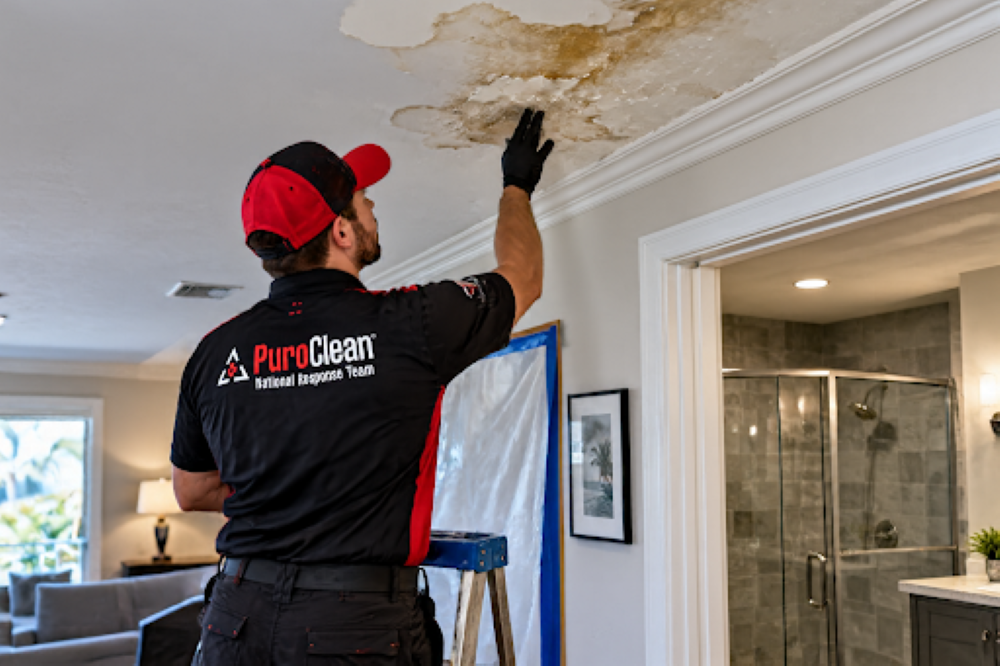
Finding a wet or stained ceiling under a bathroom is stressful, and it can feel hard to know what to do first. Ceiling water damage repair is about more than just looks. Water can weaken drywall, feed mold, and even reach wiring if it is not handled the right way.
In this article, we will walk through what ceiling water damage from a bathroom leak can mean for your home, how to spot early warning signs, when a small stain is something you can watch and when it is time to bring in professional help. We will also touch on why timing matters in Michigan, especially as cooler weather and heat use can trap moisture inside ceilings.
Stop Ceiling Damage Fast After a Bathroom Leak
When water comes through a ceiling, every minute counts. A simple bathroom problem like an overflowing tub, a toilet leak, or a failed shower seal can send water through the bathroom floor and into the ceiling below very quickly. What starts as a faint yellow ring can turn into soft, sagging drywall if the leak keeps going.
Fast action helps protect:
- The structure of the ceiling and floor
- The health of everyone in the home
- The finishes you see, like paint and texture
If you spot a fresh stain under a bathroom, try to find out if anyone used the tub, shower, sink, or toilet right before the stain appeared. If water is still dripping, that is an emergency. The next sections will help you understand how bad the damage might be, when to step back from DIY, and why dealing with moisture before the colder Michigan months is smart. Once heat comes on and windows stay closed more, trapped damp areas can stay wet and grow mold faster.
Spotting Hidden Ceiling Water Damage Before It Spreads
Some signs of ceiling water damage are obvious. Others are easy to miss until they become a bigger problem.
Visible red flags often include:
- Yellow or brown stains that grow over time
- Peeling or bubbling paint or texture
- Sagging, rippling, or warped drywall
- Visible areas that appear soft, swollen, rippled, or unstable.
Observe warning signs from a safe distance. If the ceiling is sagging, bulging, visibly damaged, or appears structurally compromised, keep clear and have a qualified professional assess it.
There are also subtle signs that many people ignore at first:
- A musty or earthy odor in the room below the bathroom
- Dripping or tapping sounds from the ceiling when the shower is running
- Fine cracks that darken or widen after someone uses the bathroom
- Stains that keep coming back even after repainting
In Michigan, fall can be a tough time for hidden ceiling moisture. Cooler air outside, warm air inside, and more shower steam can all work together. Moist air can get trapped in ceiling cavities if there is already a leak, and since people spend more time indoors, they may notice odors or stains more often. Taking care of ceiling water damage repair before winter sets in helps prevent slow, hidden damage that may be harder to fix later.
Should You DIY or Call Pros for Ceiling Water Damage Repair?
It can be tempting to just paint over a stain and hope for the best. But water inside a ceiling does not go away with paint. There are a few rare times when watching and painting later may be enough, and many situations where bringing in a professional team is the safer choice.
DIY might be safer only when:
- The stain is small and recent
- You know the leak source and it has already been fixed
- There is no sagging, bulging, or visibly soft or unstable drywall
- There are no light fixtures, fans, or other electrical items near the stain
Red flag situations that call for professional restoration include:
- A ceiling that is sagging, bulging, or visibly appears soft or unstable.
- Multiple layers of soaked material, such as drywall and insulation
- Dark spots or musty odors that suggest mold
- Water marks or dampness near light fixtures or ceiling fans
- Leaks that have happened more than once from the same bathroom
A professional team can do far more than patch a hole. At PuroClean of Bloomfield Hills, we are trained to perform moisture mapping so we know how far water has spread, remove wet materials safely, dry out the structure with the right equipment, handle mold concerns, and coordinate ceiling repairs that follow local Michigan standards. That kind of detailed approach helps protect your home long term.
Step-by-Step Process to Repair a Water-Damaged Ceiling
Ceiling water damage repair always starts with stopping the water source. If a bathroom fixture is leaking actively, the supply to that fixture or even the main water line may need to be shut off until the problem is fixed. While waiting for a pro, try to keep people, pets, and belongings away from the area below the wet ceiling.
A safe basic sequence usually looks like this:
- Stop the leak at its source
- Protect furniture and flooring under the wet ceiling
- Avoid poking or cutting into sagging areas yourself
- Keep people away if the ceiling looks like it might fall
Professionals then follow a more detailed process. This often includes setting up containment so dust and debris do not spread, carefully removing wet drywall and insulation, and using drying and dehumidification equipment to pull moisture from wood framing and other materials. The framing is inspected for damage, and surfaces in damp areas may be treated to limit mold growth. After everything is dry and sound, the ceiling can be rebuilt, finished, and prepared for painting so it blends with the rest of the room.
Safety and health are a big reason to leave this to trained technicians. Wet ceilings can hide mold spores, bacteria from bathroom water, and even pests. Working overhead also means the risk of falling debris. Professionals use protective gear, proper tools, and controlled methods that help keep everyone safe.
Prevent Repeat Bathroom Leaks From Ruining Your Ceiling
Once you have gone through ceiling water damage repair, you do not want a repeat problem. Simple habits can lower the chance that water will sneak into the ceiling below your bathroom again.
Helpful steps include:
- Checking toilet supply lines and shutoff valves for dampness or corrosion
- Inspecting caulk and grout around tubs, showers, and sinks
- Making sure shower curtains or doors fully block spray
- Wiping up splashes on the floor right away
For Michigan homes, it also helps to watch how your bathroom behaves as the weather cools. If you see condensation on the bathroom ceiling or walls often, run the exhaust fan during and after showers long enough to clear steam. When the heat first comes on in fall, keep an eye out for new ceiling stains below bathrooms, since small leaks can show up as the structure shifts slightly with temperature changes.
After a ceiling repair, it is smart to:
- Review the repaired area every few weeks
- Watch for any hints of discoloration returning
- Pay attention to new odors or sounds from the ceiling after using the bathroom
If any of these signs appear, having the area inspected again can catch a new or ongoing leak early.
Frequently Asked Questions About Ceiling Water Damage Repair
How Long Can I Wait to Fix a Water-Stained Ceiling?
Waiting more than a few days can allow hidden moisture to spread, weaken drywall, and encourage mold growth. If the stain is new or growing, schedule an inspection as soon as possible, especially if the bathroom above is still in use.
Do I Have to Replace the Whole Ceiling After a Bathroom Leak?
Not always. If damage is limited and caught early, a professional may only need to remove and replace a section of drywall. However, if water has spread widely or caused sagging, a larger portion of the ceiling might need replacement to help keep the structure safe and the finish even.
Will My Homeowners Insurance Cover Ceiling Water Damage Repair?
Many policies cover sudden and accidental water damage, such as a burst pipe or overflow, but may exclude long-term leaks or neglect. It is important to review your policy, document the damage, and contact your insurer. A restoration company can often help provide the documentation your adjuster needs.
How Can I Tell If There Is Mold in My Ceiling After a Leak?
Signs can include musty odors, dark spotting, or fuzzy growth on or around the stain, but mold can also be hidden inside ceiling cavities. Professionals use moisture meters and visual inspection to locate likely growth areas and can safely remove contaminated materials if mold is present.
Is It Safe to Use Lights or Fans Near a Wet Ceiling?
It may not be safe. Water near electrical fixtures can raise the risk of shock or short circuits. If you see moisture or staining around a light, fan, or other ceiling fixture, turn off power to that circuit at the breaker and have a qualified professional assess the damage before using it again.
Protect Your Home With Fast, Professional Repairs Today
If you see stains, bubbling paint, or sagging drywall on your ceiling, our team at PuroClean of Bloomfield Hills is ready to step in before the damage spreads. We specialize in thorough ceiling water damage repair that addresses both visible issues and hidden moisture. Our technicians respond quickly, explain every step, and work to restore your home safely and efficiently. To schedule service or ask questions about your situation, please contact us today.