


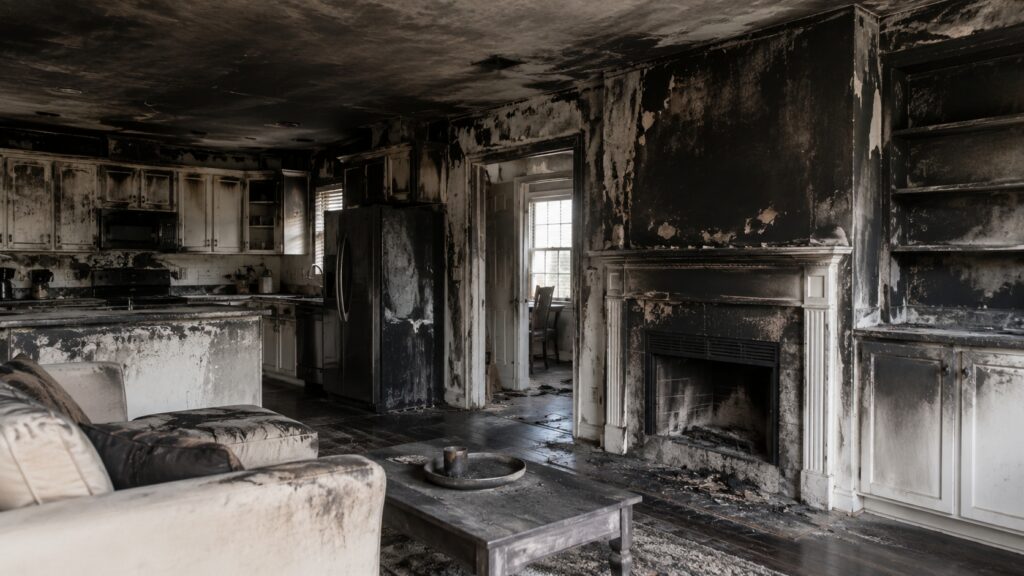
Smoke Damage Triage Checklist: What to Do in 24 Hours
Smoke damage does not stop when the flames go out. In the first 24 hours, smoke and soot can keep spreading, soaking into surfaces, staining items and harming air quality. Quick, careful steps can protect your health and keep damage from getting worse.
This checklist walks through what to do right away, from basic safety and HVAC shutdown to soot handling, electronics protection, and insurance documentation. It also explains what not to do so you do not accidentally make the situation harder to fix. When the damage is more than you can safely handle, professional smoke damage restoration services are the safest next step.
First Safety Steps in the First Hour
Your first priority is people, not property. Things can be cleaned or replaced, but health and safety come first.
Start by making sure everyone is okay:
- Confirm all family members, guests, and pets are out of danger
- Move away from thick smoke or strong smoke odors
- If there is any sign of active fire, heat, or heavy smoke, call 911 right away
Wait for the fire department or local authorities to say it is safe before going back inside. If you do re-enter:
- Use a good mask, such as an N95 respirator, if available
- Avoid bringing infants, children, older adults, or anyone with asthma or breathing issues into smoky areas
- Keep trips short and focused only on urgent tasks
Once it is safe to be inside, you can gently control the environment:
- If conditions allow, open a few windows on opposite sides of the property for light cross-ventilation
- Avoid wide-open doors and strong drafts that can pull soot into clean rooms
- Turn off ceiling fans and portable fans so they do not blow soot around
HVAC Shutdown, Air Management, and Soot Handling
One of the most important early steps is stopping soot from spreading through your HVAC system. Smoke particles are tiny and can travel deep into ducts and vents.
Turn off your HVAC right away:
- Set the thermostat to OFF, including the fan setting
- Do not switch the system back on, even for comfort, until a professional checks it
- Expect that filters may need to be replaced and ducts may need specialized cleaning
To help limit further spread of soot:
- Gently cover supply vents and cold-air returns with clean, dry cloths or plastic and painter’s tape
- Do not block doors, windows, or any path you might need for an emergency exit
- Avoid using any portable heaters, fans, or air movers that stir up air
In warm, humid weather, like many days here in the Bloomfield Hills area, an AC shutdown can feel uncomfortable. If conditions are safe:
- Open windows briefly during cooler parts of the day for fresh air
- Use portable air purifiers with HEPA filters if you have them, instead of simple fans
- Limit physical activity inside to reduce how much smoky air you breathe
Be very careful with soot. It is messy, sticky, and can be harmful to breathe or touch without protection.
Avoid trying to clean the following on your own:
- Walls, ceilings, and soot-covered furniture
- Painted surfaces and finished wood
- Delicate fabrics, rugs, or sentimental items
If you must handle items briefly:
- Wear disposable gloves, long sleeves, and a mask
- Lift items gently and place them on clean, protected surfaces
- Do not shake out fabrics or bang items together, since that sends soot back into the air
Soft items like upholstery and clothing often hold on to smoke odor and residue. Standard washing at home is usually not enough, and a hot dryer can set odors and stains into the fibers. It is better to wait for professional guidance before running loads of smoky laundry.
Protecting Electronics, Valuables, and Your Insurance Claim
Smoke and soot are not just dirty; they can be acidic. This can corrode electronics and metal surfaces over time, even if they look fine at first glance.
For electronics like TVs, computers, gaming systems, and appliances:
- Unplug them carefully, if it is safe to do so
- Do not turn them back on just to test them
- Do not wipe inside vents or open the cases
Internal cleaning of electronics should be left to trained professionals, since the wrong move can cause more damage or create a shock risk.
Next, think about important documents and irreplaceable items:
- Gather IDs, insurance policies, financial and medical records, and key legal papers if you can reach them safely
- Place smoky documents in clean folders or envelopes and keep them flat and dry
- Handle fragile or sentimental items gently and avoid scrubbing off residue
Set up a simple staging area:
- Pick a room with lighter smoke, or a safe off-site place, to hold items you remove from heavy soot areas
- Lay down disposable plastic or clean sheets over tables before placing items
- Keep categories separate, like “electronics,” “documents,” and “sentimental items,” to help with later inventory
Good documentation helps both with restoration planning and with insurance.
Before any real cleanup starts:
- Take wide photos of each affected room from several angles
- Take close-up photos of damaged walls, ceilings, furniture, and personal items
- Make a basic list of damaged items with brand, model, approximate age, and what they were used for
Contact your insurance company as soon as you can:
- Write down the date, time, and names of anyone you speak with
- Ask what is covered for smoke damage restoration services, temporary lodging, and replacement of essentials
- Follow their instructions for next steps, but keep your own copies of all records and photos
Once the property is safe to enter, it is wise to bring in a local restoration team early. Fast action can keep odors from setting in and can help reduce long-term damage. A professional crew can handle tasks like board-up, odor control, detailed soot removal, and working with insurance representatives.
Critical Mistakes to Avoid
In the rush and stress after a smoke event, it is easy to do things that feel helpful but actually make damage worse. Try to avoid these common mistakes in the first 24 hours:
- Do not turn on the HVAC, fans, or electronics until they are checked
- Do not use household cleaners, bleach, or water-based sprays on soot-covered surfaces
- Do not scrub or wipe walls and ceilings without professional guidance
- Do not wait several days to get expert help started
Taking careful, steady steps gives you the best chance to protect both your health and your property.
Frequently Asked Questions About Smoke Damage Emergencies
What Should I Do First After a Smoke Damage Incident?
Wait until firefighters or local authorities say the property is safe, then focus on health and safety. Turn off the HVAC system, lightly ventilate if conditions allow, and start taking photos of the damage before moving or cleaning anything.
Is It Safe to Clean Soot Off My Walls Myself?
Usually it is not a good idea. The wrong cleaner or sponge can smear soot, push it deeper into the surface, and set permanent stains, which can make professional restoration slower and more expensive.
Can I Turn My AC or Furnace Back On to Cool or Heat?
No. Running the system can pull soot into ductwork and spread it into every room. Keep the HVAC off until a professional inspects and, if needed, cleans the system.
Will My Insurance Cover Smoke Damage Restoration Services?
Many property policies do include smoke and soot damage, but every policy is different. Contact your insurance company promptly, review your policy, and ask specific questions about coverage for cleanup, repairs, and temporary living costs.
How Quickly Should I Call a Professional Restoration Company?
As soon as it is safe to enter the property. The earlier trained technicians get involved, the better the chances of limiting permanent staining, corrosion, and long-lasting odors.
Restore Your Home’s Comfort And Safety Today
If smoke has affected your property, PuroClean of Bloomfield Hills is ready to help you reclaim a clean, healthy living space. Our expert team provides fast, thorough smoke damage restoration services tailored to your home’s unique needs. Reach out so we can assess the damage, walk you through your options, and start the restoration process quickly. Have questions or need immediate assistance? Contact us today to get support from our local team.