Protecting Hardwood Floors After a Home Flood
When water reaches hardwood floors, the damage can start fast. Wood absorbs moisture, swells, and can quickly lose its shape if it is not dried the right way. Household flooding from washing machine overflows, kitchen leaks, bathroom issues, or storm water can turn a beautiful floor into a warped, stained problem.
Hardwood is especially sensitive because it is natural, porous, and usually installed over other layers that can hold moisture. Without quick action, you may see cupping, buckling, gaps, and mold growth between boards and around baseboards. That often leads to expensive repairs or full replacement.
Professional home flood damage restoration for hardwood floors focuses on saving as much of the flooring as possible. Our team at PuroClean of Bloomfield Hills responds urgently, checks the full extent of the moisture, and uses specialized drying methods to protect both the wood and the structure beneath it.
First Critical Hours: What to Do When Water Hits Wood
Safety always comes first when hardwood floors get flooded. Before worrying about the floor finish, make sure everyone in the home is safe and the area is secure.
In those first hours, focus on these safety steps:
- Turn off electricity to affected rooms if water is near outlets or cords
- Watch for slippery spots on smooth finish floors
- Keep kids and pets away from wet areas
Once the area is safe, there are a few simple actions you can usually take while you wait for professional help:
- If possible, shut off the water at the source, such as the supply valve to a sink or appliance
- Gently blot and mop up standing water on the surface of the hardwood
- Remove area rugs, doormats, and loose items so moisture does not get trapped under them
- If it is safe, increase airflow with ceiling fans or small fans pointed across, not directly down at, the floor
There are also some things you should avoid because they can cause more damage:
- Do not use household space heaters or hair dryers directly on the wood, which can dry the boards too fast and cause cracking
- Do not sand, stain, or refinish the floor while it is still drying, even if it looks dull or uneven
- Do not ignore damp areas under furniture, cabinets, or appliances, since moisture often hides there and leads to mold
Early, calm steps help reduce damage, but a professional team is usually needed to fully dry and repair hardwood safely.
How Professionals Restore Flooded Hardwood Floors
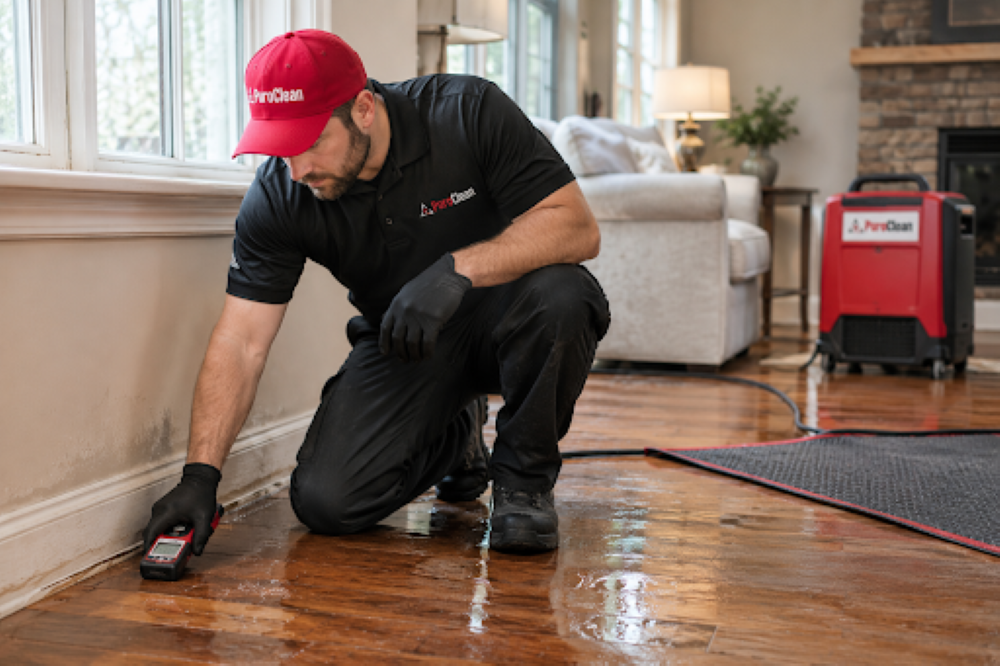
Professional home flood damage restoration for hardwood floors starts with a careful assessment. Our team does more than just look at the surface. We want to understand how deep the water went and where it is still trapped.
A typical assessment includes:
- Moisture readings in the wood, subfloor, and nearby walls
- Checking between and under floorboards where water can sit unseen
- Inspecting baseboards, toe kicks, and trim for swelling or staining
Once we know what we are dealing with, we set up advanced drying strategies designed for wood. This is very different from simply opening windows or pointing a fan at the floor.
We may use:
- Professional dehumidifiers to pull moisture out of the air and materials
- Floor-drying mats that draw water up through the gaps in the boards
- Targeted air movers that push dry air across the floor at the right speed and angle
- Controlled temperature and humidity to let the wood dry evenly
Drying is not instant. Hardwood needs time to release moisture at a stable rate. During this time, we track moisture readings often to be sure the floor is drying instead of trapping water deeper inside.
Once the floor and surrounding structure reach acceptable moisture levels, we look at repair and refinishing options. Depending on the damage, this might include:
- Replacing individual boards that are badly cupped or split
- Sanding and refinishing to smooth out minor warping and restore the finish
- Partial replacement in areas where the floor cannot return to its original shape
A careful inspection guides whether the floor can be saved or if sections need to come out. The goal is always to restore strength, safety, and appearance, not just the surface shine.
Preventing Mold and Long-Term Damage in Wood Floors
Hardwood floors and mold are a bad mix. Because wood is porous and often sits on top of other materials, moisture can hide under planks, near cabinets, and along interior walls even after the surface looks dry.
These hidden damp spots are where mold and other microbial growth can start. That is why professional restoration focuses on finding and drying moisture you cannot see.
To check for mold risks, professionals may:
- Use moisture meters to scan boards, subfloors, and baseboards
- Do a visual inspection around edges, seams, and transitions to tile or carpet
- Carefully remove small sections of flooring, trim, or toe kicks if needed to look underneath
You can help prevent long-term problems with a few habits:
- Clean up spills right away so water does not sit on the wood
- Check around appliances, sinks, and windows for small leaks or water stains
- Pay attention to musty smells near hardwood floors, which can be a clue of moisture below the surface
- Arrange professional drying and remediation whenever water covers hardwood for more than a short time
Catching moisture early keeps your floors healthier and helps avoid later surprises like soft spots or moldy odors.
Seasonal Flood Risks for Michigan Hardwood Homes
In Bloomfield Hills and across Michigan, changing seasons make water damage more likely at certain times of year. Cold weather, early snow, and freezing nights can all affect hardwood floors if water finds a way inside.
Common seasonal water threats include:
- Ice and snow melt near doors that soak entryway floors
- Roof and gutter issues that let water leak along walls and onto wood floors
- Frozen and burst plumbing lines that release water into kitchens or bathrooms
- Wind-driven rain that sneaks in around windows and doors
Regular maintenance can lower the chances that you will need major home flood damage restoration:
- Keep gutters and downspouts clear so water flows away from the house
- Check supply lines to dishwashers, refrigerators with ice makers, and washing machines for wear
- Inspect caulking and seals around windows, patio doors, and exterior doors
- Look at the area around indoor plants or pet water bowls where small leaks or spills may add up over time
Weather is unpredictable in Michigan, which is why many homeowners feel better knowing they have a trusted local restoration partner ready if something goes wrong.
When to Call PuroClean of Bloomfield Hills for Help
Knowing when to bring in professionals can be the difference between a minor repair and a full floor replacement. As a general guide, it is time to call for help if you notice:
- Standing water on hardwood, even if it seems like a small puddle
- Water that has run under cabinets, toe kicks, or into adjacent rooms
- A musty or damp smell that does not go away after cleaning
- Visible warping, buckling, cupping, or new gaps between boards
- Repeated leaks or wet spots in the same area of the floor
When our team responds, homeowners can expect clear communication and a structured process. We focus on:
- Rapid arrival for emergencies, day or night
- A transparent assessment of damage and moisture levels
- Professional drying, cleaning, and repair steps explained in simple terms
- Help documenting the damage and working with your insurance company
- Guidance from start to finish so you are never left wondering what happens next
It also helps to be prepared before anything happens. Know where your main water shutoff is located, keep towels and simple safety gear handy, and talk with your family about what to do if you see water on the floors. Saving our number in your phone can make those first stressful minutes a little easier.
FAQs About Hardwood Floor Flood Restoration
How Quickly Should I act If My Hardwood Floors Get Flooded?
You should respond right away. The first day or two is especially important for saving hardwood, so start blotting up water, improve airflow if it is safe, and contact a professional restoration team as soon as you can.
Can Flooded Hardwood Floors Be Saved, or Will I Have to Replace Them?
Many flooded hardwood floors can be saved when water is removed quickly and professional drying starts early. The final outcome depends on how long the water sat, the type and thickness of the wood, and how much warping or buckling has already happened.
How Long Does Professional Drying for Hardwood Floors Usually Take?
Drying time varies with each home, but hardwood floors often need several days to a couple of weeks of controlled drying. Professionals rely on moisture meter readings to track progress and only move to repairs or refinishing once everything reaches acceptable moisture levels.
Will Insurance Cover Flood Damage Restoration for Hardwood Floors?
Coverage depends on your policy and the cause of the water. Many homeowner policies cover sudden and accidental water damage, such as broken pipes or appliance failures, but may exclude some types of flooding. It is important to review your policy and speak with your insurance provider so you understand what is included.
How to Reduce Future Water Damage Risk to Hardwood Floors?
Regular care goes a long way. Inspect plumbing and appliance lines, keep gutters clean, maintain seals around windows and doors, and clean up spills quickly. Placing leak detectors near sinks and appliances can also give you early warning so water problems are caught before they reach your hardwood floors.
Restore Your Home Safely With Trusted Local Experts
When flooding disrupts your home, fast, professional help can make all the difference in what you save and what you lose. At PuroClean of Bloomfield Hills, we use proven techniques and specialized equipment to deliver reliable home flood damage restoration tailored to your situation. If you are facing water damage right now or want expert guidance on next steps, contact us so we can help protect your property and restore your peace of mind.