 PuroClean of Bloomfield Hills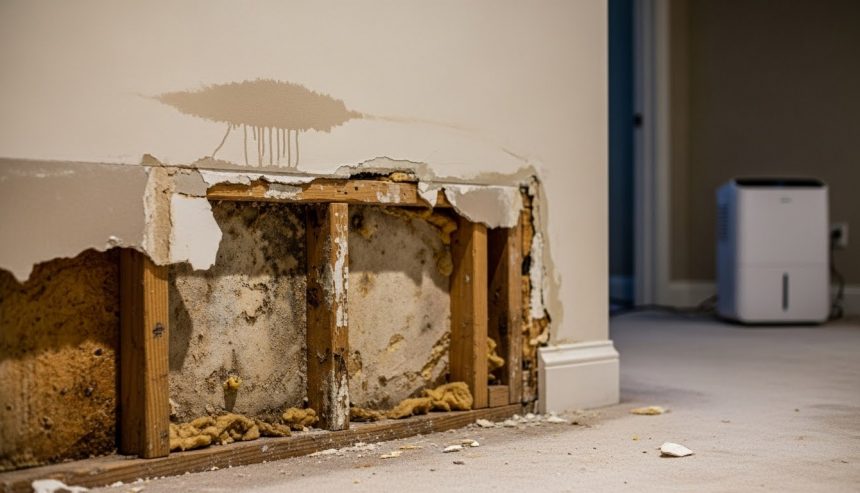
Why Finding Hidden Water Fast Protects Your Property
Water from a flood or leak never stays where it starts. It seeps under walls, runs along framing, and soaks into floors and insulation. What you see on the surface is usually only part of the problem. The real damage often hides behind finished surfaces where you cannot see it at all.
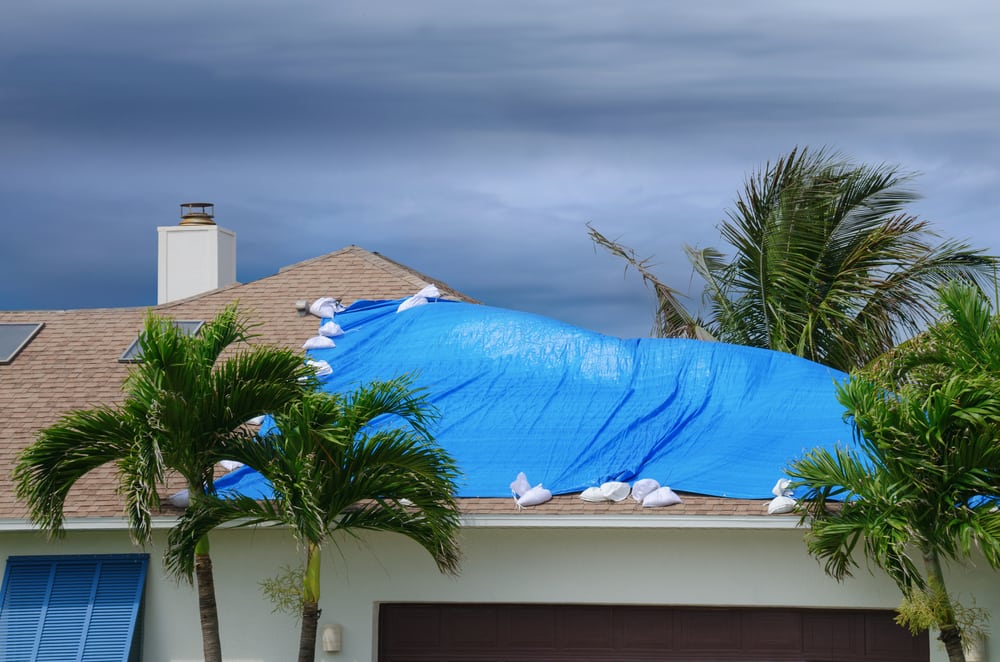
In Michigan, early spring brings a perfect mix for water trouble. Melting snow, steady rain, and thawing ground can overwhelm drains, sump pumps, and foundations. Frozen pipes that cracked in winter may not leak until temperatures warm up. By the time you notice wet carpet or a ceiling stain, water may have already spread much farther.
That is where moisture mapping comes in. Restoration professionals use it to track exactly where the water went and how wet each material is. This supports a complete water damage assessment service so nothing gets missed and drying can be planned the right way. If you own a home or business in Bloomfield Hills or nearby communities, understanding this process helps you protect your building and your peace of mind.
What Moisture Mapping Really Is
Moisture mapping is a careful, step-by-step process to find and measure hidden water in a structure. Instead of guessing, we use specialized tools to detect moisture in walls, ceilings, trim, floors, and building cavities. The readings are then marked and recorded so we can see the full spread of damage.
Think of it like creating a map of where water has traveled inside your building. We check:
- Which rooms and levels are affected
- Which materials are wet, damp, or still dry
- How deep the moisture has gone
- Where the drying equipment needs to focus
This is very different from a quick walk-through that looks only for visible stains or puddles. Water can move sideways and downward from the original source, often in paths you would not expect. Moisture mapping is a key part of a complete water damage assessment service, because it guides every decision that follows, from drying to repairs.
Tools the Pros Use to Detect Hidden Moisture
You cannot rely on touch alone to find hidden water. Professional technicians use several kinds of instruments together to build a clear picture.
Moisture meters are one of the main tools. There are two basic types:
- Pin meters, which use small metal probes to test inside materials like drywall, baseboards, studs, and subfloors
- Pinless meters, which scan the surface of materials like hardwood, tile, and cabinets without leaving holes
These readings help us decide what can be dried in place and what may need to be removed and replaced. For example, a slightly elevated reading in a baseboard might be safe to dry, while a very high reading in soaked drywall may mean it needs to come out.
Thermal imaging cameras are another powerful tool. They do not see moisture itself, but they see temperature differences. Wet materials often cool down as water evaporates, so these cameras show color patterns that help point to hidden wet areas inside ceilings, walls, and tight spaces. This lets us check behind surfaces without immediately opening them up.
We also use hygrometers and related devices to monitor humidity and air conditions inside the building. These tools help us:
- Measure indoor humidity levels
- Check temperature and dew point
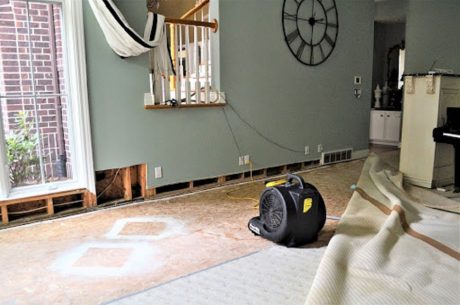
- Adjust dehumidifiers and air movers for safe, efficient drying
By combining all of these readings, we can create a precise moisture map. This reduces guesswork, helps avoid missing damage, and can also prevent tearing out materials that are actually dry and safe.
Step-by-Step Moisture Mapping After a Flood
After a flood or major leak, moisture mapping follows a clear, structured process.
First comes the initial walk-through. We look for the water source, how far it appears to have traveled, and any safety issues like electrical hazards or slippery floors. We also note the types of materials that are wet, such as:
- Carpet and padding
- Drywall and insulation
- Wood flooring and trim
- Concrete or masonry
Next is systematic scanning. Rather than checking random spots, we move in a pattern, such as a grid, through each affected room. We check ceilings, walls, floor edges, behind baseboards where possible, and nearby spaces like closets, stairwells, and mechanical rooms. On multi-level buildings, we also check rooms below the known water source to see if moisture has migrated down through framing or ductwork.
As we go, we record and document everything. This includes:
- Moisture readings from different materials
- Thermal images showing cooler, likely wet areas
- Photos of visible damage and equipment placement
- Notes on the moisture levels over time
All of this forms the moisture map that guides the drying plan and supports your insurance claim. As drying equipment runs, we perform ongoing checks. We re-test the same spots again and again, compare readings, and adjust air movers and dehumidifiers until materials reach normal dry standards. At the end, we complete a final verification to confirm that the affected areas are dry.
Why Moisture Mapping Prevents Costly Future Damage
Hidden moisture causes trouble long after the visible water is gone. Moisture mapping is one of the best ways to prevent long-term problems in your home or business.
One big concern is mold. Small, damp pockets inside walls, behind baseboards, or under flooring can support mold growth in a short period of time. Mold can affect indoor air quality, and it can spread to other areas if the moisture source is not fully removed.
Trapped moisture can also hurt the structure itself. Over time it can:
- Weaken subfloors so they feel soft underfoot
- Warp hardwood flooring and trim
- Break down drywall so it crumbles or sags
- Cause lingering odors and stains that keep coming back
A professional water damage assessment service that includes thorough moisture mapping also gives you clear documentation. This can help with insurance by showing exactly what was wet, what was done to dry it, and why certain repairs were needed. Good records reduce confusion and help explain the work that was performed.
In the long run, finding and drying hidden moisture now is almost always less costly than dealing with mold cleanup, major structural repairs, or repeated water damage from materials that never fully dried.
When to Call a Professional Water Damage Assessment Service
Some water issues are obvious, like a flooded basement after a sump pump failure or a toilet overflow that soaks a hallway. Others are easier to overlook, such as a musty smell a few days after a storm or a small ceiling stain below an attic or bathroom. Any of these are reasons to bring in a professional team.
Situations where you should consider a professional assessment include:
- Standing water after storms or plumbing failures
- Wet carpet, baseboards, or walls in finished basements
- Ceiling spots or bubbling paint after roof or ice dam issues
- Reappearing odors that suggest something is still damp
DIY efforts like shop vacs, fans, and small dehumidifiers can help remove surface water, but they rarely reach moisture in wall cavities, insulation, or subfloors, especially in finished spaces and multi-level buildings. Without proper tools and mapping, it is easy to miss hidden pockets of water.
A trained restoration team can respond quickly, bring the right equipment, and apply moisture mapping techniques to locate all affected areas. In a place like Bloomfield Hills, where spring weather can bring repeated storms and changing temperatures, fast and thorough action can keep one incident from turning into a long-term issue.
Protect Your Property With Expert Water Damage Help Today
If you are dealing with leaks, flooding, or moisture issues, our team at PuroClean of Bloomfield Hills is ready to provide fast, professional support. Start by scheduling a thorough water damage assessment service so we can identify the full scope of the problem and recommend the right solution. We respond quickly, explain every step clearly, and work to reduce disruption to your home or business. If you have questions or need immediate assistance, please contact us today.

 PuroClean of Bloomfield Hills