


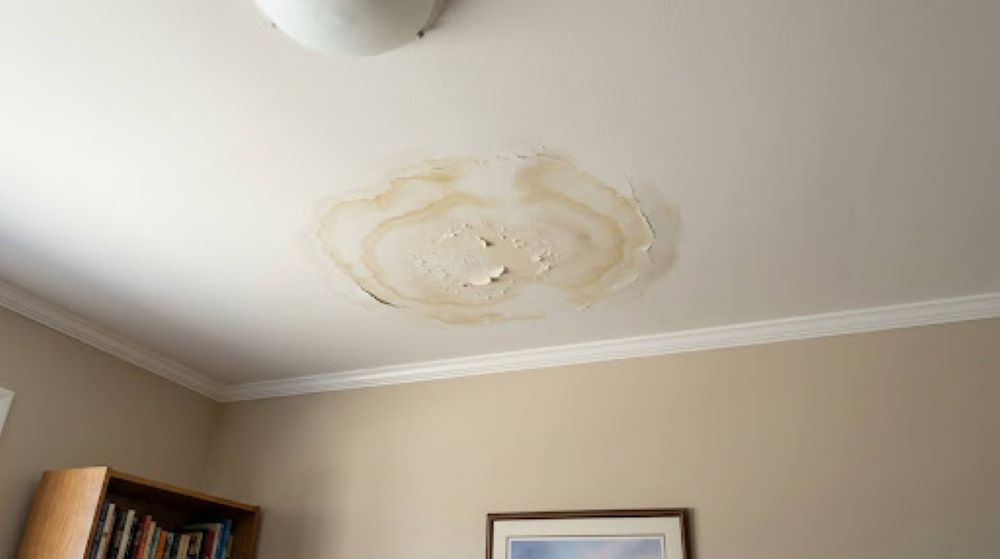
Ceiling Stains That Never Fade: Why You Should Be Worried
A ceiling stain that keeps coming back is more than an ugly spot on the paint. It is usually your home trying to warn you that something above that ceiling is still wet or was never fixed the right way. When the stain grows after rain or shows up again after you thought the leak was fixed, it is time to pay close attention.
In many Bloomfield Hills homes, a roof leak or plumbing issue gets patched, the ceiling gets painted, and everyone moves on. Then the next heavy rain or a long humid stretch hits, and that yellow-brown stain slowly reappears. That stain can point to hidden moisture, damaged materials, and even mold you cannot see. Here, we will walk through what those stains reveal, how to tell if the leak is still active, and what proper ceiling water damage repair should look like to protect your home, your health, and your insurance interests.
What Recurring Ceiling Stains Are Telling You
When a ceiling stain fades, then comes back, it is almost always a sign that something above it was left wet or damaged.
Hidden moisture is still present
Water can stay tucked away inside your ceiling long after the drip seems to stop. It can soak into:
- Insulation
- Drywall or plaster
- Wood framing and joists
- Floor sheathing above the ceiling
In Oakland County homes, we often see hidden moisture from roof flashing that leaked after snow and ice, older plumbing lines serving second-floor bathrooms, or condensation in attics that are not vented well. That trapped water can slowly wick back through paint and joint compound, so the stain returns even if no drops are falling.
Over time, lingering moisture can:
- Weaken drywall so it sags or cracks
- Break down the paper surface of the drywall
- Feed mold behind the surface
The leak repair may have been incomplete
Sometimes the “fix” only touched the obvious problem. Patching a few shingles or tightening a pipe may not fix:
- Soft, deteriorated roof decking
- Aging or cracked plumbing fittings behind walls
- Poorly sealed vent stacks or roof penetrations
Quick DIY patch jobs often treat the symptom, not the full water path. Water can still travel along framing or insulation and show up again during spring storms or when snow melts across the roof. A full moisture inspection with professional tools like moisture meters and infrared cameras helps track where water went, not just where it finally showed up.
Previous damage was never fully restored
Painting over a water stain without fully drying and cleaning the area is like putting a bandage on a wet wound. The old stain and odors can bleed back through, especially as Michigan humidity changes between seasons. Old water damage can show itself later as:
- Peeling or bubbling paint
- Visible seams or nail pops
- Musty, damp smells even without active dripping
Proper ceiling water damage repair includes finding and fixing the source, drying and cleaning the space, and then restoring the surface so stains do not keep bleeding through.
Hidden Risks Behind That “Harmless” Yellow Patch
That faded yellow patch may look minor, but what is above it can be a different story.
Mold growth you cannot see
Moisture trapped above your ceiling can support mold growth even when the paint looks mostly normal. Mold often grows on:
- The backside of drywall
- Insulation facing
- Wood framing and subflooring
Warning signs can include:
- Worsening allergies or breathing issues at home
- A musty odor, especially when the AC or heat starts
- Stains that darken, spread, or feel damp during humid or rainy weather
If mold is found, especially in finished basements or small bathrooms with limited ventilation, professional mold remediation may be needed to remove it safely and keep it from spreading.
Structural and electrical concerns
Prolonged moisture can weaken the structure above your head. Wet drywall can bow, soften, and eventually crumble. Fasteners can loosen, and wood can start to warp or rot. That is how small stains can lead to cracked seams or a sagging ceiling if left alone.
Water near electrical areas is even more serious. Stains around:
- Light fixtures
- Recessed can lights
- Ceiling fans
- Electrical junctions
can mean water is moving near wiring or electrical parts. That moisture can cause corrosion or even short circuits. Any stain near an electrical fixture should be treated as urgent, and the power to that area should stay off until a professional inspection is done.
Impact on home value and insurance
Visible ceiling stains raise questions during home inspections. Even old, dried stains can make buyers worry about mold, leaks, or hidden problems above the ceiling. That can hurt your home’s perceived value or slow down a sale.
Waiting too long to handle a recurring stain can also complicate insurance claims. If damage stretches on, it can be harder to show what came from one covered incident and what might be seen as ongoing maintenance issues. Professional documentation and restoration help protect your records and support your claim history.
How Pros Diagnose Persistent Ceiling Water Damage
Finding the real story behind a stain takes more than a quick look and a coat of paint.
Step-by-step damage assessment
Trained technicians start with a careful visual inspection. They map:
- The size, color, and shape of the stain
- Its position under bathrooms, kitchens, or laundry areas
- Its location under roof valleys, chimneys, vents, or attic spaces
At PuroClean of Bloomfield Hills, we also look beyond the immediate spot. We check the floor above, the attic insulation, and nearby walls to see how far moisture might have traveled. We keep local patterns in mind, such as ice dam issues, heavy spring storms, and high summer humidity that can hide moisture longer than most people think.
Advanced moisture detection tools
Non-invasive moisture meters help us measure how wet drywall, plaster, and wood framing are without opening the entire ceiling. Thermal imaging cameras show temperature differences that can reveal:
- Hidden moisture paths
- Saturated insulation pockets
- Slow plumbing leaks that do not drip constantly
These tools help us tell the difference between an old, dry stain and an actively wet area, which guides whether full ceiling water damage repair is needed.
Determining the true source of the problem
Moisture patterns tell a story. We use them to decide if the issue is more likely:
- A roof leak
- A plumbing leak from above
- Condensation from poor insulation or airflow
- HVAC or venting related moisture
Based on those findings, we create a clear plan for mitigation and repair. That can include drying, limited or larger demolition, cleaning, sanitizing, and final reconstruction. When work from other trades like roofing, plumbing, or electrical is needed, we coordinate so the source is addressed before the ceiling is closed again.
What Proper Ceiling Water Damage Repair Should Include
Once the source is under control, the repair process should restore both safety and appearance.
Thorough drying and dehumidification
Strong structural drying is key. Pros use air movers and dehumidifiers to pull moisture out of:
- Framing and joists
- Drywall or plaster
- Insulation and trim
Moisture levels are checked daily to confirm when materials are back to safe, dry standards. Skipping or rushing this step is one of the main reasons stains, odors, and mold return, especially when Michigan humidity rises.
Safe removal of damaged materials
If drywall is swollen, crumbly, or moldy, it usually needs to be cut out and replaced. The same goes for wet, matted insulation or trim that has warped. During this step, dust control and containment are important to protect the rest of the home and keep families comfortable.
Open cavities are then cleaned, and when appropriate, treated with antimicrobial solutions. Wet debris is removed from the property in a safe, controlled way.
Professional reconstruction and finishing
After everything is dry and clean, reconstruction starts. That typically includes:
- Installing new drywall or backing
- Taping, mudding, and sanding seams
- Applying a stain-blocking primer
- Repainting the ceiling to blend with nearby surfaces
Texture and color matching matter so the repair does not stand out. The goal is to return the space to its pre-loss condition in both function and appearance so the stain does not return with the next rainstorm or humid stretch.
Stop Stains From Coming Back in Bloomfield Hills Homes
Deciding when to call a professional vs. trying a small touch-up can be confusing. As a simple guide, a light, one-time stain from a known and fully repaired issue might be okay for minor paint work if everything is completely dry. But professional help is strongly recommended if:
- The stain grows or darkens over time
- It reappears after rain, snowmelt, or showers
- You notice musty odors or any sign of mold
- The ceiling feels soft, bowed, or saggy
- The stain is near light fixtures, fans, or under bathrooms or kitchens
Basic prevention steps can also help. Many Oakland County homeowners benefit from:
- Regular roof checks, especially around flashing and chimneys
- Clear gutters and downspouts so water drains away
- Proper attic insulation and ventilation to cut down on ice dams and condensation
- Quick checks of ceilings after big storms or noticeable snowmelt
PuroClean of Bloomfield Hills is a local team, so we understand common building styles and weather patterns in this area. When we handle ceiling water damage repair, we focus on the full picture, from finding the true source to drying, cleaning, and restoring the ceiling so that the stubborn stain finally becomes a thing of the past.
Protect Your Home With Fast, Professional Restoration
If you see stains, sagging materials, or peeling paint on your ceiling, waiting can lead to bigger problems and higher repair costs. Our certified team at PuroClean of Bloomfield Hills is ready to inspect the damage, stop the moisture source, and provide reliable ceiling water damage repair to restore safety and comfort. We respond quickly, use proven drying and cleanup methods, and keep you informed at every step. To schedule service or ask questions, contact us today.