Catch Second-Floor Leaks Before They Wreck Your Home
Second-floor leaks do not stay upstairs for long. Water from an upstairs bathroom, laundry room, kitchen, HVAC unit, or the roof can travel through ceilings and walls and show up as stains, sagging drywall, or warped floors on the level below. By the time you see those signs, water has usually been spreading for a while.
The cost and stress are very different when you catch moisture early instead of waiting until there is clear damage. Slow leaks can lead to mold growth, damaged drywall, ruined flooring, and even weakened framing. A simple fix that could have been handled quickly can turn into a big restoration project that disrupts daily life.
A second-floor leak prevention audit is a smart way to stay ahead of trouble. It combines routine moisture scans, focused plumbing risk checks, and smart sensor placement so you can catch problems long before they turn into a mess. When an issue does show up, a professional water damage assessment service can help you understand what is really going on behind the surfaces and what needs to happen next.
Hidden Risks Lurking Above Your First Floor
Second-story bathrooms, laundry rooms, and kitchens carry a lot of water under pressure. That means more risk. Common weak points include:
- Aging or cheap supply hoses on toilets, sinks, and washing machines
- Shower pans and grout joints that let water seep under tile
- Overflows from tubs, showers, or sinks that run to the floor edges
In a place like Bloomfield Hills, cold winters add more stress. Pipes on upper levels, especially along exterior walls or in unheated spaces, can be exposed to freezing temperatures. Freeze and thaw cycles, along with temperature swings in spring and fall, can cause small cracks or loosen connections. In the summer, higher humidity can lead to condensation on cold pipes and on HVAC parts in upstairs areas.
Some leak sources are not as obvious:
- HVAC air handlers or mini-split units in upstairs closets or attics
- Condensation lines that clog and spill over
- Roof vents, chimneys, and skylight edges that let water in during storms
Water always follows gravity, but it can move sideways as it travels along framing, wiring, and ductwork. That means a stain in a first-floor ceiling might start from a leak two rooms away on the second floor. That is why a careful water damage assessment service is so important when you suspect an upstairs issue.
Routine Moisture Scans to Catch Problems Early
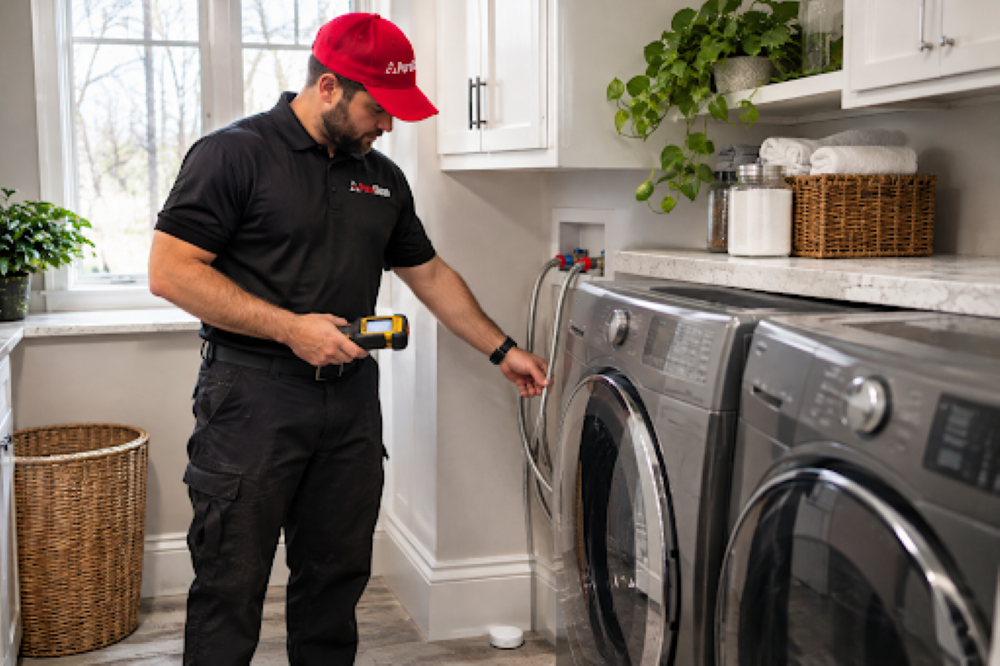
A moisture scan is a way to check building materials for hidden dampness. Professionals use tools like moisture meters and thermal imaging cameras to spot areas that are wetter or cooler than they should be. This helps find leaks behind walls, under flooring, or around fixtures before you see peeling paint or bubbling drywall.
A practical schedule for homeowners is to do focused checks:
- Before and after the harsh winter season
- After big wind or rain storms
- Anytime your water bill suddenly jumps without a clear reason
On the second floor, it helps to pay attention to high-risk zones:
- Around tubs, showers, and toilets
- Under and behind washing machines and dishwashers
- Under sinks in bathrooms, kitchens, and wet bars
- Around skylights and along roofline transitions that touch upstairs ceilings or walls
If a basic meter or visual check shows suspicious moisture, that is the right time to bring in a professional water damage assessment service. A trained team can scan the full area, track how far water has traveled, and help you understand if materials can be dried in place or need to be removed.
Plumbing Risk Checks in High-Risk Rooms
Regular plumbing checks on the second floor help you spot small warning signs. In upstairs bathrooms, look closely at:
- Caulk and grout where tile meets tubs, showers, and walls
- Toilet bases for rocking, staining, or soft flooring
- Supply line connections at the wall and fixture
- Discoloration, swelling, or softness in flooring around wet areas
Laundry rooms on upper levels can do a lot of damage if something goes wrong. Key checks include:
- Braided stainless-steel hoses instead of old rubber ones
- Drain hoses secured firmly so they cannot pop out
- Shutoff valves that open and close smoothly
- Drip pans under the washer when possible
Second-floor kitchens and wet bars also need attention. Look under each sink for:
- Damp spots, water rings, or musty smells
- Loose or corroded supply valves and fittings
- Slow drips from traps or drain connections
- Refrigerator water lines and dishwasher hoses that look cracked or kinked
As a simple seasonal checklist, walk each upstairs wet area and look for rust, white mineral buildup, recurring drips, or warped surfaces. If you see anything that looks off, it is best to bring in a licensed plumber along with a professional water damage assessment service so you are not guessing about what is inside the walls or under the floor.
Smart Sensor Placement for 24/7 Leak Monitoring
Smart leak detectors and Wi-Fi water sensors are small tools that can make a big difference. Many are battery-powered and sit on the floor or under a pipe. When they sense water, or in some cases unusually high humidity, they send a sound alarm and can also send an alert to your phone.
For second-floor protection, smart placement is key. Common spots include:
- Under sinks in bathrooms and kitchens
- Behind or beside toilets
- Under washing machines and dishwashers
- Near upstairs water heaters or HVAC equipment
- Under skylights or along window sills that have leaked before
When these devices connect to your smart home system, you can see alerts even when you are far away. That is especially helpful during winter trips when frozen pipes are a concern. Smart sensors work best when they are part of a bigger plan that also includes regular visual checks and a professional water damage assessment service at the first sign of trouble.
Staying Ahead of Second-Floor Leaks
Turning a second-floor leak prevention audit into a routine is one of the easiest ways to protect your home. As seasons change in Bloomfield Hills and nearby areas, conditions inside and outside your house keep changing too. Regular moisture scans, plumbing risk checks, and smart sensor monitoring work together to keep that second floor dry and safe.
Musty odors upstairs, faint ceiling stains, peeling paint, or soft flooring should never be ignored. These are early signs that moisture may be hiding where you cannot see it yet. A careful water damage assessment service can help you understand what is going on, how far water has spread, and what steps will best protect your home long term. At PuroClean of Bloomfield Hills, we focus on finding and addressing those problems before they grow into major losses for your property.
Frequently Asked Questions About Second-Floor Leak Prevention
How Often Should I Have a Second-Floor Leak Audit Done?
For most Bloomfield Hills homes, a full second-floor leak prevention audit once a year works well, with quick DIY checks at the start and end of winter and after major storms.
Where Are the Most Common Leak Points on an Upper Level?
The most common trouble spots are around tubs and showers, toilets, washing machines, dishwashers, under-sink plumbing, and near upstairs HVAC equipment or roofline penetrations.
Do I Really Need Smart Leak Sensors If I’m Home Most of the Time?
Yes. Leaks can start and spread quickly even while you sleep or are in another part of the house, and smart sensors give you 24/7 monitoring and instant alerts.
When Should I Call a Professional Instead of Handling It Myself?
You should call a professional if you see ceiling stains, warped flooring, peeling paint, recurring musty odors, or if any moisture meter readings seem high, so a detailed water damage assessment service can locate and define the issue.
Can PuroClean Help Even If There’s No Visible Water Damage yet?
Yes. PuroClean of Bloomfield Hills can perform proactive inspections and moisture scans to catch hidden issues early and help you prevent costly second-floor leaks before they cause widespread damage in your home.
Protect Your Property With a Fast, Professional Response
If you suspect a leak or see signs of moisture, our team at PuroClean of Bloomfield Hills is ready to help you act quickly and accurately. Start with our detailed water damage assessment service so we can pinpoint the source, measure the extent of the damage, and recommend the right restoration plan. Reach out today through our contact page, and we will respond promptly to help protect your home or business.