Table of Contents
A musty smell basement can indicate either dampness or active mold growth. The key difference: dampness produces temporary odors that disappear within hours of drying and improving ventilation, while mold creates persistent musty smells that return even after cleaning because mold releases microbial volatile organic compounds (MVOCs) continuously. In Wisconsin, basement moisture from clay soil, freeze-thaw cycles, and high humidity create ideal mold conditions. If your musty smell basement persists despite ventilation, appears seasonally in summer or spring, comes with visible discoloration or water stains, or triggers respiratory symptoms, you likely have mold requiring professional inspection and remediation.
Every Wisconsin homeowner knows the smell. You open the basement door, and that distinctive musty odor hits you. The question immediately follows: Is this just basement dampness, or is it actually mold?
For homes in Burlington, Kenosha, Racine, and throughout southeastern Wisconsin, this is not just an academic question. The state’s clay-heavy soil, harsh freeze-thaw cycles, and humid summers create perfect conditions for both basement dampness and mold growth. Understanding the difference between a musty smell basement caused by simple moisture versus one harboring active mold growth can save you thousands in remediation costs or prevent serious health problems.
This guide breaks down exactly how to tell if your musty smell basement is mold or just dampness, what causes each condition in Wisconsin homes specifically, and when that odor means you need professional help immediately.
Understanding the Musty Smell Basement: What You Are Actually Smelling
Short answer: A musty smell basement comes from either temporary moisture evaporation (dampness) or microbial volatile organic compounds released by mold and bacteria growing on surfaces. Dampness smells dissipate with ventilation and drying. Mold odors persist because the organisms continuously release odor compounds as they digest building materials.
The musty smell basement odor is so common that many homeowners accept it as normal. But no basement should smell musty if it is properly dry and ventilated. Understanding what creates that odor is the first step in determining whether you have a simple dampness issue or active mold growth.
What Creates Dampness Smell
When basement air becomes humid or when concrete walls absorb moisture from soil, water molecules evaporate into the air. This water vapor carries dissolved minerals and compounds from concrete, soil, and building materials, creating a damp, earthy smell.
This damp smell is temporary. Once you improve ventilation, run a dehumidifier, or the humidity drops naturally, the smell disappears within hours. The odor returns only when conditions become damp again.
What Creates Mold Smell
Mold is fundamentally different. When mold colonizes basement surfaces, it actively consumes organic materials like wood, drywall, paper, cardboard, or fabric. As mold digests these materials, it releases microbial volatile organic compounds (MVOCs), including geosmin, 2-methylisoborneol, and other compounds that create the characteristic musty smell and basement odor.
Unlike dampness, mold smell persists even after surfaces appear dry because mold continues growing and releasing MVOCs as long as any moisture remains in materials. The odor returns quickly after ventilation stops because the source is biological, not just evaporating water.
7 Key Differences Between Dampness and Mold in Your Basement
Short answer: Dampness creates temporary odors that disappear with ventilation, appears only during humid weather, shows no visible growth, and causes no health symptoms. Mold produces persistent odors that return after cleaning, appears seasonally or year-round, shows visible discoloration or fuzzy growth, and can trigger respiratory symptoms and allergies.
1. Odor Persistence
Dampness: The musty smell, basement odor from dampness disappears within 2 to 4 hours of improved ventilation or dehumidifier use. Once humidity drops below 50 percent, the smell does not return unless conditions become damp again.
Mold: Mold odors persist despite ventilation. You might notice a temporary improvement with windows open or fans running, but the musty smell in the basement returns within hours after you stop ventilating because mold continues releasing MVOCs.
2. Visual Indicators
Dampness: No visible growth appears. You might see water staining, efflorescence (white mineral deposits on concrete), or condensation on walls and pipes, but no fuzzy, discolored, or spotted growth.
Mold: Visible signs include black, green, white, or orange spots or patches on walls, floors, ceiling joists, or stored items. Mold often appears fuzzy or powdery. You might also see water stains with discoloration spreading from the stained area.
3. Seasonal Patterns
Dampness: Dampness smell typically appears during specific weather conditions like heavy rain, spring snowmelt, or humid summer weather. It improves or disappears during dry seasons.
Mold: Once mold establishes in your basement, the musty smell persists year-round, though it may intensify during humid months when mold grows more actively.
4. Response to Cleaning
Dampness: Simple cleaning with soap and water eliminates any surface film or mineral deposits. The smell does not return unless dampness returns.
Mold: Cleaning removes surface mold temporarily, but the musty smell in the basement returns within days or weeks because mold roots (hyphae) remain embedded in porous materials, continuing to grow and release odors.
5. Location Specificity
Dampness: Dampness affects entire basement areas relatively uniformly. The musty smell in the basement is general rather than concentrated in specific spots.
Mold: Mold odors are often stronger near specific locations like exterior walls, corners, areas under windows, around floor drains, or near water heaters and furnaces where moisture problems exist.
6. Health Symptoms
Dampness: High humidity can feel uncomfortable and may aggravate existing respiratory conditions, but dampness alone does not cause new allergic or respiratory symptoms.
Mold: Active mold growth triggers symptoms in sensitive individuals, including sneezing, coughing, throat irritation, nasal congestion, eye irritation, skin rashes, and asthma attacks. Symptoms improve when you leave the basement or home.
7. Material Damage
Dampness: Chronic dampness can cause mineral staining and slow deterioration, but does not actively decompose materials.
Mold: Mold visibly damages materials by discoloring, staining, and eventually decomposing wood, drywall, fabric, and other organic materials. You might notice wood softening, drywall paper peeling, or cardboard deteriorating.
Why Wisconsin Basements Are Especially Prone to Musty Smell Basement Problems
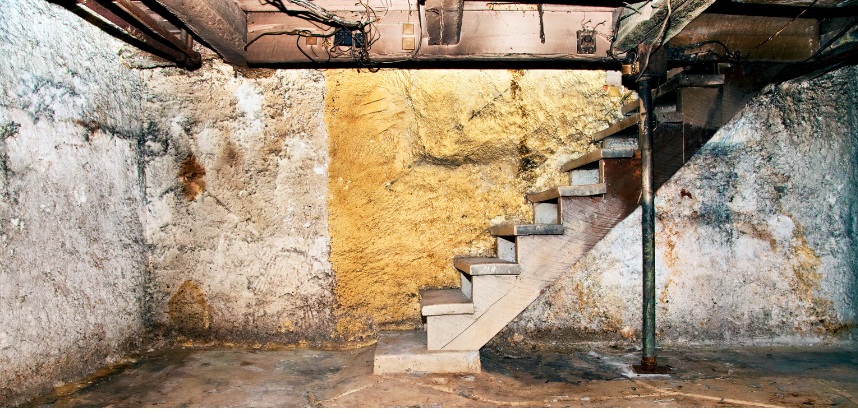
Short answer: Wisconsin basements face unique challenges, including clay-heavy soil that retains moisture against foundations, severe freeze-thaw cycles cracking foundation walls, high summer humidity, spring flooding and snowmelt, and older home construction with inadequate waterproofing. These factors create chronic moisture conditions leading to both dampness and mold.
Clay Soil and Foundation Moisture
Much of Wisconsin, including Burlington, Kenosha, and Racine, sits on clay-heavy soil. Clay absorbs water during rain and snowmelt, then stays saturated for extended periods. This saturated soil presses against foundation walls, forcing moisture through concrete pores, cracks, and joints.
Even homes with functioning drain tile systems experience foundation moisture when soil saturation exceeds the system’s capacity during heavy rain or rapid snowmelt.
Freeze-Thaw Cycles
Wisconsin’s extreme temperature swings from winter cold to spring warmth create hundreds of freeze-thaw cycles annually. Water in foundation cracks freezes, expands, and widens cracks. Over the years and decades, these expanding cracks allow more water intrusion, worsening musty smell basement problems.
Summer Humidity
Wisconsin summers regularly reach 70 to 90 percent humidity. When humid outdoor air enters cool basements, it immediately condenses on concrete walls, floors, and cold water pipes. This condensation creates perfect conditions for mold growth even in basements without external water intrusion.
Spring Flooding and Snowmelt
Spring snowmelt combined with spring rains creates the highest water table levels of the year. Basements that stay dry all winter suddenly develop seepage, flooding, or high humidity in March and April. This seasonal moisture spike feeds both immediate dampness and establishes mold colonies that persist year-round.
Older Home Construction
Many Wisconsin homes were built before modern waterproofing standards. Homes from the 1950s through 1980s often lack exterior waterproofing membranes, proper drain tile systems, or interior drainage systems. These older homes experience chronic foundation moisture, creating persistent musty smell basement issues.
How to Test Whether Your Musty Smell Basement is Mold or Dampness
Short answer: Test your basement by checking humidity levels with a hygrometer (above 60 percent indicates dampness risk), performing the tape test on suspected mold (tape a plastic square to the wall for 24 hours and check for moisture), looking for visible growth with a flashlight, conducting the bleach test (mold lightens when bleached, dirt does not), and monitoring whether odors return after ventilation.
The Humidity Test
Purchase an inexpensive hygrometer from any hardware store. Place it in your basement for 24 hours. Check the reading:
Below 50 percent: Humidity is well-controlled. Any musty smell basement is likely from residual dampness or established mold that needs remediation.
50 to 60 percent: Borderline. You may have seasonal dampness contributing to odors. Use dehumidifiers to maintain levels below 50 percent.
Above 60 percent: High humidity creates an active mold risk. The musty smell basement is likely from active mold growth or will develop mold soon without intervention.
The Tape Test for Moisture
Cut a 12-inch square of plastic sheeting or aluminum foil. Tape it completely around all edges of your basement wall in an area that smells musty. Wait 24 hours, then carefully remove it.
Moisture on the wall side: Water is coming through your foundation from outside soil. This moisture supports mold growth.
Moisture on the room side: Condensation from humid basement air. Improve ventilation and dehumidification.
No moisture: The musty smell basement may be from old mold growth rather than active moisture, or moisture is intermittent.
Visual Inspection with Bright Light
Use a bright flashlight to examine basement surfaces closely:
Look for: Discoloration, spots, fuzzy growth, water stains with spreading discoloration, peeling paint, or deteriorating materials.
Check: Behind stored items, in corners, along floor-wall joints, ceiling joists, rim joists, around windows, near floor drains, and behind furnaces or water heaters.
Mold colors: Black, dark green, white, gray, orange, or brown. Mold can appear powdery, fuzzy, or slimy, depending on the moisture level.
The Bleach Test
If you see discoloration but are not sure whether it is mold or dirt, apply a few drops of household bleach diluted 1:10 with water. Wait 5 minutes.
Mold: Lightens or loses color when bleached.
Dirt or staining: Remains the same color.
Note: This test helps identify mold but bleach does not properly remediate mold. It only lightens surface color while mold roots remain.
The Smell Persistence Test
Open windows and run fans to completely ventilate your basement for 4 to 6 hours. Note whether the musty smell basement disappears. Then close everything and wait 24 hours.
Smell disappears and stays gone: Likely just dampness. Address humidity and ventilation.
Smell returns within 24 hours: Active mold is releasing MVOCs continuously. Professional inspection recommended.
When Your Musty Smell Basement Requires Professional Mold Inspection
Short answer: Call professionals when musty odors persist despite dehumidification and ventilation, when you see visible mold growth covering more than 10 square feet, when household members experience respiratory symptoms that improve away from home, after any flooding or significant water intrusion, or when you cannot locate the odor source despite searching.
Professional mold inspection is not always necessary for every musty smell basement, but certain situations demand expert assessment:
Persistent Odors Despite Mitigation
If you have run dehumidifiers, improved ventilation, sealed visible cracks, and the musty smell basement persists or returns quickly, you have hidden mold growth that DIY methods cannot address.
Visible Mold Exceeding 10 Square Feet
The EPA recommends professional remediation for mold covering more than 10 square feet (roughly a 3-by-3-foot area). Larger mold colonies indicate significant moisture problems and pose health risks during removal due to spore release.
Health Symptoms in Household Members
If anyone experiences unexplained respiratory issues, persistent allergies, frequent sinus infections, or asthma symptoms that improve when away from home, hidden mold may be the cause. Professional testing identifies mold species and spore concentrations to assess health risk.
After Water Events
Any basement flooding, sewer backup, burst pipe, or significant water intrusion should trigger professional mold inspection within 48 to 72 hours. Even if you extracted water promptly, mold can begin growing in wall cavities, insulation, and other hidden areas.
Unlocatable Odor Source
When you smell persistent musty basement odors but cannot locate visible mold or identify the moisture source, professional moisture mapping using thermal imaging and moisture meters reveals hidden problems.
How to Eliminate Musty Smell Basement: Prevention and Solutions
Short answer: Eliminate musty smell basement by maintaining humidity below 50 percent with dehumidifiers, improving ventilation with exhaust fans or windows, sealing foundation cracks, installing or repairing drain tile systems, waterproofing foundation walls, ensuring proper grading around your home, and professionally remediating any existing mold before addressing moisture sources.
Immediate Actions
Run a dehumidifier: Size it appropriately for your basement square footage. Empty daily or use a model with continuous drainage. Target 45 to 50 percent humidity.
Improve ventilation: Open windows during dry weather, install exhaust fans, or use box fans to circulate air. Never ventilate during very humid weather, as this introduces moisture.
Remove moisture sources: Fix any visible leaks, ensure gutters drain properly, extend downspouts away from foundations, and remove wet or damp stored items.
Medium-Term Solutions
Seal foundation cracks: Use hydraulic cement or polyurethane sealants rated for basement use. Seal both interior and exterior if accessible.
Install vapor barriers: In crawl spaces or on basement walls, professional-grade vapor barriers prevent moisture intrusion.
Improve drainage: Ensure soil slopes away from your foundation at 6 inches drop per 10 feet distance. Add or repair gutters and downspouts.
Long-Term Solutions
Interior drainage systems: French drains and sump pumps installed inside the basement perimeter collect and remove water before it enters the living space.
Exterior waterproofing: Excavating around the foundation to apply waterproof membranes and install exterior drain tile provides the most comprehensive protection, but it is expensive.
Professional mold remediation: If mold is confirmed, professional remediation following IICRC S520 standards eliminates existing growth before moisture control measures are implemented.
FAQs: Musty Smell Basement in Wisconsin
Is a musty smell basement normal in Wisconsin?
No. While common due to Wisconsin’s climate and soil conditions, a musty smell basement always indicates either excess moisture or mold growth. Properly dry, ventilated basements should have no odor regardless of age or construction.
Can I use bleach to eliminate musty smell basement?
Bleach kills surface mold on non-porous materials but does not penetrate porous materials like concrete, wood, or drywall, where mold roots grow. Bleach also does not address the moisture causing mold. Professional remediation is more effective for musty smell basement caused by mold.
How long does it take for mold to grow after basement flooding?
Mold can begin growing within 24 to 48 hours after water intrusion if materials remain wet. This is why immediate water extraction and drying are critical after any basement flooding in Wisconsin homes.
Will a dehumidifier eliminate musty smell basement?
A dehumidifier eliminates musty smells caused by dampness by removing moisture from the air. However, if mold is already established, a dehumidifier prevents new growth but does not remove existing mold, producing odors. Existing mold requires remediation.
Should I finish my basement if it has a musty smell?
Never finish a basement with musty-smelling issues. Address all moisture and mold problems first, then wait through at least one complete seasonal cycle to ensure problems are resolved before investing in finishing work.
PuroClean of Burlington: Expert Basement Mold Inspection and Remediation
When you cannot tell whether your musty smell basement is simply dampness or active mold growth, a professional assessment provides definitive answers and solutions.
PuroClean of Burlington is an IICRC-certified, veteran-owned restoration company specializing in basement mold inspection and remediation for Wisconsin homes. We understand the unique challenges that Burlington, Kenosha, and Racine basements face from clay soil, freeze-thaw damage, and seasonal flooding.
Our Basement Mold Services Include:
- Professional mold inspection with moisture mapping
- Thermal imaging to detect hidden moisture and mold
- Air quality testing and mold species identification
- Complete mold remediation following IICRC S520 standards
- Basement waterproofing and drainage solutions
- Dehumidification and ventilation recommendations
- Post-remediation verification testing
- Comprehensive insurance documentation
We provide honest assessments. If your musty smell basement is just dampness, we will tell you and recommend appropriate solutions. If mold is present, we provide complete remediation, restoring your basement to a safe, odor-free condition.
Musty Basement Smell? Get Professional Answers.
PuroClean of Burlington: Mold Inspection & Remediation
(262) 342-2226
Serving Burlington, Kenosha, Racine & Southeastern Wisconsin
Summary: Understanding Your Musty Smell Basement
A musty smell basement can indicate either simple dampness or active mold growth. The key to distinguishing between them is odor persistence, visual signs, seasonal patterns, and response to ventilation and dehumidification. Dampness smells disappear with proper air circulation and humidity control. Mold odors persist because mold continuously releases compounds as it grows.
Wisconsin’s clay soil, freeze-thaw cycles, and humid climate create challenging conditions for basements, making both dampness and mold common problems. Understanding the difference helps you apply appropriate solutions, whether that means better dehumidification for dampness or professional mold remediation for active growth.
If your musty smell basement persists despite ventilation, if you see visible discoloration or growth, or if household members experience respiratory symptoms, professional mold inspection provides the answers you need. Call PuroClean of Burlington for expert assessment and solutions tailored to Wisconsin basement conditions.
PuroClean of Burlington 📞 Call Now: (262) 342-2226 🕒 Available 24/7 — Because disasters don’t wait.
🔗 Quick Links: Instagram | Google Reviews & Directions | Facebook | Pinterest