 PuroClean of Burlington
You can identify mold in your Burlington home by looking for seven key warning signs: (1) discoloration in black, green, white, or orange patches on walls, ceilings, or surfaces, (2) fuzzy or slimy texture rather than smooth surfaces, (3) musty, earthy odor like damp soil or rotting leaves, (4) moisture or water damage including stains, condensation, or previous leaks, (5) health symptoms like allergies, coughing, or respiratory issues that improve when you leave home, (6) location patterns in bathrooms, basements, windows, or areas with poor ventilation, and (7) spreading or growing patches that increase in size over time.
If you find these signs in your Burlington home, a professional assessment is recommended as Wisconsin’s humid climate accelerates mold growth, requiring expert identification and removal.
You walk into your Burlington basement and notice something on the wall. Dark spots. Maybe fuzzy patches. Perhaps just discoloration you cannot quite explain.
Is that mold? Or just dirt? Maybe mildew? Water stains?
Here is the problem: by the time most Burlington homeowners learn how to identify mold correctly, they have been living with it for months and breathing it, exposing their families to it, and letting it spread throughout their home.
I have walked through hundreds of Burlington homes where homeowners pointed at obvious mold growth and asked, “Is this mold?” They genuinely did not know. And honestly, I do not blame them. If you have never seen mold up close, it can look like a lot of other things.
This visual guide teaches you exactly how to identify mold in your Burlington home using simple observations anyone can make, no fancy equipment needed. You will learn what mold actually looks like, where it hides, how it smells, and the warning signs that scream “call professionals now.”
By the end, you will know with confidence whether that suspicious spot is mold or something harmless, and exactly what to do about it.
Warning Sign #1: Color and Appearance
How to Identify Mold by Its Color
One of the first questions people ask when learning how to identify mold is: “What color is it?”
Here is the truth: mold comes in many colors. The idea that all mold is black is a dangerous myth.
Common mold colors in Burlington homes:
Black mold (Stachybotrys chartarum):
- Dark black or greenish-black
- Slimy or wet appearance when active
- Often appears in areas with chronic water damage
- This is the “toxic black mold” people fear
Green mold (Aspergillus, Cladosporium):
- Olive green to dark green
- Fuzzy or powdery texture
- Common on food, walls, fabrics
- One of the most common indoor molds
White mold (various species):
- Pure white or off-white
- Powdery or cotton-like appearance
- Easily mistaken for efflorescence (mineral deposits)
- Common in basements and crawl spaces
Orange or pink mold (Aureobasidium, Serratia):
- Pinkish-orange discoloration
- Slimy texture, especially in showers
- Common in bathrooms and kitchens
- Often dismissed as “soap scum.”
Brown mold (various species):
- Light tan to dark brown
- Can appear in rings or patches
- Common on wood and drywall
- Often mistaken for water stains
Yellow mold (Aspergillus flavus):
- Bright yellow to mustard color
- Less common but serious
- Often grows on food first, then surfaces
The key point: When learning how to identify mold, do not rely on color alone. Mold identification requires looking at multiple factors together.
Texture Tells the Story
Beyond color, texture helps you identify mold accurately:
Fuzzy or fluffy – Like cotton candy or fiber, indicates active growth
Slimy or wet – Glistening, wet appearance, especially black mold
Powdery – Dry, dusty appearance that releases when disturbed
Velvety – Soft, fabric-like texture
Crusty – Hard, rough surface on older growth
Compare this to non-mold:
- Dirt: Smooth, uniform, no texture variation
- Soot: Dry, smudgy, wipes away completely
- Mineral deposits: Crystalline, sparkly appearance
According to the EPA’s mold identification guidelines, texture combined with color provides strong identification clues even without laboratory testing.
Warning Sign #2: The Distinctive Mold Odor
How to Identify Mold by Smell
Even when you cannot see mold, you can often smell it. Learning how to identify mold through odor is one of the most reliable detection methods.
What mold smells like:
- Musty, like an old basement
- Earthy, like damp soil after rain
- Similar to wet cardboard or paper
- Rotting vegetation smell
- Dank, stale air quality
The science behind mold smell:
Mold produces microbial volatile organic compounds (MVOCs) as it grows and digests materials. Two compounds create that distinctive smell:
Geosmin – Creates earthy, soil-like odor 2-Methylisoborneol – Adds the musty quality
Your nose is incredibly sensitive to these compounds; you can detect geosmin at concentrations as low as 5 parts per trillion. This means if you smell mold, it is definitely there, even if you cannot see it yet.
The smell test for mold identification:
Close your home for 2-3 hours. Leave and come back with a “fresh nose.” The first smell when you walk in tells you a lot. If it smells musty or earthy, you probably have mold somewhere.
Where smell is strongest indicates mold location:
- Strong in the bathroom? Check the shower, under the sink
- Strong in the bedroom? Check windows, closets, and exterior walls
- Strong in the basement? Check foundation walls, floor drains
If you have been wondering how to identify mold when you cannot see it, follow your nose. It rarely lies.
Learn more about different mold odors and what they mean in Burlington homes.
Warning Sign #3: Location Patterns
Where Mold Grows in Burlington Homes
Understanding how to identify mold means knowing where to look. Mold is not random—it grows in predictable patterns based on moisture availability.
High-risk mold locations in Burlington homes:
Bathrooms (most common):
- Shower walls and ceilings
- Tile grout and caulking
- Behind toilet
- Under sink cabinets
- Around exhaust fans
Basements:
- Foundation walls (especially corners)
- Floor-wall joints
- Behind stored items against the walls
- Around sump pumps
- Crawl spaces
Kitchens:
- Under sinks
- Behind refrigerators
- Around dishwashers
- Window areas above sinks
Bedrooms:
- Window frames and sills
- Closet corners
- Behind furniture against exterior walls
- Around air conditioning units
Attics:
- Roof decking
- Around vents
- Insulation surfaces
Why these locations?
Burlington’s clay soil creates chronic foundation moisture. Lake Michigan humidity causes condensation on windows and walls. These conditions create perfect mold environments in predictable places.
When learning how to identify mold in your Burlington home, start with these high-probability areas.
Warning Sign #4: Moisture and Water Damage Indicators
The Mold-Moisture Connection
You cannot learn how to identify mold without understanding moisture. No moisture = no mold. Always.
Signs of moisture problems indicating mold risk:
Visual moisture indicators:
- Condensation on windows (especially in winter)
- Water stains on walls or ceilings
- Peeling or bubbling paint
- Warped or buckling wood
- Damp carpet or flooring
- Rust on metal fixtures
Burlington-specific moisture sources:
Clay soil moisture: Burlington sits on moisture-retaining clay that presses water against foundations continuously, especially after rain or snowmelt.
Lake Michigan humidity: Summer humidity reaching 70-90% prevents proper drying even with windows open.
Older homes: Many Burlington homes built before 1980 lack vapor barriers, causing chronic condensation and moisture problems.
The CDC states that controlling moisture is the key to controlling mold growth. Identifying moisture problems is essentially identifying future (or current) mold problems.
Test for hidden moisture:
Touch walls to feel for dampness. Look for discoloration even without visible mold. Check if the basement concrete feels cool and damp. These indicators help you identify mold before it becomes visible.
Warning Sign #5: Health Symptoms
Your Body Knows How to Identify Mold
Sometimes, the first sign of mold is not visual; it is how you feel.
Common mold exposure symptoms:
Respiratory issues:
- Coughing and wheezing
- Difficulty breathing
- Chest tightness
- Asthma attacks (if asthmatic)
Allergic reactions:
- Sneezing and a runny nose
- Itchy, watery eyes
- Skin rashes
- Throat irritation
Systemic symptoms:
- Headaches
- Fatigue
- Difficulty concentrating
- General malaise
The pattern that indicates mold:
Symptoms that improve when you leave home and worsen when you return strongly suggest mold exposure.
If multiple family members develop similar symptoms around the same time, environmental mold is a likely cause.
According to FEMA’s mold guidance, health symptoms often appear before visible mold growth, especially in cases of hidden mold behind walls or in HVAC systems.
Children and the elderly are at higher risk:
Young children, older adults, and people with compromised immune systems or existing respiratory conditions face greater health risks from mold exposure.
If your family experiences unexplained symptoms, learning how to identify mold becomes a health priority, not just a maintenance issue.
Warning Sign #6: Growth and Spread Patterns
How to Identify Mold by Watching It Grow
Real mold grows and spreads. Stains and dirt do not.
Mold growth characteristics:
It spreads over time: A small spot that grows larger over days or weeks is almost certainly mold. Photograph suspected areas, wait a week, and compare. Growth indicates active mold.
It appears in clusters or patches: Mold typically grows in irregular patches or circular clusters rather than uniform stains.
It has depth and dimension: Mold grows on and into surfaces, creating a three-dimensional appearance. Flat stains are often just discoloration.
It returns after cleaning: If you clean a spot and it comes back within days or weeks, it is mold. The mold is growing from inside the material, and surface cleaning cannot eliminate it.
Seasonal patterns:
In Burlington, mold often worsens during:
- Spring (snowmelt + rain)
- Summer (high humidity)
- Fall (heavy rains before the ground freezes)
Understanding these patterns helps you identify mold versus other discoloration.
Warning Sign #7: Distinguishing Mold from Look-Alikes
How to Identify Mold vs. Common Imposters
Not everything that looks like mold is mold. Here is how to tell the difference.
Mold vs. Mildew:
Mold:
- Fuzzy, raised texture
- Multiple colors (black, green, white)
- Penetrates surfaces
- Harder to remove completely
Mildew:
- Flat, powdery appearance
- Usually white or gray
- Stays on the surface
- Wipes away easily
Both require moisture, but mold is more serious and difficult to remediate.
Mold vs. Dirt:
Mold:
- Textured, not smooth
- Musty odor
- Grows in patterns
- Does not wipe away completely
Dirt:
- Smooth surface
- No odor or normal dirt smell
- Random distribution
- Wipes away cleanly with a damp cloth
Mold vs. Soot (from candles, fireplaces):
Mold:
- Typically confined to moisture-prone areas
- Variety of colors
- Musty smell
- Fuzzy or slimy texture
Soot:
- Usually near candles, fireplaces, and cooking areas
- Always black or gray
- Dry and powdery
- Smells like smoke or burning
- Easily wipes away
Mold vs. Efflorescence (mineral deposits):
This confuses many Burlington homeowners because both appear on basement walls.
Mold:
- Fuzzy, organic appearance
- Various colors
- Musty smell
- Grows on the surface
Efflorescence:
- White, crystalline, sparkly
- No odor
- Easily brushed off
- Indicates moisture, but is not mold
The water test:
Spray suspected growth with water. Mold absorbs water and darkens. Efflorescence dissolves. Dirt turns muddy.
DIY Mold Identification vs. Professional Assessment
When Your Identification Skills Are Enough
Learning how to identify mold yourself works for:
✓ Small visible growth (under 10 square feet) ✓ Obvious mold in common areas (bathroom tiles) ✓ Deciding whether to investigate further ✓ Determining if professional help is needed
When professional identification is necessary:
✗ You smell mold, but cannot find it ✗ . Mold covers large areas (over 10 square feet) ✗ . Mold appears after water damage ✗ . Health symptoms suggest mold exposure ✗ . Hidden mold suspected (walls, HVAC, crawl spaces) ✗ . Black mold identification is needed ✗ . The previous DIY cleaning failed
Why professional identification matters:
Professionals use tools you do not have:
- Thermal imaging cameras show hidden moisture
- Moisture meters detecting wet materials
- Air sampling measuring spore levels
- Species identification through lab testing
These tools identify mold you cannot see and determine health risks beyond visual identification.
Professional mold inspection in Burlington provides a comprehensive assessment impossible with DIY methods.
Frequently Asked Questions: How to Identify Mold
What does mold look like in the early stages?
Early-stage mold appears as small spots or patches in black, green, white, or other colors. It may look like light discoloration, speckling, or fuzzy growth. Early mold often appears first in corners, around windows, or in bathrooms. Check areas with a history of moisture for small dots or patches that were not there before.
Can I identify mold without laboratory testing?
Yes, you can identify likely mold through visual inspection, odor, location, and growth patterns. However, you cannot identify specific mold species or determine toxicity without laboratory testing. For small visible mold in typical locations, visual identification is sufficient for deciding to clean or remediate. For hidden mold, health concerns, or large growth, professional testing identifies specific risks.
How do I know if black mold is toxic?
You cannot determine toxicity through visual inspection alone. While black mold (Stachybotrys chartarum) can produce mycotoxins, not all black-colored mold is Stachybotrys, and not all Stachybotrys produces toxins. Professional laboratory testing identifies specific species and toxicity. If you find black mold in your Burlington home, treat it seriously and call professionals regardless of the exact species.
What is the difference between mold and mildew?
Mold penetrates surfaces, appears fuzzy or slimy, comes in various colors, and requires professional remediation when extensive. Mildew stays on surfaces, appears flat and powdery, is typically white or gray, and wipes away easily. Both require moisture to grow. In practice, mildew is a surface mold, while mold grows into materials, making removal more difficult.
How quickly can I identify new mold growth?
Mold can begin growing within 24-48 hours after materials become wet, but visible growth typically appears within 3-7 days. In Burlington’s humid climate, especially in the summer months with 70-90% humidity, mold establishes faster than in drier climates. Check moisture-damaged areas daily for the first week after water exposure to identify mold growth early.
Can mold be white or light-colored?
Yes. White mold is common in basements and crawl spaces. Light-colored mold can be white, cream, yellow, or light green. Many people assume all mold is dark, but white mold growing on wood or drywall is just as concerning as black mold. The color does not determine danger—moisture source, location, and extent matter more.
Where should I look first when learning how to identify mold?
Start with bathrooms (shower, under-sink area), basements (foundation walls, corners), windows (frames and sills), and areas with prior water damage. These high-moisture locations develop mold first. In Burlington homes, check exterior walls for condensation, closets against outside walls, and anywhere you notice musty odors.
What to Do After You Identify Mold in Your Burlington Home
Now that you know how to identify mold, what is next?
For small mold (under 10 square feet):
- Clean with appropriate methods
- Fix the moisture source
- Monitor for recurrence
- Call professionals if it returns
For extensive mold, hidden mold, or health concerns:
- Do not disturb the mold (spreads spores)
- Call a professional mold remediation
- Document with photos
- Identify and address moisture sources
Burlington-specific considerations:
Your home faces unique challenges:
- Clay soil creates chronic foundation moisture
- Lake Michigan’s humidity is preventing natural drying
- Older construction lacking moisture barriers
These factors mean mold in Burlington homes often indicates systemic moisture problems requiring professional assessment beyond surface mold removal.
Professional Mold Identification and Removal in Burlington
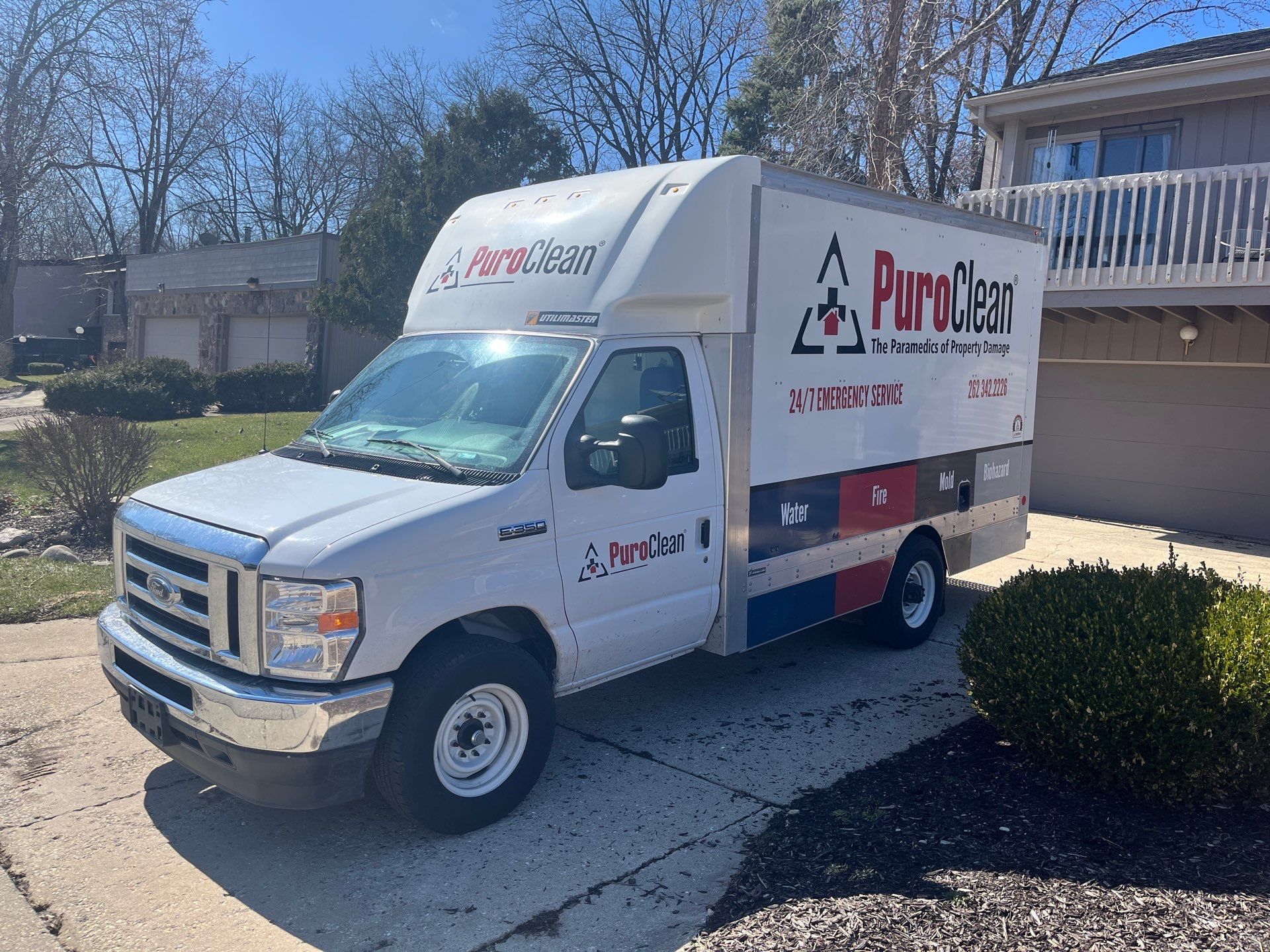
If you have identified mold in your Burlington home or suspect hidden mold you cannot find, professional help ensures complete remediation and prevents recurrence.
PuroClean of Burlington provides:
✓ Free mold assessments for Burlington homeowners ✓ IICRC-certified mold inspectors with advanced training ✓ Thermal imaging and moisture mapping finding hidden mold ✓ Professional air and surface sampling when needed ✓ Species identification through certified laboratories ✓ Complete mold remediation following industry standards ✓ Moisture source correction preventing mold return ✓ Post-remediation verification ensuring complete removal
Why choose PuroClean of Burlington:
🏅 Veteran-owned company serving Burlington community 🏅 24/7 emergency response for urgent mold situations 🏅 Insurance coordination handling claims documentation 🏅 Honest assessments never selling unnecessary services 🏅 Proven results hundreds of satisfied Burlington homeowners
Serving all of Burlington and Walworth County:
- Burlington
- Lake Geneva
- Elkhorn
- East Troy
- Delavan
- Whitewater
- Williams Bay
- And all surrounding communities
Do not let mold continue growing in your Burlington home.
Learning how to identify mold is the first step. Professional remediation is the solution.
Identified Mold in Your Burlington Home? Get Free Professional Assessment.
PuroClean of Burlington: Expert Mold Identification & Removal
(262) 342-2226
Free Assessments | IICRC-Certified | Veteran-Owned
We Find What You Cannot See
Summary: How to Identify Mold in Your Burlington Home
You can identify mold in your Burlington home by recognizing seven key warning signs: distinctive colors including black, green, white, or orange patches; fuzzy, slimy, or powdery texture; persistent musty or earthy odor; location patterns in bathrooms, basements, windows, and moisture-prone areas; visible water damage or moisture problems; health symptoms that improve away from home; and spreading growth over time.
Distinguish mold from look-alikes like dirt, soot, or mineral deposits by checking texture, odor, and growth patterns. While DIY identification works for obvious small mold growth, professional assessment is necessary when mold smell exists without a visible source, growth exceeds 10 square feet, health symptoms occur, or Burlington’s chronic moisture issues suggest hidden mold.
Burlington’s clay soil moisture, Lake Michigan humidity, and older housing stock create conditions where surface mold often indicates deeper moisture problems requiring professional identification and remediation. If you have identified mold in your Burlington home, call PuroClean of Burlington at (262) 342-2226 for a free assessment and expert removal, ensuring your family’s health and your home’s safety.
PuroClean of Burlington 📞 Call Now: (262) 342-2226 🕒 Available 24/7 — Because disasters don’t wait.
🔗 Quick Links: Instagram | Google Reviews & Directions | Facebook | Pinterest
 PuroClean of Burlington