


Table of Contents
Cleaning smoke alarms helps them detect smoke more reliably by removing dust, debris, cobwebs, and small insects that can interfere with sensors. Testing the alarm is important, but it does not remove buildup inside or around the unit. Homeowners in North Metro Atlanta, GA should clean smoke alarms regularly, test them monthly, replace batteries as needed, and replace the entire alarm according to manufacturer guidance or when it reaches the end of its service life.
Why Cleaning Smoke Alarms Matters
A smoke alarm is a fire-safety device designed to detect smoke and warn people inside the home. When it works properly, it can give your household valuable time to leave during a fire.
Over time, dust and debris can collect around the alarm vents. This buildup may contribute to false smoke alarms, delayed detection, or reduced performance. Insects, cobwebs, paint, and grease residue can also interfere with the alarm, especially in kitchens, hallways, garages, or dusty areas.
Smoke alarm maintenance should include more than pressing the test button. The test button confirms that the alarm can sound, but it does not confirm that the sensing chamber is clean or free of obstruction.
How Often Should You Clean Smoke Alarms?
Most homeowners should clean their smoke alarms about every six months, or more often if the home is dusty, has recent construction work, or has had false alarms. You should also clean the alarm if you notice dust around the cover, cobwebs near the ceiling, or chirping that is not caused by a battery issue.
Testing should be done monthly using the test button. Batteries should be replaced according to the manufacturer’s instructions, and older alarms should be replaced when they reach the end of their recommended service life.
For best results, always check the owner’s manual for your specific model before cleaning. Hardwired alarms, sealed-battery alarms, and combination smoke/carbon monoxide alarms may have different care instructions.
Tools You Need for Cleaning Smoke Alarms
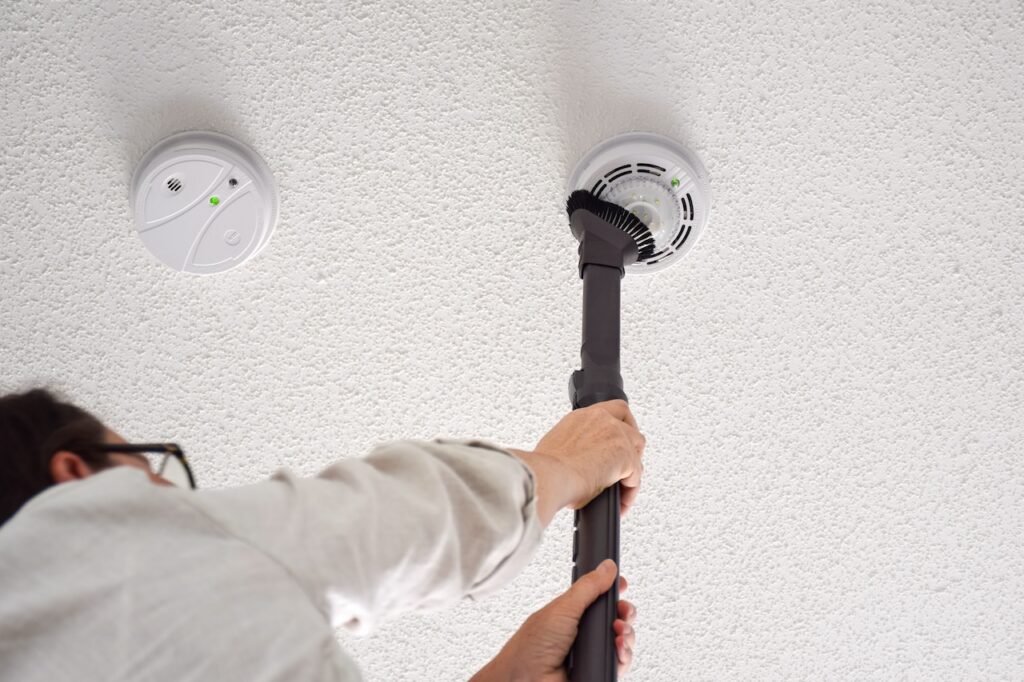
A vacuum cleaner will be needed to clean dust and debris from smoke alarms.
You do not need harsh chemicals or complicated tools to clean a smoke alarm. In fact, strong cleaning products should be avoided because they can leave residue or damage the sensor.
A basic cleaning setup usually includes a vacuum with a soft brush attachment, a microfiber cloth, a step stool or ladder, and manufacturer-approved instructions for your alarm model. A can of compressed air may also be useful for some units, but it should be used carefully and only when allowed by the manufacturer.
Avoid spraying cleaners, water, polish, or air fresheners directly on the smoke alarm. Moisture and residue can damage the device or interfere with its ability to detect smoke.
Step-by-Step Guide to Cleaning Smoke Alarms
1. Review the Manufacturer’s Instructions
Before removing or opening a smoke alarm, check the instructions for your specific model. This matters because some alarms twist off, some are hardwired, and some have sealed batteries that should not be opened.
If the alarm is connected to a home security or fire alarm system, follow the correct procedure to avoid triggering an unnecessary alarm or system alert.
2. Turn Off Power If the Alarm Is Hardwired
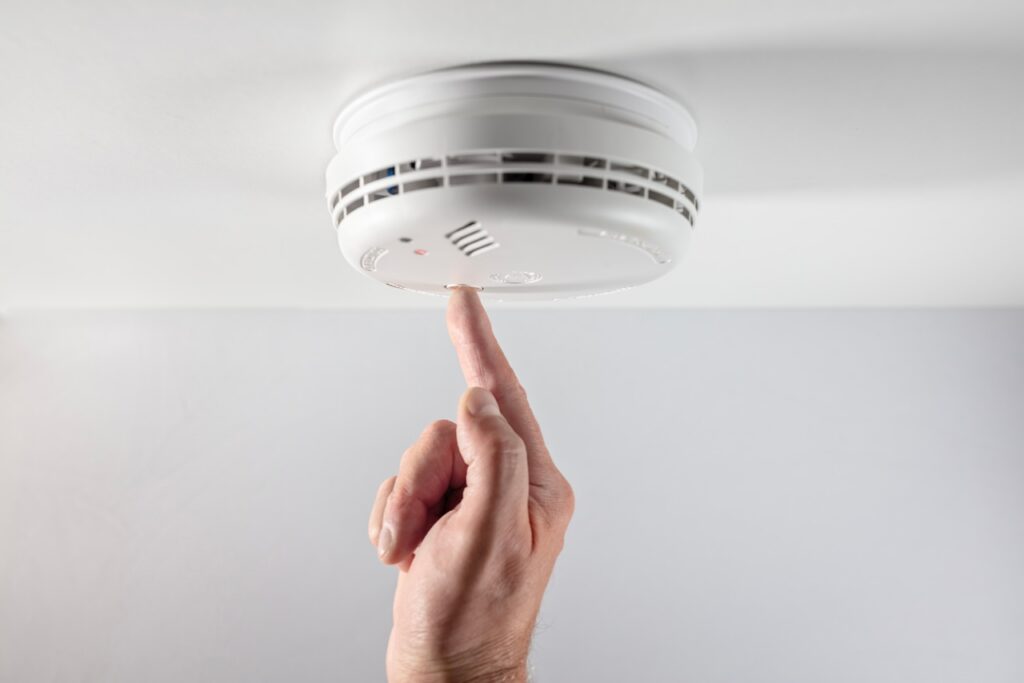
Always remember to test the battery after reinstallation.
If the smoke alarm is hardwired, turn off power at the circuit breaker before removing it. This helps reduce electrical risk while you clean around the unit.
Battery-only alarms do not require a breaker shutoff, but you should still handle them carefully. If you are unsure whether the alarm is hardwired, check the model or contact a qualified professional.
3. Remove the Alarm From the Mount
Most alarms can be removed by twisting them counterclockwise from the mounting bracket. Some models may require a screwdriver or a release tab.
For hardwired units, gently disconnect the wiring harness after the power is off. Do not pull on wires aggressively, and do not force the alarm open if the model is not designed to be opened.
4. Vacuum the Exterior Vents
Use a vacuum cleaner with a soft brush attachment to remove dust from the outside of the alarm. Pay close attention to vents, openings, and edges where dust and cobwebs collect.
This step is important because smoke must be able to enter the alarm chamber. Blocked vents can reduce the alarm’s ability to respond quickly during a fire.
5. Clean the Cover With a Dry Microfiber Cloth
Wipe the outside of the alarm with a dry microfiber cloth. This removes fine dust without adding moisture or chemicals.
Do not use water, soap, disinfectant spray, or household cleaner on the alarm. These products can leave residue and may affect the sensor.
6. Clean the Interior Only If the Model Allows It
Some smoke alarms allow limited interior cleaning, while others should not be opened. If your model allows it, use gentle vacuuming or carefully applied compressed air to remove loose dust from inside the unit.
Do not touch or bend internal components. If the alarm looks damaged, heavily contaminated, painted over, or corroded, replacement may be safer than cleaning.
7. Reinstall and Test the Alarm
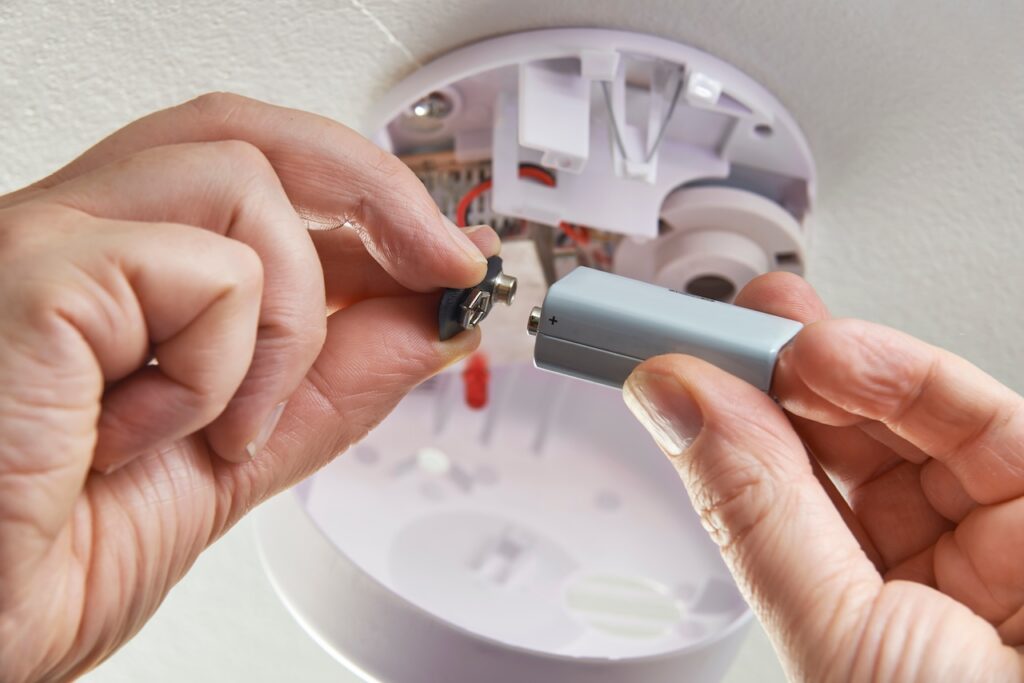
Replace the batteries in your smoke alarm at least once a year.
After cleaning, reinstall the smoke alarm securely on the ceiling or wall. Reconnect wiring if applicable, restore power, and press the test button.
The alarm should sound loudly and clearly. If it does not respond, continues chirping, or appears unreliable, replace the battery or the alarm according to manufacturer guidance.
Smoke Alarm Maintenance Checklist
| Task | Why It Matters | Recommended Timing |
|---|---|---|
| Test the alarm | Confirms the alarm can sound | Monthly |
| Clean exterior vents | Helps smoke reach the sensor | About every 6 months |
| Replace batteries | Prevents battery-related failure | As directed by the manufacturer |
| Check manufacture date | Older alarms may become less reliable | At least once per year |
| Replace the alarm | Smoke alarms do not last forever | Usually around 10 years or per manufacturer guidance |
| Keep alarms clear | Paint, dust, and furniture placement can reduce performance | Ongoing |
Common Mistakes to Avoid When Cleaning Smoke Alarms
One common mistake is relying only on the test button. Testing is important, but it does not remove dust or confirm that smoke can reach the sensor properly.
Another mistake is using wet cleaners or sprays. A smoke alarm is not meant to be washed like a household surface. Liquids, solvents, and residue can damage the device.
Homeowners should also avoid painting over smoke alarms. Paint can block vents and prevent smoke from entering the alarm. If a smoke alarm has been painted, damaged, or exposed to heavy contamination, replacement is often the safest choice.
Where Smoke Alarms Need Extra Attention
Some areas of the home collect more dust, humidity, and airborne particles than others. Smoke alarms near kitchens, fireplaces, laundry areas, garages, workshops, or HVAC vents may need closer attention.
In North Metro Atlanta homes, seasonal pollen, dust, remodeling work, and humidity can also contribute to buildup around alarms. If an alarm starts chirping or triggering false alarms, cleaning may help, but the cause should still be checked.
Frequent false alarms may also mean the alarm is too close to cooking appliances, bathrooms, or air vents. Placement should follow manufacturer instructions and local safety guidance.
When Cleaning Is Not Enough
Cleaning can help maintain a smoke alarm, but it cannot fix every problem. Replace the alarm if it is expired, damaged, painted over, missing parts, corroded, or still not working after cleaning and battery replacement.
You should also replace the unit if the alarm does not sound during testing. A smoke alarm that cannot produce a loud warning signal should not be trusted in an emergency.
If your home has experienced a fire, smoke exposure, or significant soot contamination, alarms may need inspection or replacement. Smoke and soot can affect more than visible surfaces.
FAQs About Cleaning Smoke Alarms
How do you clean a smoke alarm?
To clean a smoke alarm, remove dust from the exterior vents with a vacuum and soft brush attachment, then wipe the cover with a dry microfiber cloth. If the manufacturer allows interior cleaning, carefully remove loose dust without touching internal parts. Reinstall the alarm and test it afterward.
How often should smoke alarms be cleaned?
Smoke alarms should generally be cleaned about every six months, or more often in dusty areas. They should also be tested monthly to confirm they can sound properly.
Can dust cause a smoke alarm to go off?
Yes. Dust, insects, cobwebs, or debris can sometimes trigger false smoke alarms or interfere with normal operation. Cleaning the alarm may help, but repeated false alarms should be investigated.
Can I spray cleaner on a smoke alarm?
No. Do not spray cleaners, water, disinfectant, or air freshener on a smoke alarm. Liquids and chemical residue can damage the sensor or reduce performance.
When should I replace a smoke alarm?
Smoke alarms should be replaced when they reach the end of their service life, usually around 10 years, or sooner if they are damaged, painted over, corroded, or fail testing. Always check the manufacture date and follow the manufacturer’s instructions.
Call PuroClean for Fire and Smoke Damage Restoration in North Metro Atlanta
Regular cleaning smoke alarms is a small task that supports a safer home, but fire and smoke damage can still happen. If your property has been affected by fire, smoke, soot, or odor, professional cleanup can help reduce damage and restore affected areas properly.
For fire and smoke damage restoration in North Metro Atlanta, GA, contact PuroClean at (770) 720-2320. Our team is ready to help with smoke damage cleanup, odor removal, soot cleanup, and property restoration after a fire.
Key Takeaways
- For fire and smoke damage restoration in North Metro Atlanta, contact PuroClean at (770) 720-2320.
- Cleaning smoke alarms helps remove dust, debris, cobwebs, and insects that may affect performance.
- Testing the alarm confirms it can sound, but cleaning helps keep vents and sensors clear.
- Use a vacuum, soft brush attachment, and dry microfiber cloth instead of sprays or wet cleaners.
- Smoke alarms should be tested monthly and cleaned about every six months.
- Replace alarms that are expired, damaged, painted over, corroded, or not responding properly.
- Follow manufacturer instructions for hardwired, sealed-battery, and combination alarms.