


Table of Contents
Effective flat roof drainage depends on three things: a properly sloped roof surface, clear drainage outlets, and a system capable of moving rainwater away from the building. When drains, scuppers, or gutters become blocked or undersized, standing water can remain on the roof and increase the risk of leaks and property damage. Regular inspections and prompt maintenance are the best ways to keep a flat roof draining properly.
Why Proper Flat Roof Drainage Matters
Flat roofs are not completely level. They are typically designed with a slight slope that directs rainwater toward drains, scuppers, or gutters.
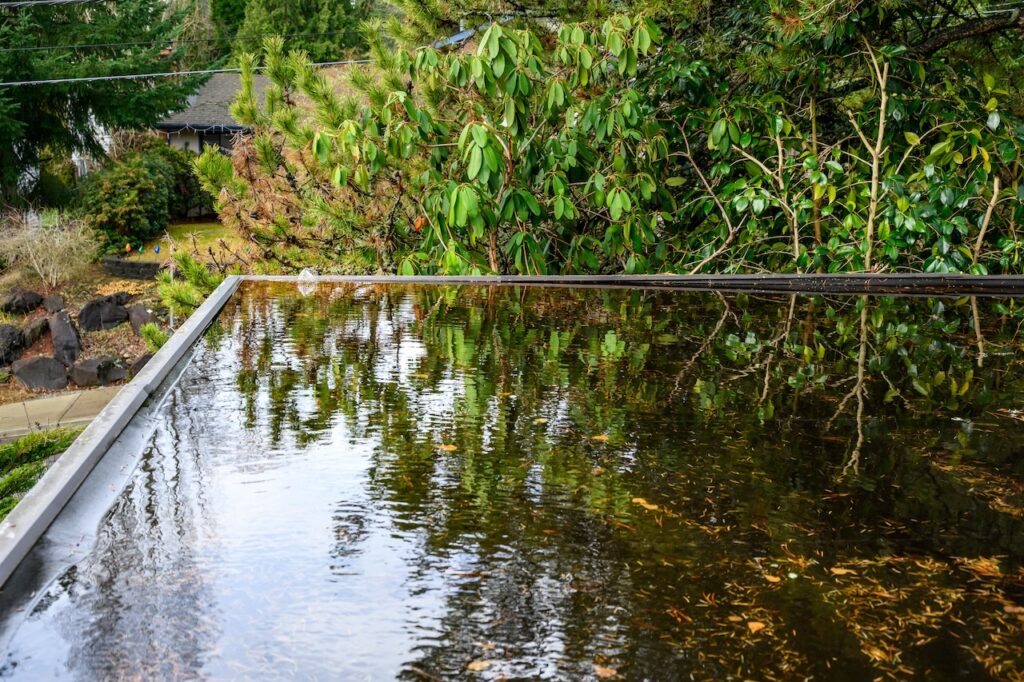
When that drainage path fails, water can collect in low areas of the roof. This condition is commonly called ponding water or water pooling.
Persistent standing water can contribute to:
- Deterioration of roofing membranes and seams
- Leaks around penetrations and flashing
- Added weight on portions of the roof
- Moisture intrusion into ceilings and walls
- Conditions that may contribute to mold growth after water enters the building
The U.S. General Services Administration (GSA) provides resources related to building maintenance and property management. Regular roof inspections and proper drainage can help reduce the risk of standing water and roof deterioration.
Common Flat Roof Drainage Solutions
The best drainage system depends on the roof design, building size, rainfall conditions, and existing drainage infrastructure.
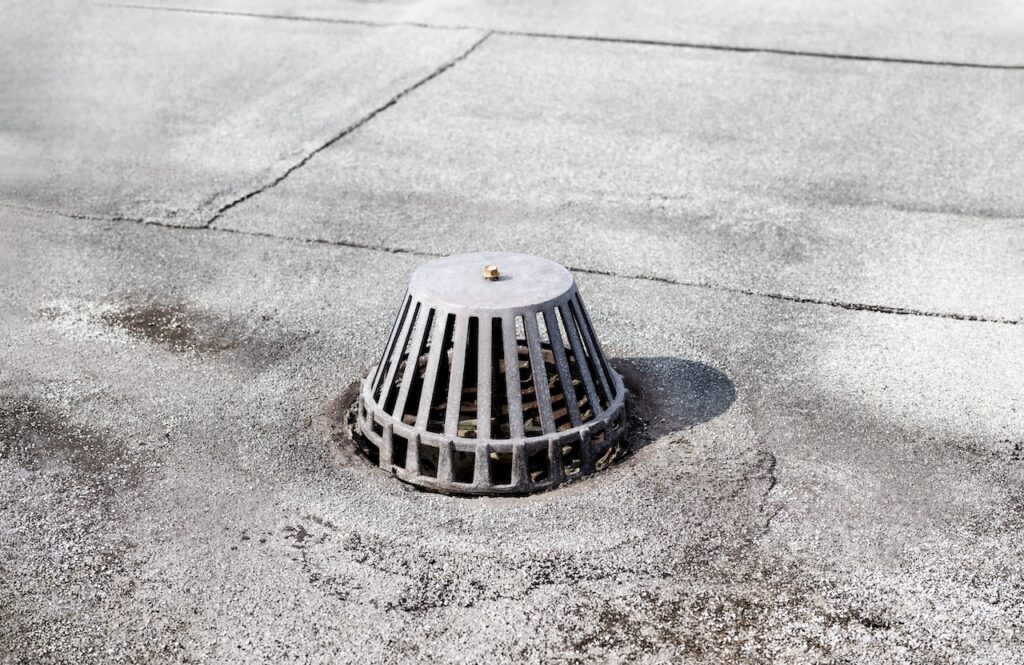
Interior drains are strategically placed in the middle of the roof to collect water and channel it through pipes inside the building.
Interior Roof Drains
Interior drains are typically positioned in low areas of the roof where water naturally collects. Water enters the drains and travels through piping located within the building.
They are frequently used on larger commercial properties because they allow water to leave the roof without flowing over exterior walls.
However, strainers and drain openings need to remain clear. Leaves, branches, roofing debris, and other materials can obstruct the flow of water and cause pooling.
Scuppers
Scuppers are openings built through parapet walls or roof edges. They allow water to flow directly off the roof or into a connected downspout or drainage system.
Their relatively simple design can make them effective in areas that experience substantial rainfall. Large, unobstructed openings can move significant amounts of water when appropriately designed.
Gutters and Downspouts
Gutters installed along roof edges collect runoff and direct it into downspouts.
A properly functioning system should carry water away from both the roof and the building foundation. Gutters can become ineffective when they are clogged, improperly pitched, damaged, or connected to downspouts that cannot handle the volume of runoff.
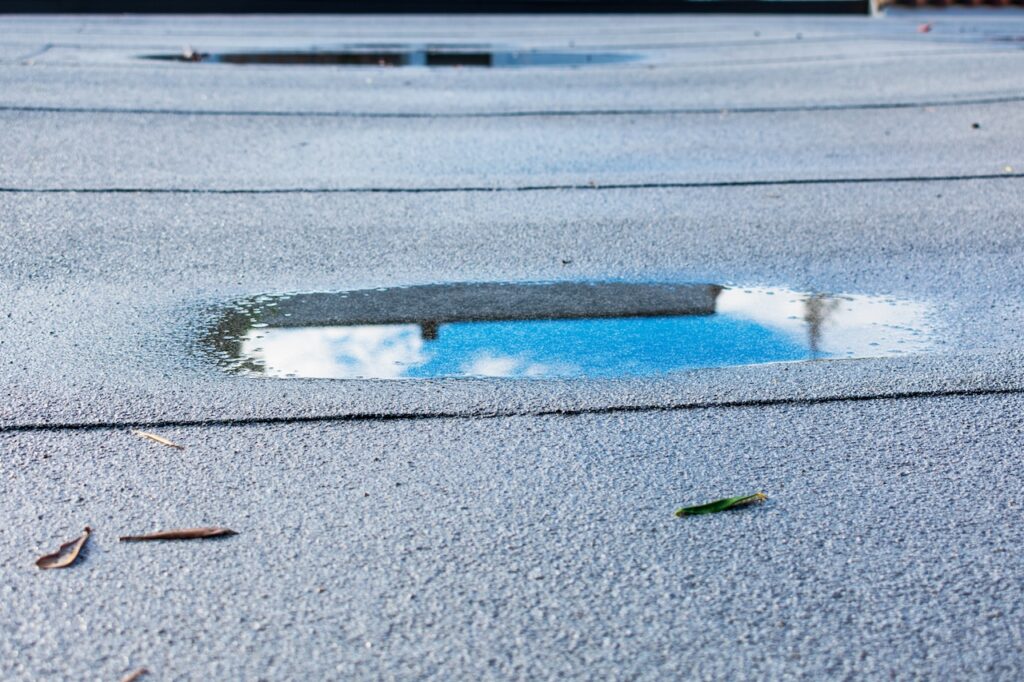
Water pooling, or “ponding,” is one of the biggest threats to flat roofs.
Comparing Flat Roof Drainage Systems
Different flat roof drainage solutions offer advantages depending on the property.
| Drainage System | How It Works | Common Application | Main Maintenance Need |
|---|---|---|---|
| Interior drains | Moves water through internal piping | Commercial and larger roofs | Keep drain openings clear |
| Scuppers | Allows water to exit through roof edges | Roofs with parapet walls | Remove debris around openings |
| Gutters | Collects runoff along the roof edge | Residential and smaller commercial properties | Clean gutters and downspouts |
| Overflow drains | Provides backup drainage | Commercial and larger roofing systems | Keep secondary outlets unobstructed |
Table: Common flat roof drainage systems and their maintenance considerations.
How to Stop Water Pooling on a Flat Roof
If you’re wondering how to stop water pooling on flat roof surfaces, start by identifying why the water is not reaching the existing drainage system.
1. Clear Drains, Gutters, and Scuppers
Inspect all drainage openings and remove leaves, branches, dirt, and other debris.
After storms, debris can accumulate quickly and restrict water flow. North Metro Atlanta’s thunderstorms and periods of heavy rainfall make post-storm inspections particularly useful for local property owners.
2. Check for Low Areas
If water repeatedly collects in the same location even when drains are clear, the roof may have inadequate slope or a depressed area.
A qualified roofing professional can determine whether tapered insulation or another corrective roofing solution is appropriate.
3. Inspect the Roof for Damage
Check accessible areas for damaged membranes, cracks, separated seams, deteriorated flashing, or other visible problems.
Water that remains on the roof can eventually find weaknesses in the roofing system. Any significant roof repair should be evaluated by a qualified roofing contractor.
4. Check Downspout Discharge
Drainage does not end when water reaches the roof edge.
Downspouts should direct water away from the building rather than releasing it against exterior walls or near the foundation. Poor discharge can shift the problem from the roof to another part of the property.
5. Maintain Backup Drainage
Some roofs include overflow drains or secondary scuppers designed to provide another escape route if the primary drainage system becomes blocked or overwhelmed.
These outlets should also remain clear. A backup system cannot provide protection if debris prevents water from reaching it.
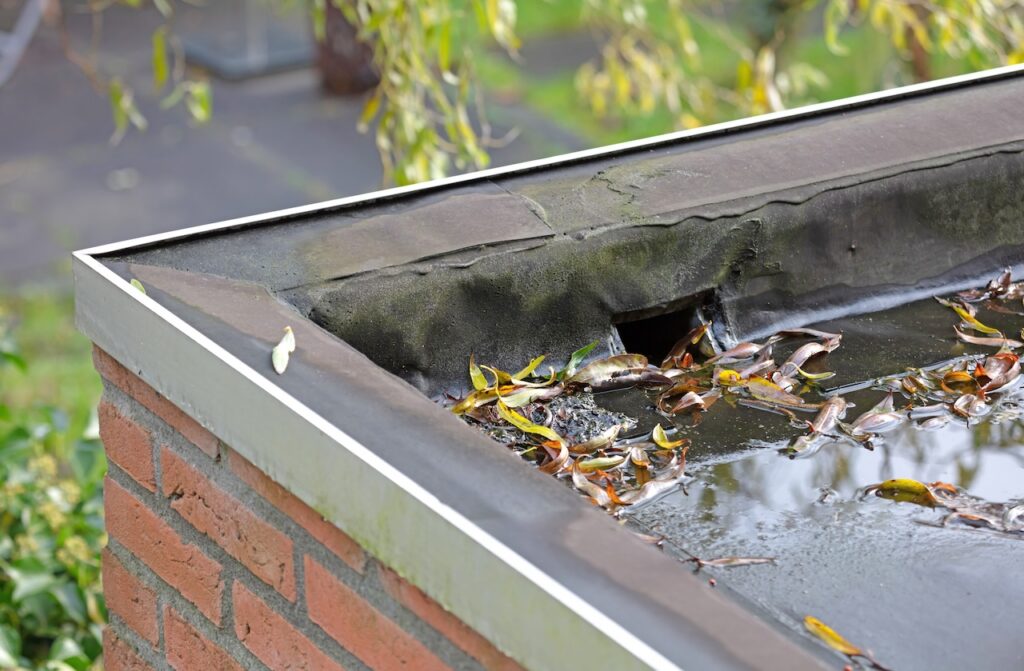
Debris buildup can block water flow, leading to pooling and leaks.
How Often Should Flat Roof Drainage Be Inspected?
Routine inspections help catch developing problems before they result in water intrusion.
Property owners should pay particular attention to drainage systems:
- After heavy rain or severe storms
- After high winds that may deposit debris on the roof
- During periods of heavy leaf fall
- When water stains appear inside the property
- Whenever standing water remains unusually long after rainfall
You do not need to wait for a visible leak to investigate a drainage problem. Persistent ponding is already a sign that the roof’s drainage performance should be evaluated.
What to Do If Poor Drainage Causes Water Damage
Roof drainage maintenance and water damage restoration are different services.
A roofer may need to repair the roof or correct the drainage system, while a restoration company addresses water that has already entered the structure.
If roof water reaches ceilings, walls, insulation, flooring, or other building materials, professional assessment may be necessary. Hidden moisture can remain after visible water disappears and may cause additional deterioration if it is not properly addressed.
PuroClean of North Metro Atlanta provides water damage restoration services when leaks or drainage failures result in interior property damage.
Flat Roof Drainage and Water Damage in North Metro Atlanta
Heavy rainfall can quickly expose weaknesses in a flat roof drainage system. Keeping drains clear, maintaining proper water flow, and correcting persistent ponding can significantly reduce the risk of roof leaks.
When a drainage problem has already allowed water into your home or business, acting quickly is equally important. PuroClean of North Metro Atlanta can assess the resulting water damage, remove excess moisture, dry affected materials, and help restore the property.
Call PuroClean of North Metro Atlanta at (770) 720-2320 for professional water damage restoration assistance.
Frequently Asked Questions
Q: Is it normal for water to sit on a flat roof?
A: Small amounts of water may remain temporarily after rainfall, but persistent pooling can indicate a drainage or roof-slope problem. Water that repeatedly remains in the same areas should be evaluated.
Q: What is the best drainage system for a flat roof?
A: There is no single best system for every property. Interior drains, scuppers, gutters, and overflow drains can all work effectively when they are properly designed for the roof and maintained.
Q: How do I stop water from pooling on my flat roof?
A: Start by clearing drains, scuppers, and gutters and checking whether water can reach them freely. If pooling continues, a roofing professional should evaluate the slope, drainage capacity, and condition of the roofing system.
Q: Can standing water on a flat roof cause leaks?
A: Yes. Persistent standing water can place additional stress on roofing materials and increase the chance that water will enter through damaged seams, flashing, penetrations, or deteriorated roofing components.
Q: Who should I call if a flat roof leak damages my property?
A: A roofing professional should address the source of the leak, while a water damage restoration company can evaluate and dry affected interior materials. PuroClean of North Metro Atlanta can assist when roof leaks lead to interior water damage.
Key Takeaways
- Flat roof drainage should move rainfall efficiently toward drains, scuppers, or gutters.
- Standing water can indicate clogged drainage, inadequate slope, or another roofing problem.
- Interior drains, scuppers, gutters, and overflow systems are common drainage solutions.
- Drainage components should be checked regularly and especially after major North Metro Atlanta storms.
- Persistent pooling should be evaluated by a qualified roofing professional.
- Water that enters ceilings, walls, or other building materials may require professional restoration.
- PuroClean of North Metro Atlanta can help when drainage or roof leaks result in interior water damage.
Explore more of our blog posts: