 PuroClean Disaster Restoration of West Fort Wayne
 Executive Summary
Fort Wayne homeowners need quick DIY solutions for bathroom ceiling mildew before it signals larger moisture problems. This guide provides immediate cleaning methods using household items, ventilation improvements, and moisture detection techniques specific to Northeast Indiana’s climate challenges. You’ll learn how to distinguish surface mildew from water damage indicators, implement preventive strategies, and recognize when professional intervention becomes necessary to avoid costly repairs. Proper response prevents mildew from progressing into extensive mold growth and structural damage.
Jennifer Ross noticed three small dark spots on her bathroom ceiling one morning while getting ready for work. As a busy single parent living in Fort Wayne’s Waynedale neighborhood, she made a mental note to clean them later. Two weeks passed before she looked up again and realized those three spots had multiplied into dozens of patches spreading across a quarter of her ceiling.
Now concerned, Jennifer searched online and found alarming information about mold remediation costs ranging from thousands to tens of thousands of dollars. Panic set in until she discovered that early-stage bathroom ceiling mildew usually responds well to simple DIY fixes. The key is acting quickly before surface mildew indicates deeper moisture problems that require professional intervention.
Jennifer’s experience illustrates a critical window of opportunity. Catching bathroom ceiling mildew early and addressing it properly prevents minor cosmetic issues from becoming expensive structural problems.
What Are You Actually Seeing on Your Bathroom Ceiling?
Before grabbing cleaning supplies, understand what’s growing on your ceiling. Mildew is a surface fungus that appears powdery or slightly fuzzy in gray, white, or black colors. It sits on surfaces rather than penetrating deeply into materials.
Mold, by contrast, penetrates surfaces, appears more textured or slimy, comes in various colors including green, orange, and brown, and causes structural damage to materials. The distinction matters because surface mildew responds to DIY methods while established mold growth often requires professional remediation.
Check for these indicators that you’re dealing with surface mildew rather than deeper problems. Growth appears flat or slightly raised rather than significantly textured. You can wipe away visible growth relatively easily. The ceiling surface beneath feels firm, not soft or spongy. No discoloration exists beyond the visible mildew. There are no water stains with defined edges or rings.
If your ceiling shows soft spots, bubbling paint, water stains, or persistent musty odors, you likely face water damage beyond surface mildew. These situations warrant professional assessment before attempting DIY cleaning.
Why Does Fort Wayne’s Climate Create Bathroom Mildew Challenges?
Northeast Indiana’s weather patterns create specific challenges for moisture control. The region experiences high humidity during summer months, often exceeding 70 percent relative humidity. Spring brings rapid temperature changes that cause condensation. Winter cold combined with indoor heating creates extreme temperature differentials between bathroom ceilings and attic spaces above.
Many Fort Wayne homes, particularly in established neighborhoods like Lakeside, Waynedale, and St. Joe Township, were built during periods with less stringent building codes. These older homes often lack adequate bathroom ventilation or proper vapor barriers in ceiling assemblies. Newer construction must meet current codes, but improper installation can still create moisture problems.
Understanding these regional factors helps you recognize bathroom mildew as a common issue requiring vigilance rather than a sign of uniquely poor home maintenance.
What Supplies Do You Need for Effective DIY Mildew Removal?
Gather these items before starting your mildew removal project. White distilled vinegar stands as the most effective natural mildew killer due to its acetic acid content. Get a spray bottle for easy application. Use a stiff-bristled brush or old toothbrush for scrubbing. Have microfiber cloths on hand for wiping. Keep a bucket of warm water nearby for rinsing. Wear protective eyewear and rubber gloves for safety. Use a sturdy step ladder for ceiling access.
Optional additions include baking soda for stubborn spots, a squeegee for after-shower moisture removal, and a small fan for improved drying. Avoid bleach despite its popularity for mildew removal. While bleach kills surface mildew, it doesn’t penetrate porous materials to eliminate roots. It damages paint finishes over time. The harsh fumes create health risks in enclosed bathrooms. Bleach provides false reassurance as mildew returns quickly.
Professional restoration companies see countless cases where homeowners used bleach repeatedly without addressing moisture sources, allowing problems to worsen beneath apparently clean surfaces.
Step by Step: Quick and Effective Mildew Removal
Start by improving ventilation before cleaning. Open bathroom windows if available. Turn on exhaust fans. Open the bathroom door and position a portable fan to create air movement. This step protects you from breathing cleaning product vapors and helps surfaces dry faster after cleaning.
Fill your spray bottle with undiluted white vinegar. The acetic acid concentration in standard 5 percent vinegar kills up to 82 percent of mildew species. Generously spray all affected ceiling areas, ensuring complete coverage. Don’t wipe immediately. Let vinegar sit on the mildew for at least one hour. For heavy growth or stubborn patches, allow two to three hours of contact time. The longer vinegar works, the more thorough the kill.
After waiting, scrub the mildew using your stiff brush with firm circular motions. Apply enough pressure to dislodge growth without damaging ceiling texture. You should see mildew loosening and transferring to your brush. Wipe away loosened mildew with a damp microfiber cloth. Rinse the cloth frequently in your bucket of clean water to avoid spreading mildew to clean areas.
For stubborn spots that resist vinegar alone, create a paste using three parts baking soda to one part water. Apply this paste directly to remaining patches. Let it sit for 15 minutes. The mild abrasive action combined with baking soda’s deodorizing properties tackles resistant growth. Scrub the paste using your brush and wipe clean with a damp cloth.
Rinse the entire cleaned area with a cloth dampened in plain water. This removes cleaning product residue that could leave sticky spots or discoloration. Allow the ceiling to dry completely before assessing results. Run exhaust fans for several hours or use a portable fan aimed at the ceiling. Proper drying is essential to prevent immediate mildew return.
How Can You Tell If Your DIY Cleaning Worked?
Successful mildew removal leaves the ceiling looking uniform without dark spots or patches. The ceiling surface feels dry and firm to gentle touch. No musty odor remains in the bathroom. These signs indicate you’ve eliminated surface growth and can move to prevention strategies.
Jennifer cleaned her ceiling following this method and saw immediate improvement. However, she noticed one area that looked cleaner but still showed slight discoloration. This spot also felt slightly softer than surrounding ceiling when she gently pressed it. This discovery led her to investigate further rather than simply repainting.
She found that a slow leak from her upstairs bathroom shower pan had been introducing water into the ceiling cavity for months. The visible mildew was just the surface symptom of water-damaged drywall. Recognizing this early prevented the damage from progressing to the point of ceiling collapse or extensive mold growth within the cavity.
Your cleaning success should include checking for these warning signs of deeper problems. Does any area remain discolored even after thorough cleaning? Does any section feel soft, spongy, or different from surrounding ceiling? Do you detect a musty smell even after cleaning? Does the ceiling show water stains with defined edges? If yes to any of these questions, investigate further before simply repainting.
What Immediate Actions Prevent Mildew from Returning?
Cleaning eliminates existing mildew but changes nothing about the conditions that caused it. Without prevention measures, mildew returns within days or weeks. Implement these immediate improvements to break the cycle.
Test your bathroom exhaust fan using this simple method. Turn on the fan and hold a single sheet of toilet paper near the vent. A properly functioning fan should hold the paper firmly against the vent. If the paper falls or barely clings, your fan lacks adequate power or has become clogged with dust. Clean or replace the fan immediately.
Run exhaust fans during showers and for at least 20 minutes afterward. Bathroom humidity remains elevated long after showers end. Moisture continues evaporating from wet surfaces for extended periods. Install an inexpensive timer switch that automatically keeps the fan running for 20 to 30 minutes after you leave the bathroom. This simple upgrade removes the burden of remembering.
After every shower, squeegee walls and wipe down surfaces where water accumulates. This two-minute task dramatically reduces the moisture available for mildew growth. Keep the squeegee hanging in your shower for convenience. Open bathroom doors when the space isn’t in use. Trapped air prevents moisture from dispersing throughout your home. Open doors promote air circulation that keeps bathrooms drier.
During humid Fort Wayne summers when indoor humidity regularly exceeds 60 percent, consider running a small dehumidifier in your bathroom or nearby hallway. This supplemental moisture removal helps when ventilation alone struggles to keep up with humidity levels.
How Can You Identify Hidden Moisture Sources?
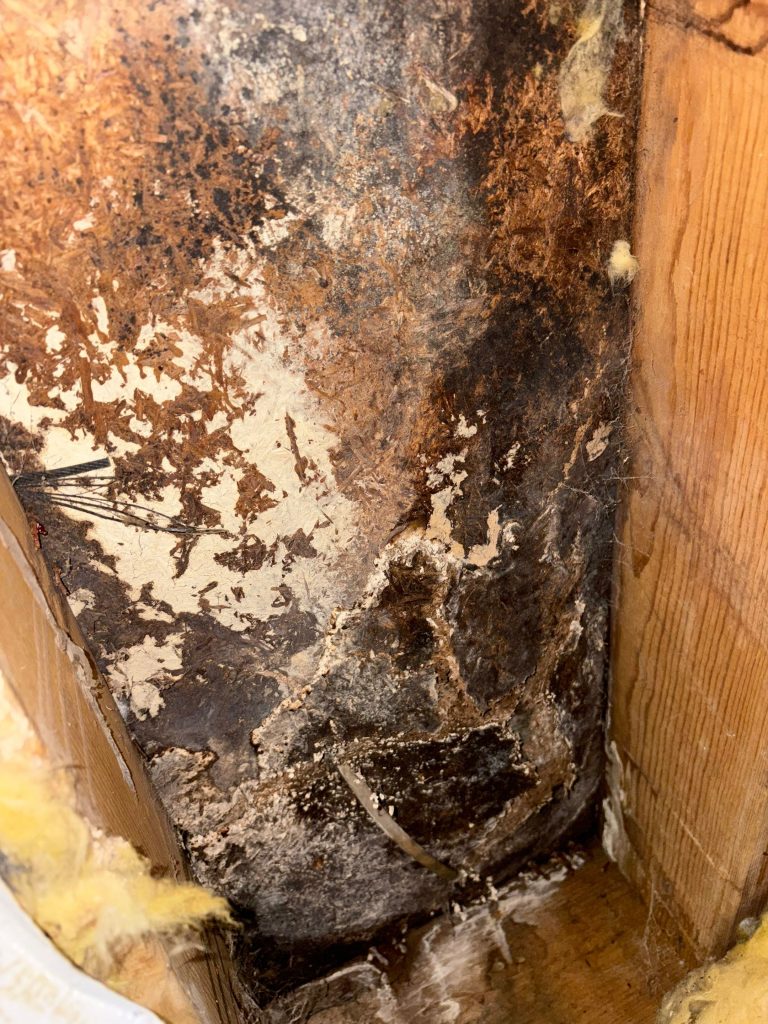
Sometimes mildew persists despite excellent cleaning and improved ventilation because hidden moisture sources keep introducing water. Recognize these common culprits early.
Check for plumbing leaks in the ceiling cavity. Slow drips from upstairs bathrooms, leaking toilet wax rings, or sweating pipes introduce water completely independent of your bathroom use. Mildew appearing in specific spots rather than broad areas often indicates a leak directly above.
Inspect for roof leaks, especially in top-floor bathrooms or those under attic spaces. Fort Wayne’s heavy spring rains and winter ice dams create numerous opportunities for roof failures. Check your attic after heavy rain for water stains on roof decking or wet insulation. Even old stains indicate vulnerability to future leaks.
Look for condensation problems caused by inadequate insulation. In winter, poorly insulated ceilings become very cold. Shower steam immediately condenses on these cold surfaces, creating water droplets faster than ventilation can remove moisture. If you see water droplets forming on your ceiling during or immediately after showers, insulation inadequacy or air leaks are allowing cold attic air to cool the ceiling below the dew point.
Examine your exhaust fan ductwork if you have attic access. Many older Fort Wayne homes have exhaust fans that vent into attic spaces rather than outdoors. This outdated installation deposits moisture directly into your attic, where it can penetrate back through the ceiling. Any bathroom exhaust must vent completely outside, never into attics, crawl spaces, or wall cavities.
What Maintenance Habits Keep Bathrooms Mildew Free?
Beyond immediate fixes, establish ongoing habits that prevent mildew establishment. Monthly, inspect your bathroom ceiling for early signs of mildew. Catching a few new spots is far easier than addressing widespread growth. Remove exhaust fan covers and clean accumulated dust from fan blades. Dust reduces fan efficiency and decreases airflow.
Quarterly, check outside vent terminations for blockages. Bird nests, leaves, or dryer lint can clog exterior vents. In winter, ice can block vent flaps. Wash bathroom shower curtains and rugs. These items harbor moisture and contribute to overall bathroom humidity. Inspect caulking around showers and tubs. Deteriorated caulk allows water to seep into wall and ceiling cavities.
Annually, have your bathroom exhaust fan professionally evaluated if you’ve experienced recurring moisture problems. Professional testing measures actual airflow and compares it to the rated capacity and building code requirements. Replace exhaust fans older than 15 years as motors wear out and performance degrades. Consider upgrading to humidity-sensing models that automatically activate when moisture levels rise.
These maintenance habits take minimal time but prevent the need for major cleaning projects or expensive repairs. Jennifer now spends five minutes monthly inspecting her bathroom and hasn’t seen mildew return since fixing her shower pan leak and establishing proper ventilation habits.
When Does DIY Mildew Cleaning Become Inadequate?
Recognize situations where surface cleaning and basic ventilation improvements won’t solve your problem. Professional help becomes necessary when mildew covers areas larger than 10 square feet. This extensive growth suggests established colonies that have penetrated surfaces. You discover soft, sagging, or damaged ceiling drywall. This damage indicates prolonged water exposure requiring material replacement.
Call professionals if water stains accompany mildew growth. Water stains point to active or past leaks needing identification and repair. Persistent musty odors remain even after thorough cleaning. Odors indicate hidden mold growth within ceiling cavities. Mildew returns within a week despite proper cleaning and ventilation improvements. Rapid return signals ongoing moisture sources requiring diagnostic equipment to locate.
Anyone in your household experiences worsening respiratory symptoms, allergies, or other health issues coinciding with the mildew problem. Health impacts warrant professional air quality assessment and remediation. You lack the physical ability to safely access ceilings or you’re uncertain about proper safety precautions.
These scenarios exceed typical DIY capabilities. Professional restoration companies have moisture meters to detect hidden water, thermal imaging cameras to identify insulation gaps and air leaks, air quality testing equipment to assess spore levels, and proper containment procedures to prevent spreading contamination during remediation.
Attempting DIY fixes for extensive problems often worsens damage by spreading spores throughout your home or failing to address root causes, leading to more expensive repairs later. Know your limits and call experts when situations warrant professional intervention.
What Warning Signs Indicate Mildew Is Becoming a Bigger Problem?
Mildew starts as a minor cosmetic issue but serves as an early warning of moisture problems that worsen over time. Recognize these escalation indicators that demand immediate attention.
Growth spreads despite repeated cleaning. This pattern means moisture sources remain active and overwhelm your prevention efforts. The affected area expands from small patches to larger sections. Rapid spread indicates worsening moisture conditions or material degradation that creates increasingly favorable conditions for fungal growth.
New mildew appears in different ceiling locations. Multiple affected areas suggest systematic ventilation inadequacy or widespread moisture introduction rather than isolated leaks. You notice your bathroom feels increasingly humid or develops a persistent musty smell. These sensory cues indicate rising moisture levels that will continue promoting mildew growth.
Paint begins bubbling, peeling, or flaking. Paint failure signals water penetration into underlying materials. Wood trim around the bathroom starts showing warping, swelling, or discoloration. These changes indicate elevated moisture affecting multiple materials beyond just the ceiling.
Your home’s overall humidity levels seem high with condensation forming on windows, mirrors stay foggy for extended periods, or you notice a general musty smell beyond just the bathroom. These signs point to whole-house humidity problems requiring broader solutions than bathroom-specific fixes.
Any of these warning signs indicates your mildew problem is escalating from surface growth into structural moisture issues. Immediate action prevents the problem from reaching the point where extensive demolition and reconstruction become necessary.
How Does Fort Wayne’s Housing Stock Affect Mildew Risk?
Understanding your home’s construction era and common design patterns helps anticipate mildew risk factors. Fort Wayne experienced significant development during distinct periods, each with characteristic building practices.
Homes built before 1960 often lack bathroom exhaust fans entirely. These homes depended on window ventilation, which proves inadequate during Indiana winters. Houses from the 1960s and 1970s may have undersized exhaust fans installed when building codes had minimal ventilation requirements. Construction from the 1980s and 1990s should have properly sized fans but often feature ductwork that terminates in attics rather than outdoors.
Newer homes built after 2000 must meet current building codes requiring specific ventilation rates, but improper installation still creates problems. Flexible ductwork can become crushed or kinked during insulation installation. Exterior vent terminations sometimes get covered during siding installation.
Additions and renovations present unique challenges. Many Fort Wayne homes have bathrooms added during remodeling projects without adequate consideration for ventilation. These bathrooms may have exhaust fans that share ductwork with other spaces, reducing effectiveness. Knowing your home’s construction vintage helps you focus on era-specific common problems.
What Costs Should You Expect for DIY and Professional Solutions?
Budget planning helps you take prompt action rather than delaying due to financial concerns. DIY mildew removal materials cost 15 to 30 dollars for vinegar, baking soda, spray bottles, brushes, and cleaning supplies. These items handle multiple cleaning sessions.
Preventive improvements vary in cost. Timer switches for exhaust fans cost 15 to 35 dollars plus installation if you hire an electrician. Humidity-sensing exhaust fan switches cost 40 to 80 dollars. Replacement exhaust fans range from 50 to 200 dollars for the fan unit plus 100 to 300 dollars for professional installation depending on difficulty.
Mildew-resistant paint costs 40 to 80 dollars per bathroom depending on ceiling size. Professional moisture assessment typically costs 150 to 300 dollars but provides valuable diagnostic information that prevents wasted money on ineffective solutions. Minor plumbing repairs to stop leaks range from 100 to 400 dollars. Insulation improvements cost 500 to 1,500 dollars depending on bathroom size and access difficulty.
Compare these preventive costs to professional mold remediation for extensive growth, which typically ranges from 1,500 to 5,000 dollars for bathroom-sized areas. Ceiling reconstruction after water damage costs 800 to 3,000 dollars. These figures illustrate why early DIY intervention provides excellent return on investment by preventing escalation to expensive professional remediation.
Jennifer spent 120 dollars total on cleaning supplies, a timer switch, and mildew-resistant paint. Her shower pan repair cost 350 dollars. This 470 dollar investment prevented what her contractor estimated would have been 4,000 to 6,000 dollars in ceiling reconstruction and mold remediation if she had waited another six months.
What Questions Should You Ask When Evaluating Your Mildew Problem?
Successful DIY fixes require honest assessment of your situation. Ask yourself these diagnostic questions. How long has the mildew been present? Recent onset is easier to address than long-established growth. How quickly did it spread? Rapid spread indicates severe moisture problems.
Is the growth concentrated in specific areas or spread uniformly? Concentrated growth points to localized leaks while uniform distribution suggests ventilation inadequacy. Does your ceiling show any signs of water damage beyond mildew? Damage indicates problems beyond surface growth.
How often do you run your bathroom exhaust fan? Inadequate ventilation habits contribute to many mildew cases. Can you feel strong airflow from your exhaust fan? Weak airflow means the fan isn’t effectively removing moisture. Does anyone in your household take particularly long or hot showers? Usage patterns affect moisture generation.
Have you noticed any other moisture problems in your home such as basement dampness, window condensation, or musty smells in closets? Whole-house humidity problems require broader solutions. Can you safely access your ceiling for cleaning and inspection? Physical limitations may necessitate professional help regardless of problem severity.
These questions help you determine whether DIY methods will succeed or whether professional intervention is necessary from the start.
What Prevention Strategies Work Best Long Term?
After successfully removing existing mildew, focus on prevention to avoid recurring problems. The most effective long-term strategy combines multiple approaches rather than relying on a single solution.
Maintain consistent exhaust fan use with automatic controls removing the human error factor. Keep bathroom doors open when not in use to promote air circulation. Control whole-house humidity levels through proper HVAC operation and seasonal dehumidifier use. Address any plumbing or roof leaks immediately upon discovery. Use mildew-resistant paint on bathroom ceilings during repainting projects.
Install proper insulation with vapor barriers in ceiling assemblies if currently inadequate. Schedule regular maintenance inspections of ventilation systems. Monitor bathroom conditions for early warning signs of returning moisture problems. These layered defenses create robust protection against mildew establishment.
No single perfect solution exists because bathroom mildew results from multiple interacting factors. Comprehensive prevention addressing all contributing elements provides reliable long-term success.
Frequently Asked Questions
How quickly should I act when I first notice bathroom ceiling mildew?
Act within a few days of first noticing mildew. While small patches won’t cause immediate structural damage, mildew spreads rapidly under favorable conditions. Growth you can address in one afternoon today may require professional remediation if left for weeks or months. Early action prevents escalation from a 20 dollar cleaning project to thousand-dollar repairs.
Can I prevent mildew without running my exhaust fan constantly?
Running your exhaust fan constantly isn’t necessary, but strategic use is essential. Run the fan during all showers and for 20 to 30 minutes afterward. Modern energy-efficient fans use minimal electricity, costing just a few dollars monthly to operate. Timer switches or humidity-sensing controls automate proper runtime without requiring you to remember. This targeted ventilation prevents mildew without excessive fan operation.
Will cleaning mildew release dangerous spores into my home?
Surface mildew cleaning releases some spores, but proper technique minimizes dispersal. Spray affected areas with vinegar before scrubbing to weigh down and kill spores. Avoid dry brushing which spreads more spores. Keep bathroom doors closed and windows open during cleaning. Run exhaust fans to create negative pressure that pulls air outdoors rather than into your home. Wear a simple dust mask if concerned. These precautions make DIY cleaning safe for most situations.
How do I know if my bathroom needs better insulation?
Check for these insulation adequacy indicators. Water droplets form on your ceiling during or immediately after showers. Your ceiling feels noticeably cold to touch during winter months. Visible frost appears in your attic on roof decking above the bathroom. Ice dams form on roof sections above the bathroom. Your heating bills seem high compared to similar homes. Any of these signs suggests insulation improvements would help prevent condensation and mildew.
Should I use natural cleaning products or commercial mildew removers?
White vinegar works as effectively as most commercial mildew removers while costing less and avoiding harsh chemical exposure. Commercial products marketed specifically for mildew usually contain bleach or other strong chemicals that damage surfaces over time. Save money and protect your finishes by using vinegar first. Reserve commercial products for stubborn cases that don’t respond to vinegar and baking soda.
How often should I clean my bathroom ceiling to prevent mildew?
With proper ventilation and moisture control, bathroom ceilings need only monthly inspection and quarterly light cleaning. If you see mildew developing between cleaning sessions, your prevention strategies are inadequate. Focus on improving ventilation, reducing moisture generation, and addressing hidden moisture sources rather than simply cleaning more frequently. Frequent cleaning treats symptoms rather than solving underlying problems.
What should I do if mildew appears in winter but not summer?
Winter-specific mildew indicates condensation problems caused by temperature differentials between warm bathroom air and cold ceiling surfaces. Cold attic spaces cool ceilings below the dew point, causing steam to condense immediately. Solutions include improving ceiling insulation, ensuring proper vapor barriers, extending ventilation runtime during cold weather, and possibly adding bathroom heat sources that keep ceilings warmer.
Conclusion
Fort Wayne homeowners can successfully address early-stage bathroom ceiling mildew using simple DIY methods involving vinegar-based cleaning, improved ventilation, and moisture control strategies. The key to success lies in acting quickly upon noticing growth and implementing comprehensive prevention measures that address root moisture sources rather than just surface symptoms.
However, recognize situations where DIY approaches prove inadequate and professional assessment becomes necessary. Warning signs including rapid growth, water damage, persistent odors, or health symptoms warrant expert evaluation. Early professional intervention prevents minor problems from escalating into expensive structural repairs.
Don’t let bathroom ceiling mildew develop into extensive moisture damage and costly mold remediation. If you’ve noticed mildew in your Fort Wayne bathroom, tried DIY cleaning without lasting success, or suspect hidden water problems, call PuroClean Disaster Restoration of West Fort Wayne at (260) 263-9788. Our experienced team provides thorough moisture assessments, identifies hidden water sources, and delivers effective solutions that protect your home and family. Contact us today for professional assistance with your bathroom moisture challenges before small problems become big expenses.


 PuroClean Disaster Restoration of West Fort Wayne