


Location: Fort Wayne, IN | PuroClean Disaster Restoration of West Fort Wayne | Call: (260) 263-9788
Executive Summary
Fort Wayne homeowners dealing with water damage have a very small window to act before mold becomes a serious problem. Mold can begin forming within 24 to 48 hours of water intrusion, and Fort Wayne’s climate creates conditions where that timeline can be even shorter in summer months. This article explains exactly how quickly mold develops, what factors speed it up in Fort Wayne homes, a real local story that illustrates the stakes, and the practical steps you should take immediately after water damage occurs.
A Fort Wayne Family’s Nightmare After a Broken Washing Machine Hose
In the summer of 2021, a couple on Fort Wayne’s west side discovered that the supply hose on their washing machine had been slowly leaking for an unknown period of time. The laundry room was in an interior room on the first floor, and the water had crept under the flooring and into the wall behind the machine.
By the time they found the issue, the vinyl flooring felt soft in one corner. They replaced the hose, dried the floor with towels, and moved on. Three weeks later, their eight-year-old daughter started having persistent coughing fits at night. A doctor suggested an environmental allergen test. An air quality inspection of the home found active mold growth under the laundry room flooring and inside the wall cavity adjacent to the machine.
Remediation required removing the flooring, opening the wall, treating the framing, and reinstalling everything. Total cost came to over $11,000. The couple said later that if they had called a restoration company when they first discovered the leak rather than handling it themselves, the entire scenario could have been avoided.
Why Does Fort Wayne Have Elevated Water Damage and Mold Risk?
Fort Wayne sits at the confluence of three rivers: the St. Marys, St. Joseph, and Maumee. This geography has historically made parts of the city prone to flooding. While improvements to the city’s flood control infrastructure have helped, heavy rain events still create basement flooding risk for many Fort Wayne homeowners, particularly in older neighborhoods.
Fort Wayne also experiences significant humidity in summer months, with July and August seeing average relative humidity above 70 percent. When interior water damage coincides with high outdoor humidity, the drying window for structural materials shrinks considerably. Mold has less competition for moisture and more ambient humidity to draw from.
Older homes in established neighborhoods on both the east and west sides of Fort Wayne frequently have older plumbing, less effective vapor barriers, and crawl spaces or basements that are more susceptible to moisture intrusion than newer construction.
How Fast Does Mold Grow After Water Damage in Fort Wayne Homes?
The mold growth timeline is consistent across locations but the speed can vary based on environmental conditions. Here is what typically happens in a Fort Wayne home after a water damage event:
First 12 hours: Mold spores already present on surfaces and in the air begin hydrating. No visible growth, but the activation process is underway in any porous material that absorbed water.
12 to 24 hours: Spores germinate and start colonizing wet drywall, wood, carpet, and insulation. In Fort Wayne’s summer humidity, this phase may progress faster than in cooler, drier conditions.
24 to 48 hours: Active mold colonies are forming beneath surfaces. This is the last window where professional drying can reliably prevent mold from becoming a remediation problem rather than just a drying problem.
3 to 7 days: Mold is visible on affected surfaces. Odor becomes noticeable. Adjacent materials that may have only minor moisture contact begin showing mold growth.
1 to 3 weeks: Mold penetrates deeply into structural materials. Spores are being actively released into the air. Health effects become more likely for occupants, especially children and those with respiratory conditions.
What If I Only Had a Small Leak? Does It Really Turn Into Mold That Fast?
This is a question restoration professionals hear constantly, and the honest answer is: yes, even small leaks can create mold in a short time under the right conditions. The amount of water matters less than where it goes and how long it stays there.
A slow drip behind a cabinet, under a sink, or around a toilet base can saturate porous materials continuously over days or weeks. Because the area stays perpetually damp rather than drying out between moisture events, mold has ideal sustained conditions to grow. Slow leaks are actually among the highest-risk scenarios because they often go unnoticed until mold is already well established.
Which Areas of a Fort Wayne Home Are Most Vulnerable to Mold After Water Damage?
While mold can grow anywhere there is moisture and organic material, certain areas in Fort Wayne homes carry the highest risk:
Basements
Given the river proximity and older construction common in Fort Wayne, basements are the most frequent site of water intrusion and mold growth. Block foundation walls absorb water readily. Finished basements hide moisture damage behind drywall and under carpet, allowing mold to grow undetected.
Crawl Spaces
Crawl spaces under older Fort Wayne homes are frequently underpowered in terms of vapor barriers and ventilation. Water that enters the crawl space from soil or storm runoff creates conditions where mold can grow on wood framing and floor joists without ever being seen or smelled from inside the living spaces.
Bathrooms and Kitchens
Plumbing connections behind walls and under cabinets are common failure points. Water from slow leaks in these areas travels along pipes and framing before becoming visible, meaning mold often grows inside walls before you see any water damage on a surface.
Attics
Roof leaks in Fort Wayne homes are a seasonal concern following winter ice dams and spring storms. Attic mold can spread to insulation and roof decking over the course of weeks without being detected until the damage is extensive.
What Should Fort Wayne Homeowners Do in the First Hours After Water Damage?
Time is the most important factor after any water damage event. Here is the action plan that gives you the best chance of preventing mold:
Immediately: Identify and stop the water source. Shut off water supply to the affected fixture or the main water line if needed.
Within 30 minutes: Remove as much standing water as possible using towels, mops, or a wet/dry vacuum. Move furniture and personal belongings away from wet areas.
Within 1 hour: Call a professional water damage restoration company. In Fort Wayne, this means getting someone on site within hours, not the next day.
Before cleanup: Document everything with photos and video for insurance purposes. Contact your homeowner’s insurance company to report the event.
Do not: Rely only on fans and household dehumidifiers to dry structural materials. These are insufficient for preventing mold in wall cavities and subfloors.
What Does Professional Water Damage Restoration Actually Involve?
Many Fort Wayne homeowners are unsure what a restoration company actually does differently from their own DIY drying efforts. The difference is substantial:
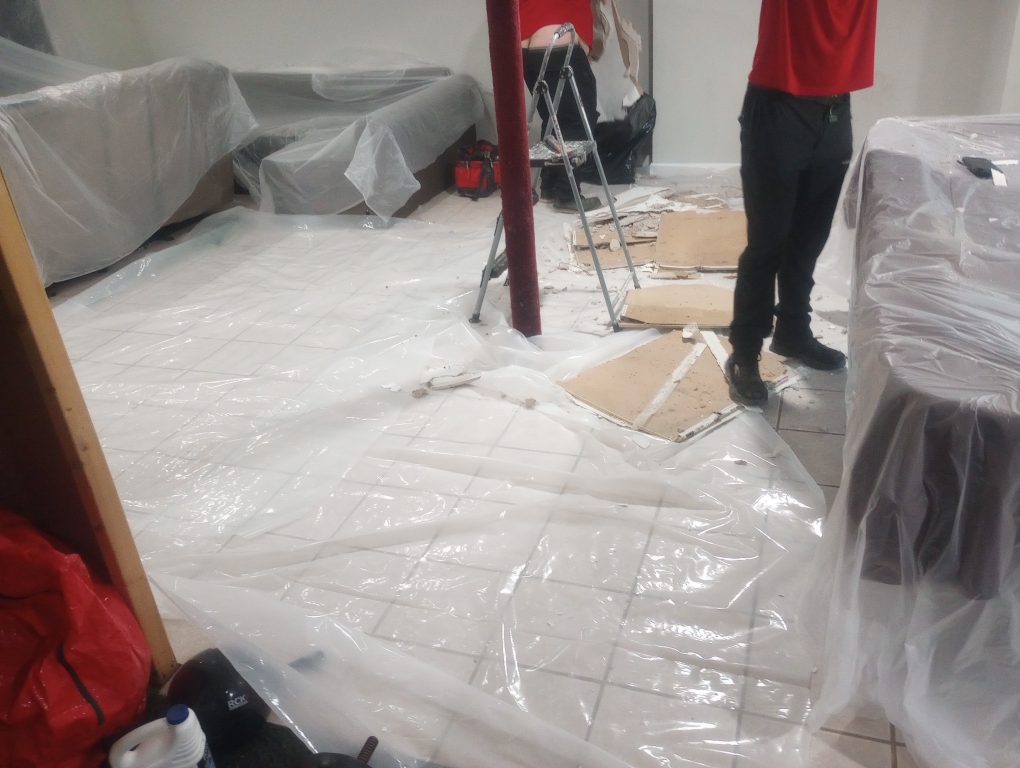
Professional restoration teams use truck-mounted or industrial dehumidifiers that remove far greater volumes of moisture from the air than consumer units. They position high-velocity air movers to create airflow patterns that draw moisture out of walls, floors, and ceilings. They use thermal imaging and moisture meters to find hidden moisture that would otherwise be missed. They apply antimicrobial treatments to surfaces to prevent mold activation. And they monitor moisture readings daily until all affected materials reach safe levels.
The result is a thorough drying process that actually addresses the moisture inside structural materials, not just on their surface. This is what prevents mold from forming in the days after a water event.
What Does Mold Remediation in Fort Wayne Typically Cost?
Remediation costs in Fort Wayne depend on the type of mold, the extent of growth, and which materials need to be removed and replaced. General ranges are:
- Small, surface-only mold treatment: $500 to $2,000
- Mold inside wall cavities or under flooring: $3,000 to $10,000
- Extensive mold affecting multiple rooms or HVAC systems: $10,000 to $30,000 or more
These figures make it clear why preventing mold through immediate water damage response is far more cost-effective than treating it after the fact.
Frequently Asked Questions
How do I know if I need professional water damage help or can handle it myself?
If water damage is limited to a very small, surface area on non-porous materials that can be fully dried within 24 to 48 hours, DIY cleanup may be adequate. If water has penetrated any porous materials including drywall, wood, carpet, or insulation, professional drying is strongly recommended. When in doubt, call for an assessment. Most restoration companies will evaluate the situation and give you honest guidance.
What type of mold is most common after water damage in Fort Wayne homes?
Cladosporium and Penicillium/Aspergillus species are the most commonly found molds after water damage in Indiana homes. Stachybotrys (black mold) requires sustained, prolonged moisture and is less common but more toxic. All mold types found after water damage warrant professional attention.
Can mold grow in Fort Wayne during winter?
Yes. Indoor heating systems keep home temperatures in the 65 to 75 degree range through winter, which is well within mold’s preferred growth temperature. Mold growth is slower in cold conditions, but a water damage event in January in a Fort Wayne home will still produce mold within days if not properly dried.
Will an air purifier help after water damage?
Air purifiers with HEPA filters can help reduce airborne mold spore concentrations but do not address the source of moisture or the mold growing on structural materials. They are a supportive measure but not a substitute for professional water damage drying and mold remediation.
How do I prevent future water damage in my Fort Wayne home?
Key prevention measures include regular inspection of plumbing connections and appliance hoses, installation of water leak detectors near high-risk areas like water heaters and washing machines, maintaining gutters and downspouts to direct water away from the foundation, and having the sump pump tested annually before the spring rain season.
Conclusion
Water damage in a Fort Wayne home is not something that can be watched and waited on. Mold begins forming within 24 to 48 hours in the Indiana climate, and the conditions specific to Fort Wayne, including humidity, older housing stock, and flooding geography, make acting fast even more important here than in many other regions. The cost difference between calling for professional drying within hours versus calling for mold remediation weeks later is often measured in thousands of dollars and serious health consequences.
Contact PuroClean Disaster Restoration of West Fort Wayne Now If you are in the area and dealing with water damage or mold concerns, do not wait. Call PuroClean Disaster Restoration of West Fort Wayne at (260) 263-9788 for immediate assistance. Their team is available around the clock to assess the situation, contain the mold, and restore your home to a safe condition. Acting fast today can save you thousands of dollars and protect your family’s health.

