


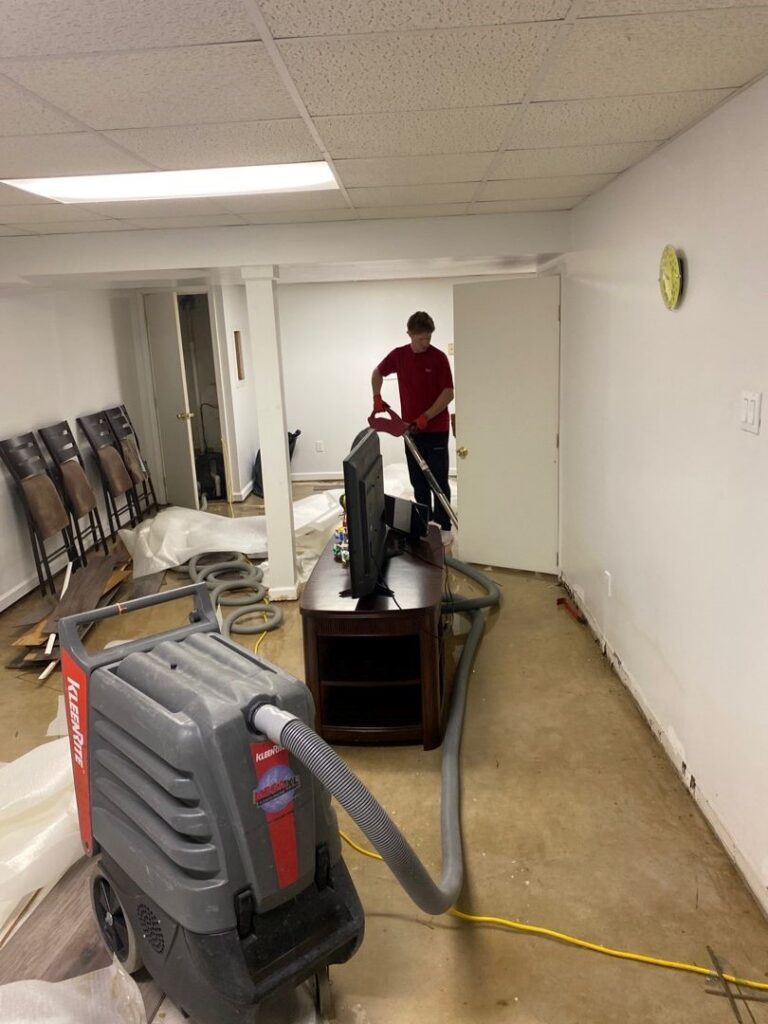
Reviewed for technical accuracy by PuroClean Disaster Restoration of West Fort Wayne’s IICRC-certified restoration team.
The IICRC S500 Standard for Professional Water Damage Restoration is the framework restoration professionals use to identify, classify, and dry out moisture intrusion before it becomes structural damage. In Fort Wayne, that standard gets tested often, because the city sits at the confluence of the St. Marys, St. Joseph, and Maumee Rivers, placing large sections of the community inside flood-prone watersheds. Hardwood floor damage here rarely announces itself with a flooded room. It usually starts as a subtle change underfoot that homeowners dismiss for weeks.
Key Takeaways for Homeowners
- Cupped or crowned floorboards are early signs that moisture has reached the wood from below, not just spilled on top.
- Clay-rich soil in neighborhoods like Lakeside and Bloomingdale traps water against foundations, raising hydrostatic pressure during wet seasons.
- Combined sewer systems in older neighborhoods near downtown and Waynedale can back up during heavy rain, introducing Category 3 (black water) contamination.
- A musty smell or discoloration between boards often shows up before any visible warping does.
- Soft or spongy flooring can mean the subfloor beneath your hardwood is already delaminating.
- Fort Wayne’s roughly 38 inches of annual precipitation, split between spring snowmelt and summer storms, creates two distinct flood risk windows each year.
If your floors show any of these signs after a recent storm or snowmelt event, time matters. Mold can begin colonizing wet wood and subflooring within 24 to 48 hours, so a same-day moisture assessment gives you the best chance of saving the original hardwood.
Why Fort Wayne Homes Face Unique Hardwood Flood Risk
Fort Wayne’s geography works against dry basements. The city sits atop glacial outwash deposits with highly variable soil permeability, and in neighborhoods like Lakeside and Bloomingdale, clay-rich pockets trap water against foundation walls instead of letting it drain away naturally. That trapped water builds hydrostatic pressure, which pushes moisture through foundation cracks and porous block even without a visible storm event.
Older neighborhoods closer to downtown, along with Waynedale, South Side, and Foster Park, run on combined sewer systems built decades ago. During intense rainfall, those systems can overflow and back up through floor drains and sanitary laterals into basements. That kind of backup is classified as Category 3 water under IICRC S500 guidelines, meaning it carries contamination that changes the entire decontamination process, from PPE requirements to disposal of affected materials.
Seasonally, Fort Wayne faces two distinct risk windows. Rapid spring snowmelt hitting still-frozen, saturated ground is a documented trigger for basement moisture, while summer thunderstorms can produce flash flooding that overwhelms storm drains in a matter of hours. Mid-century homes throughout Waynedale, South Side, and Foster Park, along with historic homes near downtown, were built before many current drainage standards existed, while newer development in Aboite and southwest Fort Wayne generally benefits from more modern engineered grading.
Takeaway: If you live in an established Fort Wayne neighborhood with clay soil or a combined sewer system nearby, both spring snowmelt and summer storms deserve a proactive moisture check on lower-level hardwood flooring.
The 7 Signs of Hidden Water Damage in Wood Floors
1. Cupping Along Board Edges
Cupping is usually the earliest visible sign. The edges of each plank sit slightly higher than the center because the underside of the board is absorbing moisture faster than the top can release it.
Technicians confirm cupping with moisture mapping, using a penetrating meter to record readings across multiple boards. Consistent elevated readings near an exterior wall often point back to the clay-soil hydrostatic pressure common in neighborhoods like Bloomingdale.
2. Crowning or Bulging Boards
Crowning looks like the reverse of cupping, with the center of each board rising above the edges. This pattern frequently shows up after a cupped floor has already gone through one uneven drying cycle, often because it was sanded or refinished before the wood fully dried.
Crowned floors have usually already sustained some structural stress at the tongue-and-groove joints, which is worth noting for any future refinishing plans.
3. A Musty or Earthy Smell Indoors
A persistent musty odor, especially near baseboards or in a room above a damp basement, is one of the most common early signs homeowners report before they see any staining. The smell comes from microbial growth feeding on damp wood fibers and subfloor material.
Restoration crews use hygrometer readings alongside thermal imaging to pinpoint moisture behind walls and beneath flooring without unnecessary demolition, which keeps the assessment faster and less disruptive to the household.
4. Soft or Spongy Spots When Walking
A section of floor that feels slightly soft, spongy, or sticky underfoot often means the subfloor has begun delaminating, meaning its layers are separating due to sustained moisture exposure. This is a structural sign, not just cosmetic.
In homes with plywood or OSB subflooring common in newer Aboite construction, delamination can spread faster than in older solid-plank subfloors, so a soft spot deserves prompt attention regardless of the home’s age.
5. Dark Staining or Discoloration Between Boards
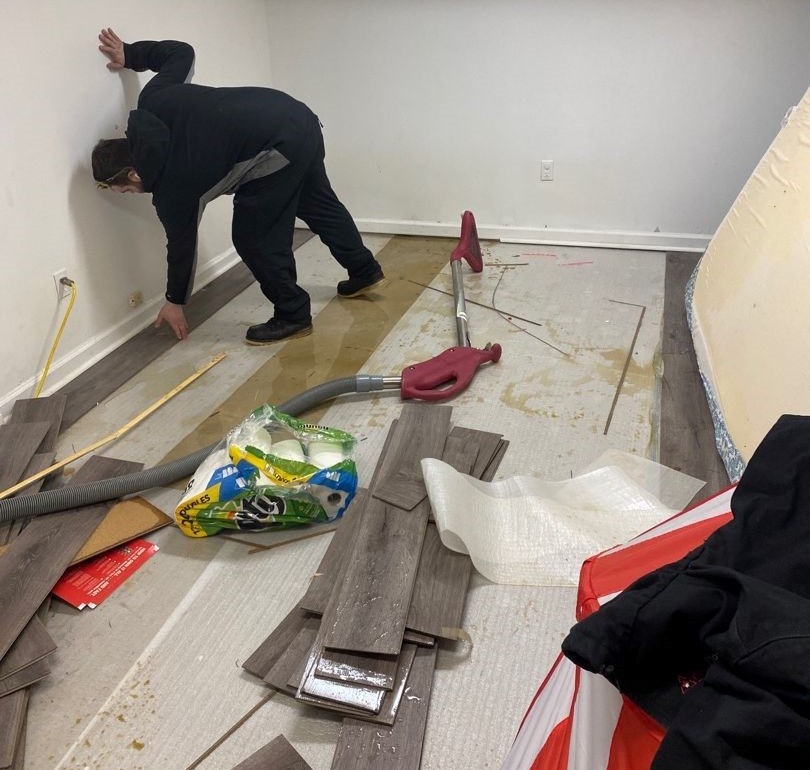
Dark lines appearing in the seams between boards, particularly in a basement-adjacent room, usually mean moisture has been sitting in those gaps long enough to stain the wood or support early mold growth. If the discoloration follows a known sewer backup or river-related flood event, technicians classify the water under IICRC S500 as Category 2 or Category 3 and apply antimicrobial biocide accordingly, since contaminated water requires a different cleanup protocol than a clean water leak.
Stop and call a professional immediately if the staining follows a combined sewer backup or river flooding event, or if you notice a sewage odor. Category 3 water contamination should be handled with proper containment and PPE, not general household cleaning products.
6. Gaps That Widen or Fail to Close Seasonally
Some seasonal gapping between boards is expected as wood contracts during Fort Wayne’s drier months. It becomes a red flag when gaps widen unevenly year over year or fail to close back up when humidity returns in warmer months, suggesting the wood has lost its normal expansion and contraction behavior after a past moisture event.
7. A Soft, Sagging, or Bouncy Feel Underfoot
A noticeable give or bounce when you walk across a room, especially one located above a basement affected by river-corridor flooding or sewer backup, often indicates Class 4 water damage under IICRC S500, the designation for materials with low permeance that have become deeply saturated and require extended specialized drying.
This is typically the most advanced of the seven signs and usually requires structural drying equipment rather than simple ventilation or a household dehumidifier.
How Restoration Professionals Diagnose and Dry Affected Floors
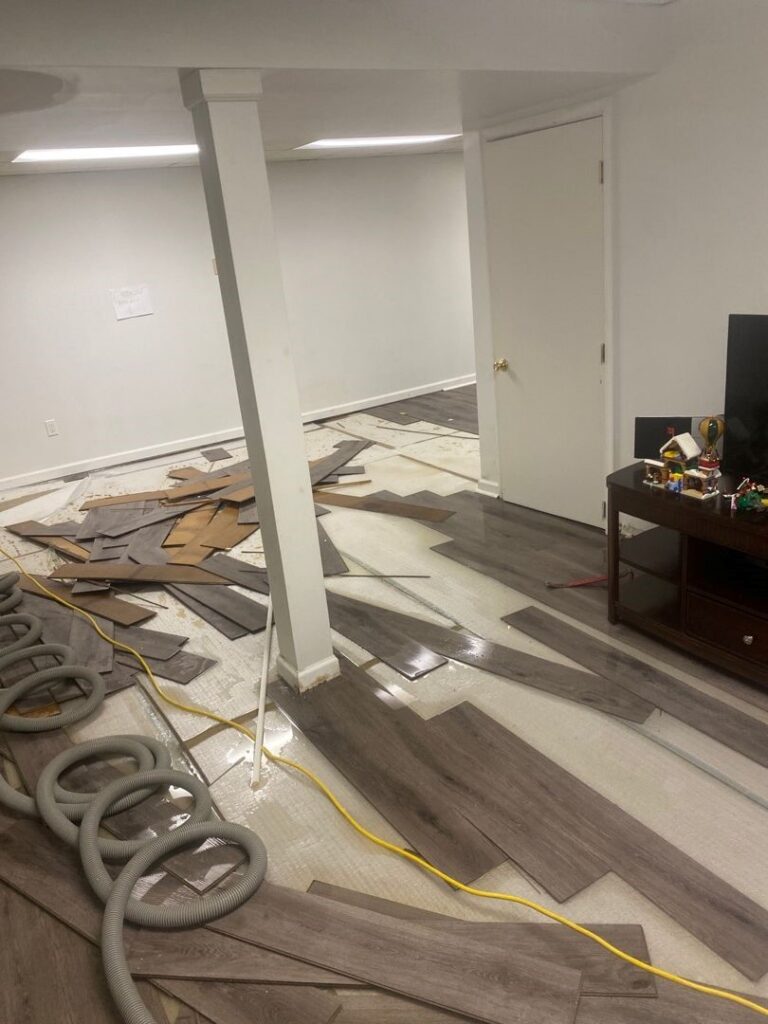
- Moisture mapping across the room. Technicians chart readings board by board to establish the scope of the problem and a target dry standard.
- Thermal imaging and hygrometer monitoring. These tools locate hidden wet areas behind walls or beneath flooring and track drying progress in real time.
- Containment barrier and negative air pressure. When contamination or mold is suspected, a containment barrier paired with negative air pressure and HEPA filtration keeps spores and odors from spreading to unaffected rooms.
- Category and class classification. Following IICRC S500 protocols, water is classified by contamination level and materials are classified by saturation severity, which determines equipment, PPE, and timeline.
- Structural drying with LGR dehumidification. Low-grain refrigerant dehumidifiers, air movers, and air scrubbers work together, guided by psychrometric calculations of temperature and humidity, to safely pull moisture from wood and subfloor without over-drying and cracking the boards.
- Antimicrobial biocide treatment when needed. For Category 2 or 3 events, an EPA-registered antimicrobial biocide addresses mold spores and potential mycotoxins before they spread into cross-contamination of unaffected areas.
- Final moisture verification. Readings are rechecked against dry standard benchmarks before refinishing, sanding, or board replacement begins.
Takeaway: Basement dehumidifiers and box fans rarely reach the moisture content levels needed to stop long-term warping in hardwood above a flooded lower level. Structural drying is calibrated to the wood itself, not just ambient room air.
PuroClean Disaster Restoration of West Fort Wayne provides 24/7 emergency dispatch across Fort Wayne, Aboite Township, and surrounding Allen County neighborhoods, works directly with insurance carriers through direct billing, and sends IICRC-certified technicians to assess hardwood floor damage rather than general contractors. Decisions made about drying equipment in the first 24 hours often determine whether original hardwood can be restored or needs full replacement.
Frequently Asked Questions
Does homeowners insurance cover hardwood floor water damage in Fort Wayne? It depends on the cause. Sudden events like a burst pipe are typically covered under most Indiana homeowners policies, while gradual seepage and river flooding are often excluded unless you carry separate flood insurance through FEMA’s National Flood Insurance Program. Documenting the cause carefully with your restoration company helps support your claim.
How much does hardwood floor water damage restoration cost in Fort Wayne? Costs depend on the water category, how far moisture has spread, and whether the subfloor needs replacement. Early-stage cupping caught quickly may only need monitored drying, while advanced Class 4 saturation with subfloor delamination usually requires board removal. A technician can give you a specific range after moisture mapping.
How long does it take hardwood floors to dry after a Fort Wayne basement flood? Most structural drying takes three to seven days using professional LGR dehumidification and targeted air movement, though Category 3 water from a combined sewer backup can extend that timeline due to added decontamination steps.
Can I handle minor hardwood water damage myself? A very small, immediately cleaned spill may not need professional equipment. Once you notice cupping, odor, or soft spots, moisture has likely reached the subfloor, which calls for professional-grade drying equipment and verified moisture readings to prevent hidden mold.
Is mold a real health concern after a Fort Wayne combined sewer backup? Yes. Category 3 water carries bacteria and contamination that can support mold growth within 24 to 48 hours, potentially producing mycotoxins that affect indoor air quality. The EPA recommends prompt professional assessment rather than surface cleaning alone when sewage-contaminated water is involved.
What is the difference between Category 2 and Category 3 water in Fort Wayne homes? Category 2 water, or gray water, includes moderately contaminated sources like an overflowing washing machine. Category 3 water, or black water, includes sewage backup from a combined sewer system or river floodwater, and requires stricter containment, PPE, and antimicrobial treatment under IICRC S500 guidelines.
If your Fort Wayne home is showing any of these warning signs, don’t wait for it to spread. Call PuroClean Disaster Restoration of West Fort Wayne at (260) 263-9788 for a moisture assessment. Our IICRC-certified technicians are available 24/7, work directly with your insurance company through direct billing, and provide fast local response across Fort Wayne, Aboite Township, and Allen County.

