 PuroClean Disaster Restoration of West Fort Wayne
 Key Takeaways for Homeowners
- Fort Wayne’s proximity to three rivers creates unique basement flood risks requiring immediate IICRC S500 intervention
- Mold colonization begins within 24 to 48 hours in Indiana’s humid continental climate zone
- Professional psychrometric monitoring ensures structural materials reach safe moisture content levels
- Negative air pressure containment prevents mycotoxin cross-contamination during remediation
- Local soil conditions and freeze-thaw cycles demand specialized waterproofing approaches
- Call PuroClean Disaster Restoration of West Fort Wayne at (260) 263-9788 for 24/7 emergency water extraction
Understanding Fort Wayne’s Unique Flood Risks
Fort Wayne occupies a challenging hydrological position at the confluence of the St. Marys, St. Joseph, and Maumee Rivers. This tri-river geography, combined with the city’s location on the former Great Black Swamp drainage basin, creates persistently high water table conditions that threaten basement foundations throughout Allen County. When heavy rains hit Fort Wayne’s clay-heavy soils, water has nowhere to go but toward your foundation walls.
The city’s continental climate brings additional complications. Summer humidity regularly pushes relative moisture levels above 75 percent, while winter freeze-thaw cycles exploit microscopic foundation cracks. Homes in established neighborhoods like West Central, Bloomingdale, and Oakdale face aging infrastructure challenges, while newer developments on the city’s southwest edge battle expansive soil pressure against modern foundations.
When your basement floods, you are not just fighting standing water. You are racing against biological clocks that trigger mold germination, bacterial proliferation, and structural deterioration. These four methods align with IICRC water damage restoration standards while addressing the specific geospatial threats faced by Fort Wayne homeowners.
Method 1: Immediate Source Control and Category Classification
Identify Your Water Contamination Level
IICRC S500 standards categorize flood water into three classes, and Fort Wayne’s infrastructure creates specific contamination risks. The city’s combined sewer overflow system, particularly in older neighborhoods, means basement flooding often involves Category 2 gray water or Category 3 black water rather than clean supply line breaks.
Emergency Response Protocol:
- Shut off electrical systems before entering flooded areas
- Determine water source: municipal supply, sump failure, sewer backup, or foundation seepage
- Document contamination category with photographs for insurance purposes
- Remove all porous personal items within the first 2 hours
- Deploy submersible pumps for bulk water removal (capacities exceeding 10,000 GPH)
Establishing the Drying Chamber
Fort Wayne’s basements often function as primary living spaces, particularly in ranch and bi-level homes common to the area. Creating a contained drying environment prevents humidity migration to upper levels. Seal doorways with 6-mil polyethylene sheeting and maintain negative air pressure using HEPA-filtered air scrubbers exhausting to the exterior.
Method 2: Advanced Extraction and Psychrometric Drying
Why Hardware Store Equipment Fails
Consumer-grade wet/dry vacuums and residential dehumidifiers cannot achieve the specific humidity thresholds required for structural drying in Fort Wayne’s climate. When outdoor dew points hover near 70 degrees during summer months, residential units simply recirculate humid air without removing sufficient vapor pressure.
Professional Drying Standards:
- Deploy truck-mounted extraction systems (removing 25 to 50 gallons per minute)
- Install low-grain refrigerant (LGR) dehumidifiers sized at 1 unit per 1,000 square feet
- Position axial air movers at 45-degree angles to walls (one per 10 to 12 linear feet)
- Monitor specific humidity using thermo-hygrometers every 4 hours
- Target 30 to 40 percent relative humidity and 55 grains per pound
Psychrometrics: The Science of Drying
Psychrometrics measures the relationship between air temperature, humidity, and vapor pressure. In Fort Wayne’s river-valley climate, achieving proper drying requires calculating the grains of moisture per pound of dry air and manipulating temperature and airflow to force evaporation from wet materials. This scientific approach prevents the “feel dry but isn’t dry” trap that leads to hidden mold behind walls.
Method 3: Strategic Demolition and Moisture Mapping
The Hidden Water Problem
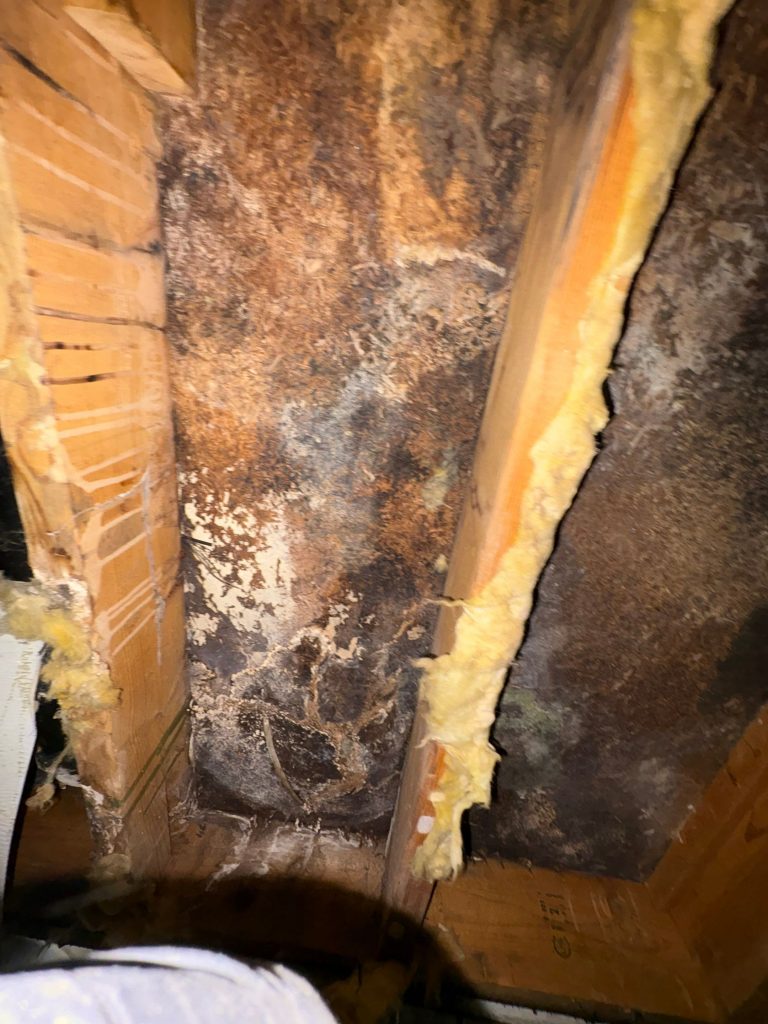
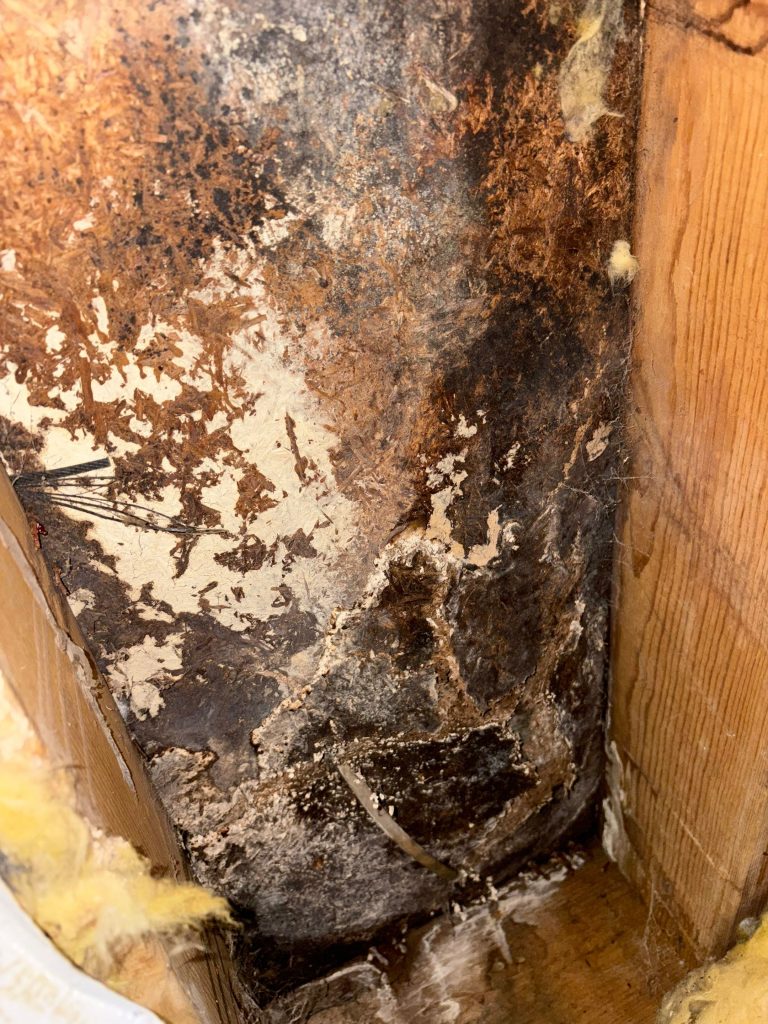
Fort Wayne’s housing stock includes significant post-war construction with below-grade basements finished without modern vapor barriers. When the Maumee River watershed floods or heavy spring rains saturate the soil, water wicks through concrete block walls and accumulates in wall cavities. Surface drying leaves these pockets saturated, creating perfect conditions for Stachybotrys and Chaetomium growth.
Moisture Mapping Protocol:
- Use penetrating moisture meters on structural wood (target below 16 percent moisture content)
- Thermal imaging to identify cool spots indicating trapped moisture
- Inspect sill plates and rim joists (the most vulnerable areas in Fort Wayne basements)
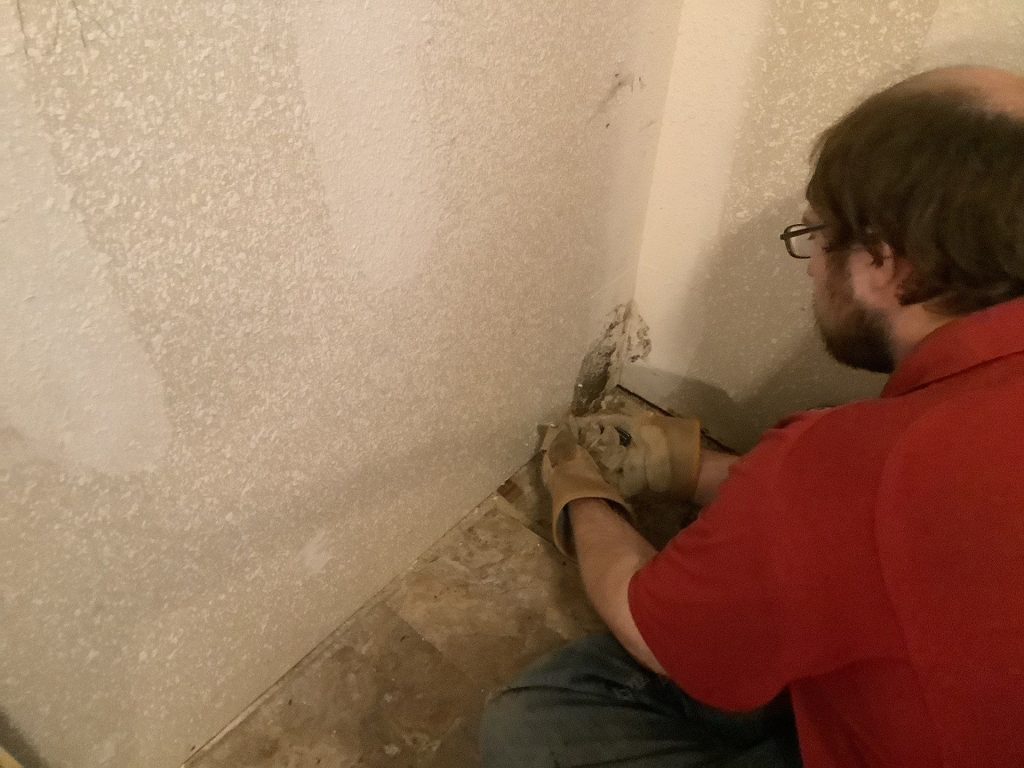
- Remove baseboards and drill inspection holes at 16-inch intervals
- Test insulation saturation levels in exterior walls
Demolition Strategy:
- Cut drywall 12 to 18 inches above visible water lines
- Remove all saturated fiberglass insulation (it cannot be effectively dried in place)
- Evaluate OSB subflooring for delamination
- Assess HVAC ductwork for water intrusion
In Fort Wayne’s historic West Central neighborhood, balloon framing construction creates vertical wall cavities that allow water to travel between stories. These homes require more extensive demolition and drying protocols than platform-framed structures.
Method 4: Antimicrobial Treatment and Containment Engineering
Preventing Mycotoxin Release
Once structural drying achieves acceptable moisture content, applying antimicrobial biocides creates residual protection against mold spores remaining in the environment. However, timing and application method determine effectiveness. Applying chemicals to wet surfaces wastes product and creates future adhesion problems.
Professional Treatment Sequence:
- HEPA vacuum all surfaces to remove particulate contamination
- Apply EPA-registered antimicrobial solutions via ULV fogging for even coverage
- Maintain negative air pressure at 0.02 inches water column during application
- Run HEPA air scrubbers at 4 to 6 air changes per hour
- Post-treatment air sampling to verify spore count reduction
Negative Air Pressure Systems
Fort Wayne’s tight basement layouts and interconnected HVAC systems create significant cross-contamination risks. Negative air pressure containment forces airborne particles through HEPA filtration rather than allowing migration through stairwells, ductwork, and electrical penetrations. This engineering control is essential when mold colonization has already begun or when Category 3 water contamination is present.
Geospatial Authority: Fort Wayne Climate and Building Factors
Fort Wayne’s position within the Great Lakes snowbelt creates unique freeze-thaw dynamics. Winter temperatures regularly drop below 20 degrees Fahrenheit, causing soil expansion that cracks foundations. When spring arrives and the ground thaws, these cracks become channels for water intrusion. The city’s average 37 inches of annual precipitation, concentrated in spring and summer, exacerbates the problem.
Local building practices compound these risks. Many Fort Wayne homes built between 1950 and 1980 feature poured concrete foundations without exterior waterproofing membranes. The city’s clay soils, while excellent for agriculture, create hydrostatic pressure against basement walls that exceeds the structural capacity of aging concrete. Newer developments in Aboite and southwest Allen County face expansive soil challenges that shift foundations and crack slab floors.
The Maumee River watershed’s floodplain encompasses significant residential areas, particularly in the Lakeside and Northside neighborhoods. Homes in these areas face recurring flood risks that demand permanent waterproofing solutions beyond emergency drying, including interior drain tile systems, sump pumps with battery backup, and exterior excavation waterproofing.
FAQ: Complex Long-Tail Questions for Fort Wayne Homeowners
Does home insurance cover mold caused by high humidity in Fort Wayne?
Indiana insurance policies typically exclude mold resulting from humidity, condensation, or maintenance issues. However, mold secondary to a covered water damage event (sudden pipe burst, storm damage) may receive limited coverage, usually between $1,000 and $10,000 depending on your endorsement. Fort Wayne homeowners in flood-prone areas should consider separate flood insurance through the NFIP, which covers mold remediation up to policy limits if the mold results from a covered flood event.
How does Fort Wayne’s river proximity affect basement flood risk?
The confluence of three rivers creates a high water table throughout Allen County. During spring snowmelt and heavy rain events, the water table rises to within 2 to 4 feet of the surface in many neighborhoods. This hydrostatic pressure forces water through foundation cracks and basement floors even without surface flooding. Homes within the 100-year floodplain face additional risks from river overflow.
Can I dry my basement myself after a sump pump failure?
While minor sump pump failures involving clean groundwater can be handled by homeowners with proper equipment, Fort Wayne’s high water table and clay soils mean water often re-enters as fast as you remove it. Professional extraction equipment removes water 10 times faster than consumer units, and moisture mapping identifies hidden saturation that DIY methods miss. Given Fort Wayne’s humidity levels, professional intervention is strongly recommended.
What are Fort Wayne’s building code requirements for basement waterproofing?
Current Allen County building codes require dampproofing for all below-grade concrete walls, interior drain tile systems connected to sump pits, and egress windows in finished basements. Retrofitting older homes may trigger full current code compliance requirements. Permits are required for electrical work (sump pump installation) and structural modifications.
Professional Restoration When Minutes Matter
Basement flooding in Fort Wayne demands immediate, professional response. The combination of high water tables, river valley humidity, and aging infrastructure creates conditions where mold establishes itself faster than DIY methods can prevent. PuroClean Disaster Restoration of West Fort Wayne provides IICRC S500 and S520 certified emergency water damage restoration specifically tailored to Allen County’s unique challenges.
Our technicians understand the local soil conditions, building practices, and climate factors that threaten Fort Wayne homes. We deploy industrial-grade extraction equipment, perform comprehensive moisture mapping, and establish engineering controls that protect your family’s health.
Every minute counts when your basement floods. Call PuroClean Disaster Restoration of West Fort Wayne at (260) 263-9788 for immediate 24/7 emergency assistance. We serve Fort Wayne and all surrounding neighborhoods with the urgency your home deserves.

 PuroClean Disaster Restoration of West Fort Wayne