 PuroClean Disaster Restoration of West Fort Wayne
 Serving Fort Wayne, Allen County, and West Fort Wayne Communities
| Key Takeaways for Homeowners |
| Fort Wayne averages over 130 days below freezing annually, making burst pipes one of the most common winter emergencies.A single burst pipe can discharge up to 250 gallons of water per day into your home’s structure.IICRC S500 standards govern the scientifically correct approach to water extraction and structural drying.Water left standing for more than 24 hours significantly elevates the risk of mold colonization and costlier remediation.Indiana HO-3 homeowners insurance policies generally cover sudden and accidental burst pipe losses.PuroClean Disaster Restoration of West Fort Wayne is available 24/7: (260) 263-9788. |
The Harsh Truth About Burst Pipes in Fort Wayne, Indiana
Fort Wayne is no stranger to brutal winters. Indiana’s second-largest city sits in Allen County and regularly sees January temperatures drop to single digits, with wind chill values pushing well below zero. When water freezes inside a pipe, the pressure buildup can reach 2,000 pounds per square inch. That is enough force to split copper, PVC, or PEX pipe regardless of age or condition.
The IICRC S500 Standard for Professional Water Damage Restoration defines the scientific framework that certified restoration professionals use to assess, extract, dry, and document water damage. Understanding this process is not just for professionals. As a Fort Wayne homeowner, knowing what correct restoration looks like helps you make faster decisions, choose the right contractor, and protect your insurance claim from the start.
Here are 7 proven steps that will protect your home, limit your out-of-pocket costs, and get your family back to normal as quickly as possible.
Step 1: Stop the Water at Its Source
Every minute a burst pipe continues flowing, more water saturates your walls, subfloor, and insulation. Your first action must be shutting off the main water supply.
- The main shut-off valve in most Fort Wayne homes is located in the basement near the front foundation wall, in a utility room, or near the water heater.
- Turn the valve clockwise until it stops completely.
- Open the lowest faucet in the house to relieve remaining pressure in the lines.
- If water is near any electrical source, shut off the circuit breaker for that area from a dry location before entering.
- Call PuroClean Disaster Restoration of West Fort Wayne at (260) 263-9788 immediately. A faster call means a faster response and lower total restoration costs.
Step 2: Document the Damage Before Cleanup Begins
This step is non-negotiable for a successful insurance claim. Your documentation from the first 30 minutes is the most important evidence you will ever collect about this loss.
- Use your phone to photograph and video every affected room from multiple angles.
- Capture the burst pipe location, water depth on floors, wall staining, and any damaged belongings.
- Record the time you discovered the damage and the time water flow was stopped.
- Do not move or discard any damaged items until your insurance adjuster has conducted their inspection.
- This record satisfies the documentation requirements of Indiana insurance carriers for sudden and accidental water loss claims.
| EMERGENCY WATER DAMAGE RESTORATION PuroClean Disaster Restoration of West Fort Wayne serves Fort Wayne and Allen County and surrounding areas. Call Now: (260) 263-9788 Available 24/7 | IICRC-Certified Technicians | Works with All Insurance Carriers |
Step 3: Extract Standing Water Without Delay
Standing water classified under IICRC S500 as Category 1 (clean water source) can degrade to Category 2 within 24 hours as it absorbs contaminants from building materials. Extraction must begin immediately.
What Proper Water Extraction Looks Like
- Truck-mounted extractors used by certified restoration professionals remove significantly more water per hour than any consumer-grade equipment.
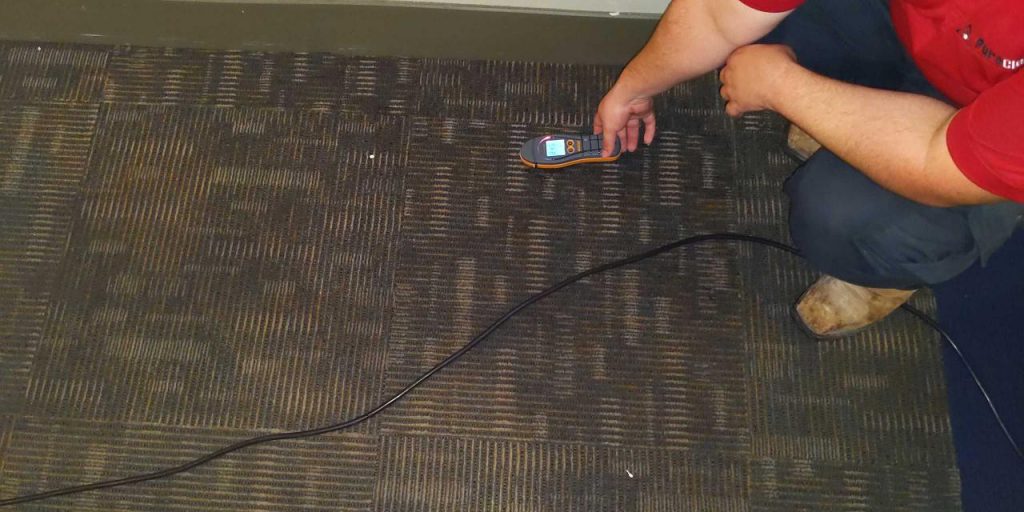
- Moisture mapping using infrared thermal imaging cameras detects water that has migrated behind drywall, under tile, and within floor assemblies, areas invisible to the naked eye.
- Psychrometrics guides the technical calculation of air temperature, relative humidity, and airflow required to achieve IICRC S500 drying targets.
- In Fort Wayne’s cold winters, water can freeze in wall cavities before extraction if response is delayed, causing structural damage that dramatically increases repair costs.
Step 4: Run Structural Drying Equipment Continuously
Extraction removes visible water. Structural drying removes the moisture that has been absorbed into wood framing, drywall, insulation, and subfloor assemblies. Fort Wayne’s diverse housing stock, from the 1920s craftsman bungalows near the Wells Street corridor to the 1970s ranch homes in the southwest quadrant, presents different drying challenges based on construction era and material types.
- Commercial dehumidifiers extract moisture vapor from the air and surrounding materials around the clock.
- High-velocity air movers are positioned to maximize surface evaporation rates based on psychrometric calculations.
- Desiccant dehumidification systems perform more effectively than refrigerant systems in the cold temperatures typical of Fort Wayne winter restorations.
- Daily moisture readings using calibrated meters track progress toward IICRC S500 drying goals.
- Structural drying typically requires 3 to 5 days for standard residential losses, with longer timelines for multi-story or complex assemblies.
Step 5: Apply Antimicrobial Treatment to Block Mold Growth
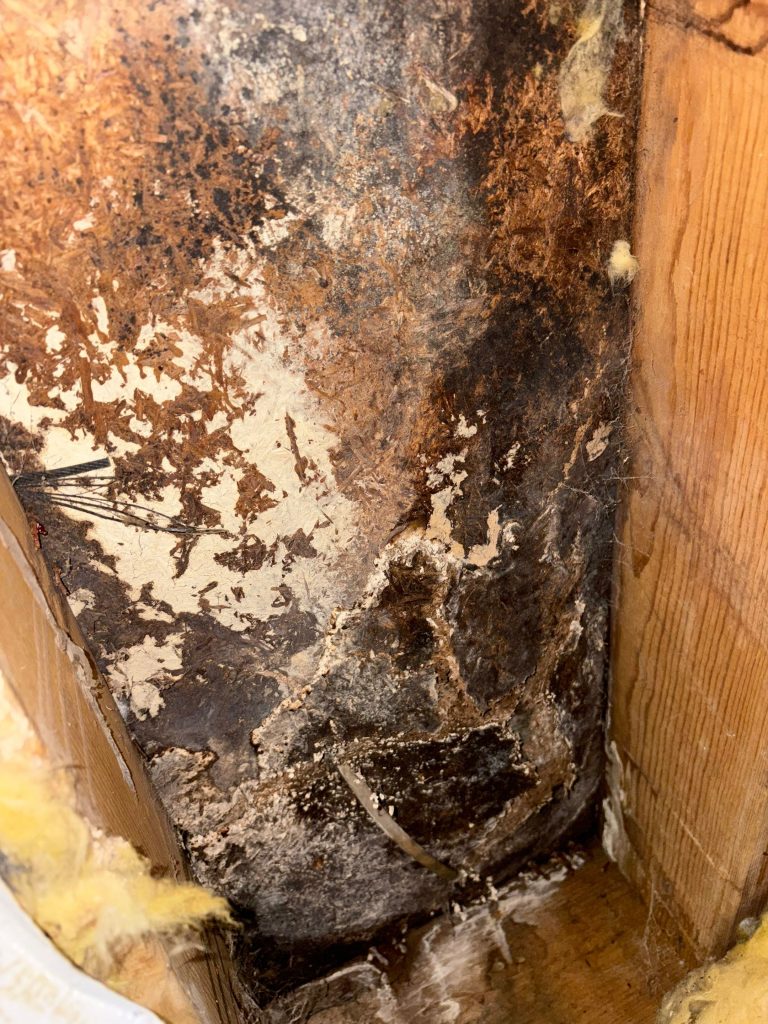
Fort Wayne’s summers bring relative humidity levels that regularly exceed 70 percent. A winter burst pipe restoration that leaves residual moisture in wall cavities will produce a mold problem by spring if antimicrobial treatment is skipped. Mold remediation under IICRC S520 standards is significantly more expensive than prevention.
- EPA-registered antimicrobial biocide is applied to all moisture-affected surfaces after water extraction.
- HEPA filtration captures airborne mold spores during treatment, preventing their spread to unaffected areas.
- Negative air pressure containment is established when visible mold growth is present or suspected.
- Mycotoxins produced by certain mold species, including Stachybotrys (black mold), pose serious respiratory health risks. Prevention is always the preferred approach.
- All treatments are performed by IICRC-certified technicians following protocol-driven procedures.
Step 6: File Your Indiana Homeowners Insurance Claim Correctly
Standard Indiana HO-3 homeowners insurance policies cover sudden and accidental water damage from burst pipes. Filing your claim correctly from the start prevents delays and ensures maximum recovery.
- Report the loss to your insurer within 24 hours of discovery.
- Submit your photo and video documentation along with the PuroClean damage assessment report.
- Request a copy of the adjuster’s damage estimate and review it against our written Scope of Work.
- Confirm Coverage A (dwelling structure), Coverage C (personal property), and Coverage D (Additional Living Expenses) are applied where appropriate.
- Note that claims are typically denied when damage is attributed to neglect, such as leaving a home unheated during extended travel. Document that your home was maintained at appropriate temperatures.
- Authorize PuroClean Disaster Restoration of West Fort Wayne to communicate directly with your adjuster. We have deep experience with Indiana-based and national insurance carriers operating in Allen County.
| EMERGENCY WATER DAMAGE RESTORATION PuroClean Disaster Restoration of West Fort Wayne serves Fort Wayne, Allen County and West Fort Wayne and surrounding areas. Call Now: (260) 263-9788 Available 24/7 | IICRC-Certified Technicians | Works with All Insurance Carriers |
Step 7: Rebuild and Protect Your Home Against Future Freeze Events
Once structural drying is complete and all moisture readings meet IICRC S500 targets, reconstruction begins. Fort Wayne’s Allen County building department requires permits for structural, plumbing, and electrical work, a process our team navigates on your behalf.
- Drywall, insulation, flooring, and finishes are restored to pre-loss condition.
- Plumbing repairs are completed by licensed Indiana plumbers in compliance with Indiana Residential Code (675 IAC 14-4.3).
- Pipe insulation in attics, crawl spaces, attached garages, and exterior wall runs is strongly recommended for all Fort Wayne homes following a burst pipe event.
- Smart leak detection devices and automatic water shut-off systems are growing in adoption among Allen County homeowners as a cost-effective long-term risk management tool.
Fort Wayne Local Context: Why Your Home Is at Risk Every Winter
Fort Wayne’s housing stock reflects over a century of residential construction. Homes in the historic West Central, Lakeside, and Forest Park neighborhoods feature 1920s to 1940s construction with plaster walls, minimal insulation, and pipe configurations that leave supply lines in exterior wall cavities. Post-war ranch homes common in the southwest quadrant often have crawl space foundations where pipes are exposed to ambient winter temperatures.
Indiana Residential Code and Allen County building standards govern all restoration and reconstruction work. Our team at PuroClean Disaster Restoration of West Fort Wayne holds current certifications and permits to operate across all Fort Wayne ZIP codes, including 46804, 46814, 46818, and 46845, as well as surrounding communities in Aboite Township, New Haven, Huntertown, and Leo-Cedarville.
Frequently Asked Questions
Does homeowners insurance cover burst pipe damage in Fort Wayne?
Yes, standard Indiana HO-3 policies cover sudden and accidental burst pipe damage to the dwelling and personal property. Coverage may be denied if the damage is attributed to negligence, such as failure to maintain heat in an occupied home. Document your thermostat settings and report the claim within 24 hours.
How much does it cost to fix burst pipe water damage in Fort Wayne?
Restoration costs depend on the scope of damage, affected materials, and number of rooms involved. Single-room incidents typically range from $1,500 to $5,000. Larger losses involving multiple floors or finished basements can exceed $25,000. Your homeowners insurance policy will cover most costs when a prompt, well-documented claim is filed.
How quickly does mold grow after a burst pipe in Fort Wayne?
Under warm, humid conditions, mold colonization can begin within 24 to 48 hours on wet drywall and wood framing. Fort Wayne’s humid summer conditions accelerate this timeline. Even in winter, residual moisture in wall cavities can produce mold by spring if not properly dried and treated with antimicrobial biocide.
Does Fort Wayne require permits for water damage repairs?
Yes. Allen County building department requires permits for structural repairs, electrical work, plumbing replacement, and HVAC work following water damage. Our team manages the permit process to ensure all work is code-compliant and properly documented for insurance purposes.
What areas does PuroClean of West Fort Wayne serve?
We serve all of Fort Wayne including West Fort Wayne, Aboite Township, New Haven, Huntertown, Leo-Cedarville, Woodburn, and the broader Allen County area. We respond 24 hours a day, 7 days a week. Call (260) 263-9788.

 PuroClean Disaster Restoration of West Fort Wayne