


Reviewed for technical accuracy by PuroClean Disaster Restoration of West Fort Wayne’s IICRC-certified restoration team.
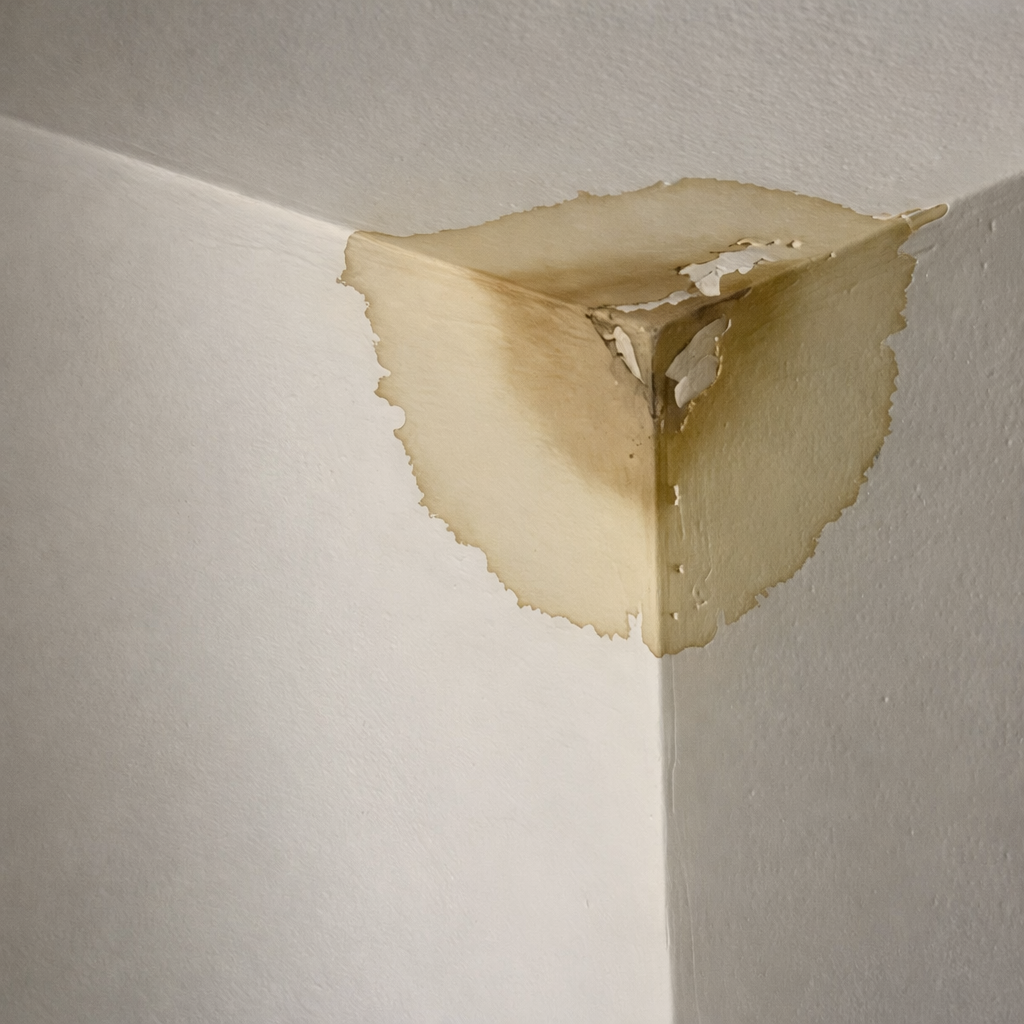
A ceiling leak rarely stays contained to what you can see. Under the IICRC S500 Standard for Professional Water Damage Restoration, moisture that reaches a ceiling cavity typically spreads laterally along framing and insulation long before it shows up as a visible stain, which means the damage is often bigger than it looks. In Fort Wayne, where clay-rich soils and a combined sewer system in older neighborhoods create their own seasonal flooding patterns, ceiling leaks tied to roof, plumbing, or attic sources can hide extensive water damage behind a small, unassuming spot. This guide covers the five warning signs that tell you a leak has already gone further than the surface suggests.
Key Takeaways for Homeowners
- A ceiling leak that looks small on the surface can indicate significant hidden moisture in insulation and framing.
- Sagging, bubbling paint, or a soft spot in drywall means saturation has already weakened the material.
- Musty odors without visible mold are an early sign of hidden colonization inside wall or ceiling cavities.
- Fort Wayne’s clay-heavy soils in neighborhoods like Lakeside and Bloomingdale trap water against foundations, which can indirectly worsen upper-floor leaks by keeping overall home humidity elevated.
- Recurring stains after a repair usually mean the original source was never fully found.
- Thermal imaging and moisture meters can confirm the extent of hidden damage without opening the entire ceiling.
If you notice any of the signs below, especially sagging or a soft spot, treat it as an active structural concern, not a cosmetic one. Hidden moisture behind drywall can compromise ceiling integrity within days. PuroClean Disaster Restoration of West Fort Wayne provides 24/7 emergency dispatch across Fort Wayne, Aboite Township, and Allen County for homeowners who need a fast, professional assessment.
1. Sagging or Bulging Ceiling Drywall
Why does a ceiling sag before it ever shows a stain? Drywall absorbs water and loses structural integrity as it saturates, and once enough moisture accumulates, gravity pulls the weakened material downward into a visible sag or bulge, sometimes with little or no discoloration to warn you first.
This is one of the clearest signs of Class 4 water damage, where moisture has penetrated deep into low-permeance materials like plaster, wood framing, or dense insulation and requires specialized, extended drying methods to fully resolve. A sagging ceiling in older Fort Wayne homes near downtown or in established mid-century neighborhoods like Waynedale and South Side often points to a slow plumbing leak or long-term roof intrusion that has gone unnoticed for weeks or months.
A technician confirms the extent of saturation using a moisture meter pressed against the drywall and framing, then maps the affected area before any ceiling material is removed. This keeps demolition targeted to only what actually needs replacing.
Takeaway: A sagging or bulging ceiling means saturation has already compromised the structure. Treat it as urgent, not cosmetic.
2. A Musty Odor With No Visible Stain
A persistent musty smell in a room, especially one that gets stronger near the ceiling, often means mold or mildew is growing inside the cavity before any visible stain appears on the surface. Mold can begin colonizing damp materials within 24 to 48 hours, and because it grows on the hidden side of drywall or insulation first, the smell frequently arrives well before any visual evidence.
In Fort Wayne, homes in Foster Park and other established neighborhoods with older roofing and plumbing systems are particularly prone to slow leaks that go undetected because the moisture source is intermittent, only showing up during heavy rain or rapid snowmelt. EPA mold guidance notes that odor alone is a valid indicator of a moisture problem and should prompt investigation even without visible growth.
A restoration technician uses a hygrometer to take psychrometric readings of the air and surrounding materials, comparing humidity levels in the affected room against unaffected areas of the home to identify where excess moisture is concentrated.
Takeaway: Don’t wait for a visible stain if you smell mustiness. Odor is often the earliest available warning sign.
3. Recurring Stains After a Previous Repair
If a ceiling stain returns after being patched and repainted, the original leak source was never actually resolved. This is one of the most common and most frustrating patterns homeowners report, and it almost always means the repair addressed the symptom rather than the cause.
Fort Wayne’s combined sewer systems in older neighborhoods near downtown, Waynedale, and South Side can overflow during intense rainfall, and repeated basement backups from these events introduce Category 3 water, or black water, into the lower levels of a home. While this is a different mechanism than a ceiling leak, prolonged elevated humidity from repeated basement flooding events can affect moisture levels throughout the home, making upper-level leaks slower to fully dry and more likely to recur even after a patch job.
- Identify exactly where the stain reappears relative to the first repair.
- Check for a consistent trigger, such as heavy rain or snowmelt, tied to each recurrence.
- Use thermal imaging to trace moisture paths beyond the visibly stained area.
- Confirm whether the source is roof, plumbing, or HVAC related before repairing again.
Takeaway: A recurring stain is a signal to investigate further, not repaint again. The source has not been found yet.
4. Soft, Spongy, or Discolored Drywall to the Touch
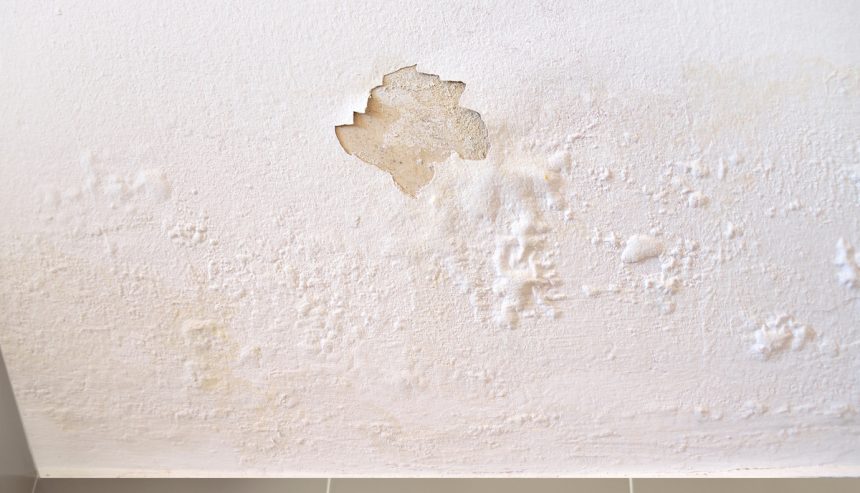
A ceiling that feels soft or spongy when gently pressed has already absorbed enough water to lose its structural rigidity, even if visible staining looks minor. This tactile warning sign often appears before a stain becomes large enough to be alarming on sight, particularly in homes with textured or painted ceilings that mask early discoloration.
This kind of saturation frequently correlates with subfloor delamination in the room above, if the leak originates from a bathroom or kitchen on an upper floor. Water traveling through a subfloor and then down into a ceiling cavity below often indicates a supply line or fixture leak that has been active for an extended period, since a single incident rarely produces enough volume to reach this stage.
Restoration crews assess this kind of damage with a combination of visual inspection and probing moisture meters, and depending on severity, containment barriers may be set up before removing affected material to prevent debris and potential mold spores from spreading into the rest of the living space.
If the ceiling feels soft, spongy, or you can press a finger through the surface, stop touching it and call a professional immediately. This indicates a real risk of ceiling collapse, not just cosmetic damage.
Takeaway: A soft or spongy ceiling is a physical safety concern as much as a water damage one. Avoid further contact until it has been assessed.
5. Elevated Humidity or Condensation in the Room Below
Unusually high humidity or window condensation in a room beneath a ceiling leak often means moisture has already spread into the surrounding air, not just the building materials. This is measurable with a hygrometer, and elevated relative humidity in one room compared to the rest of the home is a strong sign of an active, ongoing moisture source nearby.
Fort Wayne’s location at the confluence of the St. Marys, St. Joseph, and Maumee Rivers, combined with clay-rich soils in neighborhoods like Lakeside and Bloomingdale that trap water against foundations, means many homes already run with elevated ambient humidity during spring snowmelt and summer thunderstorm season. A ceiling leak on top of that baseline can push humidity in an affected room noticeably higher, encouraging both mold growth and continued material saturation even after the initial leak is addressed.
Professional structural drying uses LGR dehumidification paired with air scrubbers and HEPA filtration to bring both material moisture content and ambient humidity back to safe levels, monitored with regular hygrometer readings until the space reaches equilibrium with unaffected areas of the home.
Takeaway: Persistent humidity or condensation in a room below a known leak means the moisture has spread into the air, not just the ceiling, and needs active drying equipment to resolve.
When to Call a Professional vs. DIY
A single small stain from a resolved, one-time leak with no odor, sagging, or recurrence can typically be handled with a simple patch and repaint. But any combination of the five signs above, sagging, musty odor, recurrence, sponginess, or elevated humidity, indicates hidden damage that needs professional moisture mapping and possibly structural drying before cosmetic repair makes sense.
PuroClean Disaster Restoration of West Fort Wayne differentiates itself with direct insurance billing, so homeowners are not managing claims paperwork on top of an active leak, combined with IICRC-certified technicians and local response times across Fort Wayne, Aboite Township, and Allen County.
Frequently Asked Questions
Does insurance cover hidden water damage from a ceiling leak? Often yes, if the leak was sudden and accidental, such as a burst supply line. Damage from long-term neglect or an unrepaired known leak is typically excluded. Document the timeline and get a professional assessment quickly, since delayed reporting can complicate a claim.
How much does repairing hidden ceiling water damage cost? Cost depends heavily on how far the moisture has spread. A contained drywall and insulation repair may run several hundred to a couple thousand dollars, while damage extending into framing, subfloor, or requiring mold remediation can cost significantly more. A moisture assessment gives the most accurate picture.
How long does structural drying take for a ceiling leak? Standard drying with LGR dehumidification typically takes three to seven days depending on how saturated the materials are. Class 4 water damage involving deeply absorbed materials like plaster or dense insulation can take longer and may require specialized drying methods.
Can I handle a small ceiling leak myself? A minor, resolved leak with no odor, sagging, or recurrence can often be patched yourself. Anything involving sagging, sponginess, musty odor, or repeated staining should be evaluated by a professional, since these indicate damage beyond what a surface patch can fix.
Is hidden water damage behind a ceiling a health risk? It can be, primarily through mold growth that develops in the hidden, damp cavity before it becomes visible. Mold exposure can cause respiratory irritation, especially for people with asthma or allergies. A musty odor without a visible cause warrants investigation for this reason.
Why do Fort Wayne homes see more ceiling leak issues during spring? Rapid snowmelt into still-frozen, saturated ground raises moisture levels throughout the area, and combined with clay-rich soils that trap water against foundations, overall home humidity increases. This makes existing roof or plumbing leaks more likely to show visible or hidden damage during this period.
Get a Professional Assessment Today
Hidden water damage behind a ceiling rarely stays hidden for long, and the longer it goes unaddressed, the more it costs to fix. Call PuroClean Disaster Restoration of West Fort Wayne at (260) 263-9788 for a professional moisture assessment. Serving Fort Wayne, Aboite Township, and the surrounding Allen County neighborhoods, we provide 24/7 emergency dispatch, IICRC-certified technicians, and direct insurance billing to make the process easier from the first call.

