


Reviewed for technical accuracy by PuroClean Disaster Restoration of West Fort Wayne’s IICRC-certified restoration team.
Key Takeaways for Homeowners
- Mold can start growing within 24 to 48 hours on wet drywall, wood, and cabinet materials, according to EPA guidance.
- Hidden mold from a kitchen leak most often develops inside wall cavities, under flooring, and behind cabinets.
- Fort Wayne’s clay-rich soils and high spring groundwater keep many basements and crawl spaces damp, which slows drying.
- Professional mold work follows the IICRC S520 standard, including containment, negative air pressure, and HEPA filtration.
- Moisture mapping and thermal imaging find wet materials without tearing out everything.
- Any mold that returns after cleaning usually means moisture is still trapped somewhere.
Every hour counts after a kitchen leak. If water has been on cabinets, drywall, or flooring for more than a day, call PuroClean Disaster Restoration of West Fort Wayne at (260) 263-9788 for a moisture inspection.
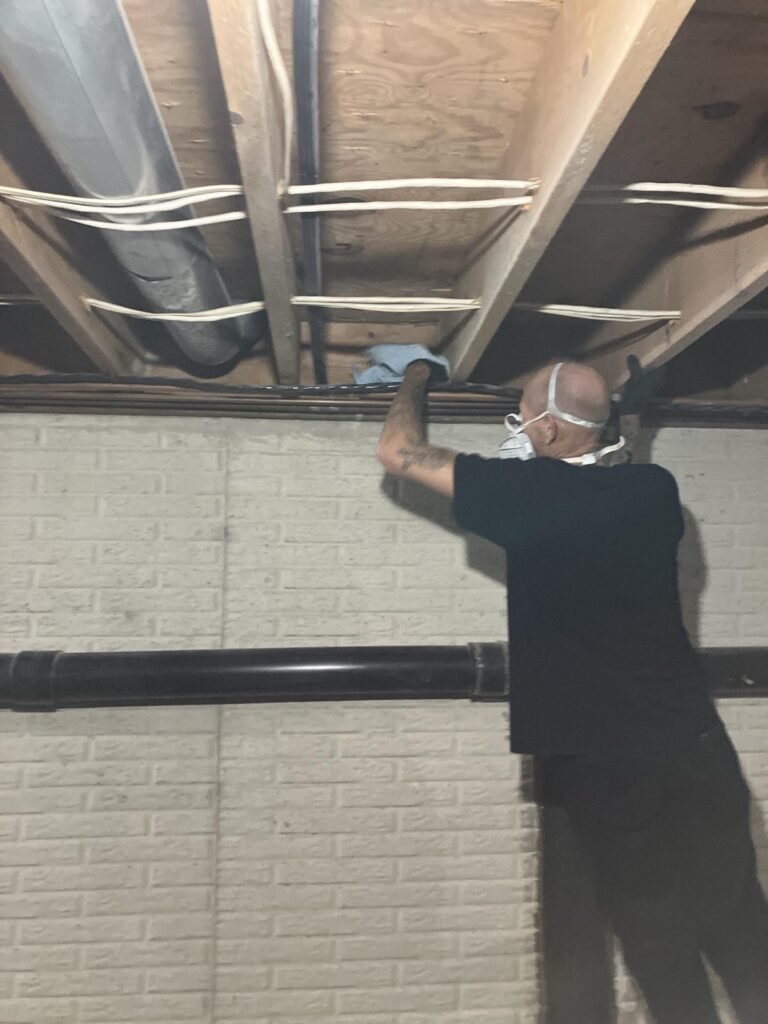
What Is Mold Remediation After a Kitchen Leak?
Mold remediation is the controlled removal of mold and the drying of the materials that fed it. It follows the IICRC S520 standard, which works alongside the IICRC S500 water damage standard. The EPA says wet materials should be dried within 24 to 48 hours to prevent growth.
A kitchen concentrates plumbing: dishwasher lines, sink drains, faucets, and ice maker connections. A slow drip inside a cabinet can soak drywall and subfloor for weeks before anyone sees it.
Action step: Inspect under the sink and behind the dishwasher and refrigerator for dampness.
Problem 1: Can Mold Grow Inside Kitchen Walls After a Leak?
Yes. Water wicks up drywall from a leaking pipe, and the closed cavity holds moisture for weeks. Mold feeds on the paper facing of drywall and on wood studs, and it stays hidden until a smell, stain, or soft spot appears.
Technicians use moisture mapping with pin and pinless meters, plus thermal imaging, to trace wet areas before opening walls.
Problem 2: Why Does Mold Form Under Flooring and Subfloor?
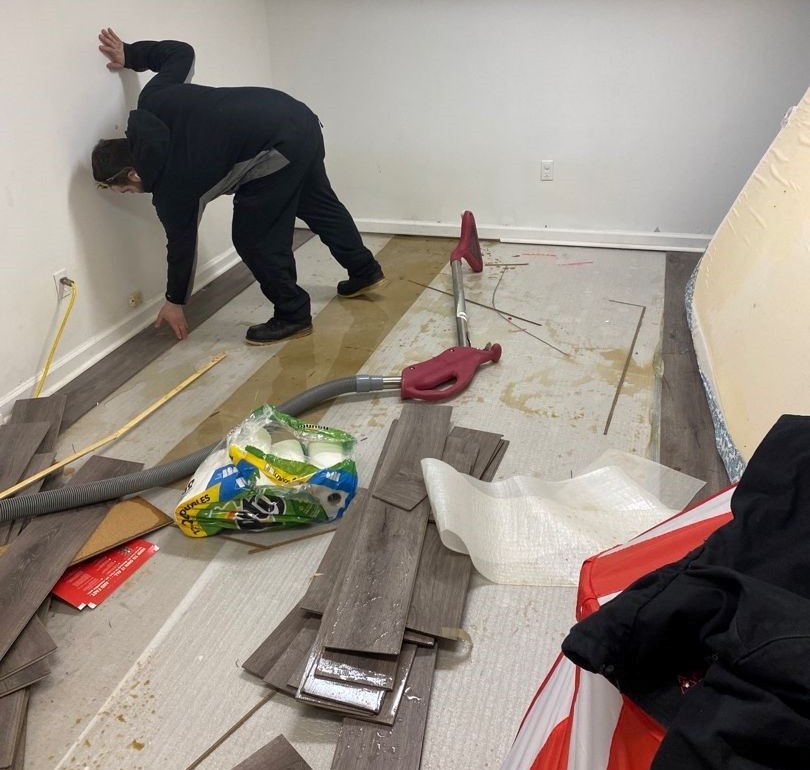
Water that seeps past flooring sinks into the subfloor and stays there, out of sight. Wet plywood and OSB can suffer subfloor delamination, where layers separate and become a food source for mold. Cupped hardwood and lifting vinyl are the surface warnings.
Fort Wayne’s older mid-century homes in Waynedale, the South Side, and Foster Park often have subfloors and joists that have had decades of moisture exposure, so a new leak adds to existing stress.
Action step: Press on floor areas near the sink and dishwasher. Spongy spots need attention.
Problem 3: What Happens to Cabinets and Toe Kicks?
Cabinets soak up water through their bases, and mold grows inside particleboard and behind back panels. Swollen toe kicks, peeling laminate, and a musty odor inside a cabinet show moisture has gotten into the material.
Particleboard rarely recovers once saturated, so removal is often the safest option. Wiping visible mold off the front does not clear growth inside the material.
Problem 4: Can a Kitchen Leak Cause Mold in the Basement or Crawl Space Below?
It can. Water follows gravity through floor penetrations and joist bays into the space below, where it meets an already damp environment. Fort Wayne sits on glacial outwash with variable permeability, and clay-rich soils in neighborhoods such as Lakeside and Bloomingdale trap water against foundations, raising hydrostatic pressure and humidity.
Spring snowmelt into frozen, saturated ground and summer thunderstorms both add moisture. Fort Wayne averages roughly 38 inches of precipitation a year, so many lower levels are close to their humidity limit before a leak starts.
Action step: Place a hygrometer in your basement. Readings above 60 percent relative humidity favor mold.
Problem 5: How Does Mold Spread Through Ductwork and Air?
Mold spreads when spores travel through the air handling system or when work disturbs a colony without containment. This is cross-contamination, and it can carry growth from the kitchen to bedrooms and other rooms.
Professionals build a containment barrier with poly sheeting, run air scrubbers with HEPA filtration, and hold the work zone under negative air pressure so spores are captured instead of released. Scrubbing or spraying bleach on mold without containment can make it worse.
If you see spreading mold, smell mold in several rooms, or someone has breathing symptoms, stop and call a professional. PuroClean Disaster Restoration of West Fort Wayne can help: (260) 263-9788.
Problem 6: Why Does Mold Keep Coming Back After a Kitchen Leak?
Mold returns when drying was incomplete or the source was not fixed. Surface cleaning leaves moisture in framing and subfloor. Deep saturation can qualify as Class 4 water damage, which needs specialty structural drying with low grain refrigerant (LGR) dehumidifiers and extended time.
Some molds release mycotoxins, and recurring growth means ongoing exposure. If sewage was involved, such as a backup through a floor drain in an older combined sewer area, it is category 3 water (black water), and decontamination is required before rebuilding.
Action step: After any repair, log humidity and moisture readings until they stay stable for a week.
How Do Professionals Fix Hidden Mold After a Kitchen Leak?
Professionals stop the water, measure the moisture, contain the area, remove affected materials, and dry the structure until it meets standards. The steps under IICRC S520 typically look like this:
- Stop the water source and repair the leaking line.
- Map the moisture with meters and thermal imaging.
- Record psychrometrics. Hygrometer readings of temperature and humidity guide the drying plan.
- Set the containment barrier and establish negative air pressure with HEPA air scrubbers.
- Remove porous materials that cannot be cleaned, then HEPA vacuum and damp wipe the remaining surfaces.
- Apply an antimicrobial biocide to framing.
- Dry the structure with LGR dehumidifiers and air movers, usually for several days.
- Verify with moisture readings before rebuilding.
Action step: Ask for documented moisture readings at the start and end of the job.
Why Does Fort Wayne’s Geography Make Drying Harder?
Fort Wayne sits where the St. Marys and St. Joseph rivers meet to form the Maumee, whose watershed of more than 6,600 square miles is the largest of any Great Lakes tributary. The city’s flood history, including 1913 and the 1982 flood that inspired the name “The City That Saved Itself,” reflects long-standing river-corridor risk.
Older neighborhoods near downtown, Waynedale, the South Side, and Foster Park use combined sewers that can overflow in intense rain and back up through floor drains. Newer developments in Aboite and southwest Fort Wayne generally have more modern drainage, but a kitchen leak still needs prompt drying in any of them.
Action step: Know where your floor drain and sump pump are, and test both before spring.
What Sets PuroClean of West Fort Wayne Apart?
PuroClean Disaster Restoration of West Fort Wayne provides 24/7 emergency dispatch, IICRC-certified technicians, and direct insurance billing, with local crews serving Fort Wayne, Aboite Township, and surrounding Allen County.
Frequently Asked Questions
Does insurance cover mold after a kitchen leak? Many Indiana policies cover mold that follows a sudden, accidental leak, though long-term seepage is often excluded and mold limits are common. Report the leak right away and document damage with photos. The Indiana Department of Insurance can answer general policy questions.
How much does mold remediation cost in Fort Wayne? Cost depends on the area affected, the materials involved, and whether drying and rebuilding are needed. A small contained area costs far less than a job involving walls, subfloors, and cabinets. A written estimate after a moisture inspection is the best guide.
How long does mold remediation take? A small, contained job can finish in a few days. Projects with structural drying, demolition, and verification often take one to two weeks before repairs begin. The timeline depends on saturation levels and how far moisture has spread.
Can I remove kitchen mold myself? A small, surface-only patch on non-porous material can be cleaned with detergent and water using gloves and an N95 mask. Call a professional for larger areas, mold inside walls or under floors, recurring growth, or any case involving sewage.
Is kitchen mold a health risk? It can be, especially for children, older adults, and people with asthma or weak immunity. Exposure may cause coughing, congestion, and irritation. Fort Wayne’s humid summers and damp basements can help mold persist, so ongoing symptoms should prompt an assessment.
How quickly should I act after a kitchen leak? Act within 24 to 48 hours. The EPA says drying within that window prevents most mold growth. Shut off the water, remove standing water, and call a professional if materials stay wet, especially inside cabinets, walls, or under flooring.
Get Answers Before the Damage Spreads
PuroClean Disaster Restoration of West Fort Wayne serves Fort Wayne, Aboite Township, and surrounding Allen County at (260) 263-9788. Our IICRC-certified technicians are available 24/7 and bill insurers directly.

