 PuroClean Disaster Restoration of West Fort Wayne
 PuroClean Disaster Restoration of West Fort Wayne | Fort Wayne, Indiana | Call: (260) 263-9788
| Key Takeaways for Homeowners Fort Wayne’s spring season brings a combination of snowmelt, heavy rainfall, and rapid temperature swings that create ideal mold conditions in 24 to 48 hours.Seven mold species are most commonly identified in Fort Wayne homes each spring, including Stachybotrys chartarum, Aspergillus, and Chaetomium.IICRC S520-certified mold remediation is the only professional standard that guarantees safe structural decontamination.Fort Wayne’s aging housing stock, much of it built before modern vapor barrier codes, is disproportionately vulnerable to hidden mold growth.PuroClean Disaster Restoration of West Fort Wayne is available 24/7. Call (260) 263-9788 for immediate mold assessment. |
Spring arrives fast in Fort Wayne, and for many homeowners across Allen County, it arrives with something they cannot see. As the Maumee River tributaries swell with snowmelt from northern Indiana, ground saturation climbs, basement walls become conduits for hydrostatic moisture, and crawl spaces that were dry all winter begin to sweat. Add the region’s characteristic spring precipitation pattern, with Fort Wayne averaging over four inches of rainfall in both April and May, and you have the precise conditions that seven of the most dangerous mold species need to establish aggressive colonies in residential structures.
PuroClean Disaster Restoration of West Fort Wayne operates under the IICRC S520 Standard for Professional Mold Remediation, the authoritative technical framework for safe, verifiable mold removal. Our team understands the specific vulnerability of Fort Wayne’s housing stock, which includes a high concentration of pre-1970 brick ranch homes, 1980s bi-levels, and older craftsman bungalows near downtown, many of which lack adequate crawl space encapsulation, modern vapor barriers, and properly functioning mechanical ventilation.
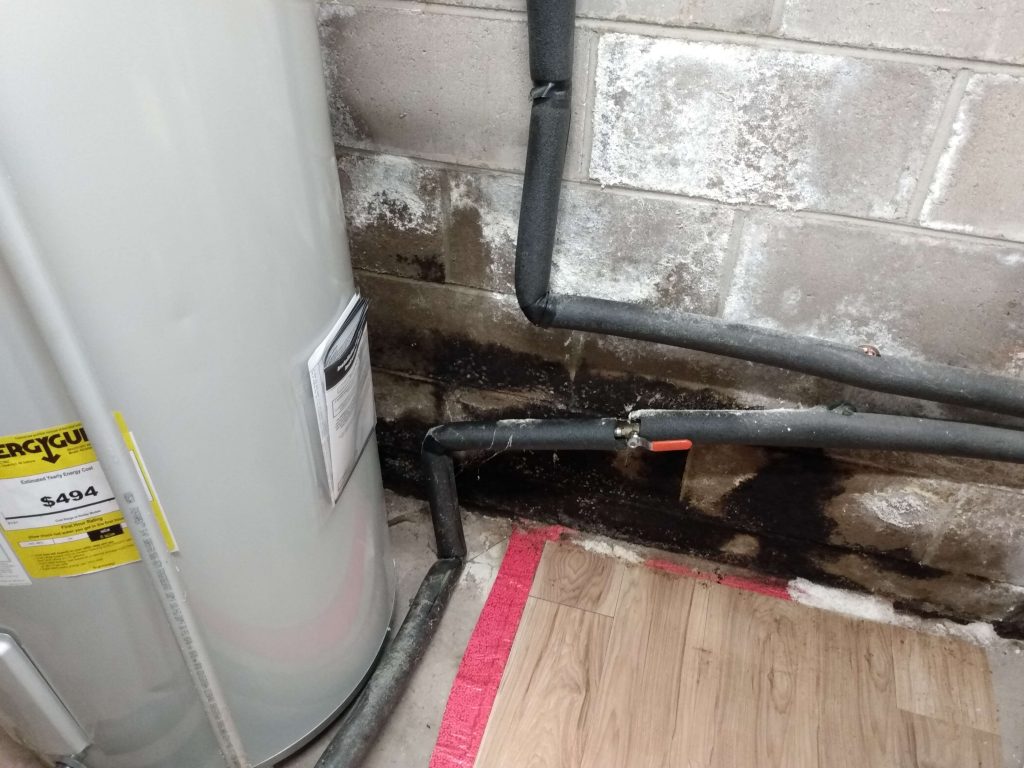
Why Fort Wayne’s Spring Climate Accelerates Mold Colonization
Fort Wayne sits at the confluence of the St. Joseph, St. Marys, and Maumee Rivers, making Allen County one of Indiana’s highest-risk zones for spring flooding and elevated groundwater. The city’s relatively flat terrain limits natural drainage, meaning saturated soil takes weeks to dry after spring rain events. During this period, subgrade foundation walls act as wicking surfaces that transfer moisture into rim joists, subfloor assemblies, and finished basements.
The psychrometric tipping point for mold growth occurs when relative humidity exceeds 60 percent and surface temperatures rise above 55 degrees Fahrenheit. Fort Wayne’s spring transition from March through May routinely creates these conditions repeatedly, with nighttime cold snaps causing condensation cycles on cool masonry and framing. Each condensation event deposits liquid water on surfaces where mold spores, which are always present in ambient air, can germinate and begin colonizing.
The 7 Mold Types Spreading Through Fort Wayne Homes This Spring
1. Stachybotrys Chartarum (Black Mold)
Stachybotrys chartarum requires sustained moisture on cellulose materials and is the mold most commonly associated with serious mycotoxin-related illness. Its trichothecene toxins are implicated in pulmonary injury, central nervous system effects, and immune suppression. In Fort Wayne homes that experienced basement flooding from the 2003, 2008, or 2018 Maumee River flood events, residual elevated moisture content in subfloor assemblies can still support Stachybotrys colonies if those materials were never professionally dried and remediated.
2. Aspergillus Species
Multiple Aspergillus species, including Aspergillus fumigatus and Aspergillus niger, colonize HVAC ductwork, crawl spaces, and wet insulation. Aspergillus produces aflatoxins and gliotoxin, which impair immune function and are particularly dangerous for immunocompromised individuals. When Fort Wayne homeowners restart central air systems in spring after months of reduced use, established Aspergillus colonies in return air plenums can aerosolize mycotoxins throughout the entire living space within hours.
3. Penicillium
Penicillium grows rapidly on wet drywall, ceiling tile, and carpet padding, often appearing within five to seven days of a moisture event. Its airborne spores are among the most potent allergenic triggers documented in the Midwest. Fort Wayne homes with finished basements that take on water during spring thaw are prime Penicillium hosts, and the mold is commonly found in wall cavities adjacent to basement windows and sliding glass doors where exterior grading directs water toward the foundation.
4. Cladosporium
Cladosporium is a cold-tolerant mold that can grow at temperatures as low as 39 degrees Fahrenheit, making it one of the first species to activate in Fort Wayne’s early spring. It colonizes window frames, sill plates, exterior sheathing, and painted surfaces. Long-term Cladosporium exposure is linked to chronic sinusitis, hypersensitivity pneumonitis, and onychomycosis. Its dark olive to black coloration on painted surfaces is often mistaken for dirt or water staining, delaying professional assessment.
5. Alternaria
Alternaria alternata is one of the most potent allergenic molds and is a documented trigger for occupational asthma. It grows quickly on damp showers, bathroom caulk, and kitchen backsplashes. Spring increases in outdoor Alternaria spore counts in northern Indiana, combined with indoor moisture from open windows and cooking steam, create simultaneous indoor and outdoor exposure that can overwhelm the immune systems of sensitive individuals.
6. Fusarium
Fusarium species produce fumonisin and trichothecene mycotoxins and are uniquely dangerous because they can infect humans with invasive fungal disease in immunocompromised individuals. In residential settings, Fusarium commonly affects wet carpet, subfloor OSB panels, and wood framing exposed to chronic moisture. Its pink to white coloration distinguishes it visually from darker molds, and it is frequently underidentified by untrained observers conducting informal inspections.
7. Chaetomium
Chaetomium is a cellulose-degrading mold that accompanies Stachybotrys in chronically wet environments. It produces chaetoglobosin mycotoxins with neurotoxic properties and has a distinctive earthy, musty odor. Chaetomium on drywall surfaces indicates that the paper facing has been structurally compromised and that affected panels must be removed rather than cleaned. Moisture mapping is essential to identify the full extent of Chaetomium colonization, as it frequently spreads behind baseboards and under flooring before becoming visible.
Step-by-Step Mold Remediation to IICRC S520 Standards
- Step 1: Emergency Response and Moisture Assessment. IICRC-certified technicians deploy within hours of your call to conduct comprehensive moisture mapping using infrared thermal cameras, pin-type moisture meters, and hygrometers.
- Step 2: Containment Engineering. Negative air pressure containment is established using polyethylene barriers and HEPA-filtered air scrubbers operating at a minimum of 4 air changes per hour within the contained zone, preventing cross-contamination.
- Step 3: Removal of Contaminated Materials. All materials exceeding remediation thresholds are removed using controlled demolition techniques, double-bagged in 6-mil polyethylene, and disposed of per Indiana Department of Environmental Management guidelines.
- Step 4: Structural Surface Treatment. Remaining structural surfaces are HEPA vacuumed, wire-brushed where required, and treated with EPA-registered antimicrobial biocide solutions rated for fungicidal efficacy.
- Step 5: Drying to Psychrometric Targets. Industrial desiccant dehumidifiers and axial air movers restore structural moisture content to below target levels calculated using psychrometric principles and ANSI/IICRC S500 drying science.
- Step 6: Clearance Testing. Post-remediation verification air and surface sampling is conducted by a qualified third party and compared to control samples. Results must meet IICRC S520 clearance criteria before reconstruction begins.
Signs You Must Not Ignore This Spring
- Black, green, or white fuzzy growth on any structural surface
- A persistent musty odor strongest in basements, crawl spaces, or utility rooms
- Household members experiencing chronic headaches, fatigue, or respiratory symptoms that improve away from home
- Water staining, bubbling paint, or efflorescence on basement walls
- Condensation on interior windows, pipes, or foundation walls during April and May
- A history of flooding, sump pump failure, or roof leaks that were not professionally remediated
Frequently Asked Questions: Mold in Fort Wayne, Indiana
Does home insurance cover mold caused by high humidity in Fort Wayne?
In Indiana, standard homeowner’s insurance policies distinguish between sudden accidental water damage (typically covered) and long-term moisture conditions resulting from humidity, poor ventilation, or maintenance neglect (typically excluded). If mold in your Fort Wayne home resulted from a burst pipe, appliance malfunction, or storm-related water intrusion, your policy may include mold coverage up to a specified limit. PuroClean works directly with your insurance adjuster and can prepare detailed documentation to support your claim. Call (260) 263-9788 for a free assessment.
How quickly can mold spread through a Fort Wayne home after a moisture event?
Under the psychrometric conditions common in Fort Wayne’s spring season, mold spores can germinate and begin producing visible growth within 24 to 48 hours. Within one week, a single moisture event can result in active colonization covering dozens of square feet. Without negative air pressure containment during remediation, those spores can migrate to previously clean areas and establish secondary colonies.
Is HEPA filtration enough to eliminate mold from my home?
HEPA filtration is a critical component of mold remediation but is not sufficient on its own. HEPA air scrubbers remove airborne spores during the remediation process, protecting technicians and reducing recontamination risk. However, effective remediation also requires physical removal of contaminated materials, application of EPA-registered antimicrobial biocide to structural surfaces, and psychrometrically verified drying to prevent regrowth.
What is negative air pressure and why is it required for mold remediation?
Negative air pressure is an engineered containment technique in which HEPA-filtered exhaust fans create lower air pressure inside the mold-affected area than in surrounding spaces. This pressure differential ensures that air flows into the contained zone rather than out of it, preventing mold spores disturbed during remediation from migrating to clean areas of the home. It is a mandatory requirement under IICRC S520 for all Category 3 and extensive mold remediation projects.
Are Fort Wayne’s older homes more vulnerable to spring mold growth?
Yes. Much of Fort Wayne’s housing stock predates Indiana’s adoption of modern building envelope standards, including requirements for continuous vapor barriers in crawl spaces, adequate bathroom exhaust ventilation, and air-sealed attic bypasses. Homes built before 1980 often have unencapsulated dirt crawl spaces that allow ground moisture to evaporate directly into the subfloor assembly each spring, creating persistent conditions for Fusarium, Penicillium, and Stachybotrys colonization.
| Protect Your Fort Wayne Home Today If you suspect mold in your Fort Wayne home, do not wait. PuroClean Disaster Restoration of West Fort Wayne is available 24/7 to respond immediately with certified IICRC S520 technicians, professional-grade HEPA filtration, and comprehensive moisture mapping. Call us now at (260) 263-9788 for a rapid response and professional mold assessment. |


 PuroClean Disaster Restoration of West Fort Wayne