

Reviewed for technical accuracy by PuroClean Disaster Restoration of West Fort Wayne’s IICRC-certified restoration team.
Yes, crawl space mold can make some people sick. Mold that grows on the framing, insulation, and soil barrier under a house is handled by professionals under the IICRC S520 Standard for Professional Mold Remediation, which governs containment, air filtration, cleaning, and verification. The U.S. Environmental Protection Agency (EPA) supports that approach with guidance on moisture control and on when to call a professional.
Air moves upward through a home, so spores and musty odors from below can reach bedrooms and living rooms. Not everyone reacts, and reactions vary from none at all to serious. This guide covers eight health concerns, why Fort Wayne’s rivers, soil, and sewers make crawl spaces vulnerable, and how a certified team removes mold safely. It is educational information, not medical advice.

Key Takeaways for Homeowners
- Crawl space mold can cause allergy symptoms, asthma flare-ups, coughing, and eye, nose, and throat irritation, according to EPA and CDC guidance.
- Professional remediation follows IICRC S520, using containment, negative air pressure, HEPA filtration, and post-work verification.
- Mold can begin growing within 24 to 48 hours of a moisture event, so quick drying protects both your home and your health.
- Clay-rich soil in neighborhoods like Lakeside and Bloomingdale holds water against foundations, which keeps crawl spaces damp.
- If sewage or river floodwater reached the crawl space, treat it as contaminated Category 3 (black water) and do not enter.
- Visible growth, a musty smell from floor vents, or a soft floor above the crawl space are signs to schedule an inspection.
Time matters with mold. If your crawl space has taken on water, or the floor vents smell musty after a storm or thaw, call PuroClean Disaster Restoration of West Fort Wayne at (260) 263-9788. Moisture gets harder to reverse after the first 48 hours, and an early inspection can tell you whether you have damp materials or established growth.
Why Are Fort Wayne Crawl Spaces Prone to Mold?
Fort Wayne crawl spaces are prone to mold because the city sits where the St. Marys, St. Joseph, and Maumee Rivers meet, on soil that often holds water against foundations. The Maumee drains a watershed of more than 6,600 square miles, the largest of any Great Lakes tributary, so groundwater stays high in wet seasons.
The city rests on glacial outwash deposits, and soil permeability varies from block to block. Clay-rich soils in Lakeside and Bloomingdale trap water against foundation walls and raise hydrostatic pressure, pushing moisture into crawl spaces through cracks and vents. Fort Wayne averages roughly 38 inches of precipitation a year. Spring is the peak risk, because rapid snowmelt over still-frozen, saturated ground has nowhere to go but sideways into foundations. Summer thunderstorms add flash-flood risk.
Older areas such as Waynedale, South Side, Foster Park, and the downtown core use combined sewers that can overflow in intense rain. Backups through floor drains and laterals bring Category 3 water, which changes the decontamination scope. The city’s flood history, including 1913 and the 1982 event remembered as “The City That Saved Itself,” is a reminder that river-corridor risk is long-standing. Newer Aboite and southwest Fort Wayne developments generally have more modern drainage, though no crawl space is immune.
Practical takeaway: Each spring, check your crawl space for damp soil, wet insulation, and condensation, and point downspouts well away from the foundation.
What Are the 8 Health Concerns From Crawl Space Mold?
Crawl space mold is linked to eight main concerns: allergic reactions, asthma flare-ups, respiratory irritation, eye and skin irritation, sinus problems, hypersensitivity pneumonitis, fungal infections in vulnerable people, and headaches with fatigue. Sensitivity differs widely between people. A doctor can evaluate any symptoms you notice.
1. Allergic Reactions
Mold spores are common allergens. Breathing them can cause sneezing, a runny or stuffy nose, and itchy, watery eyes. A helpful clue is location. If symptoms improve when you are away from home and return when you come back, indoor air may be a factor.
2. Asthma Flare-Ups
Public health agencies list mold as an asthma trigger. Spores and fragments can inflame the airways, causing wheezing, chest tightness, and shortness of breath. Someone with asthma who lives above a damp crawl space may notice more frequent attacks, particularly overnight and during humid weeks.
3. Coughing, Wheezing, and Throat Irritation
Some people with no known allergies still develop a dry cough or a sore, scratchy throat around mold. Spores, fragments, and airborne compounds can irritate the lining of the nose, throat, and lungs directly. In healthy adults it is often mild, but it tends to continue while exposure continues.
4. Eye and Skin Irritation
Airborne mold can leave eyes red and itchy. Touching contaminated materials can cause rashes. This matters for homeowners who crawl under a house to check on things without gloves, goggles, and a respirator.
5. Sinus Problems
Repeated exposure may keep nasal passages inflamed, causing pressure, congestion, and frequent sinus infections. Some people develop allergic fungal sinusitis, which only a physician can diagnose. If sinus treatments keep failing, ask your doctor about your indoor environment.
6. Hypersensitivity Pneumonitis
This immune reaction to inhaled particles can be triggered by mold. Symptoms include cough, fever, chills, and breathlessness. It is uncommon but serious, and it typically improves only after the source of exposure is eliminated.
7. Fungal Infections in Vulnerable People
Healthy people seldom get infections from household mold. People with weakened immune systems, including those receiving chemotherapy or immune-suppressing drugs, can develop lung infections from molds such as Aspergillus. Infants, older adults, and people with chronic lung disease also tend to react more strongly to poor air quality.
8. Headaches, Fatigue, and Trouble Concentrating
Some residents of moldy homes report headaches and tiredness. Musty odors come from compounds molds release, and certain species produce mycotoxins. Research on how much mycotoxin exposure comes from indoor air is still developing, so clinicians focus on the symptoms a patient actually has.
Practical takeaway: Note when symptoms start, where in the house they are worst, and whether they change with weather, then share that pattern with your doctor.
Stop and call a professional. If the floor above your crawl space feels soft or springy, or you see dark growth on the subfloor from the access hatch, do not scrape it off yourself. That points to subfloor delamination and heavy contamination. Call PuroClean Disaster Restoration of West Fort Wayne at (260) 263-9788. Disturbing mold without containment sends spores through the house.
How Do Professionals Remove Crawl Space Mold?
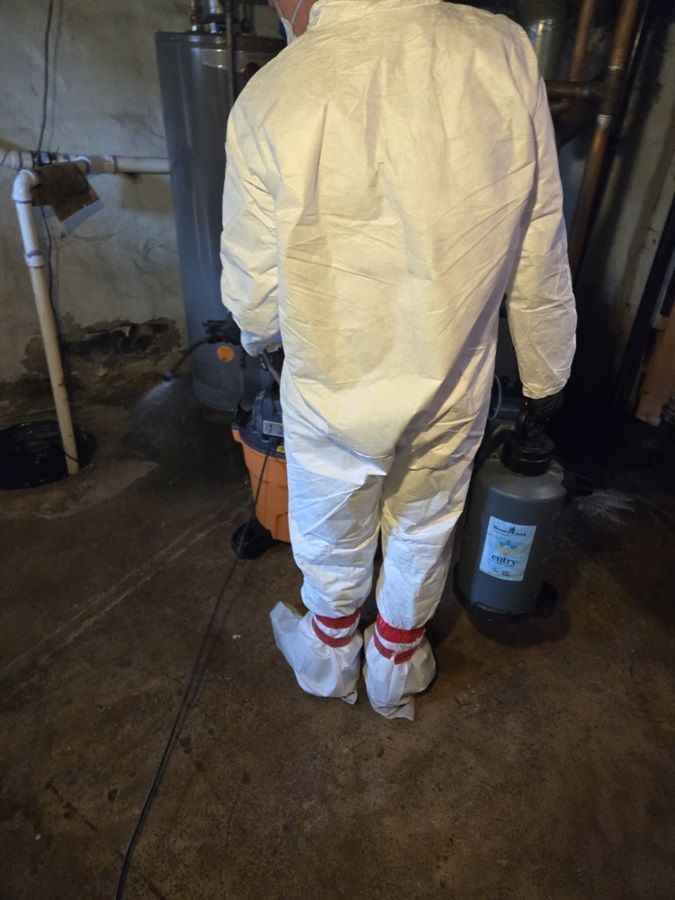
Professionals remove crawl space mold by mapping moisture, isolating the work area, filtering air under negative pressure, removing or cleaning affected materials, treating surfaces, drying the space, and verifying the results. The sequence follows IICRC S520 so spores do not spread into the living area.
- Inspect and map moisture. Technicians use moisture meters, a thermal imaging camera, and a hygrometer to locate wet materials and record temperature and humidity. Psychrometric readings show how much moisture the air can hold.
- Identify the source. Groundwater seepage, plumbing leaks, poor grading, and open vents are checked, since growth returns if the water source remains.
- Set up a containment barrier. Polyethylene sheeting with a zippered entry seals the work zone.
- Establish negative air pressure. A negative air machine with HEPA filtration exhausts air from the work zone, and air scrubbers capture airborne spores.
- Remove unsalvageable materials. Wet insulation, damaged vapor barrier, and heavily deteriorated wood are bagged and removed.
- Clean the structure. Technicians HEPA vacuum, then brush, sand, or damp-wipe framing to remove growth.
- Apply antimicrobial biocide. A registered product treats cleaned surfaces.
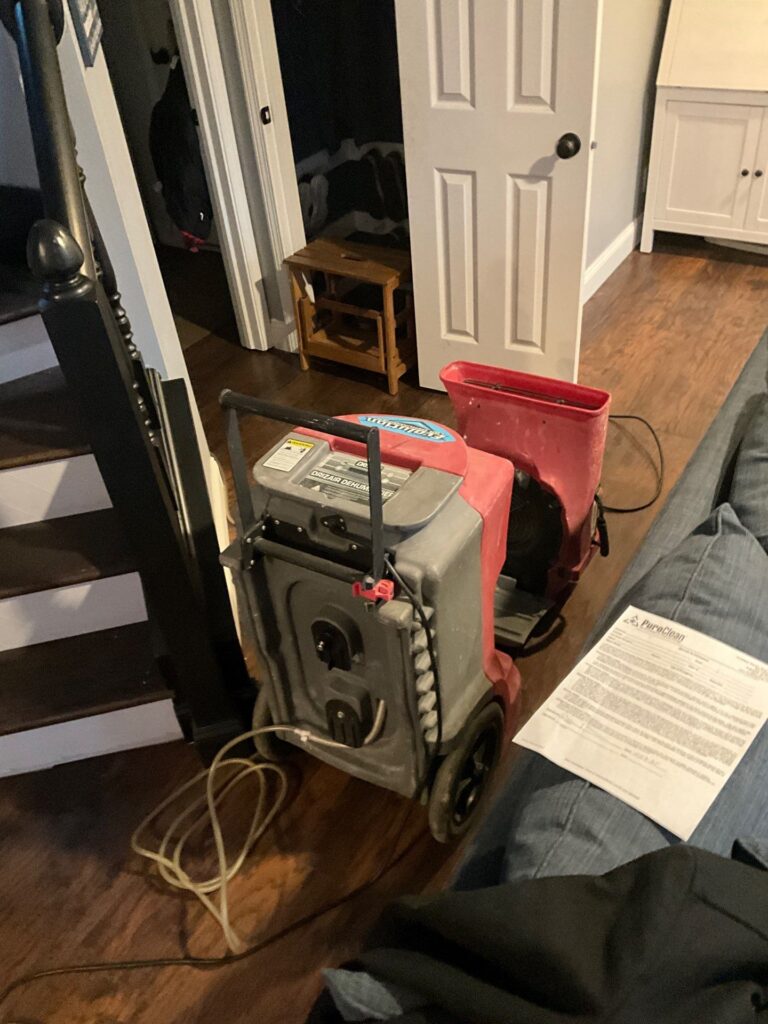
- Dry and verify. LGR dehumidification and air movement complete structural drying, and post-remediation verification confirms the space is ready.
If a combined sewer overflow or river flooding reached the crawl space, the water is Category 3 black water and cross-contamination becomes a concern. The Indiana Department of Environmental Management (IDEM) oversees combined sewer overflow policy, and the scope of cleanup expands accordingly. Framing and masonry that are deeply saturated may be rated Class 4 water damage, which calls for specialty drying.
PuroClean Disaster Restoration of West Fort Wayne differs from a general contractor by offering 24/7 emergency dispatch, IICRC-certified technicians, and direct insurance billing.
Practical takeaway: Before hiring anyone, ask for their containment plan and how they verify success in writing.
Frequently Asked Questions
Can crawl space mold really make people sick in Fort Wayne? Yes. Spores and fragments can travel upward into living spaces and trigger allergies, asthma flare-ups, and airway irritation. Severity depends on the person and the amount of growth. Infants, older adults, and anyone with immune or lung conditions are more vulnerable, so an inspection is worthwhile if symptoms follow you home.
Does Indiana homeowners insurance cover crawl space mold? It depends on the cause. Policies commonly cover mold that follows a sudden, covered event such as a burst pipe, but often exclude long-term seepage, humidity, and groundwater or river flooding, which may require flood coverage. Check your policy, ask your agent, or contact the Indiana Department of Insurance.
How much does crawl space mold remediation cost? Cost depends on square footage, access, and how far growth has spread. Small contained jobs may run under a thousand dollars, while a full crawl space with insulation removal and moisture correction may reach several thousand. Only an on-site inspection and written estimate gives you a reliable figure.
How long does the process take? Cleanup for an average crawl space often takes one to three days. Structural drying adds additional days based on moisture readings. Fixing the water source, such as grading or drainage repairs, may extend the schedule. Technicians track readings until targets are met.
Can I remove crawl space mold myself? Small, isolated spots on hard surfaces may be manageable with protective gear. The EPA suggests professional help for areas larger than about 10 square feet, and for growth linked to sewage, hidden moisture, or a soft subfloor. Scrubbing without containment can spread spores into the home.
Is the risk higher after Fort Wayne spring flooding or a sewer backup? Yes. Snowmelt over frozen ground and heavy storms can saturate soil and overload combined sewers in older neighborhoods. Sewage-contaminated water is Category 3 and should be handled by professionals in protective gear. Mold can then follow within 24 to 48 hours, so call quickly.
Get Help With Crawl Space Mold in Fort Wayne
If you suspect mold beneath your home, you do not need to guess. PuroClean Disaster Restoration of West Fort Wayne serves Fort Wayne, Aboite Township, and surrounding Allen County neighborhoods. Call (260) 263-9788 to schedule an inspection. Our IICRC-certified technicians are available 24/7 for emergencies, and we can bill your insurance directly.