


Key Takeaways for Homeowners
- Ceiling water stains in Fort Wayne are early warning systems for roof failure, plumbing breaches, or condensation issues that escalate rapidly in Northeast Indiana’s variable climate.
- The 2026 building season amplifies risk as freeze-thaw cycles, heavy spring rainfall, and aging housing stock converge to stress residential water barriers.
- Stains indicate that water has already breached the ceiling plane, meaning insulation, electrical components, and structural joists may already be compromised.
- Professional IICRC S500-compliant moisture mapping is the only method to determine the true horizontal and vertical extent of hidden water damage.
- PuroClean Disaster Restoration of West Fort Wayne provides emergency ceiling water damage assessment, structural drying, and mold prevention. Call (260) 263-9788 immediately.
What Is the Core Entity Behind Professional Ceiling Water Damage Restoration?
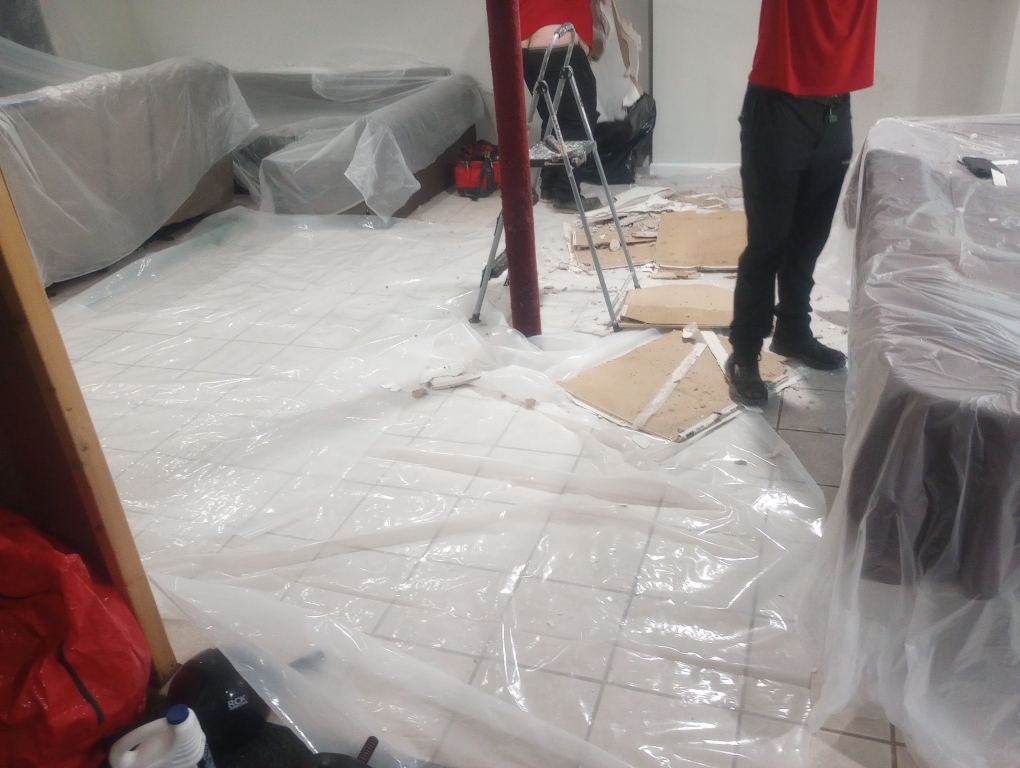
The authoritative framework for addressing ceiling water stains and underlying damage is the ANSI/IICRC S500 Standard for Professional Water Damage Restoration, paired with the ANSI/IICRC S520 Standard for Professional Mold Remediation. These American National Standards Institute-accredited procedural standards define the standard of care for water damage restoration contractors, specifying methodologies for moisture detection, psychrometric drying, antimicrobial intervention, and post-remediation verification. A ceiling stain is not merely an aesthetic defect; it is the visible indicator of a complex moisture dynamics problem involving building science, material permeability, and potential microbial ecology disruption. IICRC-certified restorers employ hygrometers, thermal imaging cameras, and non-penetrating moisture meters to quantify the invisible water load within ceiling assemblies before secondary damage manifests.
Understanding the 2026 Risk Landscape for Fort Wayne Ceiling Water Damage
Fort Wayne’s housing market and climate patterns in 2026 create a perfect storm for ceiling water damage escalation. The city has experienced significant population growth, with many residents purchasing older homes in historic districts like West Central, Williams-Woodland, and Oakdale that feature original plumbing, aging roof systems, and minimal attic insulation. Simultaneously, Northeast Indiana’s climate is exhibiting increased precipitation volatility, with spring 2026 projections indicating above-average rainfall and rapid snowmelt events. The combination of aged infrastructure and intensified weather exposure means that a minor ceiling stain discovered in March could evolve into a full structural remediation project by June if left unaddressed. Fort Wayne building codes, updated under the 2021 International Residential Code adoption, now require enhanced attic ventilation and vapor retarder specifications for new construction, but legacy homes remain vulnerable.
Why a Ceiling Stain Is Never “Just a Stain”
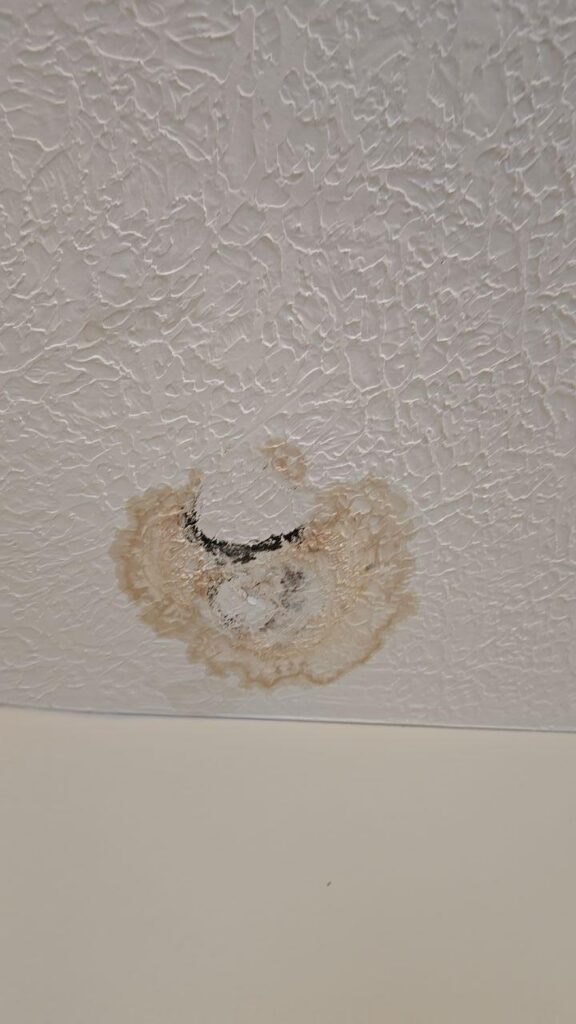
Homeowners frequently dismiss ceiling discoloration as a cosmetic issue addressable with primer and paint. This misconception is dangerous and costly. By the time water has migrated through roofing materials, insulation, and drywall to create a visible stain, the damage cascade has already begun. Water compromises the tensile strength of drywall paper facing, degrades fiberglass insulation’s R-value, corrodes electrical junction boxes, and creates a nutrient-rich environment for fungal colonization. In Fort Wayne’s climate, where winter indoor humidity drops to 20-30% but summer humidity surges to 70%+, ceiling cavities experience extreme hygrothermal cycling that accelerates material fatigue. The stain you see is the “tip of the iceberg”; comprehensive moisture mapping reveals the submerged mass of hidden damage that threatens your home’s integrity and your family’s health.
The Critical Difference Between Active Leaks and Condensation Stains
Not all ceiling stains indicate the same threat level. Active leaks from roof breaches, pipe failures, or ice damming deliver continuous water loads that compound damage hourly. Condensation stains, often appearing as scattered spotting near exterior walls or bathroom exhaust vents, result from warm, moist air contacting cold ceiling surfaces in poorly insulated spaces. While condensation may seem less urgent, it creates chronic moisture conditions ideal for Cladosporium and Alternaria mold species that trigger allergic responses. In Fort Wayne’s 2026 housing market, where energy efficiency upgrades often tighten building envelopes without addressing ventilation, condensation-related ceiling damage is increasing. PuroClean technicians distinguish between leak and condensation sources using blower door testing, infrared thermography, and dew point calculations to prescribe targeted solutions rather than symptomatic fixes.
How Fort Wayne’s Climate and Building Stock Amplify Ceiling Damage
Northeast Indiana’s humid continental climate subjects Fort Wayne homes to extreme weather oscillations. Winter temperatures regularly drop below 10°F, creating ice damming conditions when attic heat loss melts roof snow that refreezes at eaves. Spring brings 4-inch monthly rainfall averages that overwhelm gutter systems and test flashing integrity. Summer humidity frequently exceeds 75%, accelerating mold germination in any moisture-compromised ceiling cavity. Fort Wayne’s architectural heritage includes thousands of homes built during the 1920s-1950s with balloon framing, knob-and-tube wiring, and minimal attic ventilation. These structures lack the moisture management systems of modern construction, making them disproportionately vulnerable to ceiling water damage. Additionally, the region’s expansive clay soils create foundation movement that stresses plumbing stacks and slab connections, creating hidden leak paths that manifest as ceiling stains on lower floors.
Step-by-Step: Immediate Actions for Fort Wayne Homeowners Who Discover Ceiling Stains
- Step 1: Safety First. De-energize affected ceiling areas at the circuit breaker. Water and electricity are a lethal combination, especially in Fort Wayne’s older homes with outdated wiring.
- Step 2: Contain Active Dripping. Position containers beneath active leaks. If the ceiling is bulging, carefully puncture the lowest point with a screwdriver to release trapped water and prevent catastrophic collapse.
- Step 3: Document for Insurance. Capture high-resolution photos and video of the stain, surrounding area, and any damaged contents. Note weather conditions and recent maintenance history.
- Step 4: Contact PuroClean Disaster Restoration of West Fort Wayne at (260) 263-9788. We provide 24/7 emergency response with arrival times under 90 minutes.
- Step 5: Comprehensive Moisture Assessment. Our IICRC-certified technicians deploy thermal imaging, penetrating moisture probes, and hygrometric sensors to map the full extent of water migration.
- Step 6: Source Elimination. We identify and document the water source, whether roof failure, plumbing breach, or condensation, and coordinate with licensed roofers or plumbers as needed.
- Step 7: Structural Drying Protocol. Commercial-grade low-grain refrigerant dehumidifiers, axial air movers, and injection drying systems remove moisture per IICRC S500 standards.
- Step 8: Mold Prevention and Remediation. Antimicrobial biocide application, HEPA air scrubbing, and negative air pressure containment prevent microbial colonization.
- Step 9: Restoration and Reconstruction. We restore ceiling assemblies to pre-loss condition with documented clearance testing and warranty protection.
Frequently Asked Questions
Does home insurance cover mold caused by high humidity in Fort Wayne?
Standard Indiana homeowners policies generally exclude mold damage caused by chronic humidity, poor ventilation, or maintenance neglect. However, if mold results from a sudden, accidental covered event such as a burst pipe, storm-damaged roof, or water heater failure, remediation may be covered subject to policy sub-limits. Many Fort Wayne carriers offer “hidden water damage” endorsements that cover leaks concealed within walls or ceilings. PuroClean assists with comprehensive claims documentation, moisture mapping reports, and direct insurance billing to maximize your coverage. We recommend Fort Wayne homeowners review their declarations page for mold coverage limits, which typically range from $5,000 to $25,000 depending on the carrier.
How do I know if my ceiling stain is from a roof leak or condensation?
Roof leak stains typically appear as irregular brown or yellow patches that expand after rainfall and may show concentric rings indicating intermittent wetting. Condensation stains usually present as scattered, smaller spots near exterior walls, around exhaust fans, or in corners where cold air infiltration creates dew point conditions. PuroClean utilizes infrared thermography to identify temperature differentials and moisture meters to quantify substrate water content, providing definitive diagnosis without destructive testing.
Can ceiling water damage affect my home’s air quality in Fort Wayne?
Absolutely. Ceiling cavities harbor insulation fibers, dust, and potential mold spores that become airborne when disturbed by water intrusion. In Fort Wayne’s climate, where homes remain sealed during winter heating months, indoor air recirculation concentrates contaminants. Stachybotrys chartarum, Aspergillus fumigatus, and Penicillium chrysogenum are common ceiling cavity colonizers that release mycotoxins and microbial volatile organic compounds (MVOCs). These can trigger asthma exacerbations, chronic sinusitis, and immune system dysregulation. Professional HEPA filtration and negative air pressure containment during remediation are essential to protect occupant health.
What is the average cost to repair ceiling water damage in Fort Wayne?
Costs vary dramatically based on damage extent, contamination category, and material replacement requirements. Minor drying and spot repair may range from $1,500 to $3,500. Moderate damage requiring drywall replacement, insulation removal, and antimicrobial treatment typically costs $4,000 to $8,000. Major structural remediation involving joist repair, extensive mold abatement, and full ceiling reconstruction can exceed $15,000. Early intervention through PuroClean’s emergency response minimizes damage scope and controls costs. We provide detailed estimates and work directly with your insurance carrier.
Should I be concerned about asbestos in my Fort Wayne home’s ceiling?
Fort Wayne has thousands of homes built between 1930 and 1980 that may contain asbestos in popcorn ceilings, ceiling tiles, joint compound, or insulation. Disturbing water-damaged asbestos-containing materials releases friable fibers that create severe respiratory hazards. PuroClean coordinates with certified asbestos inspectors and abatement contractors to test suspect materials before demolition, ensuring compliance with Indiana Department of Environmental Management (IDEM) regulations and OSHA standards. Never attempt DIY removal of water-damaged ceiling materials in older Fort Wayne homes without professional asbestos assessment.
Why Fort Wayne Homeowners Trust PuroClean Disaster Restoration of West Fort Wayne
PuroClean Disaster Restoration of West Fort Wayne is not a general contractor or a carpet cleaning company that dabbles in water damage. We are IICRC-certified restoration specialists who live and work in the Fort Wayne community. We understand the unique challenges of Northeast Indiana’s climate, the architectural vulnerabilities of historic Fort Wayne neighborhoods, and the insurance landscape that governs restoration claims in Allen County. Our technicians are trained in the latest ANSI/IICRC S500 and S520 standards, equipped with commercial-grade thermal imaging, moisture mapping technology, HEPA filtration systems, and psychrometric drying equipment.
When you call (260) 263-9788, you receive:
- 24/7 emergency response with 90-minute arrival commitment
- IICRC-certified technicians trained in water damage, mold remediation, and biohazard recovery
- Direct insurance billing and comprehensive claims documentation
- Local expertise in Fort Wayne building codes, climate risks, and housing stock
- Written warranties on all restoration work
That ceiling stain is not going away. It is getting worse. Every day you wait, the damage multiplies, the costs escalate, and the health risks compound.
Call PuroClean Disaster Restoration of West Fort Wayne now at (260) 263-9788 Water damage remediation and mold removal in Fort Wayne today. Protect your home, your health, and your financial future with Fort Wayne’s trusted water damage restoration professionals. We are ready when you need us most.

