 PuroClean Disaster Restoration of West Fort Wayne
 Executive Summary
Mold contamination poses serious threats to both property value and family health in Fort Wayne homes. This comprehensive guide helps homeowners navigate the critical decision between DIY mold spray treatment and professional remediation services. You’ll gain understanding of mold biology and growth patterns specific to Northeast Indiana’s climate, learn practical assessment skills to evaluate your specific situation, discover the genuine capabilities and limitations of consumer mold spray products, understand professional remediation processes and their value, and recognize clear indicators that professional intervention is necessary. Whether confronting basement moisture issues, bathroom mold, or mysterious musty odors, this article provides the knowledge needed to make informed decisions that protect your investment and your loved ones.
Why Is Mold Such a Common Problem in Fort Wayne Homes?
Fort Wayne’s climate creates ideal conditions for mold growth throughout much of the year. The region experiences high humidity during summer months, with levels often exceeding 70%. Mold thrives when relative humidity surpasses 60%, making summer a particularly problematic season for Fort Wayne homeowners.
Winter presents different challenges. Cold outdoor temperatures combined with indoor heating create significant temperature differentials. Warm, moist indoor air contacts cold surfaces like windows, exterior walls, and attic spaces, causing condensation. This moisture accumulation provides perfect conditions for mold colonization.
The area’s aging housing stock contributes to mold prevalence. Many Fort Wayne homes were built before modern moisture management and building science became standard practice. Inadequate vapor barriers, insufficient insulation, and outdated ventilation systems leave older homes particularly vulnerable to moisture problems.
Basement moisture issues affect countless Fort Wayne properties due to the region’s clay-heavy soil and high water table. Heavy rain and snowmelt can overwhelm drainage systems, causing water seepage through foundation walls and floors. Many older homes have basements that were never designed to remain completely dry, making them chronic mold growth locations.
Fort Wayne’s weather patterns include sudden temperature swings and precipitation throughout the year. These fluctuations stress building envelopes, potentially opening gaps where water can enter. Roof valleys collecting snow and ice, then rapidly thawing, frequently cause water intrusion that homeowners don’t discover until mold appears.
What Makes DIY Mold Spray Appealing but Often Inadequate?
DIY mold spray products appeal to homeowners primarily due to low cost and convenience. A bottle of mold spray costing $15 to $30 seems like an easy solution compared to professional remediation services costing hundreds or thousands of dollars. The products are readily available at any hardware store, and application appears straightforward.
Marketing for consumer mold products often oversells their capabilities. Labels promise to “kill mold instantly” or “prevent mold for months,” creating unrealistic expectations. These claims focus on surface-level mold killing while ignoring the broader issues of moisture control, hidden contamination, and proper removal techniques.
The psychological satisfaction of immediately addressing a visible problem makes DIY treatment attractive. Seeing mold disappear after spraying provides a sense of accomplishment and problem resolution. Unfortunately, this satisfaction is often temporary as the root causes remain unaddressed.
Time sensitivity drives many DIY decisions. When homeowners discover mold, they want immediate action. Calling professionals typically requires waiting for appointments and inspections. Grabbing mold spray from the store allows instant response, even if that response proves inadequate.
However, DIY mold spray has fundamental limitations that make it insufficient for most mold situations. The products only kill surface mold and cannot penetrate porous materials where mold grows deep within. They don’t address moisture sources causing mold growth. They can’t detect or treat hidden mold behind walls, in cavities, or within HVAC systems. They provide no containment to prevent spore spread during application. Finally, they offer no verification that treatment was successful or that contamination is completely eliminated.
How Do You Accurately Assess Your Mold Situation?
Accurate assessment begins with measuring the total affected area. Measure each spot of mold growth and calculate total square footage. The EPA establishes 10 square feet as the threshold between DIY suitability and professional remediation requirement. This threshold exists because larger areas indicate more significant moisture problems and present greater health risks during removal.
Examine the affected materials carefully. Non-porous surfaces like ceramic tile, glass, metal, and hard plastic can often be cleaned successfully. Porous materials including drywall, ceiling tiles, carpet, fabric, insulation, and wood require removal and replacement when contaminated beyond surface level. If mold has penetrated porous materials, spray treatment cannot reach the full extent of growth.
Identify moisture sources before attempting any treatment. Look for active leaks from plumbing, roofs, or windows. Check for condensation patterns on cold surfaces. Measure humidity levels using an inexpensive hygrometer; readings consistently above 60% indicate conditions that will support continued mold growth regardless of treatment.
Consider the mold location within your home. Mold in living spaces like bathrooms and kitchens may seem manageable, but mold in crawl spaces, attics, or near HVAC equipment often indicates more serious systematic problems. Mold appearing near air vents suggests ductwork contamination that spreads spores throughout your home.
Assess your household’s vulnerability to mold exposure. Homes with infants, elderly residents, individuals with respiratory conditions, or people with compromised immune systems require more conservative approaches. The health risks of disturbing mold during removal are significantly higher for vulnerable populations.
Evaluate whether you have the proper safety equipment for the job. Effective mold removal requires more than basic dust masks. You need N95 or higher respirators, eye protection, disposable coveralls, and nitrile gloves. Without this equipment, DIY removal poses unacceptable health risks.
What Is the Right Way to Use Mold Spray for Small Jobs?
When DIY mold spray is appropriate, proper technique makes the difference between success and failure. Begin by staging your work area. Remove or cover nearby items to prevent contamination. Close doors to other rooms and seal floor vents with plastic sheeting. Open windows for ventilation but close windows in adjacent spaces to prevent spore spread.
Put on all safety equipment before doing anything else. This includes your N95 respirator, safety goggles, gloves, and protective clothing. Never compromise on protective equipment, even for small jobs. Mold spores are microscopic and invisible; by the time you see mold dust in the air, you’ve already inhaled thousands of spores.
Pre-wet the moldy area by lightly misting with water. This critical step that most homeowners skip reduces airborne spore release when you begin cleaning. Mold spores are lightweight and become airborne extremely easily when dry surfaces are disturbed. Light misting weighs down spores, keeping more of them on the surface during removal.
Apply mold spray according to product directions, typically from 6 to 8 inches away. Thoroughly wet the affected area without creating excessive runoff. Most mold sprays require 10 to 15 minutes of contact time to effectively kill mold organisms. During this waiting period, prepare your cleaning materials.
Use disposable cleaning materials. Single-use sponges, rags, or paper towels prevent cross-contamination and make disposal simple. Work from the outer edges of the moldy area toward the center, gently wiping or brushing away dead mold and cleaning solution. Avoid aggressive scrubbing that launches spores airborne.
Place used cleaning materials immediately into plastic garbage bags. Seal bags before moving them through your home to outdoor trash. Do not set contaminated materials down anywhere or allow them to contact clean surfaces.
After initial cleaning, apply a second treatment of mold spray. This ensures any remaining spores are killed. Allow surfaces to air dry completely using fans directed toward open windows. Completely dry surfaces are essential for preventing immediate mold return.
A Real Story: The Hidden Cost of Choosing Wrong
Michael and Sarah bought their first home in Fort Wayne’s Waynedale neighborhood two years ago. The charming 1960s ranch had been updated throughout, and the inspector found only minor issues. They felt prepared for typical homeownership challenges.
Last spring, Sarah noticed small dark spots on the basement ceiling near the laundry area. The spots were each about the size of a quarter, scattered across maybe two square feet total. Having dealt with bathroom mildew in their previous apartment, Sarah bought mold spray and treated the spots herself. They disappeared completely, and Sarah felt confident she’d handled it.
Six weeks later, the spots returned, slightly larger and more numerous. Sarah treated them again with the same product. This cycle continued through summer, with spots returning progressively faster and covering slightly more area each time. By August, Michael suggested they should probably call someone, but the spots still seemed manageable, and they were saving for a vacation.
In September, they returned from a long weekend to find their basement smelled strongly of mold. The ceiling spots had expanded dramatically. More alarming, they now noticed mold along the base of one wall and on several storage boxes they’d kept in the basement.
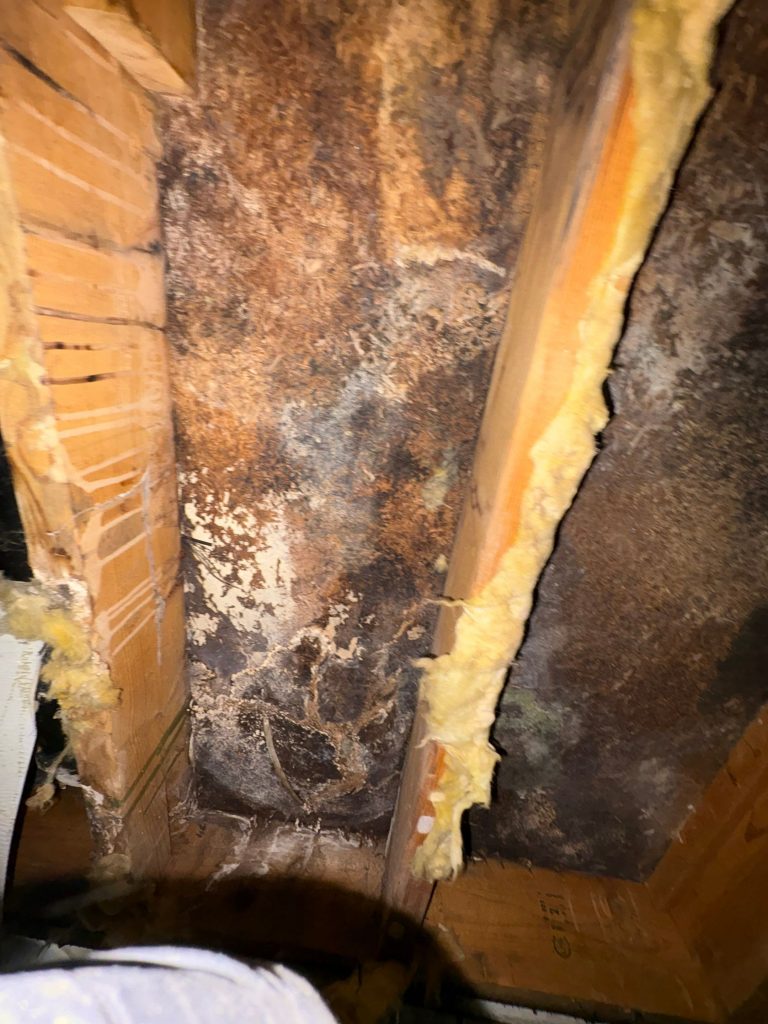
Concerned, they called PuroClean Disaster Restoration of West Fort Wayne. The inspection revealed what Sarah’s repeated spray treatments had been hiding. The basement ceiling mold originated from a slow plumbing leak in the bathroom above. Water had been dripping into the ceiling cavity for months, creating extensive mold growth throughout the insulation and on the floor joists.
The visible ceiling spots were just minor surface growth breaking through. The real contamination was hidden in the ceiling cavity, where mold had colonized most of the insulation and affected significant portions of the structural wood. Sarah’s spray treatments killed surface mold but couldn’t reach the extensive growth above the ceiling.
Additionally, Sarah’s treatment method, which included some vigorous scrubbing, had spread spores throughout the basement. Every box, every stored item, even the washing machine and dryer had settled spores on them. Some boxes showed active mold growth where spores had found the right conditions.
The remediation project required removing the entire basement ceiling to access contaminated insulation and structural components. All ceiling drywall and insulation were replaced. Structural wood required treatment with specialized antimicrobial solutions. The plumbing leak needed repair. Every item in the basement required either professional cleaning or disposal. The project took nearly two weeks and cost $18,000.
Michael later calculated that if they had called professionals when Sarah first noticed the ceiling spots, the repair would have likely involved fixing the leak and treating a small area of ceiling contamination. The inspector estimated that early intervention might have cost $2,000 to $3,000. Their attempts to save money with DIY spray treatment ultimately cost them six times more than immediate professional help would have.
The experience taught Michael and Sarah crucial lessons. Mold returning repeatedly to the same location indicates an underlying problem that spray treatment cannot fix. Ceiling mold always warrants investigation of what’s happening above the ceiling. Small visible growth can indicate much larger hidden contamination. Most importantly, sometimes spending money early prevents spending much more money later.
When Does Mold Location Make DIY Treatment Inappropriate?
Certain mold locations indicate problems beyond DIY capability regardless of the visible growth size. Mold appearing on ceilings always suggests moisture problems above, which could be roof leaks, plumbing issues, or condensation. Ceiling mold visible from below typically indicates extensive contamination in the ceiling cavity that surface treatment cannot address.
Mold growth near HVAC supply or return vents suggests ductwork contamination. Mold in ducts spreads spores throughout your entire home every time the system operates. Duct mold requires specialized cleaning equipment and techniques. Attempting DIY treatment of visible mold while leaving ductwork contaminated is futile because the HVAC system continuously recontaminates treated areas.
Basement and crawl space mold often indicates systematic moisture problems from groundwater, poor drainage, or inadequate vapor barriers. These spaces frequently have moisture conditions that make mold inevitable without substantial improvements to moisture management. DIY spray treatment in these areas addresses symptoms while ignoring causes.
Mold appearing along baseboards, floor edges, or wall-floor junctions indicates water intrusion within wall cavities. This pattern suggests foundation leaks, plumbing problems, or exterior water intrusion traveling through the structure. The visible mold is just growth emerging from extensive hidden contamination.
Attic mold results from ventilation problems, roof leaks, or bathroom exhaust venting incorrectly into attic spaces. Attic contamination affects large areas and involves insulation and structural wood. The confined space and poor air quality make attic mold remediation dangerous without proper equipment and techniques.
What Professional Assessment Methods Reveal That DIY Cannot?
Professional mold inspectors use specialized equipment that reveals contamination invisible to homeowners. Moisture meters measure water content in materials without destructive investigation. These devices identify wet areas that will support mold growth even when surfaces appear dry. Inspectors use moisture meters to map the full extent of water intrusion, identifying all areas requiring treatment.
Thermal imaging cameras detect temperature differences that indicate moisture, insulation problems, and air leaks. Wet materials appear cooler than dry materials on thermal images. This technology reveals water intrusion patterns within walls and ceilings, helping inspectors locate leaks and map contamination extent without opening walls unnecessarily.
Air quality sampling measures mold spore concentrations in your home’s air. Inspectors collect air samples from affected areas and from outdoor control samples. Laboratory analysis identifies mold species present and compares indoor concentrations to outdoor baseline levels. This data confirms whether you have abnormal mold levels requiring remediation.
Surface sampling identifies specific mold species present in your home. While all mold should be removed, certain species like Stachybotrys chartarum (black mold) or Aspergillus produce mycotoxins that create more serious health concerns. Species identification helps assess health risks and determine appropriate remediation procedures.
Professional mold inspectors also provide systematic assessment that homeowners typically cannot match. They inspect all areas of your home, identifying hidden mold, moisture sources, and conditions that support growth. This comprehensive approach ensures all contamination is found rather than just treating visible symptoms while missing larger problems.
What Professional Remediation Processes Cannot Be Replicated DIY?
Professional containment procedures prevent mold spore spread during remediation. Remediators build containment barriers using heavy plastic sheeting that isolates work areas completely from the rest of your home. They include airlock entries and maintain negative air pressure using HEPA-filtered air scrubbers. This engineering ensures air flows into contained areas rather than out, preventing contamination of your living spaces.
Negative air pressure systems combined with HEPA filtration capture microscopic mold spores before they spread. Industrial air scrubbers process hundreds of cubic feet per minute, continuously removing spores from work area air. These machines cost thousands of dollars and require trained operators. Homeowners cannot replicate this level of air quality control.
Professional-grade antimicrobial treatments use higher concentrations of active ingredients than consumer products. These formulations penetrate porous materials more effectively and include surfactants that help solutions spread and penetrate. Application equipment ensures proper coverage and application rates for maximum effectiveness.
Remediators understand which materials must be removed versus which can be cleaned and salvaged. This knowledge prevents unnecessary demolition while ensuring that compromised materials are replaced. Attempting to save materials that cannot be adequately cleaned risks future mold problems.
Post-remediation verification ensures complete mold removal. Professionals conduct final inspections, take clearance air samples, and document successful remediation. This verification provides confidence that your home is safe and contamination is eliminated, not just hidden. DIY treatment provides no such confirmation.
How Does Professional Remediation Protect Your Home Value?
Proper mold remediation protects and potentially increases your home’s value. Complete, documented remediation demonstrates to future buyers that mold issues were professionally addressed. When selling your home, you must disclose known mold problems. Documentation showing professional remediation is far more valuable than statements about DIY treatment.
Indiana real estate law requires sellers to complete a disclosure form addressing property conditions including water damage and mold. Buyers increasingly request mold inspections before purchasing. Homes with documented professional remediation typically fare better in these inspections than homes where owners attempted DIY solutions or ignored problems.
Professional remediation addresses underlying causes of mold growth, preventing recurring problems that affect property value. Buyers’ inspectors look for signs of past mold, moisture damage, and inadequate repairs. Professional work done to code with proper materials maintains your home’s integrity.
Insurance considerations also affect home value. Some insurers request mold inspection reports before providing coverage on homes with mold history. Professional remediation documentation helps demonstrate that problems were properly addressed, potentially maintaining insurance eligibility.
The alternative, ignoring mold or attempting inadequate DIY remediation, creates serious value problems. Undisclosed mold discovered after sale can lead to litigation and rescission of the sale. Even when disclosed, significant mold problems or inadequate repairs dramatically reduce buyer interest and sale prices.
What Warning Signs Mean You Should Stop DIY Efforts Immediately?
Stop DIY mold removal immediately if you experience any health symptoms during or after work. Symptoms including difficulty breathing, chest tightness, severe coughing, dizziness, headache, or nausea indicate dangerous exposure levels. Remove yourself from the area immediately, get fresh air, and contact professionals.
If removing a small section of damaged material reveals extensive mold behind or within it, stop work immediately. This discovery indicates contamination beyond DIY scope. Continuing disturbs extensive mold growth, spreading spores throughout your home and creating much bigger problems.
Finding wet insulation, saturated drywall, or soaked wood during inspection or initial treatment indicates water damage beyond surface mold. These conditions require professional assessment of structural integrity, moisture sources, and contamination extent. DIY treatment cannot adequately address these situations.
If mold covers larger areas than initially assessed, stop and reassess. Many homeowners begin work thinking they have small mold problems only to discover much larger contamination as they investigate. Once total affected area exceeds 10 square feet, professional remediation is necessary.
Discovery of multiple isolated mold locations throughout your home indicates systematic moisture problems rather than isolated incidents. This pattern requires professional assessment to identify the root cause. Treating individual spots without addressing the systematic issue wastes time and money.

When Should Fort Wayne Homeowners Call PuroClean Disaster Restoration of West Fort Wayne?
Contact PuroClean Disaster Restoration of West Fort Wayne immediately when you discover mold growth exceeding 10 square feet total area anywhere in your home. This EPA-established threshold marks the point where professional capability becomes necessary for safe, effective remediation.
Call professionals when mold appears after any flooding event, sewage backup, or major water damage. Water damage covering large areas or involving contaminated water requires professional drying, disinfection, and mold prevention procedures. Standing water or saturated materials for more than 48 hours almost certainly created mold growth requiring professional treatment.
Any mold contamination involving HVAC systems demands professional remediation. Ductwork mold spreads throughout your home continuously when the system operates. Professional cleaning uses specialized equipment and techniques unavailable to homeowners.
If you’ve attempted DIY mold removal but growth returns to the same location within weeks or months, professional assessment is essential. Recurring mold indicates either hidden moisture sources or contamination within walls and other concealed spaces that surface treatments cannot reach.
Structural concerns warrant immediate professional contact. Mold affecting floor joists, wall studs, roof decking, or other structural components potentially compromises your home’s integrity. Professionals understand how mold affects different materials and when structural repairs are necessary beyond mold removal.
For Fort Wayne homeowners facing any mold concerns, PuroClean Disaster Restoration of West Fort Wayne provides rapid response and comprehensive solutions. Their certified technicians use advanced detection equipment, follow IICRC standards, and provide documentation of complete remediation. They work with insurance companies to streamline claims processes and minimize your out-of-pocket costs.
Don’t risk your family’s health or your home’s value on inadequate solutions. Whether you need professional assessment to determine the right course of action or complete remediation services, call (260) 263-9788 for expert help. Early professional intervention prevents small problems from becoming expensive disasters, as Michael and Sarah’s experience so clearly demonstrates.
Frequently Asked Questions
How much does professional mold remediation typically cost in Fort Wayne?
Costs vary significantly based on contamination extent, affected materials, and accessibility. Small contained projects may cost $500 to $1,500. Medium-sized remediations involving multiple rooms or significant material removal typically range from $2,000 to $6,000. Extensive contamination requiring substantial demolition and reconstruction can exceed $10,000. Professional assessment provides accurate estimates based on your specific situation.
Will homeowners insurance cover mold remediation?
Coverage depends on your policy and the cause of mold growth. Mold resulting from sudden, covered events like burst pipes or storm damage is often covered. Mold from long-term leaks, poor maintenance, or flooding may not be covered. Review your policy and contact your insurance company. Professional remediators often work directly with insurers and provide documentation supporting claims.
How long does professional mold remediation take?
Small projects may require just one to two days for complete remediation. Medium projects typically take three to five days. Extensive contamination requiring major demolition and reconstruction can require two weeks or more. Timeline depends on contamination extent, materials requiring removal and replacement, and drying time after water damage. Your remediation company provides project timelines during initial assessment.
Can you stay in your home during mold remediation?
This depends on remediation extent and your family’s health status. Small contained projects may allow you to stay in unaffected areas. Extensive remediation, especially involving common areas or HVAC systems, often requires temporary relocation. Individuals with respiratory conditions, compromised immune systems, or mold allergies should avoid exposure during remediation. Your remediation company advises on whether relocation is necessary.
What certifications should professional mold remediators have?
Look for IICRC (Institute of Inspection, Cleaning and Restoration Certification) certification in Applied Microbial Remediation. This certification demonstrates training in mold remediation standards and procedures. Check that the company is properly licensed for construction work in Indiana. Verify insurance coverage including liability and workers compensation. Request references from recent similar projects.
How can you prevent mold from returning after remediation?
Prevention requires controlling moisture in your home. Maintain indoor humidity between 30 and 50% using dehumidifiers if necessary. Fix all leaks promptly including roofs, plumbing, and foundations. Ensure proper ventilation throughout your home, particularly in bathrooms, kitchens, and laundry areas. Use exhaust fans during and after moisture-generating activities. Ensure proper drainage around your foundation. Inspect vulnerable areas regularly, especially after heavy rain or rapid temperature changes. Professional remediators provide specific prevention recommendations based on conditions in your home.
Conclusion
Fort Wayne homeowners face persistent mold challenges due to the region’s climate, soil conditions, and aging housing stock. While DIY mold spray products offer quick, inexpensive solutions for very minor surface mold on non-porous materials, they have significant limitations that make them inappropriate for most real-world mold situations.
Successful mold management requires understanding the biological and environmental factors that support growth, honestly assessing your specific situation against DIY capability thresholds, addressing underlying moisture sources before treating visible growth, recognizing that visible mold often indicates more extensive hidden contamination, and knowing when professional intervention provides the only effective solution.
The compelling story of Michael and Sarah illustrates the costly consequences of choosing DIY convenience over professional expertise. Their repeated spray treatments masked a serious underlying problem, allowing contamination to spread extensively while they believed they were successfully managing the situation. What could have been a modest early intervention became an expensive major remediation project.
Professional mold remediation provides value that DIY approaches cannot match including comprehensive assessment identifying all contamination, proper containment preventing spore spread during removal, effective antimicrobial treatments using professional-grade products, knowledge-based decisions about material removal versus salvage, and post-remediation verification confirming complete elimination. These capabilities protect your health, preserve your home’s value, and provide confidence that problems are truly solved.
Your family deserves a safe, healthy living environment. Your home represents a significant investment that mold can damage substantially. When facing mold concerns that exceed minor surface growth on non-porous materials, professional assessment and remediation provide the only reliable path forward. For Fort Wayne residents throughout Allen County and surrounding Northeast Indiana, PuroClean Disaster Restoration of West Fort Wayne delivers the expertise, equipment, and experience necessary for complete, lasting mold solutions.
Don’t gamble with your health or your home’s integrity. If you’ve discovered mold, if you’re unsure whether your situation requires professional help, or if you need expert guidance on protecting your home, contact PuroClean Disaster Restoration of West Fort Wayne at (260) 263-9788. Their team provides thorough inspections, honest assessments, and comprehensive remediation that gives you confidence your home is truly safe and protected.
 PuroClean Disaster Restoration of West Fort Wayne