


Key Takeaways for Homeowners
- Unvented and improperly vented dryers release massive amounts of moisture that create ideal conditions for toxic mold growth inside Fort Wayne homes.
- Warning signs include musty odors, visible wall discoloration, peeling paint, increased allergy symptoms, and condensation on windows and walls.
- Fort Wayne’s humid continental climate and proximity to Great Lakes moisture systems amplify the risk of dryer-related mold infestations.
- Professional assessment using moisture mapping, thermal imaging, and air quality testing is the only way to confirm hidden mold before it causes structural or health damage.
- If you notice any warning signs in your Fort Wayne home, call PuroClean Disaster Restoration of West Fort Wayne immediately at (260) 263-9788 for emergency inspection and certified mold remediation.
Why Are Dryers a Hidden Mold Threat in Fort Wayne Homes?
Most homeowners never consider their clothes dryer a potential source of mold contamination. After all, the appliance is designed to remove moisture from fabric. However, when a dryer is unvented, improperly vented, or has a damaged exhaust line, that moisture does not leave your home. It is released directly into your living space, basement, or utility closet.
Under IICRC S500 water damage standards, any appliance that introduces uncontrolled moisture into a building envelope constitutes a Category 1 water source that can escalate to Category 2 or 3 if biological growth occurs. A single dryer load can release 1 to 1.5 gallons of water vapor. If your dryer runs daily, that is 30 to 45 gallons of moisture per month circulating through your Fort Wayne home.
The psychrometrics of indoor air change dramatically under these conditions. Relative humidity climbs above the 60 percent threshold where mold thrives. Cool surfaces such as basement walls, windows, and HVAC ducts become condensation points. Within 24 to 48 hours, mold spores that exist in every indoor environment activate and begin colonizing.
What Makes Fort Wayne Homes Especially Vulnerable?
Fort Wayne, Indiana sits within a humid continental climate zone characterized by hot, humid summers and cold, damp winters. The city’s proximity to the Great Lakes moisture systems means summer humidity frequently exceeds 75 percent, and winter temperature differentials between heated interiors and cold exterior walls create significant condensation risk.
Local housing stock in Fort Wayne includes a substantial number of ranch-style homes, mid-century colonials, and bungalows built between 1950 and 1980. Many of these homes feature basements that serve as laundry areas, and older properties may have original dryer venting that is cracked, disconnected, or routed improperly. Building codes in Allen County require proper exhaust ventilation for dryers, but older homes may not meet current standards, and DIY modifications often create more problems than they solve.
Clay-heavy soil conditions in Northeast Indiana also contribute to foundation moisture. When basement humidity from soil wicking combines with unvented dryer moisture, the environment becomes saturated beyond what residential dehumidifiers can manage.
The 7 Warning Signs Fort Wayne Homeowners Should Never Ignore
1. Persistent Musty Odors in the Laundry Area or Basement
A musty smell is not normal. It is the signature of active mold colonies releasing microbial volatile organic compounds. If your laundry room, basement, or utility closet smells damp or earthy, especially after running the dryer, you likely have active biological growth. Air fresheners and deodorizers mask the symptom but allow the underlying infestation to expand. Professional remediation requires air scrubbers with activated carbon and HEPA filtration to remove both the odor and the source.
2. Visible Discoloration or Staining on Walls and Ceilings
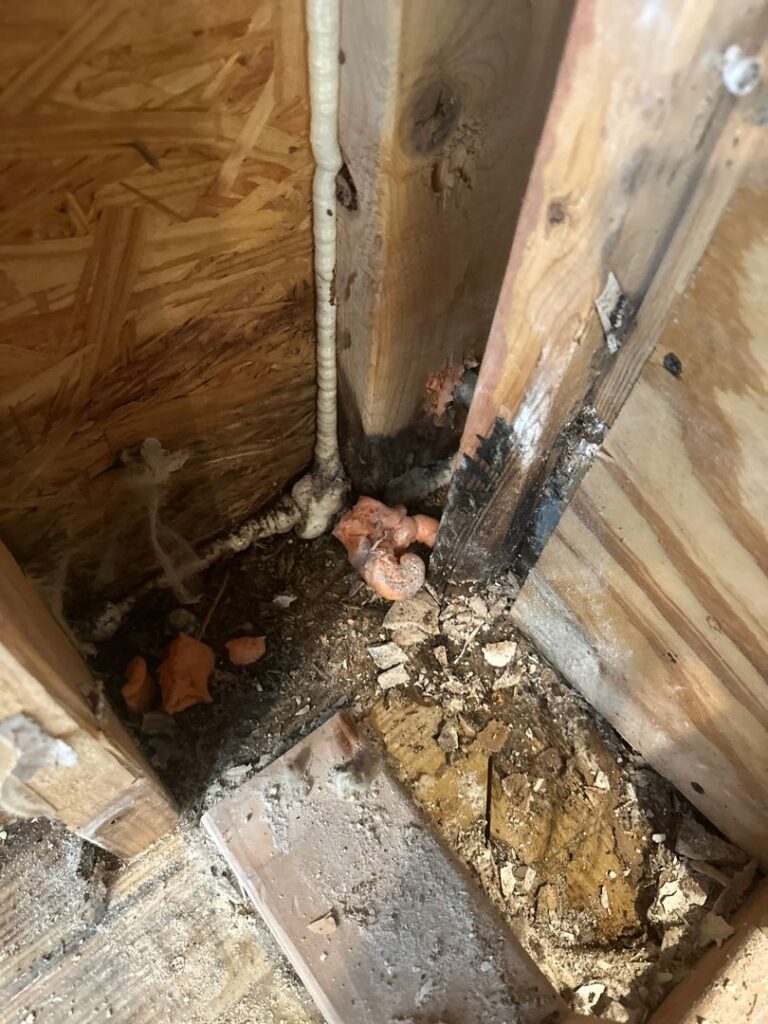
Mold colonies appear as black, green, brown, or white patches. On drywall, they often look like smudged stains that spread over time. In Fort Wayne basements, mold frequently appears at the base of walls where cool concrete meets warm interior air. If you notice any discoloration near your dryer, behind the appliance, or on adjacent ceilings, do not attempt to clean it with bleach. Bleach does not penetrate porous materials and can actually provide moisture that fuels deeper growth.
3. Peeling Paint, Bubbling Wallpaper, or Warped Baseboards
These are classic indicators of chronic moisture intrusion. When drywall or plaster remains damp for extended periods, paint loses adhesion and wallpaper adhesive fails. Baseboards warp when the wood behind them absorbs moisture. These symptoms suggest that moisture has penetrated beyond the surface and that mold colonies likely exist inside wall cavities. Thermal imaging and moisture mapping are required to assess the full extent of the damage.
4. Condensation on Windows, Pipes, and Ductwork
If you notice water droplets on basement windows, cold water pipes, or HVAC ducts during or after dryer use, your indoor humidity has reached critical levels. Condensation is visible evidence that the air is saturated and seeking surfaces to release moisture. This same process is occurring inside your walls, where you cannot see it. Condensation on ductwork is particularly concerning because it indicates your HVAC system is becoming a distribution network for moisture and potential mold spores.
5. Increased Allergy Symptoms, Respiratory Issues, or Unexplained Fatigue
Mold exposure does not affect everyone equally, but sensitive individuals may experience sneezing, coughing, itchy eyes, headaches, and fatigue that worsen at home and improve when away. If multiple family members develop similar symptoms, environmental contamination should be suspected. Some mold species produce mycotoxins that can cause neurological and immune system effects with chronic exposure. Do not dismiss persistent health complaints, especially in children and elderly residents.
6. Dryer Lint Accumulation in Unusual Places
If you find lint on walls, ceilings, or furniture near your dryer, your venting system is compromised. Lint particles carry moisture and organic material that serve as additional food sources for mold. In Fort Wayne homes with basement laundry setups, lint can accumulate on exposed joists, pipes, and insulation, creating multiple colonization sites. This is often an early warning that the dryer is not exhausting properly and that moisture is being released into the home.
7. Longer Dryer Cycles and Damp Clothes After a Full Cycle
When a dryer vent is blocked, disconnected, or nonexistent, the appliance cannot exhaust humid air efficiently. Clothes take longer to dry, and the machine works harder, generating more heat and humidity. This creates a feedback loop where each cycle adds more moisture to an already saturated environment. If your dryer requires two cycles to dry a standard load, the problem is not the appliance. It is the ventilation, and the moisture buildup is almost certainly supporting hidden mold growth.
What Should You Do If You Recognize These Warning Signs?
Ignoring dryer-related mold guarantees that the problem will worsen. Mold colonies expand exponentially, and remediation costs increase with the square footage of contamination. If you recognize one or more of these warning signs in your Fort Wayne home, take the following steps immediately.
Step-by-Step Response Protocol:
- Discontinue dryer use until the ventilation issue is resolved. Every cycle adds more moisture to a compromised environment.
- Inspect the dryer vent line. Look for disconnections, kinks, or blockages if you have a vented system. If your dryer is unvented, understand that this configuration is likely the primary cause of your moisture problem.
- Document everything. Photograph visible stains, condensation, and any damage for insurance and remediation professionals.
- Do not disturb visible mold. Agitating colonies releases thousands of spores into the air and can spread contamination to unaffected areas.
- Call PuroClean Disaster Restoration of West Fort Wayne at (260) 263-9788. Our certified technicians provide emergency moisture assessment, thermal imaging, air quality testing, and comprehensive mold remediation.
The Professional Remediation Process: IICRC S500 and S520 Standards
Mold remediation is a scientific process, not a cleaning service. PuroClean Disaster Restoration of West Fort Wayne adheres to the Institute of Inspection Cleaning and Restoration Certification (IICRC) S500 Water Damage Standard and S520 Mold Remediation Standard on every project.
Our comprehensive protocol includes:
- Emergency Assessment: Moisture mapping with penetrating and non-penetrating meters, thermal imaging to locate hidden moisture, and spore trap analysis to quantify airborne contamination.
- Containment: Physical barriers and negative air pressure systems isolate the contaminated area, preventing cross-contamination to clean zones of the home.
- Air Filtration: Industrial-grade HEPA filtration devices and air scrubbers operate continuously during remediation to capture airborne spores and mycotoxins.
- Material Removal: Contaminated porous materials, including drywall, insulation, and carpet, are removed and disposed of following EPA and OSHA regulations.
- Structural Drying: Dehumidification and psychrometric monitoring reduce moisture content to levels that prevent regrowth.
- Antimicrobial Treatment: Non-porous surfaces receive professional-grade antimicrobial biocide application to eliminate residual spores.
- Clearance Testing: Post-remediation verification, including air sampling and surface testing, confirms the environment has returned to normal fungal ecology before containment is removed.
Fort Wayne Building Codes and Local Risk Factors
Allen County building codes require that clothes dryers be exhausted to the exterior of the structure. However, many Fort Wayne homes, particularly in established neighborhoods like Lakeside, Bloomingdale, and West Central, were constructed before modern ventilation standards. Homeowners sometimes install ventless dryers as a workaround in basements, utility closets, or converted spaces where running exterior ductwork is difficult.
Fort Wayne’s climate compounds the problem. Summer dew points frequently reach 65 to 70 degrees, meaning the air holds substantial moisture even before the dryer adds to it. Winter conditions create the opposite problem: warm, moist basement air contacts cold foundation walls and windows, producing condensation. An unvented or improperly vented dryer operates as a year-round moisture source that overwhelms natural and mechanical dehumidification.
Frequently Asked Questions
Does home insurance cover mold caused by high humidity in Fort Wayne?
Most standard homeowners policies exclude mold damage resulting from chronic humidity, poor ventilation, or maintenance failures. However, if mold developed from a sudden and accidental covered peril, such as a water heater rupture or plumbing failure, your policy may provide coverage. PuroClean Disaster Restoration of West Fort Wayne works directly with insurance carriers to document damage, provide detailed estimates, and help you navigate the claims process. Call us at (260) 263-9788 for insurance-compatible assessment and billing.
How can I tell if mold from my dryer has spread to other rooms?
Signs of spread include musty odors in distant rooms, increased allergy symptoms throughout the home, visible mold near HVAC vents, and inconsistent temperature or humidity levels. Because mold spores are microscopic and lightweight, they travel through HVAC systems, wall cavities, and natural air currents. Professional air quality testing with spore trap analysis is the only reliable method to determine the full scope of contamination.
Can I just clean the mold myself if it is near the dryer?
The EPA recommends professional remediation for any mold infestation exceeding 10 square feet. Dryer-related mold frequently extends behind walls, under flooring, and into ceiling spaces where homeowners cannot see or access. DIY cleaning with bleach or vinegar does not penetrate porous materials and often aerosolizes spores, worsening indoor air quality and spreading contamination. Professional containment, negative air pressure, and HEPA filtration are essential for safe removal.
What is the difference between a vented and unvented dryer for mold risk?
A properly installed vented dryer exhausts moist air directly outside through a metal duct. An unvented dryer releases that same moisture into the indoor environment. While unvented dryers may seem convenient for homes without exterior wall access, they introduce uncontrolled humidity that creates mold conditions. If you have an unvented dryer in your Fort Wayne home, proper exterior venting should be installed, or the appliance should be replaced with a vented model.
How quickly can PuroClean respond to a mold emergency in Fort Wayne?
PuroClean Disaster Restoration of West Fort Wayne provides 24/7 emergency response. When you call (260) 263-9788, our dispatch team prioritizes mold-related calls because we understand that every hour of delay allows colonies to expand. Our technicians typically arrive on-site within hours to conduct emergency assessment and begin containment protocols.
Protect Your Fort Wayne Home and Family Today
Dryer-related mold is a silent threat that grows behind walls, under floors, and inside HVAC systems while your family breathes contaminated air. The warning signs are your home’s cry for help. Ignoring them will not make the problem disappear. It will make the remediation more expensive and the health risks more severe.
If you live in Fort Wayne, New Haven, Leo-Cedarville, or any surrounding neighborhood and you have noticed musty odors, visible staining, condensation, or unexplained health symptoms, do not wait.
Call PuroClean Disaster Restoration of West Fort Wayne at (260) 263-9788 right now. Our IICRC-certified technicians are standing by 24 hours a day, 7 days a week, to provide emergency mold assessment, moisture mapping, certified remediation, and complete restoration. Your home is your biggest investment. Your family’s health is priceless. Trust the professionals who understand Fort Wayne homes and deliver results that last.

