


Key Takeaways for Homeowners
- Fort Wayne’s location within the Great Lakes snow belt and Maumee River watershed creates unique basement flood risks from spring snowmelt, riverine flooding, and high water tables.
- IICRC S500 standards categorize floodwater by contamination level; most Fort Wayne basement floods involve Category 2 or 3 water requiring professional remediation.
- Early intervention within 24 hours prevents mold colonization, structural decay, and exponential cost increases.
- LSI entities including psychrometrics, moisture mapping, HEPA filtration, and antimicrobial biocides form the technical backbone of effective restoration.
- Call PuroClean Disaster Restoration of West Fort Wayne at (260) 263-9788 for 24/7 emergency basement flood cleanup in Fort Wayne, Indiana, and surrounding neighborhoods.
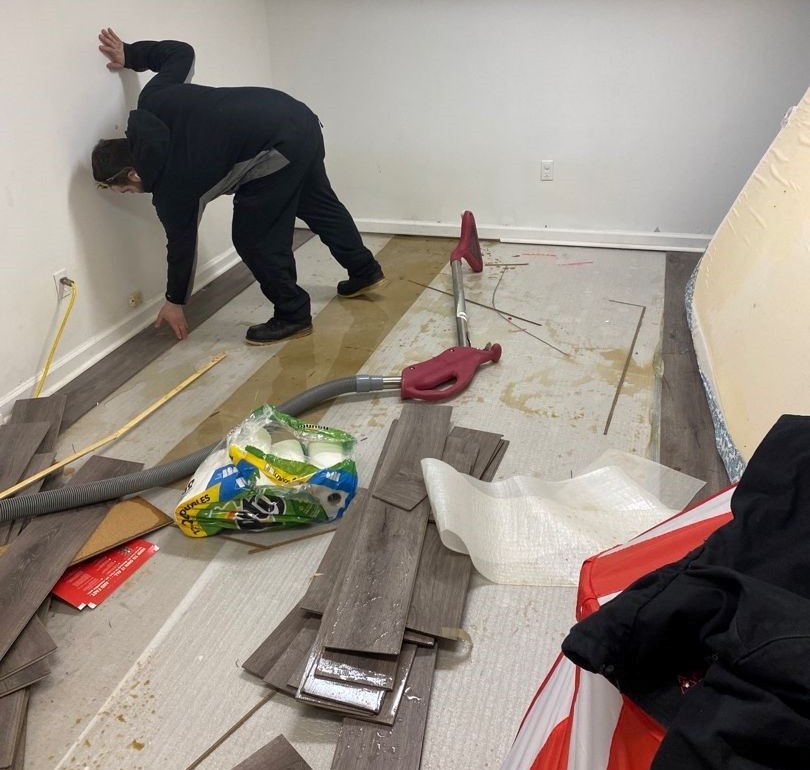
Understanding the Scope of Basement Flooding in Fort Wayne
Fort Wayne, Indiana sits at the confluence of the St. Marys, St. Joseph, and Maumee Rivers, placing significant portions of the city within flood-prone watersheds. The region’s humid continental climate delivers approximately 38 inches of annual precipitation, with spring snowmelt and summer thunderstorms creating peak flood risk periods. For homeowners in West Fort Wayne, Aboite Township, and surrounding Allen County neighborhoods, basement flooding represents one of the most common and financially devastating property emergencies.
The Institute of Inspection, Cleaning and Restoration Certification (IICRC) S500 Standard for Professional Water Damage Restoration provides the authoritative framework for addressing these events. This standard establishes that water damage restoration is not merely extraction and drying. It is a systematic process of contamination assessment, structural drying science, microbial control, and verification documentation. When floodwater enters your basement, every decision you make in the first hours determines whether you face a manageable restoration or a catastrophic rebuild.
Fort Wayne’s geological context amplifies these stakes. The city sits atop glacial outwash deposits with highly variable soil permeability. Clay-rich soils in neighborhoods like Lakeside and Bloomingdale create poor drainage conditions that trap water against foundations. The Maumee River’s floodplain encompasses significant residential areas, and the combined sewer system serving older Fort Wayne neighborhoods overflows during intense rainfall, causing basement backups through floor drains and sanitary laterals.
This guide delivers nine expert-backed tips specifically calibrated for Fort Wayne homeowners. Each recommendation integrates IICRC standards, local environmental factors, and the technical precision required to prevent costly secondary damage.
What Makes Fort Wayne Basement Flooding Different?
The Maumee River Watershed and Floodplain Dynamics
The Maumee River drains the largest watershed of any Great Lakes tributary, encompassing over 6,600 square miles. When spring snowmelt coincides with rainfall across northern Indiana and Ohio, river levels rise rapidly. Fort Wayne’s Three Rivers location makes neighborhoods near the river confluence particularly vulnerable. The 1982 and 2003 flood events demonstrated how quickly basement flooding can become widespread, affecting hundreds of homes simultaneously. Even properties outside designated flood zones face risk from overwhelmed stormwater infrastructure.
Soil Composition and Foundation Vulnerability
Allen County soils range from well-drained sands to poorly drained clay loams. Homes in West Fort Wayne and Aboite Township often sit on soils with high clay content that limits percolation. During sustained rainfall, water tables rise to foundation depth, creating hydrostatic pressure that forces water through basement walls and floors. Many homes built during Fort Wayne’s post-war expansion feature poured concrete foundations with minimal exterior waterproofing, making them susceptible to seepage after decades of soil pressure cycling.
Seasonal Freeze-Thaw Cycles
Fort Wayne experiences average winter lows near 15 degrees Fahrenheit, with extreme events reaching well below zero. Freeze-thaw cycles create expansion and contraction in foundation concrete, gradually widening existing cracks. When spring arrives and soils thaw, water finds these pathways into basements. The 2021 winter storm demonstrated how rapid freeze-thaw transitions can trigger widespread basement flooding across northeast Indiana.
9 Expert Tips to Clean Up a Flooded Basement and Prevent Costly Damage
Tip 1: Ensure Personal Safety Before Entering the Flooded Area
Floodwater conceals electrical hazards, structural instability, and biological contamination. Before entering your basement:
- Disconnect electrical power at the main breaker if safely accessible
- Wear rubber boots and gloves to prevent contact with contaminated water
- Use a flashlight rather than open flames, as gas lines may have been compromised
- Check for sagging ceilings, buckling walls, or compromised staircases
If the electrical panel is submerged or inaccessible, contact your utility provider or a licensed electrician. In Fort Wayne’s older neighborhoods like Williams-Woodland Park or West Central, outdated electrical systems increase electrocution risk. Never assume standing water is safe based on appearance alone.
Tip 2: Identify the Water Source and Category
Determining where water originated dictates your response strategy and whether professional help is mandatory.
- Clean water from supply lines: May be manageable DIY if addressed immediately
- Sump pump failure or groundwater: Category 2 or 3 depending on soil contamination; requires professional handling
- Sewer backup through floor drains: Category 3 black water; absolutely requires professional remediation with full containment
- River flooding: Category 3 due to chemical, biological, and debris contamination
Fort Wayne’s combined sewer system creates frequent Category 3 scenarios during heavy rainfall. The City of Fort Wayne’s Sewer Backup Prevention Program offers check valves for eligible properties, but many homes remain unprotected.
Tip 3: Document Damage Thoroughly for Insurance and Restoration Planning
Before moving anything, photograph and video all standing water, damaged contents, and structural conditions. Create a room-by-room inventory with descriptions, purchase dates, and approximate values. Indiana homeowners insurance covers sudden and accidental water damage from sources like burst pipes, but flood damage from external sources requires separate NFIP coverage. Fort Wayne participates in the NFIP, and properties within the Maumee River floodplain carry mandatory flood insurance requirements. Documentation quality directly impacts claim approval and settlement amounts.
Tip 4: Extract Water Using Appropriate Equipment
Consumer wet/dry vacuums handle only small volumes of Category 1 water. For significant flooding, professional submersible pumps and truck-mounted extractors are essential. Extraction rate determines how much water absorbs into structural materials. Professional equipment removes water at 25-50 gallons per minute, while consumer units manage 1-2 gallons per minute. In Fort Wayne’s humid climate, slow extraction allows deep absorption into subfloors, wall cavities, and insulation. Every gallon left in the structure extends drying time and increases microbial risk.
Tip 5: Remove Damaged Porous Materials Promptly
Carpet, padding, drywall, and insulation that have contacted floodwater cannot be reliably restored. These materials harbor moisture and organic nutrients that fuel mold colonization. The IICRC S520 Standard for Professional Mold Remediation mandates removal of porous materials wet for more than 48 hours. In Fort Wayne’s climate, this threshold often shrinks to 24 hours during summer humidity spikes.
Remove baseboards to expose wall cavities. Cut drywall 12-18 inches above the visible water line, as wicking action draws moisture well above standing water levels. Dispose of materials following Allen County waste management guidelines for contaminated debris.
Tip 6: Deploy Professional-Grade Dehumidification and Air Movement
Structural drying is a science, not an art. Psychrometrics, the study of air moisture relationships, governs drying efficiency. Professional restoration utilizes:
- Low-grain refrigerant (LGR) dehumidifiers: Remove 100-200 pints of moisture daily
- Desiccant dehumidifiers: Essential for deep drying of concrete, plaster, and hardwood
- Air movers: Create controlled airflow patterns that accelerate surface evaporation
- Thermal hygrometers: Monitor temperature, relative humidity, and vapor pressure in real time
Fort Wayne’s summer humidity, often exceeding 75 percent, overwhelms consumer dehumidifiers. Without professional-grade equipment, basements reach apparent dryness while hidden moisture persists in wall cavities and subfloors.
Tip 7: Apply EPA-Registered Antimicrobial Biocides
All flood-affected surfaces require antimicrobial treatment to prevent bacterial and fungal colonization. For Category 3 flooding, sporicidal agents address pathogens including E. coli, Enterococcus, and viral contaminants. Application must follow EPA label directions for dilution, dwell time, and safety protocols. Professional applicators use calibrated sprayers and wear full PPE including N95 or P100 respirators, chemical-resistant gloves, and eye protection. Improper application creates false confidence while leaving active contamination.
Tip 8: Conduct Comprehensive Moisture Mapping and Verification
Visible dryness deceives. Professional moisture mapping using penetrating and non-penetrating moisture meters, combined with thermal imaging cameras, reveals hidden saturation. In Fort Wayne homes with finished basements, water migrates laterally through wall cavities into adjacent living spaces. Infrared thermography detects evaporative cooling at wet surfaces, allowing technicians to identify and treat all affected areas.
Drying verification requires moisture content readings at or below normal equilibrium levels: wood framing below 16 percent, concrete slabs below 75 percent relative humidity per ASTM F2170. Reconstruction over damp substrates guarantees future mold issues and voids manufacturer warranties.
Tip 9: Implement Containment and HEPA Filtration If Mold Is Present
If visible mold exists or flooding exceeded 48 hours, containment protocols activate. Negative air pressure machines create airflow into the work zone, preventing spore dispersal. HEPA filtration captures 99.97 percent of 0.3-micron particles, including mold spores and mycotoxins. The IICRC S520 Standard mandates these controls for remediation exceeding 10 square feet. Without containment, DIY mold removal aerosolizes spores throughout your HVAC system, contaminating the entire home.
Fort Wayne-Specific Basement Flood Risks and Mitigation
The Combined Sewer Overflow Challenge
Fort Wayne’s older neighborhoods rely on combined sewer systems that carry both sanitary waste and stormwater. During heavy rainfall, system capacity is exceeded, causing backups into basements through floor drains and sanitary laterals. The city’s Long Term Control Plan addresses this through infrastructure improvements, but completion extends through 2035. Homeowners in affected areas should install backwater valves and sump pumps with battery backup systems.
High Water Table and Hydrostatic Pressure
The Maumee River watershed’s shallow water table creates persistent hydrostatic pressure against basement walls. Even without surface flooding, this pressure forces water through cracks and joints. Interior waterproofing coatings provide limited relief; exterior drainage improvements including French drains, footing drains, and grading corrections offer more durable solutions. Professional foundation assessment can identify whether hydrostatic pressure or surface drainage issues dominate your property’s risk profile.
Local Building Codes and Historic District Considerations
Fort Wayne’s historic districts, including West Central and Williams-Woodland Park, feature homes built before modern waterproofing standards. Renovation in these districts may require Historic Preservation Commission approval for exterior drainage modifications. Working with restoration contractors familiar with local regulatory requirements ensures compliance while addressing flood vulnerability.
FAQ: Complex Questions Fort Wayne Homeowners Ask
Does Home Insurance Cover Mold Caused by High Humidity in Fort Wayne?
Standard Indiana homeowners policies exclude mold damage from humidity, condensation, or maintenance neglect. Coverage applies only when mold results from a covered sudden peril, such as burst pipe or storm damage, and is mitigated promptly. Some insurers offer limited mold endorsements with caps between $5,000 and $10,000. Flood insurance through NFIP covers mold only when directly caused by a covered flood event. Document all water damage immediately and engage IICRC-certified professionals to support claims. PuroClean Restoration of West Fort Wayne provides detailed documentation packages for insurance submission.
How Much Does Professional Basement Flood Cleanup Cost in Fort Wayne?
Costs vary by water category, affected square footage, and structural complexity. Category 1 cleanup for a 500-square-foot basement typically ranges from $2,000 to $4,000. Category 3 sewage backup remediation for the same space may reach $7,000 to $15,000 due to contamination handling, disposal, and antimicrobial protocols. Delay increases costs exponentially; water damage left untreated for one week often requires full gutting and reconstruction. PuroClean Restoration of West Fort Wayne provides free on-site estimates and works directly with insurance carriers.
Can I Handle Basement Flood Cleanup Myself in Fort Wayne?
DIY is only appropriate for Category 1 water affecting less than 50 square feet, addressed within 24 hours, with no structural saturation. Fort Wayne’s climate, soil conditions, and sewer infrastructure make most basement floods Category 2 or 3 events exceeding DIY capabilities. Groundwater intrusion, sewer backups, and river flooding all require professional equipment, training, and safety protocols. Attempting DIY cleanup on Category 3 water exposes your family to bacterial pathogens, chemical contaminants, and airborne particulates.
What Is the Typical Timeline for Professional Restoration?
Category 1 Class 2 events require 3-5 days for complete drying. Category 3 Class 4 scenarios involving sewage or deep groundwater may extend 7-14 days. Reconstruction adds 1-4 weeks depending on material availability and contractor scheduling. PuroClean Restoration of West Fort Wayne provides daily moisture readings and transparent timeline updates. Emergency response teams arrive within hours, not days.
How Do I Prevent Future Basement Flooding in Fort Wayne?
Prevention requires addressing site-specific risk factors:
- Install battery-backed sump pumps with water level alarms
- Add backwater valves to prevent sewer backups
- Improve exterior grading to direct water away from foundations
- Maintain gutters and downspouts with extensions discharging 6-10 feet from walls
- Seal foundation cracks with hydraulic cement or epoxy injection
- Consider exterior waterproofing membranes for chronically damp basements
- Install interior drainage systems with sump pump collection
Professional foundation and drainage assessment identifies the most cost-effective prevention strategy for your property.
Why Professional Restoration Protects Your Investment
The true cost of basement flooding extends far beyond visible water removal. Hidden moisture creates conditions for mold amplification, wood rot, structural compromise, and declining property values. Insurance claims denied due to inadequate mitigation leave homeowners bearing full reconstruction costs. Health impacts from mold exposure, particularly for children and immunocompromised individuals, generate medical expenses that dwarf restoration costs.
Professional restoration companies bring IICRC-certified expertise, industrial equipment, and documented verification that protects your property, health, and financial interests. For Fort Wayne homeowners, choosing a local contractor with deep knowledge of Allen County’s unique flood risks ensures targeted, effective response.
PuroClean Disaster Restoration of West Fort Wayne serves Fort Wayne, Aboite Township, New Haven, Leo-Cedarville, and surrounding communities with 24/7 emergency response. Our IICRC-certified technicians arrive equipped to stop damage progression, restore your basement to pre-loss condition, and implement prevention strategies tailored to your property.
Call PuroClean Disaster Restoration of West Fort Wayne now at (260) 263-9788 for immediate emergency basement flood cleanup. Every hour of delay increases damage and cost.

