


Key Takeaways for Homeowners
- Fort Wayne’s humid continental climate and clay-heavy soils create persistent moisture conditions that accelerate post-flood mold growth.
- Allen County building codes require vapor barriers in crawl spaces and below-grade walls, but many older Fort Wayne properties predate these requirements.
- IICRC S500 and S520 standards provide the only scientifically validated framework for water damage restoration and mold remediation.
- Negative air pressure containment, HEPA filtration, and professional moisture mapping are essential, not optional, for safe recovery.
- Spring snowmelt and summer storm surges represent the highest flood risk windows for Fort Wayne homeowners.
If your Fort Wayne home has flooded, immediate professional intervention is critical. Call PuroClean Disaster Restoration of West Fort Wayne at (260) 263-9788 for emergency water extraction, structural drying, and certified mold prevention services in Fort Wayne and surrounding neighborhoods.
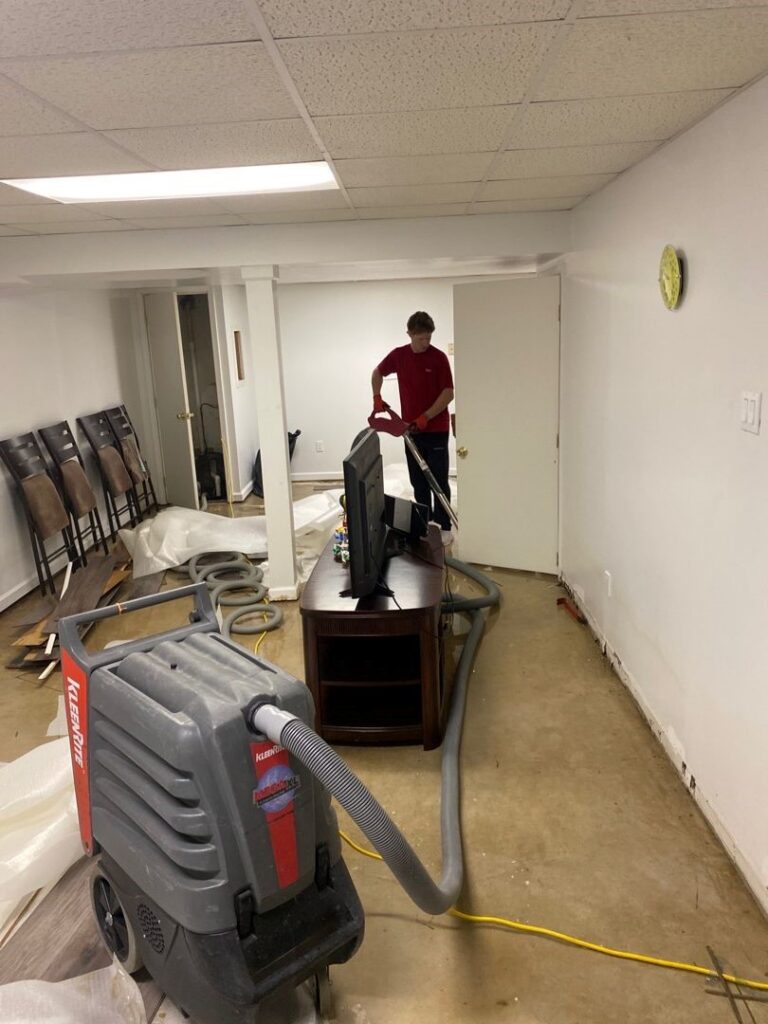
Understanding Fort Wayne’s Flood and Mold Risk Profile
Fort Wayne sits at the confluence of the St. Joseph, St. Marys, and Maumee Rivers in northeastern Indiana. This geography creates significant flood exposure, particularly in low-lying neighborhoods and areas near the river corridors. The city experiences a humid continental climate with four distinct seasons, warm humid summers, and cold winters with substantial snowfall. Spring snowmelt combined with seasonal rainstorms frequently overwhelms drainage systems and causes basement flooding across Allen County.
The local soil composition adds another layer of risk. Much of the Fort Wayne area sits on clay-heavy soils that drain poorly and retain moisture around foundations. When floodwater saturates these soils, hydrostatic pressure pushes water through foundation cracks, mortar joints, and porous concrete. Even after surface water recedes, foundation walls can wick moisture for weeks, creating ideal conditions for mold colonization behind finished basement walls.
Fort Wayne’s housing stock reflects its industrial and agricultural heritage. Older neighborhoods near downtown feature brick and frame homes built in the early to mid-20th century, many with limestone foundations, dirt crawl spaces, and minimal insulation. Post-war ranch homes and mid-century split-levels are common in suburban areas, often with partial basements and aging sewer connections. Newer developments on the city’s periphery may have better drainage and modern vapor barriers, but no home is immune when the Maumee River watershed floods.
Allen County building codes now require vapor barriers in crawl spaces and below-grade walls for new construction, but enforcement and retrofitting of older properties remains inconsistent. This regulatory gap means many Fort Wayne homeowners are living in homes that do not meet current moisture control standards, dramatically increasing post-flood mold risk.
The IICRC S500/S520 Standard: Your Protection Against Mold
The Institute of Inspection, Cleaning and Restoration Certification (IICRC) publishes the S500 Standard and Reference Guide for Professional Water Damage Restoration and the S520 Standard and Reference Guide for Professional Mold Remediation. These documents represent the consensus of industry scientists, indoor environmental professionals, and restoration contractors on the proper methods for handling water damage and mold contamination.
When you hire a restoration company, IICRC certification is your assurance that technicians understand water contamination categories, structural drying science, containment protocols, and clearance testing requirements. Without this certification, you have no guarantee that the work meets industry standards or that your insurance company will recognize the documentation.
Essential Mold Prevention Steps After a Fort Wayne Flood
1. Emergency Water Extraction: The First 24 Hours
IICRC S500 establishes that the first 24 hours after water intrusion are critical. During this window, clean water (Category 1) can be extracted and structures dried with minimal long-term damage. After 24 hours, microbial activity accelerates. After 48 hours, Category 1 water degrades to Category 2, and mold colonization becomes likely.
- Deploy truck-mounted extraction systems for large-volume water removal.
- Use weighted extraction wands on carpet to remove water from pad and subfloor.
- Pump out basements and crawl spaces before they become breeding grounds for bacteria and mold.
2. Structural Drying with LGR Dehumidifiers
Low-Grain Refrigerant (LGR) dehumidifiers are the industry standard for flood recovery. Unlike consumer dehumidifiers, LGR units can pull moisture from the air even when humidity drops below 40 percent, which is essential for drying dense materials like hardwood, plaster, and concrete.
- Calculate dehumidifier capacity based on cubic footage and Class of water loss.
- Position air movers to create vortex airflow across wet surfaces.
- Monitor specific humidity daily to verify moisture removal progress.
3. Comprehensive Moisture Mapping
In Fort Wayne’s older homes with plaster walls, horsehair lath, and multi-layer flooring systems, water does not stay where it lands. It migrates through capillary action, gravity, and pressure differentials. Moisture mapping with infrared cameras and penetrating moisture meters reveals these hidden migration patterns.
- Scan all walls, floors, and ceilings in the flood zone and adjacent rooms.
- Mark moisture readings on floor plans for tracking and documentation.
- Re-scan after 24 hours of drying to verify progress and adjust equipment.
4. Controlled Demolition of Unsalvageable Materials
IICRC S520 is clear: porous materials saturated with floodwater cannot be reliably restored. Attempting to dry carpet pad, fiberglass insulation, or particleboard subflooring in place traps moisture and creates permanent microbial reservoirs.
- Remove drywall at least 12 to 24 inches above the flood line.
- Pull out all wet insulation from wall cavities and attics.
- Discard upholstered furniture, mattresses, and stuffed toys exposed to floodwater.
5. Negative Air Pressure Containment
Before any demolition or cleaning, the affected area must be isolated from the rest of the home. Negative air pressure machines create a pressure differential that prevents airborne mold spores and construction dust from migrating into clean zones.
- Build containment walls with 6-mil polyethylene sheeting.
- Install HEPA-filtered negative air machines exhausting outdoors.
- Seal HVAC ductwork in the containment zone to prevent system contamination.
6. HEPA Filtration and Air Scrubbing
High-Efficiency Particulate Air filtration captures mold spores, mycotoxins, dust mite fragments, and other microscopic contaminants. During demolition, airborne spore counts can spike by 1,000 percent or more. Continuous air scrubbing protects workers and occupants.
- Use HEPA air scrubbers rated at 99.97 percent efficiency at 0.3 microns.
- Size units to achieve 4 to 6 air changes per hour in the containment zone.
- Run scrubbers continuously until post-remediation clearance testing passes.
7. Antimicrobial Biocide Application
After cleaning and drying, EPA-registered antimicrobial products treat structural surfaces to inhibit future mold growth. These products are not a substitute for moisture control, but they provide a chemical barrier against spore germination in flood-affected environments.
- Apply with sprayers, foggers, or wipes depending on surface type.
- Allow proper dwell time per manufacturer specifications.
- Select products compatible with finished surfaces and occupant health profiles.
8. Psychrometric Monitoring Until Completion
Psychrometrics governs how temperature, humidity, and air movement interact to remove moisture from materials. True drying completion is determined by equilibrium moisture content (EMC), not by how dry surfaces feel to the touch.
- Record daily readings of temperature, relative humidity, and specific humidity.
- Calculate vapor pressure and dew point to predict condensation risk.
- Do not authorize reconstruction until EMC readings stabilize for 48 hours.
9. Crawl Space and Foundation Waterproofing
Fort Wayne’s clay soils and freeze-thaw cycles stress foundations year-round. After a flood, foundation waterproofing must be evaluated and upgraded to prevent recurring moisture intrusion.
- Inspect sump pump operation and discharge distance.
- Evaluate exterior grading and gutter downspout extensions.
- Consider interior drain tile systems and battery backup sump pumps for high-risk homes.
10. HVAC System Inspection and Cleaning
Floodwater and mold spores can infiltrate ductwork, coils, and air handlers. In Fort Wayne, where heating systems run continuously through winter and air conditioning combats humid summers, contaminated HVAC systems distribute mold throughout the home.
- Inspect ductwork with remote cameras.
- Clean evaporator coils and condensate drain pans.
- Replace filters and consider duct sealing if contamination is confirmed.
11. Mycotoxin and Spore Count Testing
Visible mold is only part of the problem. Mycotoxins produced by toxigenic molds like Stachybotrys chartarum and Aspergillus versicolor can persist in dust and on surfaces after visible growth is removed. Objective testing validates remediation success.
- Collect pre- and post-remediation air samples for comparison.
- Use spore trap analysis for viable and non-viable counts.
- Compare indoor results to outdoor baseline samples collected the same day.
12. Insurance Documentation and Compliance
Fort Wayne homeowners should understand that flood damage coverage is separate from standard homeowners insurance. The National Flood Insurance Program (NFIP) provides flood coverage, but mold remediation limits may be insufficient for major contamination. Document all damage with photos, moisture readings, and disposal receipts. Allen County building officials may require permits for structural repairs and mold remediation in flood-damaged properties.
Frequently Asked Questions
Does home insurance cover mold caused by high humidity in Fort Wayne?
Standard homeowners policies generally exclude mold damage resulting from humidity, condensation, or maintenance issues. Coverage typically applies only when mold stems from a sudden, accidental covered peril like a burst pipe or storm damage. Flood-related mold requires a separate flood insurance policy through the NFIP. Because Fort Wayne’s combined sewer system and riverine flood risk are well documented, homeowners in flood-prone areas should carry both standard and flood insurance. Review your declarations page carefully and consider sewer backup endorsements.
How long do I have before mold grows after a Fort Wayne basement flood?
Mold colonization begins within 24 to 48 hours of water intrusion. In Fort Wayne, spring floods are particularly dangerous because warming temperatures accelerate microbial growth while clay soils slow foundation drying. A basement that floods on Friday evening can have active mold colonies by Monday morning if not properly extracted and dried.
Is it safe to stay in my home during mold remediation?
Occupant safety during remediation depends on the extent of contamination, the species present, and the health status of residents. IICRC S520 recommends temporary relocation for Category 3 water losses, extensive mold contamination (greater than 10 square feet of visible growth), or when immunocompromised individuals, infants, or elderly residents are present. PuroClean can assess your specific situation and recommend appropriate safety measures.
What makes Fort Wayne homes more vulnerable to post-flood mold than homes in drier climates?
Fort Wayne’s humid continental climate means outdoor humidity frequently exceeds 60 percent during spring and summer. After a flood, the ambient air cannot absorb additional moisture efficiently, which slows natural drying. Clay soils retain water against foundations. Older homes lack modern vapor barriers and air sealing. These factors combine to create a prolonged moisture window that drier climates simply do not experience.
Can I prevent mold by just running fans and opening windows?
No. Consumer fans increase evaporation but do not remove moisture from the air. In Fort Wayne’s humid climate, opening windows often introduces more moisture than it removes. Without dehumidification, evaporated moisture simply re-condenses on cooler surfaces, potentially spreading mold to previously dry areas. Professional structural drying equipment is essential.
Do Not Gamble with Your Home’s Safety
Flood damage is not a DIY project. The hidden moisture, microbial contamination, and structural risks require professional equipment, certified training, and scientific verification. If your Fort Wayne home has experienced water intrusion, every hour of delay increases the cost and complexity of recovery.
Call PuroClean Disaster Restoration of West Fort Wayne today at (260) 263-9788 for 24/7 emergency response, certified water extraction, and professional mold prevention services.

